
Uncategorized
Middle schoolers are now using AI to create ‘deepfake’ pornography of their classmates



From LifeSiteNews

It’s happening all over the world: a generation weaned on hardcore pornography is increasingly enabled by AI technology to create imagery of people they know personally.
A recent news story out of Alabama should be getting far more attention than it is, because it is a glimpse into the future. Middle school students are using artificial intelligence (AI) to create pornographic images of their female classmates:
A group of mothers in Demopolis say their daughters’ pictures were used with artificial intelligence to create pornographic images of their daughters. Tiffany Cannon, Elizabeth Smith, Holston Drinkard, and Heidi Nettles said they all learned on Dec. 4 that two of their daughters’ male classmates created and shared explicit photos of their daughters. Smith said since last Monday, it has been a rollercoaster of emotions.
“They’re scared, they’re angry, they’re embarrassed. They really feel like why did this happen to them,” said Smith. The group of mothers said there is an active investigation with Demopolis Police. However, they wish for the school district to take action. They believe this is an instance of cyberbullying and there are state laws and policies to protect their girls.
“We have laws in place through the Safe School’s law and the Student Bullying Prevention Act, which says that cyberbullying will not be tolerated either on or off campus,” said Smith. “It takes a lot for these girls to come forward, and they did. They need to be supported for that. Not just from their parents, but from their school and their community,” said Nettles.
The school hasn’t given many details yet, with the Demopolis City Schools Superintendent Tony Willis saying in a statement that there is little they can do: “The school can only address things that happen at school events, school campus on school time. Outside of this, it becomes a parent and police matter. We sympathize with parents and never want wrongful actions to go without consequences – our hearts and prayers go out to all the families hurt by this. That is why we have assisted the police in every step of this process.”
We’ll be seeing a lot more of this in the years ahead, as a generation weaned on hardcore pornography is increasingly enabled by technology to create imagery of people they know personally. The rise of sexting took pornography and made it personal – educators and law enforcement are still grappling with how to curtail the nearly ubiquitous practice of sending and receiving intimate images, the majority of which are then shared with others. Many of these images, by virtue of the age of the students involved, constitute child pornography. AI-generated pornography will create a whole laundry list of other disturbing issues to deal with.
A quick scan of recent headlines will give you a sense of where this is headed. From Fortune: “‘Nudify’ apps that use AI to undress women in photos are soaring in popularity, prompting worries about non-consensual porn.” These apps allow people to “digitally undress” people they know and thus create nonconsensual pornography of girls and women. These apps have already acquired millions of users.
From MIT Technology Review: “A high school’s deepfake porn scandal is pushing US lawmakers into action.” At a New Jersey high school, boys had used AI to “create sexually explicit and even pornographic photos of some of their classmates,” with up to 30 girls being impacted. The sense of violation felt by the victims is profound.
From CNN: “Outcry in Spain as artificial intelligence used to create fake naked images of underage girls.” From the story: “Police in Spain have launched an investigation after images of young girls, altered with artificial intelligence to remove their clothing, were sent around a town in the south of the country. A group of mothers from Almendralejo, in the Extremadura region, reported that their daughters had received images of themselves in which they appeared to be naked.”
One girl was blackmailed by a boy with a doctored image of herself. Another cried to her mother: “What have they done to me?”
From the Washington Post: “AI fake nudes are booming. It’s ruining real teens’ lives.” From the story: “Artificial intelligence is fueling an unprecedented boom this year in fake pornographic images and videos. It’s enabled by a rise in cheap and easy-to-use AI tools that can “undress” people in photographs — analyzing what their naked bodies would look like and imposing it into an image — or seamlessly swap a face into a pornographic video.”
Those are just a few examples of dozens of stories from the past few months. The pornography crisis is being exacerbated further by AI, once again highlighting the unfortunate truth of a joke in tech circles: First we create new technology, then we figure out how to watch porn on it. The porn industry has ruined an untold number of lives. AI porn is taking that to the next level. We should be prepared for it.


Uncategorized
Mortgaging Canada’s energy future — the hidden costs of the Carney-Smith pipeline deal


Much of the commentary on the Carney-Smith pipeline Memorandum of Understanding (MOU) has focused on the question of whether or not the proposed pipeline will ever get built.
That’s an important topic, and one that deserves to be examined — whether, as John Robson, of the indispensable Climate Discussion Nexus, predicted, “opposition from the government of British Columbia and aboriginal groups, and the skittishness of the oil industry about investing in a major project in Canada, will kill [the pipeline] dead.”
But I’m going to ask a different question: Would it even be worth building this pipeline on the terms Ottawa is forcing on Alberta? If you squint, the MOU might look like a victory on paper. Ottawa suspends the oil and gas emissions cap, proposes an exemption from the West Coast tanker ban, and lays the groundwork for the construction of one (though only one) million barrels per day pipeline to tidewater.
But in return, Alberta must agree to jack its industrial carbon tax up from $95 to $130 per tonne at a minimum, while committing to tens of billions in carbon capture, utilization, and storage (CCUS) spending, including the $16.5 billion Pathways Alliance megaproject.
Here’s the part none of the project’s boosters seem to want to mention: those concessions will make the production of Canadian hydrocarbon energy significantly more expensive.
As economist Jack Mintz has explained, the industrial carbon tax hike alone adds more than $5 USD per barrel of Canadian crude to marginal production costs — the costs that matter when companies decide whether to invest in new production. Layer on the CCUS requirements and you get another $1.20–$3 per barrel for mining projects and $3.60–$4.80 for steam-assisted operations.
While roughly 62% of the capital cost of carbon capture is to be covered by taxpayers — another problem with the agreement, I might add — the remainder is covered by the industry, and thus, eventually, consumers.
Total damage: somewhere between $6.40 and $10 US per barrel. Perhaps more.
“Ultimately,” the Fraser Institute explains, “this will widen the competitiveness gap between Alberta and many other jurisdictions, such as the United States,” that don’t hamstring their energy producers in this way. Producers in Texas and Oklahoma, not to mention Saudi Arabia, Venezuela, or Russia, aren’t paying a dime in equivalent carbon taxes or mandatory CCUS bills. They’re not so masochistic.
American refiners won’t pay a “low-carbon premium” for Canadian crude. They’ll just buy cheaper oil or ramp up their own production.
In short, a shiny new pipe is worthless if the extra cost makes barrels of our oil so expensive that no one will want them.
And that doesn’t even touch on the problem for the domestic market, where the higher production cost will be passed onto Canadian consumers in the form of higher gas and diesel prices, home heating costs, and an elevated cost of everyday goods, like groceries.
Either way, Canadians lose.
So, concludes Mintz, “The big problem for a new oil pipeline isn’t getting BC or First Nation acceptance. Rather, it’s smothering the industry’s competitiveness by layering on carbon pricing and decarbonization costs that most competing countries don’t charge.” Meanwhile, lurking underneath this whole discussion is the MOU’s ultimate Achilles’ heel: net-zero.
The MOU proudly declares that “Canada and Alberta remain committed to achieving Net-Zero greenhouse gas emissions by 2050.” As Vaclav Smil documented in a recent study of Net-Zero, global fossil-fuel use has risen 55% since the 1997 Kyoto agreement, despite trillions spent on subsidies and regulations. Fossil fuels still supply 82% of the world’s energy.
With these numbers in mind, the idea that Canada can unilaterally decarbonize its largest export industry in 25 years is delusional.
This deal doesn’t secure Canada’s energy future. It mortgages it. We are trading market access for self-inflicted costs that will shrink production, scare off capital, and cut into the profitability of any potential pipeline. Affordable energy, good jobs, and national prosperity shouldn’t require surrendering to net-zero fantasy.If Ottawa were serious about making Canada an energy superpower, it would scrap the anti-resource laws outright, kill the carbon taxes, and let our world-class oil and gas compete on merit. Instead, we’ve been handed a backroom MOU which, for the cost of one pipeline — if that! — guarantees higher costs today and smothers the industry that is the backbone of the Canadian economy.
This MOU isn’t salvation. It’s a prescription for Canadian decline.
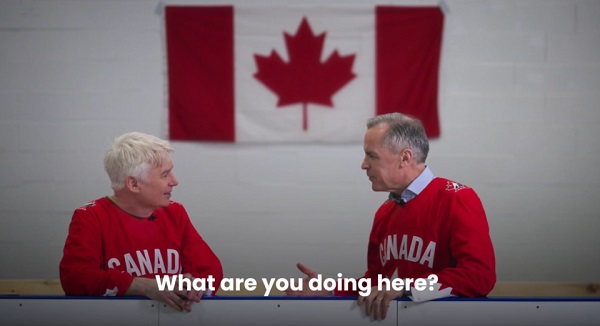

The cost of the bureaucracy increased by $6 billion last year, according to newly released numbers in Public Accounts disclosures. The Canadian Taxpayers Federation is calling on Prime Minister Mark Carney to immediately shrink the bureaucracy.
“The Public Accounts show the cost of the federal bureaucracy is out of control,” said Franco Terrazzano, CTF Federal Director. “Tinkering around the edges won’t cut it, Carney needs to take urgent action to shrink the bloated federal bureaucracy.”
The federal bureaucracy cost taxpayers $71.4 billion in 2024-25, according to the Public Accounts. The cost of the federal bureaucracy increased by $6 billion, or more than nine per cent, over the last year.
The federal bureaucracy cost taxpayers $39.6 billion in 2015-16, according to the Public Accounts. That means the cost of the federal bureaucracy increased 80 per cent over the last 10 years. The government added 99,000 extra bureaucrats between 2015-16 and 2024-25.
Half of Canadians say federal services have gotten worse since 2016, despite the massive increase in the federal bureaucracy, according to a Leger poll.
Not only has the size of the bureaucracy increased, the cost of consultants, contractors and outsourcing has increased as well. The government spent $23.1 billion on “professional and special services” last year, according to the Public Accounts. That’s an 11 per cent increase over the previous year. The government’s spending on professional and special services more than doubled since 2015-16.
“Taxpayers should not be paying way more for in-house government bureaucrats and way more for outside help,” Terrazzano said. “Mere promises to find minor savings in the federal bureaucracy won’t fix Canada’s finances.
“Taxpayers need Carney to take urgent action and significantly cut the number of bureaucrats now.”
Table: Cost of bureaucracy and professional and special services, Public Accounts
| Year | Bureaucracy | Professional and special services |
|
$71,369,677,000 |
$23,145,218,000 |
|
|
$65,326,643,000 |
$20,771,477,000 |
|
|
$56,467,851,000 |
$18,591,373,000 |
|
|
$60,676,243,000 |
$17,511,078,000 |
|
|
$52,984,272,000 |
$14,720,455,000 |
|
|
$46,349,166,000 |
$13,334,341,000 |
|
|
$46,131,628,000 |
$12,940,395,000 |
|
|
$45,262,821,000 |
$12,950,619,000 |
|
|
$38,909,594,000 |
$11,910,257,000 |
|
|
$39,616,656,000 |
$11,082,974,000 |


Brown University shooter dead of apparent self-inflicted gunshot wound

Alberta’s new diagnostic policy appears to meet standard for Canada Health Act compliance

Canada Hits the Brakes on Population

Bondi Beach Survivor Says Cops Prevented Her From Fighting Back Against Terrorists

Ford’s EV Fiasco Fallout Hits Hard

Why is Canada paying for dairy ‘losses’ during a boom?
Geopolitics no longer drives oil prices the way it used to
-
 Artificial Intelligence2 days ago
UK Police Pilot AI System to Track “Suspicious” Driver Journeys
-
 Business2 days ago
Judge Declares Mistrial in Landmark New York PRC Foreign-Agent Case
-
 Alberta24 hours ago
A Christmas wish list for health-care reform
-
 International2 days ago
World-leading biochemist debunks evolutionary theory
-
 Business17 hours ago
Some Of The Wackiest Things Featured In Rand Paul’s New Report Alleging $1,639,135,969,608 In Gov’t Waste
-
 Business2 days ago
The “Disruptor-in-Chief” places Canada in the crosshairs
-
 Energy17 hours ago
‘The electric story is over’
-
 International1 day ago
Georgia county admits illegally certifying 315k ballots in 2020 presidential election