The Governor General’s closet: A queen’s dream and a taxpayers’ nightmare
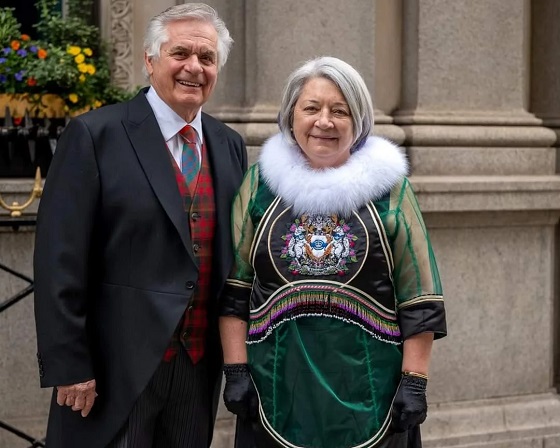
Governor General Mary Simon is spending your money like it’s her personal fund for Buckingham Palace’s boutique.
The governor general dipped into her taxpayer piggy bank (a.k.a. your wallet) to fund her shoe collection — six new pairs in 12 months — and is even charging you for her undergarments.
You read that right. Apparently, hundreds of dollars in silk undergarments are now considered essential to public services.
Simon spent $330 of taxpayers’ money on silk camisoles, $1,117 on shoes, $875 on a single blazer, $1,500 on a “sealskin chest piece” and $2,510 on luxury wool suits during the last fiscal year.
Simon spent $144 on a “black dress cardigan.” The “value of the item” according to the expense sheet is half that, listed at only $72. Is there anything the government doesn’t go overbudget on?
It’s very rare for any minister or prime minister to expense clothing. Only two ministers expensed apparel last year — each less than $300 for work boots for an event at a construction site.
Simon billed you for a total of $7,576 on shoes and clothing last year.
Simon’s annual salary is $378,000 a year. Let’s just say she doesn’t need to force you to pay for her clothes.
And that’s not all! Simon’s expansive wardrobe isn’t the only way the governor general’s office is draining the public purse.
Her lavish wardrobe is just the start of the spending spree. Since her appointment, she spent more than $120,000 on speech writers — and don’t get us started on her crazy travel expenses.
Simon has been enjoying mile-high catering — meals on airplanes include beef Wellington, carpaccio, stuffed pork tenderloin and hundreds of dollars on lemons, limes and bottled water. The list goes on.
Simon and her entourage billed you about $100,000 for airplane food during their week-long trip to the Middle East. A separate four-day trip to Germany totaled $103,000 in catering costs. She also spent hundreds of dollars on flowers to go along with the lavish meals.
All on your dime.
Oh, and the cost of those trips totalled $1 million and $700,000, respectively.
Simon also famously spent $71,000 at “Icelimo Luxury Travel” during a four-day trip to Iceland. The total bill for that trip cost taxpayers $298,000.
In fact, the governor general’s travel during her first year in office cost you almost $3 million.
Why is she even going on these far-flung excursions? The governor general’s role is to represent the monarchy here in Canada.
When was the last time you took your family on a vacation? Next time you agonize over fuel or air travel costs, remember you’re already footing the bill for an unelected figurehead’s opulent jet-setting.
The worst part of all this? The governor general’s flamboyant spending is all within rules laid out by the federal government.
Governors general can bill you up to $130,000 on clothes over their five-year term.
And all those posh clothes need cleaning, right? The governor general’s office spent $117,000 on professional dry-cleaning services since 2018, despite having staff dedicated to doing the laundry.
That works out to more than $1,800 per month spent on dry cleaning.
It’s time to close the royal boutique and stop treating taxpayers like an unlimited credit card.
Franco’s note: I just want to give a shout out to the great investigative news outlet, Blacklock’s Reporter. They were the first outlet to report on this spending. And that’s not the only big taxpayer story they uncovered this week. Check this one out: https://www.blacklocks.ca/d-e-i-spending-tops-1-04b/
Carney shrinks from pro-active cuts — lets bureaucrats retire themselves
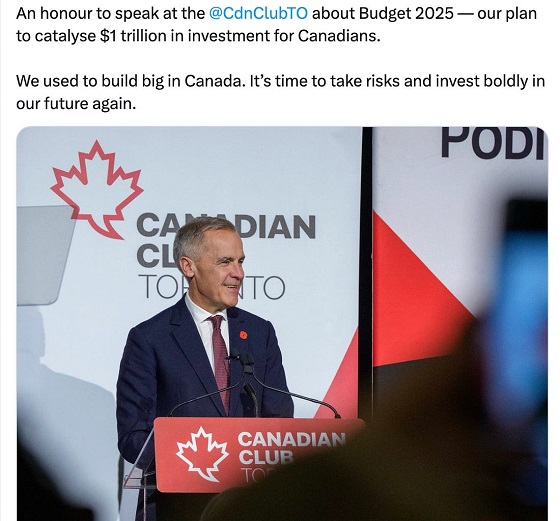
The Canadian Taxpayers Federation called out Prime Minister Mark Carney for his lackadaisical approach to Ottawa’s bureaucracy.
Carney needs to cut staff, not just wait for them to retire.
Here’s the back story:
The federal bureaucracy ballooned disproportionately under the Trudeau Liberals. Carney’s predecessor added nearly 100,000 paper pushers during his decade-long tenure.
The federal bureaucracy cost taxpayers $71.1 billion in 2024-25 — a 77 per cent increase from the $40.2 billion expense in 2016-17.
Enter Mark Carney, armed with a plan … based on inaction and procrastination.
The prime minister said he’s directed federal departments and Crown corporations to cut up to 15 per cent of their budgets over the next few years. He also claimed he would “balance the operating budget by Budget 2028.”
That seemed like a promising start — until Carney announced the cuts would “happen naturally through attrition.”
The bureaucracy now consumes about 55 per cent of the operating budget. And quality of service is decreasing.
Half of Canadians think services are worse than in 2016, according to a Leger poll commissioned by the CTF. Only 11 per cent say they’re better — proving the bureaucracy isn’t shrinking, it’s suffocating.
The poll showed most Canadians want to see the federal bureaucracy cut.
We’ll keep fighting for real cuts — not just a slow march to retirement.
Video: Carney clueless about his own gun confiscation
Carney called his gun confiscation “voluntary.”
Except the federal government announced a list of banned guns that many Canadians had stored in their homes.
Those firearms are suddenly illegal.
The Carney government plans to confiscate them in exchange for compensation. The penalty for illegal possession of a prohibited firearm under the Criminal Code is up to five years in jail.
And taxpayers like you are forced to pay those law-abiding Canadians after the government seizes their property.
“We’re not confiscating guns,” Carney said. “[It’s] an opportunity for Canadians to return guns for compensation.”
What does that mean? Taxpayers have questions.
The CTF’s Gage Haubrich and Kris Sims break it down in the video below and offer Carney an easy solution: scrap the gun ban and confiscation scheme.
Todayville is a digital media and technology company. We profile unique stories and events in our community. Register and promote your community event for free.
This was no ordinary budget day. By orchestrating a floor-crossing during a media lock-up, the Liberals blurred scrutiny of a historic spending plan while inching toward a de facto majority. That sequence raises deeper concerns about media–political entanglements and the democratic legitimacy of building a majority outside the polls.
Toronto Sun columnist Brian Lilley, in a deeply reported Substack post yesterday, captured months of palace intrigue. A well-sourced politics reporter with lines into Conservatives and Liberals alike, he lays out the knowns, the known unknowns, and the plausible backroom plays. Carney’s courting began right after the April 28 election that left him sitting at 169 seats, Lilley writes. For weeks, the Liberals probed for weak ribs in the Conservative caucus; and on November 4, they landed one.
“One thing is clear, the Liberals have been trying to poach a lot of Conservative MPs and doing everything they can to convince them to cross the floor,” he concluded.
Why? According to Lilley, Carney has been “governing for the most part like he has a majority, and he clearly doesn’t want to engage in the horse trading that a minority Parliament requires, so poaching MPs can solve his problem.”
The fallout was already clear to see last week. And it doesn’t look good for Canadian democracy or Canadian media, which receives significant government subsidies. Even at surface level, the press corps was visibly distracted from its first duty to citizens: scrutinizing a historically large budget packed with nation-building promises and unanswered questions about feasibility. Veteran reporters have already acknowledged this.
In another piece this weekend, Catherine Tunney, a solid CBC reporter, explained how Pierre Poilievre was undermined this way: “For the Opposition, budget week is a communications gift. It’s an easy way for the party to call out government spending,” she wrote. “For a leader who has built his brand on calling out Liberal spending, tabling a budget with a $78-billion deficit is the political equivalent of pitching a strike straight down the middle to Dodger slugger Shohei Ohtani.”
But instead, “of taking a victory lap around the bases, [Poilievre] ended the week facing questions about his leadership — after losing one MP to his rivals and another resigning from federal politics altogether.”
The messaging continued yesterday, with another CBC report amplifying the Liberals’ narrative that Conservative leaders were actively bullying MPs not to cross.
CBC had to issue a correction. After publishing d’Entremont’s account that senior Conservatives “pushed” his assistant, CBC later updated the story to clarify that Andrew Scheer and Chris Warkentin “pushed open the door,” and the aide stepped aside — a meaningful distinction.
Stepping back from the noise, there is a deeper problem.
Making honeyed promises to floor-crossers is legal in Canada’s democracy. But Canada is in a mounting trade war involving China and the United States, in an increasingly dangerous, cutthroat geopolitical environment. Already, the prime minister is pledging renewed engagement with Beijing as a strategic partner.
Doing so in a minority Parliament means facing tough accountability questions — and bruising inquiries in ethics committee hearings. In a majority government, an unprecedented and risky, course-altering national policy — deepening ties with Beijing while loosening ties with Washington — is considerably easier to execute.
And what kind of partner is Carney choosing? Yesterday, Japan lodged formal complaints after a senior Chinese diplomat took to social media and threatened to “cut [the] dirty neck” of Japan’s new leader over her stance on Taiwan. On Friday, Prime Minister Sanae Takaichi had said a Chinese attack on Taiwan could constitute “a survival-threatening situation” for Japan, potentially requiring the use of force.
“We have no choice but cut off that dirty neck that has been lunged at us without hesitation. Are you ready?” Chinese Consul General Xue Jian said in a message posted on X, which was later deleted.
This is the government Carney is rapidly sliding closer to. The same regime that jailed Canadians Michael Kovrig and Michael Spavor in the Meng Wanzhou affair — and a government that, Canadian intelligence has warned, attempts to shape media narratives in Canada.
As The Bureau reported in 2023, Canada’s own Privy Council Office warned in a January 2022 Special Report that Beijing’s United Front Work Department targets Canadian institutions.
In a section alleging Beijing “manipulates traditional media” in Canada, the report details press conferences held in January 2019 by former Toronto-area Liberal cabinet minister John McCallum, to argue that Canada’s detention of Huawei executive Meng Wanzhou was illegal. McCallum, then ambassador to China, was forced to resign after the Conservative opposition condemned his comments.
In the fallout, according to the Privy Council Office report, Canadian intelligence uncovered that several Chinese diplomats in Canada were voicing support for McCallum. One Chinese consulate official “sent information” to an unidentified Canadian media reporter indicating Chinese Canadians have favourable impressions of McCallum, the report says.
Now back to Ottawa media’s role. Why and how did Politico get the floor-crossing scoop during the budget lock-up — and then, that same evening, co-host a post-budget reception branded “Prudence & Prosecco” at the Métropolitain Brasserie, where Finance Minister François-Philippe Champagne and well-placed Liberals mingled with reporters? Every veteran reporter knows political parties try to influence the press — they’re called spin doctors for a reason. But darker forces can ride the same channels. In Brussels, for example, European security services are investigating a former Politico reporter over alleged ties to Chinese intelligence — still unproven, but a cautionary tale about the murkiness of media–political ecosystems.
Lilley also documents how coverage of another rumoured floor-crosser, Matt Jeneroux, became part of last week’s fog machine. The Toronto Star reported a private meeting between Jeneroux and Carney involving senior Liberal strategists Braden Caley and Tom Pitfield; Jeneroux issued categorical denials to senior Conservatives. “Someone is lying,” Lilley writes — and whether or not a second crossing was imminent, the destabilization served its purpose. Other names floated, such as Michael Chong, were so implausible as to raise suspicion of calculated disinformation.
“I didn’t buy Chong either, but Liberals kept pushing that narrative,” Lilley wrote. “As someone who knows Michael a bit, I simply didn’t believe it, didn’t even reach out to ask — he later called me to confirm the rumours were bogus.”
It is geopolitically notable that Michael Chong — sanctioned by Beijing and repeatedly targeted in PRC pressure campaigns, including a Chinese intelligence operation targeting Chong and his family that Justin Trudeau’s government failed to notify him about — saw his name tossed into this mess. Who benefits from saddling Chong with corrosive rumours?
It would seem that not only the Liberals benefit, but so do Carney’s new “strategic partners” in Beijing. None of this proves any newsroom has wittingly acted in bad faith, nor is there any evidence that Beijing’s shadow looms in the Liberals’ media playbook. But it does suggest how a coordinated political operation can be abetted by domestic media distraction.
Now, consider darker possibilities that could be in play. Not necessarily last week, but in any number of major events and stories shaping relations among Canada, China, and the United States.
The bipartisan NSICOP 2024 Review into allegations of Chinese election interference in Canada’s last two federal elections found that “during the period under review, the intelligence community observed states manipulating traditional media to disseminate propaganda in what otherwise appeared to be independent news publications.”
It added: “Foreign states also spread disinformation to promote their agendas and consequently challenge Canadian interests, which posed the greatest cyber-threat activity to voters during the time under review.”
The report continued: “These tactics attempt to influence public discourse and policymakers’ choices, compromise the reputations of politicians, delegitimize democracy, or exacerbate existing frictions in society.”
According to the intelligence community, “the PRC was the most capable actor in this context, interfering with Canadian media content via direct engagement with Canadian media executives and journalists.”
So what do we have here? Carney’s Liberals have a natural interest in destabilizing the Conservatives and sending Pierre Poilievre — a prosecutorial-style politician who excels at exposing his opponents’ weaknesses — into early political retirement. Arguably, they have a well-founded interest in dividing the Conservative Party itself.
But using the media to float names of opposition MPs who never intended to cross is disinformation, plain and simple. And when that name is Michael Chong — long targeted by Beijing — the stakes rise. If Carney is tilting toward a “strategic partnership” with Beijing, and if that delays the Foreign Influence Transparency Registry, as critics such as Dr. Charles Burton warn, then the tactics on display have moved from questionable to unacceptable — and risk entangling the interests of the Liberal Party of Canada with those of the Chinese Communist Party in Beijing.
The Bureau is a reader-supported publication. To receive new posts and support my work, consider becoming a free or paid subscriber.
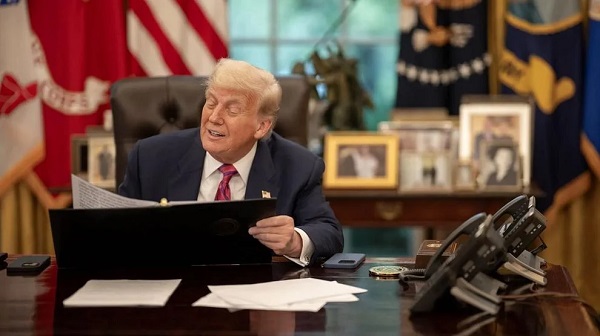
President Donald Trump on Sunday said every American with the exception of the wealthy will receive $2,000 from the revenue the U.S. has collected from tariffs.
“A dividend of at least $2000 a person (not including high-income people!) will be paid to revenue,” Trump posted on Truth Social. He did not say when or how the tariff revenue would be distributed.
“We are now the richest, most respected country in the world with almost no inflation and a record stock market price. 401Ks are highest ever,” Trump wrote. “We are taking in trillions of dollars and will soon begin paying down our enormous debt, $37 trillion. Record investment in the USA, plants and factories going up all over the place.”
Trump has said he wants to use tariffs to restore manufacturing jobs lost to lower-wage countries in decades past, shift the tax burden away from U.S. families and pay down the national debt. Economists, businesses and some public companies have warned that tariffs will raise prices on a wide range of consumer products.
Trump’s Liberation Day tariffs have been challenged in federal courts as unconstitutional by some business groups and Blue states, who argue that only Congress has the authority to enact tariffs. The U.S. Supreme Court last week heard oral arguments in a consolidated case challenging the tariffs.
Even some of the court’s conservative justices seemed skeptical of Trump’s authority to issue sweeping tariffs. Trump addressed that skepticism in his social media post.
“So let’s get this straight? The president of the United States is allowed (and fully approved by Congress) to stop ALL TRADE with a foreign country (which is far more onerous than a tariff) and LICENSE a foreign country, but it is not allowed to put a simple tariff on a foreign country, even for the purposes of NATIONAL SECURITY,” he wrote. “That is not what our great founders had in mind. The whole thing is ridiculous! Other countries can tariff us, but we can’t tariff them? It is their DREAM!!! Businesses are pouring into the USA ONLY BECAUSE OF TARIFFS. HAS THE UNITED STATES SUPREME COURT NOT BEEN TOLD THIS??? WHAT THE HELL IS GOING ON???”
The Center Square’s Brett Rowland contributed to this report.
Dan McCaleb is the executive editor of The Center Square.