
Alberta
Heavy RCMP presence in hamlet of Fort Assiniboine – Update #2


Dec. 17, 2021

Heavy RCMP presence in hamlet of Fort Assiniboine – Update #2
Fort Assiniboine, Alta.- On Dec. 12, 2021 at about 9:15 p.m., Barrhead RCMP were dispatched to a property on Township Road 632 in the area north of Fort Assiniboine in Woodland County, Alta. for a report of an incident where a suspect rammed through the locked gate at a rural residence and a firearm was discharged by the property owner. The suspect, who was known to the property owner, then fled the scene after the firearm was discharged.
Barrhead RCMP then received two additional calls reporting the suspect was at his residence Fort Assiniboine. Barrhead RCMP attended the residence. When officers went to the door of the residence they were challenged by the suspect who was inside the home. Officers were attempting to reposition and the suspect opened the door and an interaction occurred where two shots were fired at police vehicles by the suspect. Officers did not return fire.
Barrhead RCMP, with the assistance Westlock, Mayerthorpe, Swan Hills and Whitecourt RCMP Detachments, as well as RCMP Police Dog Service, contained the residence. To ensure their safety, the residents in the community were evacuated to the Fort Assiniboine Fire Hall, which is located away from the suspect’s residence.
On Dec. 13, 2021, shortly before 1 a.m., the Alberta RCMP Emergency Response Team (ERT) attended and took control of the scene. ERT arrested the suspect shortly before 4 a.m.
The suspect was examined by Emergency Medical Services on scene for minor injuries and then turned over to police.
No RCMP officers were injured during this incident.
Police remained on the scene and conducted a search of the residence pursuant to a search warrant. Police completed the scene examination at approximately 5 p.m.
Vernie Travis Huff (41) of Fort Assiniboine has been charged with:
- Uttering threats (x2)
- Pointing a firearm (x2)
- Careless use of a firearm
- Discharge firearm with intent
- Assault on a Police Officer
Huff is also facing three additional weapons and property related charges.
Following a judicial hearing, Huff was remanded in custody and is scheduled to appear on Dec. 20, 2021, at Barrhead Provincial Court.
No further charges are being laid in this matter.
The investigation has not located any damage to property caused as a result of the discharge of the suspect’s firearm; however residents are advised to report any potential damage to Barrhead RCMP.
Barrhead RCMP would like to thank the community of Fort Assiniboine for their co-operation and patience, as well as the media for their assistance, during this incident.
As this matter is now before the courts, no further information can be provided.

This article supplied by Troy Media.

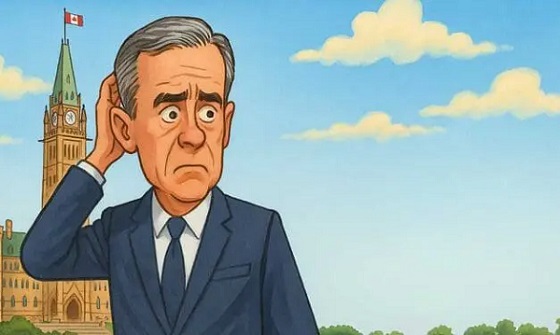
Carney’s attempt to ease Canada’s dependence on the U.S. stirs a backlash in B.C., raises Indigenous concerns and rattles his own party
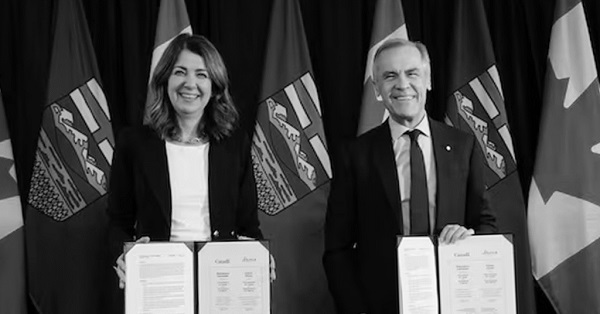
The Memorandum of Understanding (MOU) between Prime Minister Mark Carney and Alberta Premier Danielle Smith has opened a political hornet’s nest, exposing deep divisions within the Liberal Party and forcing a national debate that has been avoided for years.
Carney was under mounting pressure to respond to U.S. tariffs that threaten to carve billions out of Canada’s economy. The United States buys more than 95 per cent of Canada’s oil exports, leaving the country highly exposed to U.S. policy decisions. That pressure is now driving his push for a route to the Pacific, a project that could change Canada’s economic future but also destabilize his already fragile minority government.
Carney knows the political risk. His government could fall at any time, which only raises the stakes. Even so, he has pressed ahead. The agreement with Alberta lays early groundwork for a new pipeline to the Pacific. It would expand the oil sands, ease some environmental obligations and revive a proposal industry leaders have pushed for years.
The route is far from settled, but it is expected to run to B.C.’s northern coast and open access to Asian buyers. A Pacific route would finally give Canada a direct path into Asian energy markets, where demand remains strong and prices are often higher than in the United States.
If Carney expected broad support, he did not get it, especially in British Columbia. Because B.C. is the only province with a deep-water port capable of handling large crude carriers, it is the only path a west-coast pipeline can take. The province is now the central battleground, and whether the project succeeds will depend on what happens there.
B.C. Premier David Eby criticized the lack of consultation. “It would have been good for B.C. to be at the table,” he said, warning that the project risks undermining Indigenous support for the province’s liquefied natural gas plans. He also noted that the pipeline has no private backer and no commitments from First Nations, two obstacles that have tripped up projects before.
The backlash quickly spread to Ottawa. Steven Guilbeault, the former environment minister and the most prominent environmentalist ever to serve in a federal cabinet, resigned from cabinet in direct response to the MOU. He said the proposed pipeline “would have major environmental impacts”. Green Party Leader Elizabeth May said his departure “dashes the last hope that Mark Carney is going to have a good climate record ever.”
Several B.C. Liberal MPs echoed concerns about the political cost. CBC News reported anger inside the caucus, with some MPs “seething” over the agreement and worried about losing climate-focused voters.
The voters those MPs fear may not be as opposed as they think. An October Angus Reid Institute survey found that a solid majority of Canadians support a pipeline from northern Alberta to the northwest B.C. coast. In British Columbia, support outweighs opposition by a wide margin. That challenges Eby’s claim that the project lacks public backing. Carney may have more room to manoeuvre than his critics admit.
The most significant challenge, however, comes from Indigenous leaders. British Columbia is the only province that has formally adopted the United Nations Declaration on the Rights of Indigenous Peoples (UNDRIP) into law, giving First Nations a stronger legal position in major project decisions. Court rulings over the past two decades have affirmed a duty to consult and, in some cases, accommodate Indigenous communities, giving them major influence over large projects.
A group representing Coastal First Nations in B.C. said the pipeline “will never happen”. The Union of B.C. Indian Chiefs said it is “loudly objecting” to the MOU, arguing it was drafted without involvement from coastal First Nations and does not meet consultation standards outlined in UNDRIP. “The answer is still no and always will be,” said UBCIC Grand Chief Stewart Phillip. He also said lifting the crude oil tanker ban would amount to bulldozing First Nation rights. Without Indigenous consent, the project cannot proceed, and Carney knows this is the single largest barrier he faces.
Carney’s reasoning is straightforward. The long-term danger of relying on one market outweighs the short-term turbulence created by the pipeline fight. The MOU suggests Ottawa is prepared to reconsider projects once thought politically impossible in order to protect Canada’s economic future. He is betting that doing nothing is the bigger risk.
Whether this pipeline moves forward is uncertain, and the obstacles are real. One fact, however, remains clear. Canada cannot keep betting its stability on a single market.
Toronto-based Rashid Husain Syed is a highly regarded analyst specializing in energy and politics, particularly in the Middle East. In addition to his contributions to local and international newspapers, Rashid frequently lends his expertise as a speaker at global conferences. Organizations such as the Department of Energy in Washington and the International Energy Agency in Paris have sought his insights on global energy matters.
Troy Media empowers Canadian community news outlets by providing independent, insightful analysis and commentary. Our mission is to support local media in helping Canadians stay informed and engaged by delivering reliable content that strengthens community connections and deepens understanding across the country.

Canada and Alberta’s new net-zero energy deal is being promoted as progress, but it also brings rising costs. In this video, I break down the increase to Alberta’s industrial carbon price, how those costs can raise fuel, heating, and grocery prices, and why taxpayer-funded carbon-capture projects and potential pipeline delays could add even more. Here’s what this agreement could mean for Canadians.
Watch Nataliya Bankert’s latest video.


From Underdog to Top Broodmare

Poilievre says West Coast Pipeline MOU is no guarantee
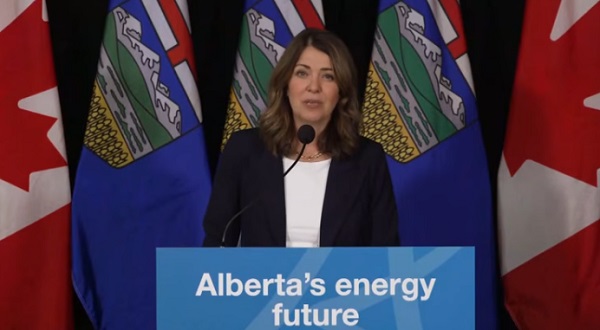
Alberta and Ottawa ink landmark energy agreement
Carney’s ‘Shared Sacrifice’ Is a Lie. Only Veterans Are Bleeding for This Budget
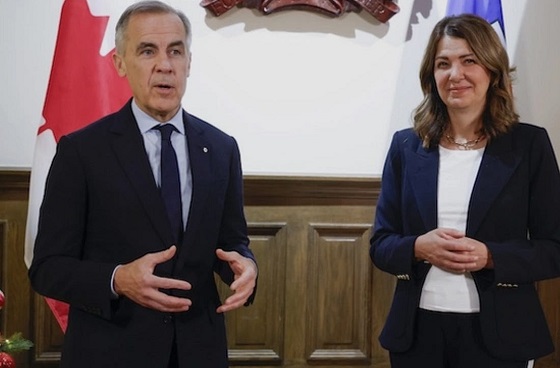
READ IT HERE – Canada-Alberta Memorandum of Understanding – From the Prime Minister’s Office
Canadian government seeking to destroy Freedom Convoy leader, taking Big Red from Chris Barber

Trump’s New AI Focused ‘Manhattan Project’ Adds Pressure To Grid
-
 Business1 day ago
Recent price declines don’t solve Toronto’s housing affordability crisis
-
 Artificial Intelligence2 days ago
The Emptiness Inside: Why Large Language Models Can’t Think – and Never Will
-
 Daily Caller1 day ago
Tech Mogul Gives $6 Billion To 25 Million Kids To Boost Trump Investment Accounts
-
 Censorship Industrial Complex24 hours ago
A Democracy That Can’t Take A Joke Won’t Tolerate Dissent
-
 Business1 day ago
Canada’s future prosperity runs through the northwest coast
-
 Great Reset23 hours ago
Canada’s MAiD (State Sanctioned Murder) Report Just Dropped
-
 Automotive16 hours ago
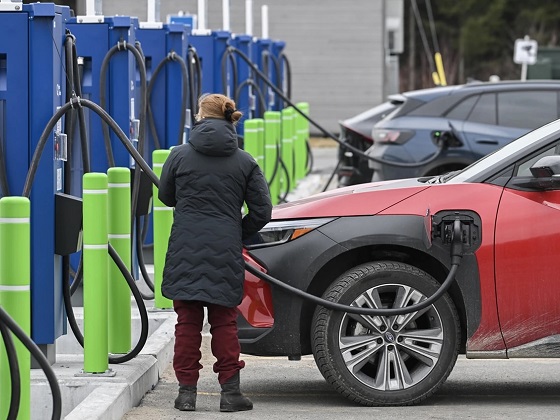
Power Struggle: Governments start quietly backing away from EV mandates
-
 Business1 day ago
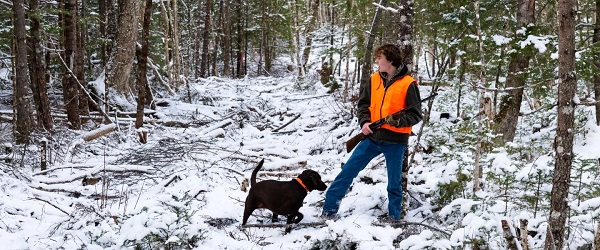
Ottawa’s gun ‘buyback’ program will cost billions—and for no good reason