
COVID-19
Florida surgeon general asks FDA for answers after study allegedly finds DNA fragments in COVID shots

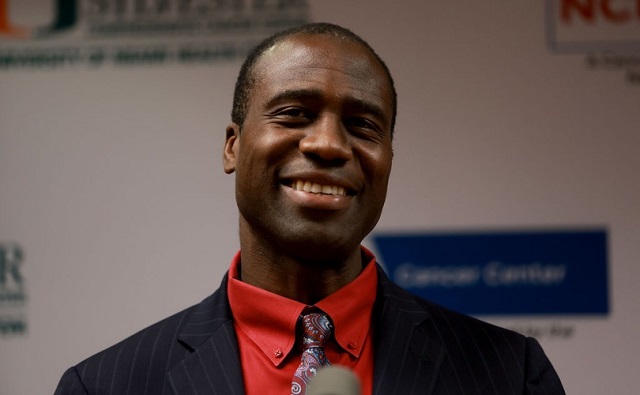

Florida’s Surgeon General Dr. Joseph Ladapo speaks during a press conference
From LifeSiteNews

‘The American people and the scientific community have a right to have all relevant information pertaining to the COVID-19 vaccines to properly inform individual decision making’
Florida Surgeon General Joseph Ladapo on Wednesday pushed the head of the FDA for answers regarding a preprint study that alleged the contamination of mRNA COVID-19 shots with plasmid DNA.
“The American people and the scientific community have a right to have all relevant information pertaining to the COVID-19 vaccines to properly inform individual decision making,” Dr. Ladapo wrote in the December 6 letter addressed to FDA Commissioner Robert M. Califf, MD, MACC.
On today's episode of: What the FDA… I asked @DrCaliff_FDA to address the DNA fragments detected in mRNA COVID shots & how they are hitchhiking into human cells. DNA integration into the human genome & oncogenesis are known risks, even acknowledged by @US_FDA in '07. pic.twitter.com/V7TBaeM1WN
— Joseph A. Ladapo, MD, PhD (@FLSurgeonGen) December 6, 2023
Ladapo, who has frequently resisted the prevailing narrative on COVID-19 vaccination — even warning young men not to get the shots at all — previously wrote to the CDC in May to share concerns about the safety and efficacy of the COVID-19 jabs, particularly in the context of their accelerated approval. He said he has not received a response to his inquiry.
In his December 6 letter to the FDA, the Sunshine State’s surgeon general wrote to share his concern about “the recent discovery of host cell DNA fragments within the Pfizer and Moderna COVID-19 mRNA vaccines. This raises concerns regarding the presence of nucleic acid contaminants in the approved Pfizer and Moderna COVID-19 mRNA vaccines.”
As LifeSiteNews reported in October, a new preprint study claimed to have discovered “significant levels” of “plasmid DNA” in expired COVID-19 vaccines, impurities the researchers say may be linked to adverse events. The study, which is not yet peer-reviewed, calls for “further investigation” to corroborate the findings.
Authors David J. Speicher, Jessica Rose, L. Maria Gutschi, David M. Wiseman, Ph.D., and Kevin McKernan said in the 31-page study they had found “billions to hundreds of billions of DNA molecules per dose” that they gathered from “[e]xpired unopened vials of Pfizer-BioNTech [shots] … and Moderna Spikevax mRNA” jabs “obtained from various pharmacies in Ontario, Canada.”
According to the researchers, the “preliminary evidence … warrant[s] confirmation and further investigation.”
An earlier preprint in June published by McKernan and his fellow researchers alleged that a fragment of a “monkey virus” genome, SV40, had been discovered in the COVID-19 jabs. The study noted that SV40 had previously been discovered in polio vaccines in the 1950s and 1960s and was linked to cancer. However, Health Feedback has noted that the DNA found in the COVID jabs was only a “fragment” of that genome, and that it’s unclear whether SV40 causes cancer in humans (current research only supports risk of cancer in certain animals), LifeSiteNews previously reported.
Moreover, the polio jabs became contaminated due to the use of monkey kidney cells to grow the virus, per Health Feedback. Those cell cultures were not used in the making of the COVID shots, making it unclear how the SV40 contaminants got into the injections to begin with.
In Ladapo’s letter to the FDA, he cited 2007 guidance from the FDA itself that, he stated, raised the possibility that “DNA integration could theoretically impact a human’s oncogenes – the genes which can transform a healthy cell into a cancerous cell,” and could therefore “result in chromosomal instability.”
“The Guidance for Industry discusses biodistribution of DNA vaccines and how such integration could affect unintended parts of the body including blood, heart, brain, liver, kidney, bone marrow, ovaries/testes, lung, draining lymph nodes, spleen, the site of administration and subcutis at injection site,” he summarized.
RELATED: Florida surgeon general Joseph Ladapo warns against taking new COVID-19 shots
After laying out the guidance from the FDA on the potential risks of DNA contamination, Ladapo asked the agency to answer whether manufacturers of the drugs have “evaluated the risk of human genome integration or mutagenesis of residual DNA contaminants from the mRNA COVID-19 vaccines alongside the additional risk of DNA integration from the lipid nanoparticle delivery system and SV40 promoter/enhancer?”
“Has [the] FDA inquired any information from the drug manufacturers to investigate such risk?” he asked.
Ladapo also asked whether “FDA standards for acceptable and safe quantity of residual DNA (present as known contaminants in biological therapies) consider the lipid nanoparticle delivery system for the mRNA COVID-19 vaccines?” Pfizer and Moderna’s COVID-19 jabs contain lipid nanoparticles (LNPs), which are “tiny balls of fat” that act as delivery mechanisms for the mRNA vaccine.
Florida’s surgeon general further inquired whether, given “the potentially wide biodistribution of mRNA COVID-19 vaccines and DNA contaminants beyond the local injection site,” the FDA has “evaluated the risk of DNA integration in reproductive cells with respect to the lipid nanoparticle delivery system?”
Citing “the urgency of these questions due to the mass administration of these vaccines and currently unavailable data surrounding possible genomic effects,” Ladapo closed his letter by asking the FDA to respond to his questions in one week’s time (December 13) by sending a written response to both his “previous letter and the concerns I have outlined above.”
Dr. Ladapo, who earned his MD from Harvard Medical School and his Ph.D. from Harvard University, was appointed to lead Florida’s health department by Florida Republican Gov. Ron DeSantis in 2021. He quickly made a name for himself as something of a maverick among state health department officials for his resistance to the prevailing COVID-19 narrative, and he has consistently and publicly spoken out against COVID-19 jabs, lockdowns, and mask mandates.

From LifeSiteNews
A judge ruled that the Ontario Court of Justice is already ‘satisfied’ with Chris Barber’s sentence and taking away his very livelihood would be ‘disproportionate.’
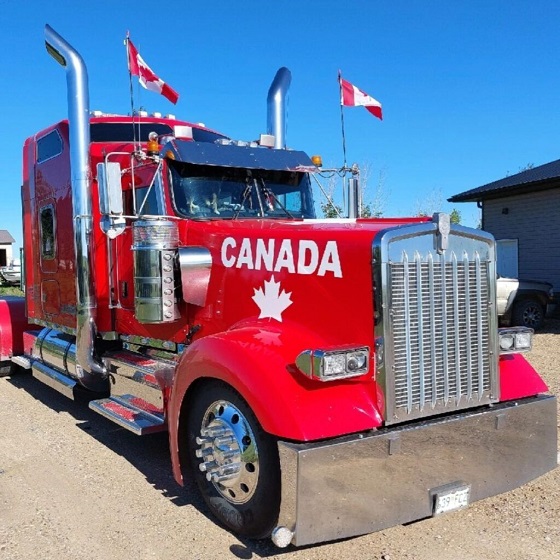
A Canadian judge has dismissed a demand from Canadian government lawyers to seize Freedom Convoy leader Chris Barber’s “Big Red” semi-truck.
On Friday, Ontario Court of Justice Judge Heather Perkins-McVey denied the Crown’s application seeking to forfeit Barber’s truck.
She ruled that the court is already “satisfied” with Barber’s sentence and taking away his very livelihood would be “disproportionate.”
“This truck is my livelihood,” said Barber in a press release sent to LifeSiteNews.
“Trying to permanently seize it for peacefully protesting was wrong, and I’m relieved the court refused to allow that to happen,” he added.
Criminal defense lawyer Marwa Racha Younes was welcoming of the ruling as well, stating, “We find it was the right decision in the circumstances and are happy with the outcome.”
John Carpay, president of the Justice Centre for Constitutional Freedoms (JCCF), said the decision is “good news for all Canadians who cherish their Charter freedom to assemble peacefully.”
READ: Freedom Convoy protester appeals after judge dismissed challenge to frozen bank accounts
“Asset forfeiture is an extraordinary power, and it must not be used to punish Canadians for participating in peaceful protest,” he added in the press release.
As reported recently by LifeSiteNews, the Canadian government claimed that Barber’s truck is an “offence-related property” relating to his involvement in the 2022 protests against Canada’s COVID mandates.
At this time, the court ruling ends any forfeiture proceedings for the time being, however Barber will continue to try and appeal his criminal conviction and house arrest sentence.
Barber’s truck, a 2004 Kenworth long-haul he uses for business, was a focal point in the 2022 protests. He drove it to Ottawa, where it was parked for an extended period of time, but he complied when officials asked him to move it.
On October 7, 2025, after a long trial, Ontario Court Justice Perkins-McVey sentenced Barber and Tamara Lich, the other Freedom Convoy leader, to 18 months’ house arrest. They had been declared guilty of mischief for their roles as leaders of the 2022 protest against COVID mandates, and as social media influencers.
Lich and Barber have filed appeals of their own against their house arrest sentences, arguing that the trial judge did not correctly apply the law on their mischief charges.
Government lawyers for the Crown have filed an appeal of the acquittals of Lich and Barber on intimidation charges.
The pair’s convictions came after a nearly two-year trial despite the nonviolent nature of the popular movement.

From LifeSiteNews
Protestor Evan Blackman’s legal team argues Trudeau’s Emergencies Act-based bank account freezes were punitive state action tied directly to protest participation.
A Freedom Convoy protester whose bank accounts were frozen by the Canadian government says a judge erred after his ruling did not consider the fact that the funds were frozen under the Emergencies Act, as grounds for a stay of proceedings.
In a press release sent out earlier this week, the Justice Centre for Constitutional Freedoms (JCCF) said that Freedom Convoy protestor Evan Blackman will challenge a court ruling in his criminal case via an appeal with the Ontario Superior Court of Justice.
“This case raises serious questions about how peaceful protest is treated in Canada and about the lasting consequences of the federal government’s unlawful use of the Emergencies Act,” noted constitutional lawyer Chris Fleury. “The freezing of protestors’ bank accounts was part of a coordinated effort to suppress dissent, and courts ought to be willing to scrutinize that conduct.”
Blackman was arrested on February 18, 2022, during the police crackdown on Freedom Convoy protests against COVID restrictions, which was authorized by the Emergencies Act (EA). The EA was put in place by former Prime Minister Justin Trudeau’s Liberal government, which claimed the protests were violent, despite no evidence that this was the case.
Blackman’s three bank accounts with TD Bank were frozen due to his participation in the Freedom Convoy, following a directive ordered by Trudeau.
As reported by LifeSiteNews, in November of this year, Blackman was convicted at his retrial even though he had been acquitted at his original trial. In 2023, Blackman’s “mischief” and “obstructing police” charges were dismissed by a judge due to lack of evidence and the “poor memory of a cop regarding key details of the alleged criminal offences.”
His retrial resulted in Blackman getting a conditional discharge along with 12 months’ probation and 122 hours of community service, along with a $200 victim fine surcharge.
After this, Blackman’s application for a stay of proceedings was dismissed by the court. He had hoped to have his stay of proceedings, under section 24(1) of the Charter of Rights and Freedoms, allowed. However, the judge ruled that the freezing of his bank accounts was legally not related to his arrest, and because of this, the stay of proceedings lacked standing.
The JCCF disagreed with this ruling, noting, it “stands in contrast to a Federal Court decision finding that the government’s invocation of the Emergencies Act was unreasonable and violated Canadians’ Charter rights, including those targeted by the financial measures used against Freedom Convoy protestors.”
As of press time, a hearing date has not been scheduled.
In 2024, Federal Court Justice Richard Mosley ruled that Trudeau was “not justified” in invoking the Emergencies Act.
In early 2022, the Freedom Convoy saw thousands of Canadians from coast to coast come to Ottawa to demand an end to COVID mandates in all forms. Despite the peaceful nature of the protest, Trudeau’s federal government enacted the EA in mid-February.
After the protesters were cleared out, which was achieved through the freezing of bank accounts of those involved without a court order as well as the physical removal and arrest of demonstrators, Trudeau revoked the EA on February 23, 2022.

There’s No Bias at CBC News, You Say? Well, OK…
Religion on trial: what could happen if Canada passes its new hate speech legislation
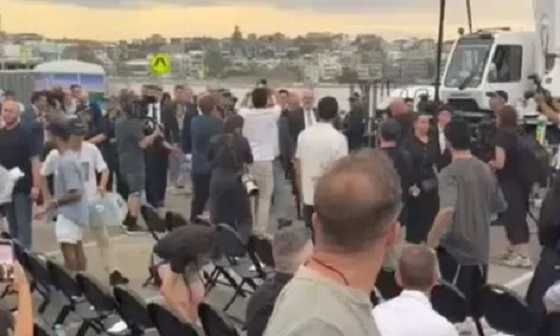
Australian PM booed at Bondi vigil as crowd screams “shame!”

Mortgaging Canada’s energy future — the hidden costs of the Carney-Smith pipeline deal
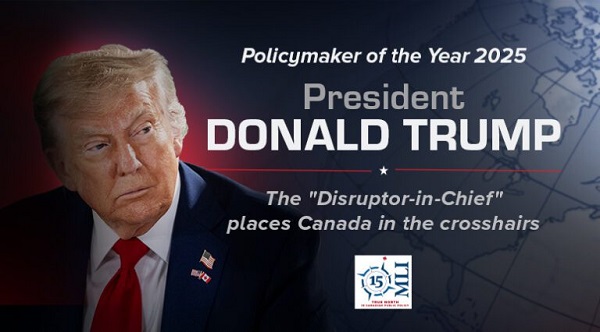
The “Disruptor-in-Chief” places Canada in the crosshairs
Canada’s EV gamble is starting to backfire
UK Police Pilot AI System to Track “Suspicious” Driver Journeys
-
 Business1 day ago
“Magnitude cannot be overstated”: Minnesota aid scam may reach $9 billion
-
 Censorship Industrial Complex22 hours ago
US Under Secretary of State Slams UK and EU Over Online Speech Regulation, Announces Release of Files on Past Censorship Efforts
-
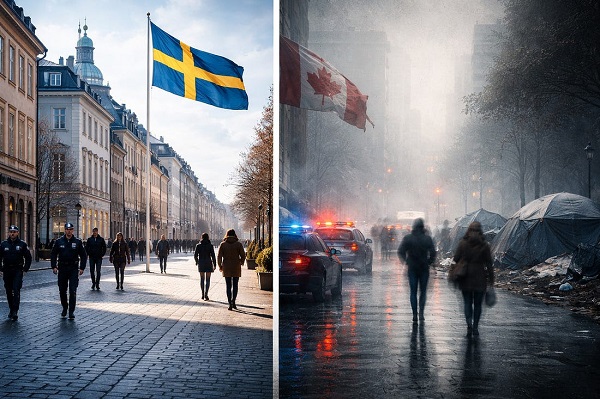 Haultain Research14 mins ago
Sweden Fixed What Canada Won’t Even Name
-
 Business2 days ago
Socialism vs. Capitalism
-
 Energy2 days ago
Canada’s debate on energy levelled up in 2025
-
 Daily Caller2 days ago
Is Ukraine Peace Deal Doomed Before Zelenskyy And Trump Even Meet At Mar-A-Lago?
-
 Business24 hours ago
Largest fraud in US history? Independent Journalist visits numerous daycare centres with no children, revealing massive scam
-
 Business5 mins ago
What Do Loyalty Rewards Programs Cost Us?