
Opinion
Feds facing the consequences of the costly carbon tax

From the Canadian Taxpayers Federation
Author: Gage Haubrich
Ottawa unveiled an unorthodox carbon tax communications strategy in Saskatchewan: threats.
Saskatchewan minister responsible for SaskEnergy, Dustin Duncan, recently announced that the Saskatchewan government will not be sending the federal government money to cover its refusal to charge Saskatchewanians the carbon tax on home heating.
In October, Saskatchewan announced that it would stop collecting the federal carbon tax on home heating in the province. The provincial government estimates this will save the average family who uses natural gas to heat their home $400 this year. That’s enough to pay for a couple trips to the grocery store, and with the current prices at the store, families need all the relief they can get.
In response, federal Minister of Energy and Natural Resources Jonathan Wilkinson shot back at Saskatchewan, announcing that because of this decision, Saskatchewanians will no longer be receiving the federal government’s carbon tax rebate.
Premier Scott Moe then pointed out the absurdity of the feds by highlighting that Saskatchewanians are still paying the carbon tax on gas, diesel and propane.
This whole mess started because Prime Minister Justin Trudeau backpedalled on his carbon tax and decided take it off heating oil. It’s a fuel primarily used in Atlantic Canada and used by almost zero Saskatchewanians.
Despite the exemption in Atlantic Canada being very similar to Premier Scott Moe’s plan in Saskatchewan, Atlantic Canadians are still on track to receive carbon tax rebates. And Quebec, which pays a lower carbon tax than the rest of the country, hasn’t faced the wrath of the federal government either.
Ottawa instead decided to pick a fight with Saskatchewan. It’s fight that won’t win them any favours in the province. At this point, it’s a good bet the Winnipeg Blue Bombers are more popular in Saskatchewan than the Liberals.
But not do outdo even himself, Wilkinson also added, “The rebate actually provides more money for most families in Saskatchewan.”
If only that were true.
Currently, the carbon tax costs 14 cents per litre of gasoline and will cost the average Saskatchewan family $410 this year, according to the Parliamentary Budget Officer.
Oh, and that’s including the rebates that Wilkinson is currently threatening to withhold.
Along with the carbon tax, Ottawa also charges a 10 cents per litre federal tax gas tax and then GST on top of the whole price of the gas, including the carbon tax. That means you are paying about two cents per litre in tax-on-tax in GST every time you fill up your vehicle.
And it’s going to get worse because the federal government plans to keep hiking up the carbon tax.
Come April 1, the carbon tax cost jumps to 17 cents per litre. By 2030, it will be 37 cents per litre and cost the average Saskatchewan household $1,723 per year.
And since almost everything we buy is delivered by a truck and then stored inside a store, the costs to transport and sell those items also goes up with the carbon tax.
After the announcement of the carbon tax heating oil exemption, five premiers, including Moe, wrote to Trudeau demanding that he take the carbon tax off all forms of home heating. It’s good to see premiers across the country take a stand, but Moe is the only one taking real action.
Instead of resorting to threats, maybe Ottawa should take the hint and scrap the carbon tax.


From the Frontier Centre for Public Policy
Drug use and violence have become common place in hospitals. Drug-addicted patients openly smoke meth and fentanyl, and inject heroin. Dealers traffic illicit drugs. Nurses are harassed, forced to work amidst the toxic fumes from drugs and can’t confiscate weapons. In short, according to one nurse, “We’ve absolutely lost control.”
“Defining deviancy down” is a cultural philosophy that emerged in the United States during the 1990s.
It refers to society’s tendency to adjust its standards of deviancy “down,” so that behaviours which were once unacceptable become acceptable. Over time, this newly- acceptable behaviour can even become society’s norm.
Of course, the converse must also be true — society looks down on those who label social behaviours “wrong,” deeming them moralistic, judgemental or simply out of touch with the realities of modern life.
Thirty years later, this philosophy is entrenched in British Columbia politics and policies. The province has become a society that cannot say “no” to harmful or wrong behaviours related to drug use. It doesn’t matter if you view drug use as a medical issue, a law-and-order issue, or both – we have lost the ability to simply say “no” to harmful or wrong behaviour.
That much has become abundantly clear over the past two weeks as evidence mounts that BC’s experiment with decriminalization and safe supply of hard drugs is only making things worse.
A recently-leaked memo from BC’s Northern Health Authority shows the deleterious impact these measures have had on BC’s hospitals.
The memo instructs staff at the region’s hospitals to tolerate and not intervene with illegal drug use by patients. Apparently, staff should not be taking away any drugs or personal items like a knife or other weapons under four inches long. Staff cannot restrict visitors even if they are openly bringing illicit drugs into the hospital and conducting their drug transactions in the hallways.
The public was quite rightly outraged at the news and BC’s Health Minister Adrian Dix quickly attempted to contain the mess by saying that the memo was outdated and poorly worded.
But his facile excuses were quickly exposed by publication of the very clearly worded memo and by nurses from across the province who came forward to tell their stories of what is really happening in our hospitals.
The President of the BC Nurses Union, Adriane Gear, said the issue was “widespread” and “of significant magnitude.” She commented that the problems in hospitals spiked once the province decriminalized drugs. In a telling quote, she said, “Before there would be behaviours that just wouldn’t be tolerated, whereas now, because of decriminalization, it is being tolerated.”
Other nurses said the problem wasn’t limited to the Northern Health Authority. They came forward (both anonymously and openly) to say that drug use and violence have become common place in hospitals. Drug-addicted patients openly smoke meth and fentanyl, and inject heroin. Dealers traffic illicit drugs. Nurses are harassed, forced to work amidst the toxic fumes from drugs and can’t confiscate weapons. In short, according to one nurse, “We’ve absolutely lost control.”
People think that drug policies have no impact on those outside of drug circles – but what about those who have to share a room with a drug-smoking patient?
No wonder healthcare workers are demoralized and leaving in droves. Maybe it isn’t just related to the chaos of Covid.
The shibboleth of decriminalization faced further damage when Fiona Wilson, the deputy chief of Vancouver’s Police Department, testified before a federal Parliamentary committee to say that the policy has been a failure. There have been more negative impacts than positive, and no decreases in overdose deaths or the overdose rate. (If such data emerged from any other healthcare experiment, it would immediately be shut down).
Wison also confirmed that safe supply drugs are being re-directed to illegal markets and now account for 50% of safe supply drugs that are seized. Her words echoed those of BC’s nurses when she told the committee that the police, “have absolutely no authority to address the problem of drug use.”
Once Premier David Eby and Health Minister Adrian Dix stopped denying that drug use was occurring in hospitals, they continued their laissez-faire approach to illegal drugs with a plan to create “safe consumption sites” at hospitals. When that lacked public appeal, Mr. Dix said the province would establish a task force to study the issue.
What exactly needs to be studied?
The NDP government appears to be uninformed, at best, and dishonest, at worst. It has backed itself into a corner and is now taking frantic and even ludicrous steps to legitimize its experimental policy of decriminalization. The realities that show it is not working and is creating harm towards others and toward institutions that should be a haven for healing.
How quickly we have become a society that lacks the moral will – and the moral credibility – to just to say “no.”
Susan Martinuk is a Senior Fellow with the Frontier Centre for Public Policy and author of Patients at Risk: Exposing Canada’s Health-care Crisis.
From LifeSiteNews
A recent Nanos research survey found that ‘Pessimism and anger remain the top emotions Canadians say best describe their views of the federal government in Ottawa.’
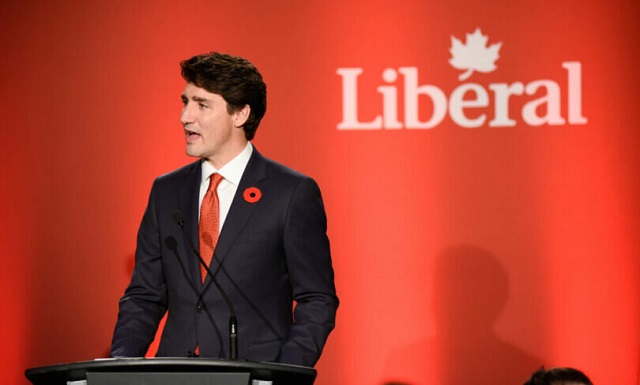
Canadians’ anger towards Prime Minister Justin Trudeau and his Liberal government has reached a record high, according to a new poll.
According to a national survey published by Nanos Research this month, 31% of Canadians feel anger and pessimism towards the Trudeau government, which marks an all-time low in satisfaction for government leadership.
“Which of the following feelings best describes your views of the federal government in Ottawa?” the poll questioned.
In addition to the 31% feeling angry and pessimistic respectively, 11% feel uninterested, while only 1% and 10% feel satisfaction and optimism, respectively. 6% were unsure of their feelings towards the Trudeau government.
“Feelings of anger toward the federal government have increased or held steady in every region, with the largest increases among residents of Quebec (December: 12%; March: 24%) and Atlantic Canada (December: 21%; March: 38%). Pessimism and anger remain the top emotions Canadians say best describe their views of the federal government in Ottawa,” the research found.
In recent months, Trudeau’s popularity has plummeted, with polls projecting a massive Conservative victory in the upcoming election.
Trudeau’s popularity has been falling and his government has been embroiled in scandal after scandal, one of the latest being a federal court ruling that the prime minister’s use of the Emergencies Act to end the 2022 Freedom Convoy was “not justified.”
Even top Liberal party stalwarts have called for him to resign.
Indeed, Canadians anger and dissatisfaction with Trudeau has become a topic of conversation on many social media platforms, with Canadians detailing how the Trudeau government has made their life less affordable.
Numerous videos are being uploaded to social media by Canadians explaining that they struggling to make ends meet amid the rising cost of living and Trudeau’s ever-increasing carbon tax, while many immigrants are telling others not to come to Canada.

Higher Capital Gains Taxes cap off a loser federal budget

A Wealth-Creating Way of Reducing Global CO2 Emissions
Scotland’s crazy anti-hate law may be sign of things to come here

Inquiry shows Canadian gov’t agencies have spent $10 million on social media ads for COVID jabs
UN attacks stay-at-home motherhood as ‘gender inequality’
Federal government’s ‘fudget budget’ relies on fanciful assumptions of productivity growth
Reflections on Earth Day

-
 Business2 days ago
UN plastics plans are unscientific and unrealistic
-
 Business2 days ago
Taxpayers criticize Trudeau and Ford for Honda deal
-
 Fraser Institute2 days ago
Canadians should decide what to do with their money—not politicians and bureaucrats
-
 Addictions2 days ago
British Columbia should allow addicts to possess even more drugs, federal report suggests
-
 Alberta2 days ago
Alberta rejects unconstitutional cap on plastic production
-
 Censorship Industrial Complex2 days ago
Australian politicians attack Elon Musk for refusing to remove video of Orthodox bishop’s stabbing
-
 Alberta2 days ago
Alberta official reveals ‘almost all’ wildfires in province this year have been started by humans
-
 Alberta2 days ago
Political parties will be part of municipal elections in Edmonton and Calgary pilot projects