
COVID-19
Federal appeals court rejects challenge against Canada’s COVID vaccine travel mandate as ‘moot’


From LifeSiteNews

People’s Party of Canada leader Maxime Bernier, former Newfoundland and Labrador premier Brian Peckford, and eight others contended citizens’ mobility charter rights were violated, but the case was dismissed because the restrictions are no longer in place.
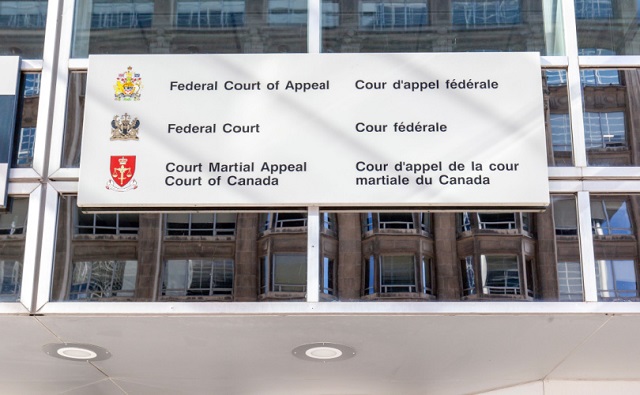
The Canadian Federal Court of Appeal dismissed as “moot” a legal challenge initiated against the federal government of Prime Minister Justin Trudeau over its COVID jab travel mandates that banned the vaccine free from travel.
The legal challenge was initiated by People’s Party of Canada leader Maxime Bernier, former Premier of Newfoundland and Labrador Brian Peckford, and eight others who said Trudeau’s mandates violated one’s mobility charter rights.
In a judgment issued November 9, Justice George R. Locke of the appeals court, on behalf of two other judges, ruled that the case was “moot for lack of live controversy” as the COVID travel jab mandates are no longer in effect.
“For the foregoing reasons, I would dismiss all of the present appeals,” the judge wrote.
Bernier and Peckford’s lawyers had argued that their case had merit, despite the travel COVID jab mandates being gone, as they could be reintroduced at a moment’s notice.
The appeals court did note that while COVID travel vaccine mandates may be reintroduced in the future, this was “highly speculative.”
Bernier, who was a strong supporter of the Freedom Convoy and did not get the COVID shots, said he was “very disappointed” in the court ruling but vowed to continue the fight against the “unjust” mandates.
“I am very disappointed but not at all surprised by this decision considering the types of slanted questions and comments that the judges made during our hearing a month ago,” Bernier wrote November 9 on X (formerly Twitter).
“I will speak to my colleague Brian Peckford and the other appellants to determine our next step. I will continue to do everything I can to fight these unjust travel mandates and make sure they are never implemented again.”
In February 2022, Bernier, along with Peckford, and eight others filed a court challenge to COVID mandates in place at the time that banned the vaccine-free from air travel. Bernier and Peckford had the help of the Justice Centre for Constitutional Freedoms (JCCF).
The legal challenge made headlines as Peckford is the last living signatory to the Canadian Charter of Rights and Freedoms, which came into force in 1982.
In November 2021, the Trudeau government introduced COVID jab travel mandates, which remained in place until June 2022.
In October 2022, the Canadian federal court ruled Bernier and Peckford’s and the others court case as “Moot” in light of the federal government dropping COVID mandates in the same month.
Later, in April 2023, Bernier and Peckford, with the help of the JCCF, along with the others in the case filed an appeal in the “mootness” ruling.
JCCF said case was important as COVID travel jab mandates were a ‘Egregious infringement of Canadians’ mobility rights’
Last month, the Federal Court of Appeal in Ottawa heard Bernier and Peckford’s and the others’ court case. JCCF president John Carpay noted at the time that the case was important as well as unique.
“There has never been a more egregious infringement of Canadians’ mobility rights than what occurred due to the unconstitutional and unlawful travel vaccine mandates,” Carpay observed.
“For the Federal Court to find that it is not in the public interest to determine whether the Federal Government acted lawfully in prohibiting 5 million Canadians from flying across the country and internationally to see family members is a grave injustice that the Federal Court of Appeal ought to remedy.”
In September 2022, Bernier thanked all Canadian “freedom fighters” who protested against COVID mandates of all kinds after a federal travel jab mandate for air travel was dropped.
Bernier, who is a former MP and cabinet minister with the Conservative Party of Canada (CPC) before creating the PPC in 2018, was one of the most outspoken politicians against the COVID mandates. He would frequently criticize his former party for not speaking out against the mandates.
Eventually, the CPC under its new leader Pierre Poilievre, but after the mandates had been lifted, began to speak out against Trudeau’s mandates.
A recent bill championed by Conservative Party of Canada (CPC) leader Pierre Poilievre that would have given Canadians back their “bodily autonomy” by banning future jab mandates was voted down yesterday Trudeau’s Liberals and all other parties rejected it.
In October 2021, Trudeau announced unprecedented COVID-19 jab mandates for all federal workers and those in the transportation sector and said the unjabbed would no longer be able to travel by air, boat, or train both domestically and internationally.
This policy resulted in thousands losing their jobs or being placed on leave for non-compliance. It also trapped “unvaccinated” Canadians in the country.
During the so-called COVID pandemic, Trudeau referred to those who chose not to get the experimental COVID shots as terrible people.
In 2021, Trudeau said Canadians “vehemently opposed to vaccination” do “not believe in science,” are “often misogynists, often racists,” and even questioned whether Canada should continue to “tolerate these people.”

From LifeSiteNews
A judge ruled that the Ontario Court of Justice is already ‘satisfied’ with Chris Barber’s sentence and taking away his very livelihood would be ‘disproportionate.’
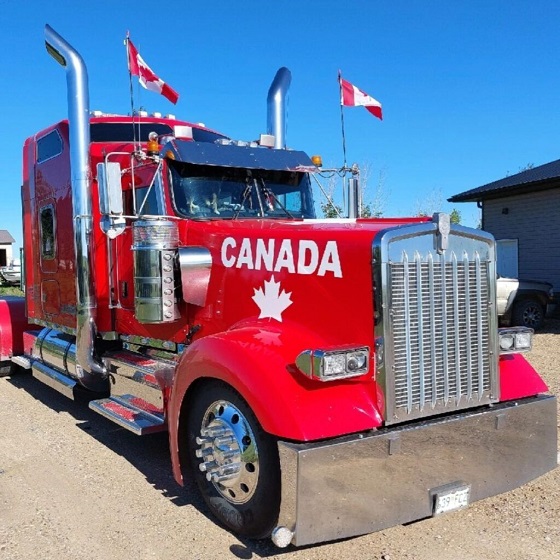
A Canadian judge has dismissed a demand from Canadian government lawyers to seize Freedom Convoy leader Chris Barber’s “Big Red” semi-truck.
On Friday, Ontario Court of Justice Judge Heather Perkins-McVey denied the Crown’s application seeking to forfeit Barber’s truck.
She ruled that the court is already “satisfied” with Barber’s sentence and taking away his very livelihood would be “disproportionate.”
“This truck is my livelihood,” said Barber in a press release sent to LifeSiteNews.
“Trying to permanently seize it for peacefully protesting was wrong, and I’m relieved the court refused to allow that to happen,” he added.
Criminal defense lawyer Marwa Racha Younes was welcoming of the ruling as well, stating, “We find it was the right decision in the circumstances and are happy with the outcome.”
John Carpay, president of the Justice Centre for Constitutional Freedoms (JCCF), said the decision is “good news for all Canadians who cherish their Charter freedom to assemble peacefully.”
READ: Freedom Convoy protester appeals after judge dismissed challenge to frozen bank accounts
“Asset forfeiture is an extraordinary power, and it must not be used to punish Canadians for participating in peaceful protest,” he added in the press release.
As reported recently by LifeSiteNews, the Canadian government claimed that Barber’s truck is an “offence-related property” relating to his involvement in the 2022 protests against Canada’s COVID mandates.
At this time, the court ruling ends any forfeiture proceedings for the time being, however Barber will continue to try and appeal his criminal conviction and house arrest sentence.
Barber’s truck, a 2004 Kenworth long-haul he uses for business, was a focal point in the 2022 protests. He drove it to Ottawa, where it was parked for an extended period of time, but he complied when officials asked him to move it.
On October 7, 2025, after a long trial, Ontario Court Justice Perkins-McVey sentenced Barber and Tamara Lich, the other Freedom Convoy leader, to 18 months’ house arrest. They had been declared guilty of mischief for their roles as leaders of the 2022 protest against COVID mandates, and as social media influencers.
Lich and Barber have filed appeals of their own against their house arrest sentences, arguing that the trial judge did not correctly apply the law on their mischief charges.
Government lawyers for the Crown have filed an appeal of the acquittals of Lich and Barber on intimidation charges.
The pair’s convictions came after a nearly two-year trial despite the nonviolent nature of the popular movement.

From LifeSiteNews
Protestor Evan Blackman’s legal team argues Trudeau’s Emergencies Act-based bank account freezes were punitive state action tied directly to protest participation.
A Freedom Convoy protester whose bank accounts were frozen by the Canadian government says a judge erred after his ruling did not consider the fact that the funds were frozen under the Emergencies Act, as grounds for a stay of proceedings.
In a press release sent out earlier this week, the Justice Centre for Constitutional Freedoms (JCCF) said that Freedom Convoy protestor Evan Blackman will challenge a court ruling in his criminal case via an appeal with the Ontario Superior Court of Justice.
“This case raises serious questions about how peaceful protest is treated in Canada and about the lasting consequences of the federal government’s unlawful use of the Emergencies Act,” noted constitutional lawyer Chris Fleury. “The freezing of protestors’ bank accounts was part of a coordinated effort to suppress dissent, and courts ought to be willing to scrutinize that conduct.”
Blackman was arrested on February 18, 2022, during the police crackdown on Freedom Convoy protests against COVID restrictions, which was authorized by the Emergencies Act (EA). The EA was put in place by former Prime Minister Justin Trudeau’s Liberal government, which claimed the protests were violent, despite no evidence that this was the case.
Blackman’s three bank accounts with TD Bank were frozen due to his participation in the Freedom Convoy, following a directive ordered by Trudeau.
As reported by LifeSiteNews, in November of this year, Blackman was convicted at his retrial even though he had been acquitted at his original trial. In 2023, Blackman’s “mischief” and “obstructing police” charges were dismissed by a judge due to lack of evidence and the “poor memory of a cop regarding key details of the alleged criminal offences.”
His retrial resulted in Blackman getting a conditional discharge along with 12 months’ probation and 122 hours of community service, along with a $200 victim fine surcharge.
After this, Blackman’s application for a stay of proceedings was dismissed by the court. He had hoped to have his stay of proceedings, under section 24(1) of the Charter of Rights and Freedoms, allowed. However, the judge ruled that the freezing of his bank accounts was legally not related to his arrest, and because of this, the stay of proceedings lacked standing.
The JCCF disagreed with this ruling, noting, it “stands in contrast to a Federal Court decision finding that the government’s invocation of the Emergencies Act was unreasonable and violated Canadians’ Charter rights, including those targeted by the financial measures used against Freedom Convoy protestors.”
As of press time, a hearing date has not been scheduled.
In 2024, Federal Court Justice Richard Mosley ruled that Trudeau was “not justified” in invoking the Emergencies Act.
In early 2022, the Freedom Convoy saw thousands of Canadians from coast to coast come to Ottawa to demand an end to COVID mandates in all forms. Despite the peaceful nature of the protest, Trudeau’s federal government enacted the EA in mid-February.
After the protesters were cleared out, which was achieved through the freezing of bank accounts of those involved without a court order as well as the physical removal and arrest of demonstrators, Trudeau revoked the EA on February 23, 2022.

The “Disruptor-in-Chief” places Canada in the crosshairs

UK Police Pilot AI System to Track “Suspicious” Driver Journeys
End Supply Management—For the Sake of Canadian Consumers

Judge Declares Mistrial in Landmark New York PRC Foreign-Agent Case

Canadian government launches trial version of digital ID for certain licenses, permits
Alberta Next Panel calls to reform how Canada works

World-leading biochemist debunks evolutionary theory
-
 Haultain Research1 day ago
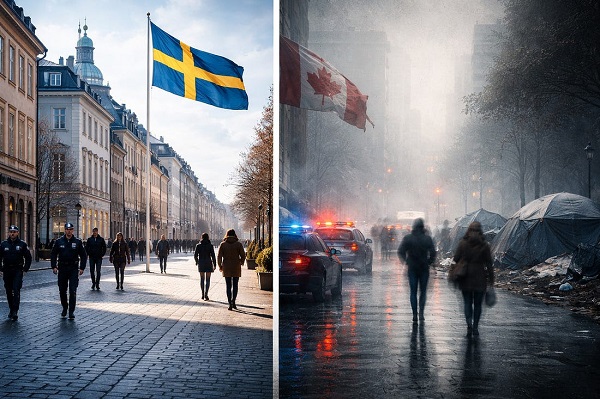
Sweden Fixed What Canada Won’t Even Name
-
 Censorship Industrial Complex2 days ago
US Under Secretary of State Slams UK and EU Over Online Speech Regulation, Announces Release of Files on Past Censorship Efforts
-
 Business1 day ago
What Do Loyalty Rewards Programs Cost Us?
-
 Business14 hours ago
Land use will be British Columbia’s biggest issue in 2026
-
 Energy15 hours ago
Why Japan wants Western Canadian LNG
-
 Business11 hours ago
Mainstream media missing in action as YouTuber blows lid off massive taxpayer fraud
-
 Business11 hours ago
Stripped and shipped: Patel pushes denaturalization, deportation in Minnesota fraud
-
 Energy3 hours ago
Rulings could affect energy prices everywhere: Climate activists v. the energy industry in 2026