
Business
Fed executive pay rises $571 million since 2015



From the Canadian Taxpayers Federation
Author: Ryan Thorpe

Executive compensation in the federal government spiked by more than half-a-billion dollars since 2015, according to access-to-information records obtained by the Canadian Taxpayers Federation.
From 2015 to 2022, executive compensation across federal departments and agencies rose from $1.38 billion to $1.95 billion – an increase of 41 per cent. Meanwhile, the number of federal executives grew from 7,138 to 9,371 – an increase of 31 per cent.
Inflation increased by 19.4 per cent between 2015 and 2022, according to Statistics Canada data.
The average annual compensation among federal executives also rose from $193,600 to $208,480 during that period.
“Taxpayers need help with the rising cost of living, not higher taxes to pay for more highly paid paper-pushers,” said Franco Terrazzano, CTF Federal Director. “It’s a safe bet that most Canadians struggling with grocery bills, heating bills and mortgage payments aren’t losing sleep worrying that government executives aren’t paid enough, so why is the government ballooning its c-suite?”
Table: Federal executive compensation, 2015 to 2022
|
Year (as of March) |
Number of executives |
Executive compensation |
|
2015 |
7,138 |
$1,381,987,936 |
|
2016 |
7,181 |
$1,406,613,900 |
|
2017 |
7,209 |
$1,410,973,156 |
|
2018 |
7,438 |
$1,460,468,760 |
|
2019 |
7,863 |
$1,555,972,489 |
|
2020 |
8,202 |
$1,692,682,269 |
|
2021 |
8,837 |
$1,836,893,134 |
|
2022 |
9,371 |
$1,953,667,640 |
The spike in federal c-suite pay follows years of underwhelming performance results across departments and agencies.
In 2022-23, federal departments hit just 50 per cent of their performance targets, according to data from the Treasury Board of Canada Secretariat. Each year from 2018 through 2021, federal departments met less than half of their performance targets.
“Less than 50 per cent of performance targets are consistently met within the same year,” according to a 2023 report from the Parliamentary Budget Officer, the government’s independent budget watchdog.
About 90 per cent of federal executives get a bonus each year, according to records obtained by the CTF. The feds handed out $202 million in bonuses in 2022, with the average bonus among executives being $18,252.
The feds handed out $1.3 billion in bonuses since 2015. The annual cost to taxpayers for federal bonuses has risen by 46 per cent during that time.
The number of employees receiving a six-figure annual salary has more than doubled under Prime Minister Justin Trudeau.
A total of 102,761 federal bureaucrats received a six-figure salary in 2022, according to access-to-information records obtained by the CTF. When Trudeau came to power in 2015, 43,424 federal bureaucrats were collecting a six-figure salary.
The feds also handed out more than 800,000 raises between 2020 and 2022. With the feds employing about 400,000 bureaucrats, that means multiple employees received more than one raise in recent years.
Under the Trudeau government, the size of the federal bureaucracy has spiked by about 40 per cent, with more than 98,000 new hires.
“In the last couple years, taxpayers have paid for tens of thousands of new bureaucrats, hundreds of thousands of pay raises and hundreds of millions in bonuses, and we’re still getting poor performance from the bureaucracy,” Terrazzano said. “Trudeau needs to take air out of the ballooning bureaucracy, and he should start by reining in the c-suite.”



IMPACT-se just released their Review of the 2025-2026 Palestinian Authority School Curriculum (Grades 1-12). They reviewed 290 text books and 71 teacher guides (both printed and digital) currently in use by schools charged with educating Palestinian children. The results were unambiguous:
“The review finds that the 2025–2026 Palestinian Authority curriculum continues to systematically violate UNESCO principles and educational standards. Published in September 2025, the curriculum incites antisemitism and violence, promotes jihad and martyrdom, glorifies terrorism, rejects peacemaking and the two-state solution, and erases Israel from maps. It has not been substantively modified since the 2020–2021 school year, maintaining the same ideological framework first established in the 2016 reform cycle.”
In other words, the glorification of violence and deep racial hatred is, by design, woven into the fabric of every topic and virtually every lesson Palestinian children are taught.
The offensive examples were hardly rare exceptions throughout those 361 books. There were, for example:
- 50 examples (taking up a full 70 pages in the report) depicting Israelis or Jews as demonic or motiveless aggressors
- 47 examples of erasure of Israel from maps and language (declaring Palestine “from river to sea”)
- 56 examples of the encouragement of martyrdom and violent jihad
- 12 examples of the overt politicization of science and math
In addition, since 2016, 29 references to peace agreements, Israel, and Jews were removed from PA curriculum texts.
Overall, around 60 percent of the report’s examples come from material aimed at grades 9-11. Nevertheless, 17 examples of indoctrination (around 4 percent of the total) came from grades 1-4.
But what does all that have to do with Canada? Well, Canada has been a steady and reliable funder for UNRWA (United Nations Relief and Works Agency for Palestine Refugees in the Near East), UNICEF (United Nations Children’s Fund), UNESCO (United Nations Educational, Scientific and Cultural Organization), and the World Bank’s provision of educational services to Palestinians.
So what? Don’t all Western nations provide the same support? Not exactly.
- A May 2025 resolution adopted by the European Parliament demanded that EU financial assistance be made conditional on removal of hate material, and urged full compliance with standards of peace and tolerance for education.
- The U.K. has, in past years, cut or reduced its funding to UNRWA over concerns about incitement in educational textbooks.
- The U.S. hasn’t provided any support for UNRWA since the Biden administration paused funding in January, 2024.
- It seems that both Sweden and the Netherlands have either cut or are phasing out their UNRWA funding.
But in May 2024, Canada committed to $65 million in new funding – which follows a brief and meaningless “pause” in UNRWA funding (where no scheduled payments were actually interrupted). That brings the funding total since 2016 to $259 million. And there’s no public record of any of that money being conditional on changes to educational textbooks.
The Global Affairs Canada officials who make these spending decisions are the ones responsible for applying official government policy. And the message driving that policy is pretty clear (pro forma “antisemitism is not who we are” press releases notwithstanding). The Government of Canada is absolutely down with pouring millions into the promotion of race-driven violence.
Is Global Affairs Canada Wasting Your Tax Dollars Abroad?

It seems like forever since I last wrote about program spending at Global Affairs Canada (GAC). I’m not aware of any big-picture changes to department policy in the meantime, but their Project Browser tool is still there – and it’s still a welcome resource for transparency.
How Does UNRWA Spend the Funding it Receives From the Canadian Government?

The government of Canada – through Global Affairs Canada – has long been among the major financial supporters of The United Nations Relief and Works Agency for Palestine Refugees in the Near East (UNRWA). The 75 year-old United Nations agency has a yearly budget that’s grown to more than 900 million US dollars, and has long been accused of antisemitism,…
Paying for Bad Government Choices

Who picks up the tab when budgetary bets go horribly wrong? Taxpayers, of course. Duh.
From the Frontier Centre for Public Policy
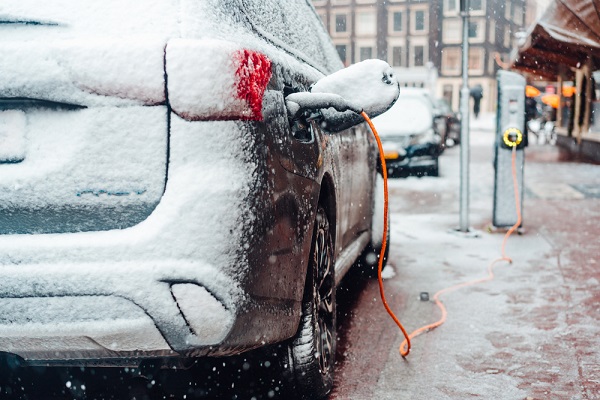
At what point does Ottawa admit its EV plan isn’t working?
Electric vehicles produce more pollution than the gas-powered cars they’re replacing.
This revelation, emerging from life-cycle and supply chain audits, exposes the false claim behind Ottawa’s more than $50 billion experiment. A Volvo study found that manufacturing an EV generates 70 per cent more emissions than building a comparable conventional vehicle because battery production is energy-intensive and often powered by coal in countries such as China. Depending on the electricity grid, it can take years or never for an EV to offset that initial carbon debt.
Prime Minister Mark Carney paused the federal electric vehicle (EV) mandate for 2026 due to public pressure and corporate failures while keeping the 2030 and 2035 targets. The mandate requires 20 per cent of new vehicles sold in 2026 to be zero-emission, rising to 60 per cent in 2030 and 100 per cent in 2035. Carney inherited this policy crisis but is reluctant to abandon it.
Industry failures and Trump tariffs forced Ottawa’s hand. Northvolt received $240 million in federal subsidies for a Quebec battery plant before filing for bankruptcy. Lion Electric burned through $100 million before announcing layoffs. Arrival, a U.K.-based electric van and bus manufacturer, collapsed entirely. Stellantis and LG Energy Solution extracted $15 billion for Windsor. Volkswagen secured $13 billion for St. Thomas.
The federal government committed more than $50 billion in subsidies and tax credits to prop up Canada’s EV industry. Ottawa defended these payouts as necessary to match the U.S. Inflation Reduction Act, which offers major incentives for EV and battery manufacturing. That is twice Manitoba’s annual operating budget. Every Manitoban could have had a two-year tax holiday with the public money Ottawa wasted on EVs.
Even with incentives, EVs reached only 15 per cent of new vehicle sales in 2024, far short of the mandated levels for 2026 and 2030. When federal subsidies ended in January 2025, sales collapsed to nine per cent, revealing the true level of consumer demand. Dealer lots overflowed with unsold inventory. EV sales also slowed in the U.S. and Europe in 2024, showing that cooling demand is a broader trend.
As economist Friedrich Hayek observed, “The curious task of economics is to demonstrate to men how little they really know about what they imagine they can design.” Politicians and bureaucrats cannot know what millions of Canadians know about their own needs. When federal ministers mandate which vehicles Canadians must buy and which companies deserve billions, they substitute the judgment of a few hundred officials for the collective wisdom of an entire market.
Bureaucrats draft regulations that determine the vehicles Canadians must purchase years from now, as if they can predict technology and consumer preferences better than markets.
Green ideology provided perfect cover. Invoke a climate emergency and fiscal responsibility vanishes. Question more than $50 billion in subsidies and you are labelled a climate denier. Point out the environmental costs of battery production, and you are accused of spreading misinformation.
History repeatedly teaches that central planning always fails. Soviet five-year plans, Venezuela’s resource nationalization and Britain’s industrial policy failures all show the same pattern. Every attempt to run economies from political offices ends in misallocation, waste and outcomes opposite to those promised. Concentrated political power cannot ever match the intelligence of free markets responding to real prices and constraints.
Markets collect information that no central planner can access. Prices signal scarcity and value. Profits and losses reward accuracy and punish error. When governments override these mechanisms with mandates and subsidies, they impair the information system that enables rational economic decisions.
The EV mandate forced a technological shift and failed. Billions in subsidies went to failing companies. Taxpayers absorbed losses while corporations walked away. Workers lost their jobs.
Canada needs a full repeal of the EV mandate and a retreat from PMO planners directing market decisions. The law must be struck, not paused. The contrived 2030 and 2035 targets must be abandoned.
Markets, not cabinet ministers, must determine what technologies Canadians choose.
Marco Navarro-Genie is vice-president of research at the Frontier Centre for Public Policy and co-author, with Barry Cooper, of Canada’s COVID: The Story of a Pandemic Moral Panic (2023).


Tech Mogul Gives $6 Billion To 25 Million Kids To Boost Trump Investment Accounts

The dangers of mRNA vaccines explained by Dr. John Campbell

‘Trouble in Toyland’ report sounds alarm on AI toys

Canadians will soon be versed in massive West Coast LPG mega-project

Learning the Truth about “Children’s Graves” and Residential Schools is More Important than Ever

Recent price declines don’t solve Toronto’s housing affordability crisis

New era of police accountability
-
 illegal immigration2 days ago
While Trump has southern border secure, hundreds of thousands of illegal immigrants still flooding in from Canada
-
 Censorship Industrial Complex2 days ago
Canadian bishops condemn Liberal ‘hate speech’ proposal that could criminalize quoting Scripture
-
 Energy1 day ago
Senate votes to reopen Alaska Coastal Plain to energy leasing
-
 Censorship Industrial Complex1 day ago
Frances Widdowson’s Arrest Should Alarm Every Canadian
-
 COVID-192 days ago
Canadian Health Department funds study to determine effects of COVID lockdowns on children
-
Automotive12 hours ago
Canada’s EV Mandate Is Running On Empty
-
 Daily Caller1 day ago
Trump Orders Review Of Why U.S. Childhood Vaccination Schedule Has More Shots Than Peer Countries
-
 Alberta1 day ago
A Memorandum of Understanding that no Canadian can understand