
Alberta
Conspiracy charges dropped, Chris Lysak, Jerry Morin released after agreeing to plea deals


From the Frontier Centre for Public Policy
By Ray McGinnis
” the Crown dropped conspiracy to commit murder of police, and mischief charges, against both Lysak and Morin. The Crown got a plea deal from Lysak and Morin on minor firearms charges. These charges the two pled guilty to were never part of the original indictment that prompted their arrests. “
Two of the four men at the Coutts blockade arrested in February 2022, accused of conspiracy to commit murder and mischief – Chris Lysak and Jerry Morin – are free men. They were released on February 6, 2024. They remained in custody in remand centres for 723 days. While in custody, Morin was in solitary confinement for 74 days.
After relying on legal aid lawyers with little results, in November 2023 Lysak crowdfunded for better counsel. His new lawyer Daniel Song brought a section 8 charter application to examine the Crown’s case against his client. Suddenly, the Crown dropped conspiracy to commit murder of police, and mischief charges, against both Lysak and Morin. The Crown got a plea deal from Lysak and Morin on minor firearms charges. These charges the two pled guilty to were never part of the original indictment that prompted their arrests.
Lysak and Morin are now reunited with their families and will begin the long journey to rebuild their lives. Both are fathers. Morin is a lineman and Chris Lysak is an electrician.
Lysak pled guilty to improper storage of a firearm which was properly registered under his name and legally purchased. The Crown also dropped charges against Chris Lysak for uttering threats.
Though the RCMP released a shocking photo of a stash of weapons around a table with an RCMP cruiser in the background, the majority of weapons on display turned out to have no connection to any of the four men arrested on conspiracy to commit murder charges. The RCMP photo was taken before Jerry Morin was arrested west of Calgary around noon on February 14, 2022. Morin was on the way to work for a rancher on a farm when he was arrested by a SWAT team.
These men were in deteriorating health and facing financial ruin. And the Crown knew this. Once they pled guilty to the minor charges, they were free men.
Dropping conspiracy to commit murder of police officer charges by the Crown is significant. News of the arrests was pointed to in the Rouleau Report as key to its justifying invocation of the Emergencies Act on February 14, 2022, by the Liberal government. Now that these charges are dropped it appears the Crown and the RCMP never had evidence to convict the accused of conspiracy to commit murder. Instead, they put them through gruelling custody in remand centres, hoping to break them. The decision to deny them bail for nearly two years was politically motivated. They were deemed too dangerous to be granted bail on one day. Then on the next they were released and deemed no threat to the public.
Lysak and Morin refused earlier offers to plea guilty. But after two years the strain of the whole ordeal led them to agree to a coerced confession to new charges in order to survive.
The plea deal was struck in a courtroom outside of the courtroom where the pre-trial motions were set to begin at 10 AM on February 6. The dropping of serious charges and confession to new minor firearms charges, and release of these two men came as a surprise.
A friend of Chris Lysak, Fort Macleod councillor Marco Van Huigenbos, said “723 days pretrial is a travesty of justice in Canada, and it has to be treated as such. There has to be a full inquiry into these prosecutions.”
Is all that is required to deny bail for those accused of serious crimes to argue that their release will undermine confidence in the justice system? The justice system is not immune from corruption or politicization. What confidence can citizens have in it? It appears lawfare is alive and well in Canada. The case of the Coutts Four shows that the Crown have the power to lay serious charges against citizens and let them linger for years in custody without bail or trial.
Is all that is required to make the Crown walk back charges of conspiracy to commit murder a smart lawyer who knows how to make a section 8 charter application?
On January 15 Chris Carbert was denied bail for the second time. The lawyer who successfully represented Chris Lysak, Daniel Song, is now being considered to represent Chris Carbert (along with his existing lawyer) at the upcoming February 20 court hearing. The remaining ‘Coutts Two’ – Chris Carbert and Tony Olienick – will be at that hearing. Olienick has just hired a new lawyer who needs to get up to speed on the details of the case.
Is the Crown now proceeding with a charge of conspiracy to commit murder against Carbert and Olienick, when it has conceded that Lysak and Morin were not part of a conspiracy? Carbert and Olienick are scheduled to stand trial in June.
Ray McGinnis is a senior fellow with the Frontier Centre for Public Policy. His forthcoming book is Unjustified: The Emergencies Act and the Inquiry that Got It Wrong
Watch Ray McGinnis on Leaders on the Frontier here. September 27, 2023 (70 minutes)


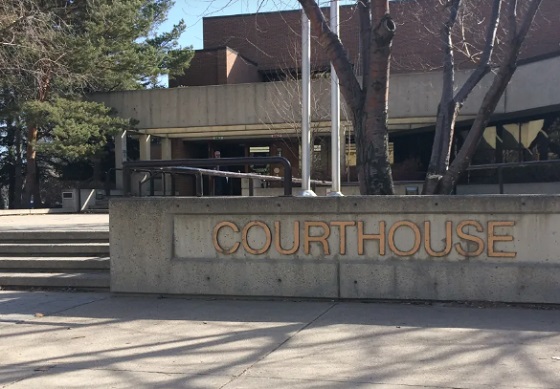
Company sentenced for workplace fatality
An oilfield equipment supplier will pay $360,000 related to a workplace fatality.
On Feb. 21, 2024 in the Red Deer Court of Justice, Isolation Equipment Services Inc. pleaded guilty to one charge under the Occupational Health and Safety (OHS) Code for failing to take measures to eliminate the potential danger of equipment or material that was dislodged or moved. The Crown withdrew 28 other charges under OHS legislation. The company was sentenced on April 24.
The charges stem from an incident on a Red Deer construction site on Jan. 13, 2022. A worker operating an overhead crane was positioning a valve bonnet when the equipment released from the rigging, striking and pinning the worker. The worker sustained fatal injuries.
The company will pay $360,000 in total penalties, including a $1,000 fine. Under a creative sentence, $359,000 will be paid to Energy Safety Canada to develop supervisor and competency programs targeting those who work with new, young and inexperienced workers.
The Occupational Health and Safety Act provides a creative sentence option in which funds that would otherwise be paid as fines are directed to an organization or project to improve or promote workplace health and safety.
Both the company and the Crown have up to 30 days to appeal the conviction or penalties.
Alberta’s OHS laws set basic health and safety rules for workplaces across the province. They provide guidance for employers to help them ensure their workplaces are as healthy and safe as possible while providing rights and protections for workers. Charges under OHS laws may be laid when failing to follow the rules results in a workplace fatality or serious injury.
Quick facts
- Jobs, Economy and Trade does not provide sentence documents. These are available through the Red Deer Court of Justice.
- Victim fine surcharges apply to fines payable to the Crown. The $1,000 fine in this case includes the 20 per cent surcharge. Surcharges are not applied to payments to other entities, in this case Energy Safety Canada, under creative sentences.
- Fatality investigation summaries are posted to alberta.ca/fatality-
investigation-reports 60 to 90 days after court proceedings conclude.
Related information

News release from the Alberta Law Enforcement Response Team (ALERT)
Calgary school principal charged
A Calgary school principal has been charged with offences relating to child sexual abuse materials following an investigation by ALERT’s Internet Child Exploitation unit.
ICE charged Bruce Campbell on April 16, 2024 with possessing and accessing child pornography. The 61-year-old man was employed as a principal at Sacred Heart Elementary School in Calgary.
“Currently we believe these offences are solely related to online activities, but can appreciate how parents and students would be shocked and concerned about these charges,” said Staff Sergeant Mark Auger, ALERT ICE.
Campbell allegedly uploaded child sexual abuse materials via Skype and ALERT was notified via the RCMP’s National Child Exploitation Crime Centre in January 2024.
Campbell’s Calgary home was searched and a number of phone and computers were seized. A preliminary forensic analysis of the seized devices found child sexual abuse materials on his work-issued cellphone.
While the investigation and charges are related to online offences, the nature of Campbell’s employment placed him in a position of trust and authority. ICE is encouraging anyone with information about this case to come forward and contact police. Anyone with information is encouraged to contact local police or Crime Stoppers (1-800-222-TIPS).
Campbell was released from custody on a number of court-imposed conditions, and is awaiting his next scheduled court appearance on May 10, 2024 in Calgary.
ALERT was established and is funded by the Alberta Government and is a compilation of the province’s most sophisticated law enforcement resources committed to tackling serious and organized crime.


A Wealth-Creating Way of Reducing Global CO2 Emissions

Trudeau’s 2024 budget could drive out investment as housing bubble continues

Alberta government should create flat 8% personal and business income tax rate in Alberta

Alberta’s baby name superstar steals the show again

Low and middle income Canadians hit hardest by high marginal effective tax rates

Coyotes Ugly: The Sad Obsession Of Gary Bettman

Now We Are Supposed to Cheer Government Surveillance?

-
 espionage2 days ago
One in five mail-in voters admitted to committing voter fraud during 2020 election: Rasmussen poll
-
 Business2 days ago
Honda deal latest episode of corporate welfare in Ontario
-
 Automotive1 day ago
The EV ‘Bloodbath’ Arrives Early
-
 Bruce Dowbiggin1 hour ago
In Toronto The Leafs Always Fall In Spring: 2024 Edition
-
Alberta52 mins ago
Red Deer Company fined $360,000.00 after 2022 workplace fatality
-
 CBDC Central Bank Digital Currency1 day ago
A Fed-Controlled Digital Dollar Could Mean The End Of Freedom
-
 Brownstone Institute1 day ago
The Numbers Favour Our Side
-
 Frontier Centre for Public Policy22 hours ago
How much do today’s immigrants help Canada?