
Business
CEWS 2.0 – Why I see it as another attack on the small business owner


July 18, 2017 – The Minister of Finance announces draft legislation of the Tax on Split Income (TOSI) rule changes that would have far reaching impact into the small business community and although some changes were made, the rules have negatively impacted small businesses ever since and will continue for years to come.

Three years later, July 17, 2020 – The same Minister of Finance tables legislation of the changes to the Canada Emergency Wage Subsidy (CEWS), what I like to call CEWS 2.0 which will also continue for years to come.
Before you try to correct me and say that the subsidy is only for 2020, please read on.
While many media and politician soundbites like to give the impression of how CEWS 2.0 will help small business, I cannot help but see this as an opposite approach.
Do not get me wrong, money is money, and businesses will take all the help they can get, and if my business qualifies, I will take full advantage of it, but I personally don’t have to pay a tax specialist to figure it out.
There are two new calculations to CEWS 2.0.
- a baseline amount based on the percentage of revenue decline in the month compared to either the same month in 2019, or the January-February 2020 average revenue amount.
- a top-up amount based on the three-previous month revenue decline where it exceeds 50%.
Instead of an all or nothing at a 30% decline, even a 1% decline will get you a pro-rated payout, although the costs of figuring out your eligible amount might outweigh the benefit.
In fact, you could have an increase in revenue compared to this time last year and still get a payout. Make sense?
If the previous three months were greater than a 50% decline you qualify for the top-up amount regardless of the result for the current month.
The complexity of the CEWS design will reward those that have experts in their corner compared to those that do not.
Consider the following scenario:
A large public corporation that has employees making more than $1,129 a week will be able to not only have a simple calculation, they will not have anyone “related” to the corporation that they have to do extra baseline remuneration calculations for. Just like CEWS 1.0, in CEWS 2.0 every employee including the CEO will be subsidized in a public corporation, with no clawback mechanism (as recommended in my earlier article, the Keep it Simple S…ubsidy).
In the large public corporation, the bookkeeping, payroll, and accounting function will be up to date and (I would hope) accurate because of internal controls. They also frequently have large accounting and I.T. departments to easily calculate the eligibility and amounts for such a subsidy.
But let us compare this to a small owner-managed business like a restaurant for example. The profit margins in restaurants are already sliced thinner than the meat on a charcuterie board. Add to this the extra costs of social distancing and safety precautions, as well as the inconsistency of regulations for being closed, re-opened, and closed again as we navigate the pandemic and restaurants seem like a lost cause for a business owner.
Assuming they are able to still successfully navigate the minefield that COVID19 has placed on their livelihoods, many restaurants have dozens of part-time staff, including family members.
So right away we have a glaring difference: relatives.
The rules in CEWS 2.0 has not reduced any of the requirements for calculations to be made with respect to relatives working in the business. Relatives must have been being paid as a wage employee during one of a few optional calculation periods prior to March 15, 2020 to be eligible for any of the CEWS.
Do you remember TOSI?
TOSI basically was designed so you could only income split dividends with related persons under a complex set of strict rules. Even though restaurants are considered “food services”, the Canada Revenue Agency (CRA) and Finance have in Example 4B of their TOSI explanatory notes an example of a restaurant which would not be considered a service. In doing so, they sent the message to continue to pay yourselves in dividends if you run a family owned restaurant.
As a result, family owned restaurants continued to do just that.
Fast forward to 2020 and you now have family members working in a low margin business, with no support for their dividend remuneration under CEWS 1.0 or CEWS 2.0.
Even if the small business owner was one of the lucky fortune tellers that decided to pay themselves wages, they still have to do a baseline calculation (two different ways – weekly or bi-weekly – for each claim period) just to figure out how much they might be able to get.
Keep in mind the bi-weekly periods are the periods that were set by finance, not the period you may already be using for your payroll cutoff.
Now we have the part-time restaurant staff in my example. The family business now must calculate the average weekly earnings of each individual staff member during the claim period to figure out what the maximum amount of benefit is.
To make it better, the bookkeeping records better be pristine and accurate on a month to month basis, rather than on an annual basis like many, if not most, small businesses do.
Enter in that sale on the 1st of this month instead of the 31st of last month, and you could be looked at as “gaming the system”.
If you are a late-night pub restaurant, make sure that you are closing out the tills at 11:59pm on the 31st of the month – or your numbers would be inaccurate and you could be called a “tax cheat.”
I can’t wait for the Halloween pub crawls this year, when the weekly earnings of those late-night pub staff will have to also be cut off at midnight Saturday, October 31st. At least there will be plenty of mask wearing that night.
So, we now have increased the compliance costs for the small restaurants for monthly reporting, weekly payroll calculations, overnight cutoffs on month-ends, and special treatment for relatives of the business.
It doesn’t take a tax specialist, a cost-accounting CPA, or a PhD in mathematics to figure out that this is going to cost more per employee in overhead costs to the small family business in comparison to the large public corporation.
While I am more than happy to receive money from my clients for doing the immense research and calculations that will be required, the fact remains for the small business owner, is all of this extra work and compliance cost worth it in the end?
Sadly, you will not know if it is worth it, until after you have put in the work to calculate it.
If you happen to be one of the lucky ones that qualifies, you will then have to track the amount of CEWS you received for each employee separately.
This is because the CRA in question 29 of their Frequently Asked Questions on CEWS said that there will be a new box at the bottom of the T4 required to be filled in for the amount of CEWS received for that employee.
But what about my earlier statement that CEWS will impact businesses for years to come? With your calculation and compliance is going on until the end of February 2021 with the addition of the T4 box, does it end there?
February 2021 will just be the beginning. This will begin the audits of the CEWS claims (if they have not already started).
Since the CEWS is required to be reported on the 2020 T4 slips filed by the business in February 2021, would it be fair to say that the three-year tax compliance clock only begins at that time?
This means from now until February of 2024 you can expect to have a call from (likely the payroll audit division of) the CRA to take a look at:
- your weekly employee wage calculations;
- the monthly revenue calculations;
- the monthly cut-offs;
- the timing of your invoices;
- the CEWS amounts allocated to individual staff members; and
- the scrutiny of amounts paid to relatives;
All while you have the joy of having an internal debate with yourself on whether to pay your tax specialist to deal with them, or to try and go at it alone and confused.
July 2017 – TOSI
July 2020 – CEWS 2.0
I wonder what July 2023 will bring.
This article was originally published on July 23, 2020.
—
 Cory G. Litzenberger, CPA, CMA, CFP, C.Mgr is the founder of CGL Strategic Business & Tax Advisors (CGLtax.ca). Cory is an advocate for small business in his role as Alberta Governor for the Canadian Federation of Independent Business (CFIB); converts legislation into layman terms for fun; and provides Canadian tax advisory services to other CPA firms across Canada; opinions are his own.
Biography of Cory G. Litzenberger, CPA, CMA, CFP, C.Mgr can be found here.

Business
Federal funds FROZEN after massive fraud uncovered: Trump cuts off Minnesota child care money



The Trump administration has cut off all federal child care payments to Minnesota, ordering a sweeping audit of the state’s day care system as investigators dig into what officials describe as one of the largest fraud schemes ever tied to social service programs.
“We have frozen all child care payments to the state of Minnesota,” Deputy Health and Human Services Secretary Jim O’Neill wrote Tuesday afternoon, saying the move comes after mounting evidence that taxpayer dollars were being siphoned to sham or non-operational day care centers. The freeze follows a viral investigative video that put a national spotlight on facilities across Minneapolis that were receiving large sums of public money despite appearing closed or barely functioning.
According to Alex Adams, assistant secretary at HHS’s Administration for Children and Families, Minnesota has already received roughly $185 million in federal child care funding this year alone. Those funds, the administration says, will remain locked down until the state can demonstrate that payments are being used lawfully. “Funds will be released only when states prove they are being spent legitimately,” Adams said.
We have frozen all child care payments to the state of Minnesota.
You have probably read the serious allegations that the state of Minnesota has funneled millions of taxpayer dollars to fraudulent daycares across Minnesota over the past decade.
Today we have taken three actions… pic.twitter.com/VYbyf3WGop
— Deputy Secretary Jim O'Neill (@HHS_Jim) December 30, 2025
O’Neill accused Minnesota officials of allowing abuse to fester for years, alleging the state has “funneled millions of taxpayer dollars to fraudulent daycares across Minnesota over the past decade.” To halt further losses, HHS outlined a series of immediate enforcement steps. Going forward, states seeking reimbursement through the Administration for Children and Families will be required to provide receipts or photographic proof documenting how funds are spent.
The department has also formally demanded that Gov. Tim Walz order a “comprehensive audit” of the day care centers flagged by investigators. O’Neill said the review must include attendance records, licensing documents, complaints, investigative files, and inspection reports. He pointed directly to a video published Friday by YouTuber Nick Shirley, who visited multiple Minneapolis-area centers listed as receiving millions in public funds but found locations that appeared closed or inactive.
In addition, HHS has launched a dedicated fraud hotline and email address at childcare.gov to encourage tips from parents, providers, and the public. “We have turned off the money spigot and we are finding the fraud,” O’Neill said, urging anyone with information to come forward.
Federal prosecutors say the scope of the alleged abuse is staggering. Authorities have already confirmed at least $1 billion in fraud tied to Minnesota child care programs, with 92 people charged so far. The U.S. Attorney’s Office has warned the total could ultimately reach as high as $9 billion as investigators continue combing through records.
The funding freeze marks one of the most aggressive crackdowns yet by the Trump administration on state-run social programs accused of lax oversight, sending a clear message that federal dollars will not flow until Minnesota can account for where the money went — and who was cashing in.

From the Frontier Centre for Public Policy
By Conrad Eder
Conrad Eder supports universal health care, but not Canada’s broken version. Despite massive spending, Canadians face brutal wait times. He argues it’s time to allow private options, as other countries do, without abandoning universality.
It’s not about money. It’s about the rules shaping how Canada’s health care system works
Canada’s health care system isn’t failing because it lacks funding or public support. It’s failing because governments have tied it to restrictive rules that block private medical options used in other developed countries to deliver timely care.
Canada spends close to $400 billion a year on health care, placing it among the highest-spending countries in the Organization for Economic Co-operation and Development (OECD). Yet the system continues to struggle with some of the longest waits for care, the fewest doctors per capita and among the lowest numbers of hospital beds in the OECD. This is despite decades of spending increases, including growth of 4.5 per cent in 2023 and 5.7 per cent in 2024, according to estimates from the Canadian Institute for Health Information.
Canadians are losing confidence that government spending is the solution. In fact, many don’t even think it’s making a difference.
And who could blame them? Median health care wait times reached 30 weeks in 2024, up from 27.7 weeks in 2023, which was up from 27.4 weeks in 2022, according to annual surveys by the Fraser Institute.
Nevertheless, politicians continue to tout our universal health care system as a source of national pride and, according to national surveys, 74 per cent of Canadians agree. Yet only 56 per cent are satisfied with it. This gap reveals that while Canadians value universal health care in principle, they are frustrated with it in practice.
But it isn’t universal health care that’s the problem; it’s Canada’s uniquely restrictive version of it. In most provinces, laws restrict physicians from working simultaneously in public and private systems and prohibit private insurance for medically necessary services covered by medicare, constraints that do not exist in most other universal health care systems.
The United Kingdom, France, Germany and the Netherlands all maintain universal health care systems. Like Canada, they guarantee comprehensive insurance coverage for essential health care services. Yet they achieve better access to care than Canada, with patients seeing doctors sooner and benefiting from shorter surgical wait times.
In Germany, there are both public and private hospitals. In France, universal insurance covers procedures whether patients receive them in public hospitals or private clinics. In the Netherlands, all health insurance is private, with companies competing for customers while coverage remains guaranteed. In the United Kingdom, doctors working in public hospitals are allowed to maintain private practices.
All of these countries preserved their commitment to universal health care while allowing private alternatives to expand choice, absorb demand and deliver better access to care for everyone.
Only 26 per cent of Canadians can get same-day or next-day appointments with their family doctor, compared to 54 per cent of Dutch and 47 per cent of English patients. When specialist care is needed, 61 per cent of Canadians wait more than a month, compared to 25 per cent of Germans. For elective surgery, 90 per cent of French patients undergo procedures within four months, compared to 62 per cent of Canadians.
If other nations can deliver timely access to care while preserving universal coverage, so can Canada. Two changes, inspired by our peers, would preserve universal coverage and improve access for all.
First, allow physicians to provide services to patients in both public and private settings. This flexibility incentivizes doctors to maximize the time they spend providing patient care, expanding service capacity and reducing wait times for all patients. Those in the public system benefit from increased physician availability, as private options absorb demand that would otherwise strain public resources.
Second, permit private insurance for medically necessary services. This would allow Canadians to obtain coverage for private medical services, giving patients an affordable way to access health care options that best suit their needs. Private insurance would enable Canadians to customize their health coverage, empowering patients and supporting a more responsive health care system.
These proposals may seem radical to Canadians. They are not. They are standard practice everywhere else. And across the OECD, they coexist with universal health care. They can do the same in Canada.
Alberta has taken an important first step by allowing some physicians to work simultaneously in public and private settings through its new dual-practice model. More Canadian provinces should follow Alberta’s lead and go one step further by removing legislative barriers that prohibit private health insurance for medically necessary services. Private insurance is the natural complement to dual practice, transforming private health care from an exclusive luxury into a viable option for Canadian families.
Canadians take pride in their health care system. That pride should inspire reform, not prevent it. Canada’s health care crisis is real. It’s a crisis of self-imposed constraints preventing our universal system from functioning at the level Canadians deserve.
Policymakers can, and should, preserve universal health care in this country. But maintaining it will require a willingness to learn from those who have built systems that deliver universality and timely access to care, something Canada’s current system does not.
Conrad Eder is a policy analyst at the Frontier Centre for Public Policy.


Remembering Afghanistan and the sacrifices of our military families

How to talk about housing at the holiday dinner table

Alberta Next Panel calls for less Ottawa—and it could pay off

“Magnitude cannot be overstated”: Minnesota aid scam may reach $9 billion

Largest fraud in US history? Independent Journalist visits numerous daycare centres with no children, revealing massive scam
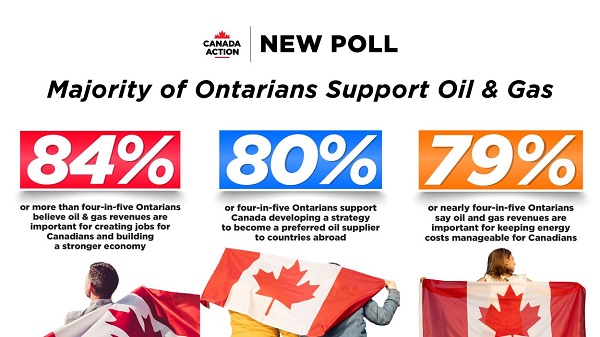
New Poll Shows Ontarians See Oil & Gas as Key to Jobs, Economy, and Trade

Tent Cities Were Rare Five Years Ago. Now They’re Everywhere
-
 Alberta23 hours ago
The Canadian Energy Centre’s biggest stories of 2025
-
Business2 days ago
Feds pull the plug on small business grants to Minnesota after massive fraud reports
-
 Business1 day ago
DOOR TO DOOR: Feds descend on Minneapolis day cares tied to massive fraud
-
 Bruce Dowbiggin1 day ago
In Contentious Canada Reality Is Still Six Degrees Of Hockey
-
 Business1 day ago
Canada needs serious tax cuts in 2026
-
 Business1 day ago
Ottawa Is Still Dodging The China Interference Threat
-
Business24 hours ago
Minneapolis day care filmed empty suddenly fills with kids
-
 Business22 hours ago
Disclosures reveal Minnesota politician’s husband’s companies surged thousands-fold amid Somali fraud crisis