
Opinion
Ontario mayor refuses to cave in to demands after town rejected ‘pride’ flag

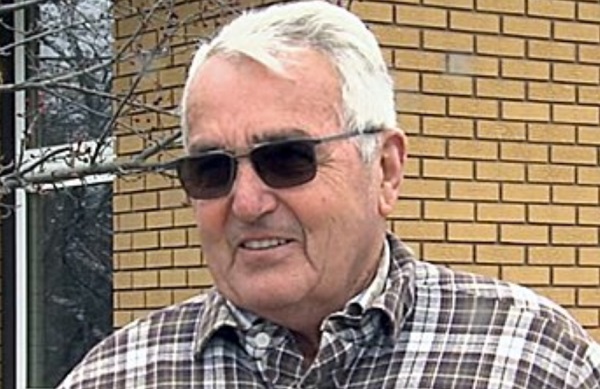
Mayor Harold McQuaker of Emo, Ontario
From LifeSiteNews
Emo, Ontario mayor Harold McQuaker said he will ‘absolutely not’ pay a fine or attend re-education classes, emphasizing that ‘I will not be extorted.’
Last month, the Ontario Human Rights Commission ordered the township of Emo to pay the LGBT activist group Borderland Pride $10,000 for voting in 2020 not to fly a “Pride” flag. Mayor Harold McQuaker was ordered to personally pay $5,000 — and take a re-education course titled “Human Rights 101” to boot. We covered both the original story as well as a follow-up, detailing Borderland Pride’s threats and demands.
There is a new development in the case: Mayor Harold McQuaker is flatly refusing to do what is being demanded of him. Asked by the Toronto Sun if he will pay the fine or attending re-education classes, the 77-year-old McQuaker was blunt. “Absolutely not,” he replied. “I will not be extorted.” He also stated that he will not host Drag Queen Story Hour at the local library, either — one of the demands laid out in an open letter published by Borderland Pride.
Emo Township is a small town of just over 1,200 people located 380 kilometers west of Thunder Bay. The township now has to decide whether to pay the LGBT activist group as demanded by the Ontario Human Rights Commission or refuse to do so. McQuaker has made up his mind. “I utterly refuse to pay the $5,000 because that’s extortion,” he stated. “I have a lot of respect for our four councillors. We have a special meeting of council, and they will decide that and what to do next, either pay the fine or appeal it.”
McQuaker grew up in the area and owned a construction company there for 50 years, and he cannot be pushed around easily. “I will not pay the $5,000 I have been fined and will not take the training,” he emphasized to the Sun. “The council will decide on the fine levied to it. I did not do anything wrong … if anybody needs training it’s the LGBTQ2+ to quit pushing their weight around and making demand that people can’t live with.”
Ironically, the Emo town hall doesn’t even have a flagpole — but that didn’t matter to Borderland Pride, which has, in addition to other demands, stated that it expects a written apology as well as “diversity and inclusion training for council, and a commitment to adopt Pride proclamations in the future without stripping out their 2SLGBTQIA+-affirming language.” Borderland Pride insisted that despite the lack of flagpole the LGBT flag could have been displayed somewhere else, “such as in a window or on a counter in the municipal office.”
McQuaker emphasized that he “doesn’t hate anyone” and that he will not tolerate the accusations being leveled at him by Borderland Pride. “I am a husband to my wife for 51 years, father of two, a grandfather of seven and a great grandfather of one,” he said. “I consider myself a very reasonable person and a good leader for our community and I would have a lot of support if there was an election.”
In response, Doug Judson of Borderland Pride suggested that the mayor should be happy to learn from the LGBT group because his role:
(A)ctually requires that the mayor ‘participate in and foster activities that enhance the economic, social and environmental well-being of the municipality and its residents.’ Part of showing this kind of community leadership is to set the tone for civil debate and to demonstrate a willingness to learn and adapt one’s perspective on issues that, for various reasons, they may have more limited understanding of. It seems obvious enough that the mayor does not have many ties to the queer community. We hope that the training that was ordered by the tribunal will assist him in his leadership role moving forward.
In short, Judson and his LGBT activist buddies hope that forcing the 77-year-old mayor of a small town to take re-education classes will create “ties to the queer community” and that he will be a good boy from now on and do what they demand the first time. Harold McQuaker isn’t having any of it — and we need more like him. Godspeed to the mayor — I hope that the council follows suit.




[This article was originally published in City Journal, a public policy magazine and website published by the Manhattan Institute for Policy Research]
By Adam Zivo
A Canadian poll finds that racial minorities don’t believe drug enforcement is bigoted.
Is drug prohibition racist? Many left-wing institutions seem to think so. But their argument is historically illiterate—and it contradicts recent polling data, too, which show that minorities overwhelmingly reject that view.
Policies and laws are tools to establish order. Like any tool, they can be abused. The first drug laws in North America, dating back to the late nineteenth and early twentieth centuries, arguably fixated on opium as a legal pretext to harass Asian immigrants, for example. But no reasonable person would argue that laws against home invasion, murder, or theft are “racist” because they have been misapplied in past cases. Absent supporting evidence, leaping from “this tool is sometimes used in racist ways” to “this tool is essentially racist” is kindergarten-level reasoning.
Yet this is precisely what institutions and activist groups throughout the Western world have done. The Drug Policy Alliance, a U.S.-based organization, suggests that drug prohibition is rooted in “racism and fear.” Harm Reduction International, a British NGO, argues for legalization on the grounds that drug prohibition entrenches “racialized hierarchies, which were established under colonial control and continue to dominate today.” In Canada, where I live, the top public health official in British Columbia, our most drug-permissive province, released a pro-legalization report last summer claiming that prohibition is “based on a history of racism, white supremacy, paternalism, colonialism, classism and human rights violations.”
These claims ignore how drug prohibition has been and remains popular in many non-European societies. Sharia law has banned the use of mind-altering substances since the seventh century. When Indigenous leaders negotiated treaties with Canadian colonists in the late 1800s, they asked for “the exclusion of fire water (whiskey)” from their communities. That same century, China’s Qing Empire banned opium amid a national addiction crisis. “Opium is a poison, undermining our good customs and morality,” the Daoguang emperor wrote in an 1810 edict.
Today, Asian and Muslim jurisdictions impose much stiffer penalties on drug offenders than do Western nations. In countries like China, Saudi Arabia, Iran, Singapore, and Thailand, addicts and traffickers are given lengthy prison sentences or executed. Meantime, in Canada and the United States, de facto decriminalization has left urban cores littered with syringes and shrouded in clouds of meth.
The anti-drug backlash building in North America appears to be spearheaded by racial minorities. When Chesa Boudin, San Francisco’s former district attorney, was recalled in 2022, support for his ouster was highest among Asian voters. Last fall, 73 percent of Latinos backed California’s Proposition 36, which heightened penalties for drug crimes, while only 58 percent of white respondents did.
In Canada, the first signs of a parallel trend emerged during Vancouver’s 2022 municipal election, where an apparent surge in Chinese Canadian support helped install a slate of pro-police candidates. Then, in British Columbia’s provincial election last autumn, nonwhite voters strongly preferred the BC Conservatives, who campaigned on stricter drug laws. And in last month’s federal election, within both Vancouver and Toronto’s metropolitan areas, tough-on-crime conservatives received considerable support from South Asian communities.
These are all strong indicators that racial minorities do not, in fact, universally favor drug legalization. But their small population share means there is relatively little polling data to measure their preferences. Since only 7.6 percent of Americans are Asian, for example, a poll of 1,000 randomly selected people will yield an average of only 76 Asian respondents—too small a sample from which to draw meaningful conclusions. You can overcome this barrier by commissioning very large polls, but that’s expensive.
Nonetheless, last autumn, the Centre for Responsible Drug Policy (a nonprofit I founded and operate) did just that. In partnership with the Macdonald-Laurier Institute, we contracted Mainstreet Research to ask over 12,000 British Columbians: “Do you agree or disagree that criminalizing drugs is racist?”
The results undermine progressives’ assumptions. Only 26 percent of nonwhite respondents agreed (either strongly or weakly) that drug criminalization is racist, while over twice as many (56 percent) disagreed. The share of nonwhite respondents who strongly disagreed was three times larger than the share that strongly agreed (43.2 percent versus 14.3 percent). These results are fairly conclusive for this jurisdiction, given the poll’s sample size of 2,233 nonwhite respondents and a margin of error of 2 percent.
Notably, Indigenous respondents seemed to be the most anti-drug ethnic group: only 20 percent agreed (weakly or strongly) with the “criminalization is racist” narrative, while 61 percent disagreed. Once again, those who disagreed were much more vehement than those who agreed. With a sample size of 399 respondents, the margin of error here (5 percent) is too small to confound these dramatic results.
We saw similar outcomes for other minority groups, such as South Asians, Southeast Asians, Latinos, and blacks. While Middle Eastern respondents also seemed to follow this trend, the poll included too few of them to draw definitive conclusions. Only East Asians were divided on the issue, though a clear majority still disagreed that criminalization is racist.
As this poll was limited to British Columbian respondents, our findings cannot necessarily be assumed to hold throughout Canada and the United States. But since the province is arguably the most drug-permissive jurisdiction within the two countries, these results could represent the ceiling of pro-drug, anti-criminalization attitudes among minority communities.
Legalization proponents and their progressive allies take pride in being “anti-racist.” Our polling, however, suggests that they are not listening to the communities they profess to care about.
The Bureau is a reader-supported publication.
To receive new posts and support my work, consider becoming a free or paid subscriber.
Invite your friends and earn rewards
From The Center Square
By
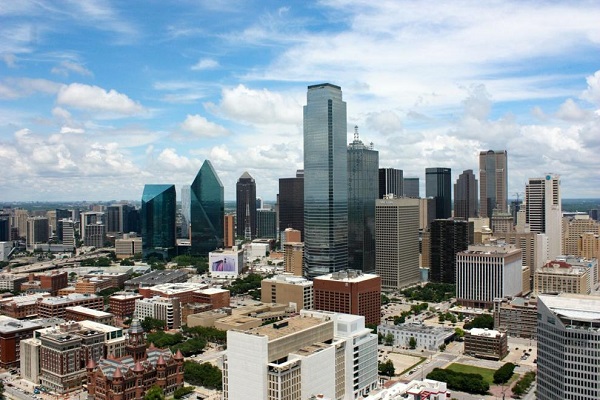
After the self-described socialist Zohran Mamdani won the Democratic primary for mayor in New York, Dallas Mayor Eric Johnson invited New Yorkers and others to move to Dallas.
Mamdani has vowed to implement a wide range of tax increases on corporations and property and to “shift the tax burden” to “richer and whiter neighborhoods.”
New York businesses and individuals have already been relocating to states like Texas, which has no corporate or personal income taxes.
Johnson, a Black mayor and former Democrat, switched parties to become a Republican in 2023 after opposing a city council tax hike, The Center Square reported.
“Dear Concerned New York City Resident or Business Owner: Don’t panic,” Johnson said. “Just move to Dallas, where we strongly support our police, value our partners in the business community, embrace free markets, shun excessive regulation, and protect the American Dream!”
Fortune 500 companies and others in recent years continue to relocate their headquarters to Dallas; it’s also home to the new Texas Stock Exchange (TXSE). The TXSE will provide an alternative to the New York Stock Exchange and Nasdaq and there are already more finance professionals in Texas than in New York, TXSE Group Inc. founder and CEO James Lee argues.
From 2020-2023, the Dallas-Fort Worth-Arlington MSA reported the greatest percentage of growth in the country of 34%, The Center Square reported.
Johnson on Thursday continued his invitation to New Yorkers and others living in “socialist” sanctuary cities, saying on social media, “If your city is (or is about to be) a sanctuary for criminals, mayhem, job-killing regulations, and failed socialist experiments, I have a modest invitation for you: MOVE TO DALLAS. You can call us the nation’s first official ‘Sanctuary City from Socialism.’”
“We value free enterprise, law and order, and our first responders. Common sense and the American Dream still reside here. We have all your big-city comforts and conveniences without the suffocating vice grip of government bureaucrats.”
As many Democratic-led cities joined a movement to defund their police departments, Johnson prioritized police funding and supporting law and order.
“Back in the 1800s, people moving to Texas for greater opportunities would etch ‘GTT’ for ‘Gone to Texas’ on their doors moving to the Mexican colony of Tejas,” Johnson continued, referring to Americans who moved to the Mexican colony of Tejas to acquire land grants from the Mexican government.
“If you’re a New Yorker heading to Dallas, maybe try ‘GTD’ to let fellow lovers of law and order know where you’ve gone,” Johnson said.
Modern-day GTT movers, including a large number of New Yorkers, cite high personal income taxes, high property taxes, high costs of living, high crime, and other factors as their reasons for leaving their states and moving to Texas, according to multiple reports over the last few years.
In response to Johnson’s invitation, Gov. Greg Abbott said, “Dallas is the first self-declared “Sanctuary City from Socialism. The State of Texas will provide whatever support is needed to fulfill that mission.”
The governor has already been doing this by signing pro-business bills into law and awarding Texas Enterprise Grants to businesses that relocate or expand operations in Texas, many of which are doing so in the Dallas area.
“Texas truly is the Best State for Business and stands as a model for the nation,” Abbott said. “Freedom is a magnet, and Texas offers entrepreneurs and hardworking Texans the freedom to succeed. When choosing where to relocate or expand their businesses, more innovative industry leaders recognize the competitive advantages found only in Texas. The nation’s leading CEOs continually cite our pro-growth economic policies – with no corporate income tax and no personal income tax – along with our young, skilled, diverse, and growing workforce, easy access to global markets, robust infrastructure, and predictable business-friendly regulations.”
Power Struggle: Electric vehicles and reality
Elon Musk slams Trump’s ‘Big Beautiful Bill,’ calls for new political party
Canada Caves: Carney ditches digital services tax after criticism from Trump

Alberta judge sides with LGBT activists, allows ‘gender transitions’ for kids to continue
China undermining American energy independence, report says

National Health Care Fraud Takedown Results in 324 Defendants Charged in Connection with Over $14.6 Billion in Alleged Fraud
Trump on Canada tariff deadline: ‘We can do whatever we want’
-
 armed forces1 day ago
Canada’s Military Can’t Be Fixed With Cash Alone
-
 Alberta1 day ago
COVID mandates protester in Canada released on bail after over 2 years in jail
-
 International1 day ago
Trump transportation secretary tells governors to remove ‘rainbow crosswalks’
-
 Business1 day ago
Canada’s loyalty to globalism is bleeding our economy dry
-
 Business1 day ago
Carney’s spending makes Trudeau look like a cheapskate
-
 Alberta1 day ago
Alberta Next: Alberta Pension Plan
-
 Crime2 days ago
Project Sleeping Giant: Inside the Chinese Mercantile Machine Linking Beijing’s Underground Banks and the Sinaloa Cartel
-
 C2C Journal23 hours ago
Canada Desperately Needs a Baby Bump