
Daily Caller
Biden-Harris Admin’s Multi-Billion Dollar Electric School Bus Program Is A Huge Gift To China, House Report Finds

From the Daily Caller News Foundation
By Owen Klinsky
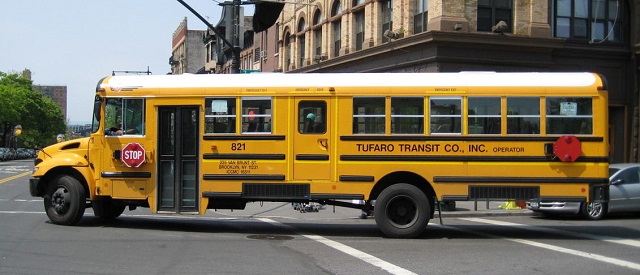
The Biden-Harris administration’s $5 billion Clean School Bus Program uses nearly 400% more taxpayer dollars per school bus and benefits the Chinese Communist Party (CCP), a House report revealed Tuesday.
The 51-page report from the House Committee on Energy and Commerce found promoting electric school buses and other electric vehicles (EVs) enriches the CCP as the EV supply chain is roughly 90% dependent on China, raising both national security and human rights concerns. It also highlighted immense expenses for taxpayers, with the average electric school bus under the first iteration of the Clean School Bus Program — the first of three iterations — costing $381,191, nearly four times that of a typical full-sized diesel school bus.
“It is clear the $5 billion Clean School Bus Program is overall a failure and, in many cases, a waste of Americans’ hard-earned taxpayer dollars,” Republican Congresswoman Cathy McMorris Rodgers, who chairs the House Committee on Energy and Commerce, said in a statement regarding the report’s findings. “The program, led by the radical Biden-Harris EPA [Environmental Protection Agency], props up a market that relies heavily upon a supply chain dominated by the Chinese Communist Party.”
Funded by the 2021 Bipartisan Infrastructure Law, the Clean School Bus Program provided the Biden-Harris EPA with funds over five years to “replace existing school buses with zero-emission and clean school buses.”
Kamala Harris led the Biden Administration's $5,000,000,000 EV school bus program.
After 3 years, just 60 buses are on the road.
That's over $83,300,000 per bus.
A vote for Kamala is a vote to waste more tax dollars on failed green programs.
— Daniel Turner (@DanielTurnerPTF) July 29, 2024
China currently accounts for approximately two-thirds of global EV battery cell production, while the U.S. manufactured just 7% as of 2022, raising national security concerns as the U.S. would likely have to depend on Chinese EV technology for its electric school buses, according to the report. Furthermore, the government-subsidized purchases of electric school buses under the Clean School Bus Program incentivize pre-existing human rights abuses in the EV supply, including the use of Uyghur forced labor in China’s Xinjiang region.
The report also identified limited range as an issue, with standard electric school buses from leading manufacturer BlueBird able to travel just 120 miles on a single charge, while some propane models can travel 400 miles before needing to refuel. The range problem can also be exacerbated by cold and warm weather conditions, with a study from the National Renewable Energy Laboratory finding electric transit buses lose roughly a third of their range at 25 degrees Fahrenheit compared to ideal conditions.
Electric school buses also increase the risk of fraud due to a lack of documentation requirements for contractors, with the EPA relying solely on self-certified applications and estimates created by applicants, according to the report. A separate July report from a Maryland county’s Office of the Inspector General resulted in millions of dollars in “wasteful spending.”
“The EPA launched the Clean School Bus program without sufficient safeguards and considerations for practical hurdles applicants may face. For example, the EPA did not require documentation for some of the required application information and allowed contractors enthused at the opportunity to receive federal funding to apply on behalf of unknowing school districts, some of which eventually withdraw from the program,” the report states. “The EPA failed to account for the considerable electric infrastructure upgrades that electrifying a school bus fleet could require, potentially leading to delays for schools in utilizing their new buses.”
The White House did not immediately respond to a request for comment.


From the Daily Caller News Foundation
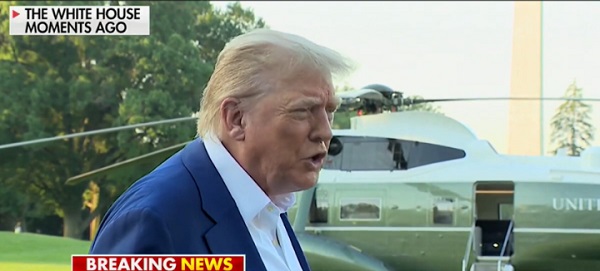
President Donald Trump expressed frustration Tuesday after Iran broke a ceasefire, prompting retaliation from Israel during a gaggle with reporters on the White House lawn.
Trump announced the ceasefire Monday, saying it was supposed to take effect at 1 a.m. Eastern Daylight Time, but Iran fired missiles at Israel Tuesday. Trump vented, saying the countries had been “fighting so long” they couldn’t make peace.
WATCH:
“You know, when I say okay, now you have 12 hours, you don’t go out in the first hour just drop everything you have on them,” Trump said. “So I’m not happy with them. I’m not happy with Iran either. But I’m really unhappy if Israel is going out this morning because the one rocket that didn’t land, that was shot, perhaps by mistake, that didn’t land, I’m not happy about that.”
“We basically have two countries that have been fighting so long and so hard, that they don’t know what the fuck they are doing,” Trump added.
The United States struck facilities in Fordow, Natanz and Isfahan related to Iran’s effort to develop nuclear weapons early Sunday morning local time, using as many as 14 GBU-57 Massive Ordnance Penetrators in the operation, which involved a 37-hour flight by seven B-2A Spirit bombers.
The American strikes came ten days after Israel launched a military operation targeting the Iranian nuclear program. Iran has responded with repeated missile attacks on Israeli cities and a refusal to resume negotiations over its efforts to pursue nuclear weapons.
From the Daily Caller News Foundation
“The Supreme Court put to rest any question about whether fuel manufacturers have a right to challenge unlawful electric vehicle mandates”
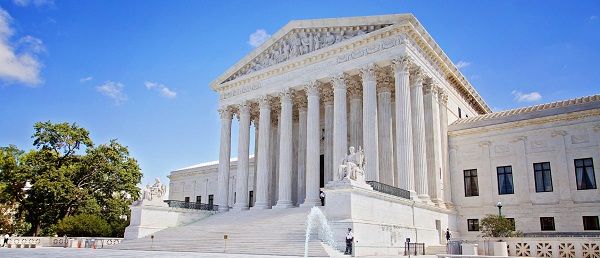
The Supreme Court sided Friday with oil companies seeking to challenge California’s electric vehicle regulations.
In a 7-2 ruling, the court allowed energy producers to continue their lawsuit challenging the Environmental Protection Agency’s decision to approve California regulations that require manufacturing more electric vehicles.
“The government generally may not target a business or industry through stringent and allegedly unlawful regulation, and then evade the resulting lawsuits by claiming that the targets of its regulation should be locked out of court as unaffected bystanders,” Justice Brett Kavanaugh wrote in the majority opinion. “In light of this Court’s precedents and the evidence before the Court of Appeals, the fuel producers established Article III standing to challenge EPA’s approval of the California regulations.”
Kavanaugh noted that “EPA has repeatedly altered its legal position on whether the Clean Air Act authorizes California regulations targeting greenhouse-gas emissions from new motor vehicles” between Presidential administrations.
“This case involves California’s 2012 request for EPA approval of new California regulations,” he wrote. “As relevant here, those regulations generally require automakers (i) to limit average greenhouse-gas emissions across their fleets of new motor vehicles sold in the State and (ii) to manufacture a certain percentage of electric vehicles as part of their vehicle fleets.”
The D.C. Circuit Court of Appeals previously rejected the challenge, finding the producers lacked standing to sue.
“The Supreme Court put to rest any question about whether fuel manufacturers have a right to challenge unlawful electric vehicle mandates,” American Fuel & Petrochemical Manufacturers (AFPM) President and CEO Chet Thompson said in a statement.
“California’s EV mandates are unlawful and bad for our country,” he said. “Congress did not give California special authority to regulate greenhouse gases, mandate electric vehicles or ban new gas car sales—all of which the state has attempted to do through its intentional misreading of statute.”

The permanent CO2 storage site at the end of the Alberta Carbon Trunk Line is just getting started
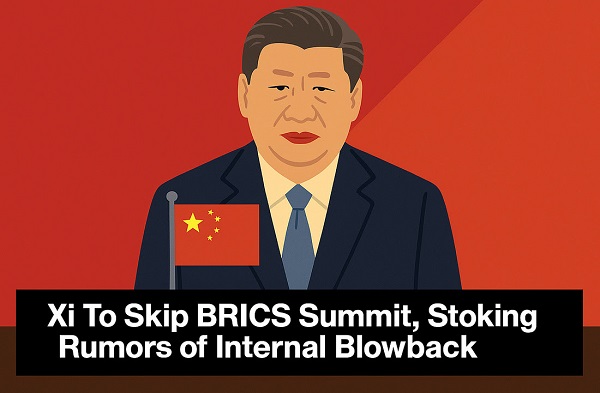
President Xi Skips Key Summit, Adding Fuel to Ebbing Power Theories

It’s not enough to just make military commitments—we must also execute them
Alberta Next Takes A Look At Alberta Provincial Police Force
New Peer-Reviewed Study Affirms COVID Vaccines Reduce Fertility
NATO commits to 5% defense floor after Trump pushes allies to step up
Canada’s euthanasia regime is not health care, but a death machine for the unwanted
-
 Business2 days ago
Canada Caves: Carney ditches digital services tax after criticism from Trump
-
 Alberta1 day ago
Alberta judge sides with LGBT activists, allows ‘gender transitions’ for kids to continue
-
 Crime19 hours ago
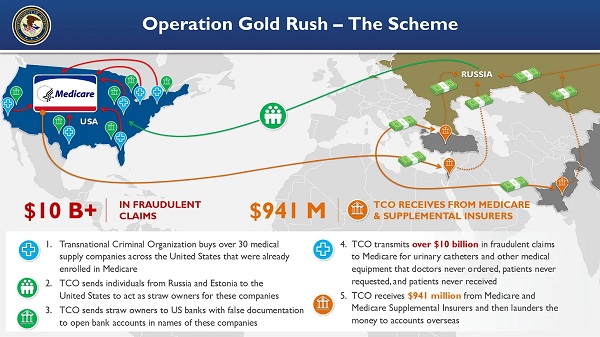
National Health Care Fraud Takedown Results in 324 Defendants Charged in Connection with Over $14.6 Billion in Alleged Fraud
-
 Business8 hours ago
Elon Musk slams Trump’s ‘Big Beautiful Bill,’ calls for new political party
-
 Censorship Industrial Complex8 hours ago
Global media alliance colluded with foreign nations to crush free speech in America: House report
-
 Crime2 days ago
Suspected ambush leaves two firefighters dead in Idaho
-
 Business1 day ago
Massive government child-care plan wreaking havoc across Ontario
-
 Alberta1 day ago
Alberta Independence Seekers Take First Step: Citizen Initiative Application Approved, Notice of Initiative Petition Issued