
Alberta
BBC documentary to feature Greta Thunberg’s interview with Mikisew Cree First Nation


from Mikisew Crew First Nation

Climate Activist Greta Thunberg interviews Mikisew Cree First Nation as part of a BBC documentary set to air in the coming weeks.
October 20, 2018 – Fort McMurray-AB – Greta Thunberg spent Saturday with the Mikisew Cree First Nation filming along the shores of Gregoire Lake, near Fort McMurray, AB. Her interviews focused on environmental concerns regarding oil sands development and climate change.
Chief Archie Waquan presented a gift to the 16 year old activist and said, “We are honoured to join forces with a dynamic young person leading the way in protecting our planet from the climate crisis. We can all learn from today’s youth and their dedication to preserving our environment for future generations.”

Councillor Calvin Waquan, Melody Lepine, Greta Thunberg, Chief Archie Waquan


Mikisew is the largest First Nation in the area and is a champion for environmental protection in the region. Mikisew was integral in the creation of a 161-880-hectare conservation park. Kitaskino-Nuwenene Wildland Park is preserved for traditional activities for use by Indigenous Peoples and also protects biodiversity and species at risk. Three Nations Energy is a company in cooperation with government, industry, Metis and AFCN. The project is about to commence phase 2, in the country’s largest off-grid solar project. It will generate the same amount of fuel produced by 800,000 litres of diesel and is expected to be operational by 2020. The Mikisew Cree also monitors harm to the heart of Mikisew homelands with a community based monitoring program. The group of guardians observe water quantity and quality, changes to ice and snow, and fish and wildlife health.
Melody Lepine, Director of Government and Industry Relations added, “Working with Miss Thunberg and the BBC is a major opportunity for the Mikisew Cree First Nation to share with the world how climate change is exacerbating environmental impacts in our region.”


From the Fraser Institute
By Tegan Hill
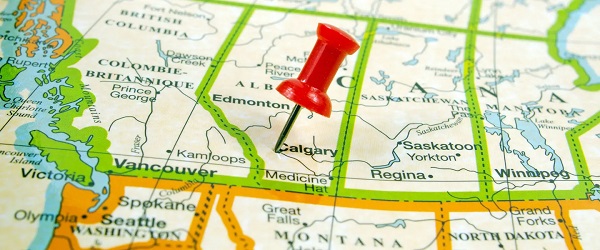
The Alberta Next Panel, tasked with advising the Smith government on how the province can better protect its interests and defend its economy, has officially released its report. Two of its key recommendations—to hold a referendum on Alberta leaving the Canada Pension Plan, and to create a commission to review programs like equalization—could lead to meaningful changes to Canada’s system of fiscal federalism (i.e. the financial relationship between Ottawa and the provinces).
The panel stemmed from a growing sense of unfairness in Alberta. From 2007 to 2022, Albertans’ net contribution to federal finances (total federal taxes paid by Albertans minus federal money spent or transferred to Albertans) was $244.6 billion—more than five times the net contribution from British Columbians or Ontarians (the only other two net contributors). This money from Albertans helps keep taxes lower and fund government services in other provinces. Yet Ottawa continues to impose federal regulations, which disproportionately and negatively impact Alberta’s energy industry.
Albertans were growing tired of this unbalanced relationship. According to a poll by the Angus Reid Institute, nearly half of Albertans believe they get a “raw deal”—that is, they give more than they get—being part of Canada. The Alberta Next Panel survey found that 59 per cent of Albertans believe the federal transfer and equalization system is unfair to Alberta. And a ThinkHQ survey found that more than seven in 10 Albertans feel that federal policies over the past several years hurt their quality of life.
As part of an effort to increase provincial autonomy, amid these frustrations, the panel recommends the Alberta government hold a referendum on leaving the Canada Pension Plan (CPP) and establishing its own provincial pension plan.
Albertans typically have higher average incomes and a younger population than the rest of the country, which means they could pay a lower contribution rate under a provincial pension plan while receiving the same level of benefits as the CPP. (These demographic and economic factors are also why Albertans currently make such a large net contribution to the CPP).
The savings from paying a lower contribution rate could result in materially higher income during retirement for Albertans if they’re invested in a private account. One report found that if a typical Albertan invested the savings from paying a lower contribution rate to a provincial pension plan, they could benefit from $189,773 (pre-tax) in additional retirement income.
Clearly, Albertans could see a financial benefit from leaving the CPP, but there are many factors to consider. The government plans to present a detailed report including how the funds would be managed, contribution rates, and implementation plan prior to a referendum.
Then there’s equalization—a program fraught with flaws. The goal of equalization is to ensure provinces can provide reasonably comparable public services at reasonably comparable tax rates. Ottawa collects taxes from Canadians across the country and then redistributes that money to “have not” provinces. In 2026/27, equalization payments is expected to total $27.2 billion with all provinces except Alberta, British Columbia and Saskatchewan receiving payments.
Reasonable people can disagree on whether or not they support the principle of the program, but again, it has major flaws that just don’t make sense. Consider the fixed growth rate rule, which mandates that total equalization payments grow each year even when the income differences between recipient and non-recipient provinces narrows. That means Albertans continue paying for a growing program, even when such growth isn’t required to meet the program’s stated objective. The panel recommends that Alberta take a leading role in working with other provinces and the federal government to reform equalization and set up a new Canada Fiscal Commission to review fiscal federalism more broadly.
The Alberta Next Panel is calling for changes to fiscal federalism. Reforms to equalization are clearly needed—and it’s worth exploring the potential of an Alberta pension plan. Indeed, both of these changes could deliver benefits.

Tegan Hill
Director, Alberta Policy, Fraser Institute

From the Fraser Institute
By Nadeem Esmail, Mackenzie Moir and Lauren Asaad
In October, Alberta’s provincial government announced forthcoming legislative changes that will allow patients to pay out-of-pocket for any diagnostic test they want, and without a physician referral. The policy, according to the Smith government, is designed to help improve the availability of preventative care and increase testing capacity by attracting additional private sector investment in diagnostic technology and facilities.
Unsurprisingly, the policy has attracted Ottawa’s attention, with discussions now taking place around the details of the proposed changes and whether this proposal is deemed to be in line with the Canada Health Act (CHA) and the federal government’s interpretations. A determination that it is not, will have both political consequences by being labeled “non-compliant” and financial consequences for the province through reductions to its Canada Health Transfer (CHT) in coming years.
This raises an interesting question: While the ultimate decision rests with Ottawa, does the Smith government’s new policy comply with the literal text of the CHA and the revised rules released in written federal interpretations?
According to the CHA, when a patient pays out of pocket for a medically necessary and insured physician or hospital (including diagnostic procedures) service, the federal health minister shall reduce the CHT on a dollar-for-dollar basis matching the amount charged to patients. In 2018, Ottawa introduced the Diagnostic Services Policy (DSP), which clarified that the insured status of a diagnostic service does not change when it’s offered inside a private clinic as opposed to a hospital. As a result, any levying of patient charges for medically necessary diagnostic tests are considered a violation of the CHA.
Ottawa has been no slouch in wielding this new policy, deducting some $76.5 million from transfers to seven provinces in 2023 and another $72.4 million in 2024. Deductions for Alberta, based on Health Canada’s estimates of patient charges, totaled some $34 million over those two years.
Alberta has been paid back some of those dollars under the new Reimbursement Program introduced in 2018, which created a pathway for provinces to be paid back some or all of the transfers previously withheld on a dollar-for-dollar basis by Ottawa for CHA infractions. The Reimbursement Program requires provinces to resolve the circumstances which led to patient charges for medically necessary services, including filing a Reimbursement Action Plan for doing so developed in concert with Health Canada. In total, Alberta was reimbursed $20.5 million after Health Canada determined the provincial government had “successfully” implemented elements of its approved plan.
Perhaps in response to the risk of further deductions, or taking a lesson from the Reimbursement Action Plan accepted by Health Canada, the province has gone out of its way to make clear that these new privately funded scans will be self-referred, that any patient paying for tests privately will be reimbursed if that test reveals a serious or life-threatening condition, and that physician referred tests will continue to be provided within the public system and be given priority in both public and private facilities.
Indeed, the provincial government has stated they do not expect to lose additional federal health care transfers under this new policy, based on their success in arguing back previous deductions.
This is where language matters: Health Canada in their latest CHA annual report specifically states the “medical necessity” of any diagnostic test is “determined when a patient receives a referral or requisition from a medical practitioner.” According to the logic of Ottawa’s own stated policy, an unreferred test should, in theory, be no longer considered one that is medically necessary or needs to be insured and thus could be paid for privately.
It would appear then that allowing private purchase of services not referred by physicians does pass the written standard for CHA compliance, including compliance with the latest federal interpretation for diagnostic services.
But of course, there is no actual certainty here. The federal government of the day maintains sole and final authority for interpretation of the CHA and is free to revise and adjust interpretations at any time it sees fit in response to provincial health policy innovations. So while the letter of the CHA appears to have been met, there is still a very real possibility that Alberta will be found to have violated the Act and its interpretations regardless.
In the end, no one really knows with any certainty if a policy change will be deemed by Ottawa to run afoul of the CHA. On the one hand, the provincial government seems to have set the rules around private purchase deliberately and narrowly to avoid a clear violation of federal requirements as they are currently written. On the other hand, Health Canada’s attention has been aroused and they are now “engaging” with officials from Alberta to “better understand” the new policy, leaving open the possibility that the rules of the game may change once again. And even then, a decision that the policy is permissible today is not permanent and can be reversed by the federal government tomorrow if its interpretive whims shift again.
The sad reality of the provincial-federal health-care relationship in Canada is that it has no fixed rules. Indeed, it may be pointless to ask whether a policy will be CHA compliant before Ottawa decides whether or not it is. But it can be said, at least for now, that the Smith government’s new privately paid diagnostic testing policy appears to have met the currently written standard for CHA compliance.

Nadeem Esmail

Mackenzie Moir

Lauren Asaad
Policy Analyst, Fraser Institute

Canada’s sudden rediscovery of energy ambition has been greeted with a familiar charge: hypocrisy

Canadian gov’t considers sharing census data on gender-confused children

Residential school burials controversy continues to fuel wave of church arsons, new data suggests
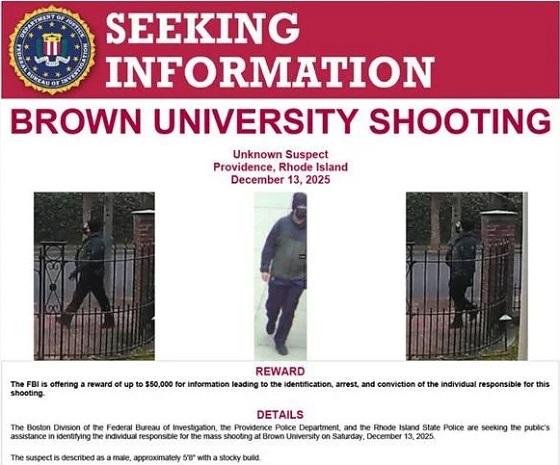
Brown University shooter dead of apparent self-inflicted gunshot wound

FBI didn’t think it had cause to raid Trump but DOJ did it anyway

Paris Climate Deal Now Decade-Old Disaster
Alberta’s new diagnostic policy appears to meet standard for Canada Health Act compliance
-
 Health2 days ago
FDA warns ‘breast binder’ manufacturers to stop marketing to gender-confused girls
-
 International2 days ago
2025: The Year The Narrative Changed
-
 Business1 day ago
There’s No Bias at CBC News, You Say? Well, OK…
-
 Uncategorized18 hours ago
Mortgaging Canada’s energy future — the hidden costs of the Carney-Smith pipeline deal
-
 Daily Caller2 days ago
Trump Reportedly Escalates Pressure On Venezuela With Another Oil Tanker Seizure
-
 Health2 days ago
All 12 Vaccinated vs. Unvaccinated Studies Found the Same Thing: Unvaccinated Children Are Far Healthier
-
 Agriculture2 days ago
Supply Management Is Making Your Christmas Dinner More Expensive
-
 International19 hours ago
Australian PM booed at Bondi vigil as crowd screams “shame!”