
Crime
EPS launches campaign to help curb vehicle thefts and smash and grabs


Your community is a HotSpot!
EPS launches new public awareness campaign to help curb Theft of and Theft from Vehicles
The Edmonton Police Service (EPS) is launching a new campaign today to alert residents that the community they live or work in, is a Hot Spot for theft from and theft of vehicles.
“These two crimes continue to be on the rise year after year and we need all communities to be more vigilant about protecting and securing their vehicles,” says Sgt. Smith of West Division Crime Management Team. “Dealing with the aftermath of having your car broken into or stolen, is much worse than making the extra effort to protect your property.”
Nine neighbourhoods in Edmonton will notice large signs by roadways, alerting them that their neighbourhood is a Hot Spot. The campaign focuses on one community in each of the six EPS Divisions.
“These communities historically have had the most theft-from and theft-of vehicles when we analyzed the data from the last five years,” says Sgt. Smith.
The EPS compared statistics from Jan. 1, 2019 to Nov. 30, 2019, which correlated with the statistics over the last five years. The Hot Spot communities include:
| Theft of Vehicle | Theft from Vehicle |
| Downtown Core (78) | Downtown Core (378) |
| Belvedere (68) | Garneau (188) |
| Alberta Avenue (67) | Alberta Avenue (128) |
| Strathcona (41) | Westmount (75) |
| Summerside (35) | Killarney (68) |
| Inglewood (34) | Summerside (56) |
There have been some occurrences of thefts involving vehicles with a smart key that have been left running, unattended and with key removed. Owners of these vehicles may be unaware that the vehicle may not lock due to a safety override feature in some manufacturers and assume incorrectly that the vehicle will not be able to be driven away.
“It appears that storage of these fobs within vehicles is often an issue. It is very easy to try the vehicle ignition button to see if the vehicle responds, even if no key is visible, in hopes that the vehicle will engage due to a hidden fob,” says Sgt. Smith.
There are many thefts where it’s unknown how a vehicle was broken into. Malls, parking lots and parkades continue to be primary targets for criminals.
“Parking lots and parkades are targets because they are often left unattended with poor lighting thus increasing the chances that thieves will go undetected,” says Sgt. Smith.
Other Theft of Vehicle and Theft from Vehicle Stats:
- City wide, between Jan. 1 and Nov. 30, 2019, a total of 3,638 vehicles were stolen in Edmonton; and 7,302 thefts from vehicles also occurred.
- The number of reported thefts from vehicles in the city has increased by 97 per cent since 2013, which had 3,701 reported incidents.
- Year to date, 2019 has had the highest number of thefts from vehicles, since 2013
- Southwest and Downtown Divisions have seen the largest increases this year.
- For theft of vehicle, there were 700 incidents reported to police just between Sept. 1 and Oct. 31 of this year; 54 of those stolen vehicles were left running with a key inside and 76 had the key or a spare key left in the car.
Tips to prevent theft of and from vehicles:
Do not leave your vehicle running – Under no circumstances should you leave your vehicle unattended while running with the key in the ignition. NOTE: Remote car starters are not a problem; they are designed to shut off if attempts are made to steal the vehicle.
No Spare Keys – Do not leave a spare key hidden in the vehicle. Thieves look for spare keys, and once they break into your vehicle, they know all the hiding spots. You can get a spare key holder for your wallet or purse.
Lock Up Your Vehicle – Always check that the doors, windows, and sun roof are shut and locked when you park your vehicle. Leave your vehicle in a locked garage where possible. Lock your vehicle even when it is in a locked garage.
Be aware of where you park – park in parking lots that have more than one of the following:
- Security cameras
- Security patrolling the parking lot
- Someone working at an entrance/exit booth
- A gated parking lot that needs a pass to get in and out
- Well lit
- A busy parking lot with lots of people coming and going or an area where there are lots of vehicles or pedestrians passing by
Treat Your Keys Like Cash – Don’t leave keys in places where they are easy to steal, such as a gym locker, on your desk at work, visible in an open purse or unattended in a shopping cart. Thieves will grab and go, then head out to the parking lot and push the button on your key fob until they find your car.
Use a Steering Wheel Locking Device (e.g. The Club) – A well-secured car will deter thieves. There are other devices available to consumers to stop thieves from easily stealing your vehicle. See your local automotive stores for details.
Do not leave items in your vehicle – Thieves can be attracted to your car because personal items are left in plain sight. Never leave anything in your vehicle, including loose change, cell phones, CDs, cameras, clothing, sunglasses, cigarettes, lighters, and any other items.
Install a Remote Car Starter – Remote starters are designed to shut off if anyone attempts to drive the vehicle without a key. This will allow you to warm up your car without risk of theft.
Don’t leave a spare key fob in your vehicle- This prevents thieves from breaking into your car to see if it can be started and driven away.
Ensure safe storage of Smart Keys/Keyless ignition fobs: Store smart keys away from the vehicle and doors. Consider investing in a “Faraday bag” to enhance security of the wireless communication system of the vehicle.
To report theft from auto under $5,000 please go to https://www.edmontonpolice.ca/ContactEPS/OnlinePropertyCrime. To report a non-emergency, call the EPS non-emergency line at 780-421-4567 or #377 from a mobile phone. For all crimes in progress, call 911.


From The Center Square
By

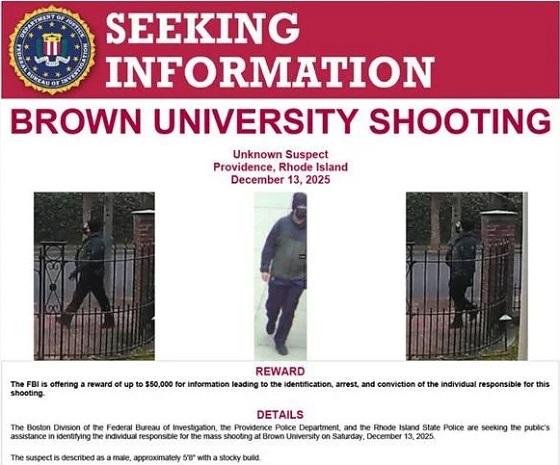
Rhode Island officials said the suspected gunman in the Brown University mass shooting has been found dead of an apparent self-inflicted gunshot wound, more than 50 miles away in a storage facility in southern New Hampshire.
The shooter was identified as Claudio Manuel Neves-Valente, a 48-year-old Brown student and Portuguese national. Neves-Valente was found dead with a satchel containing two firearms inside in the storage facility, authorities said.
“He took his own life tonight,” Providence police chief Oscar Perez said at a press conference, noting that local, state and federal law officials spent days poring over video evidence, license plate data and hundreds of investigative tips in pursuit of the suspect.
Perez credited cooperation between federal state and local law enforcement officials, as well as the Providence community, which he said provided the video evidence needed to help authorities crack the case.
“The community stepped up,” he said. “It was all about groundwork, public assistance, interviews with individuals, and good old fashioned policing.”
Rhode Island Attorney General Peter Neronha said the “person of interest” identified by private videos contacted authorities on Wednesday and provided information that led to his whereabouts.
“He blew the case right open, blew it open,” Neronha said. “That person led us to the car, which led us to the name, which led us to the photograph of that individual.”
“And that’s how these cases sometimes go,” he said. “You can feel like you’re not making a lot of progress. You can feel like you’re chasing leaves and they don’t work out. But the team keeps going.”
The discovery of the suspect’s body caps an intense six-day manhunt spanning several New England states, which put communities from Providence to southern New Hampshire on edge.
“We got him,” FBI special agent in charge for Boston Ted Docks said at Thursday night’s briefing. “Even though the suspect was found dead tonight our work is not done. There are many questions that need to be answered.”
He said the FBI deployed around 500 agents to assist local authorities in the investigation, in addition to offering a $50,000 reward. He says that officials are still looking into the suspect’s motive.
Two students were killed and nine others were injured in the Brown University shooting Saturday, which happened when an undetected gunman entered the Barus and Holley building on campus, where students were taking exams before the holiday break. Providence authorities briefly detained a person in the shooting earlier in the week, but then released them.
Investigators said they are also examining the possibility that the Brown case is connected to the killing of a Massachusetts Institute of Technology professor in his hometown.
An unidentified gunman shot MIT professor Nuno Loureiro multiple times inside his home in Brookline, about 50 miles north of Providence, according to authorities. He died at a local hospital on Tuesday.
Leah Foley, U.S. attorney for Massachusetts, was expected to hold a news briefing late Thursday night to discuss the connection with the MIT shooting.


From the Daily Caller News Foundation
A woman who survived the Hanukkah terrorist attack at Bondi Beach in Australia said on Monday that police officers seemed less concerned about stopping the attack than they were about keeping her from fighting back.
A father and son of Pakistani descent opened fire on a Hanukkah celebration Sunday, killing at least 15 people and wounding 40, with one being slain on the scene by police and the other wounded and taken into custody. Vanessa Miller told Erin Molan about being separated from her three-year-old daughter during Monday’s episode of the “Erin Molan Show.”
“I tried to grab one of their guns,” Miller said. “Another one grabbed me and said ‘no.’ These men, these police officers, they know who I am. I hope they are hearing this. You are weak. You could have saved so many more people’s lives. They were just standing there, listening and watching this all happen, holding me back.”
Dear Readers:
As a nonprofit, we are dependent on the generosity of our readers.
Please consider making a small donation of any amount here.
Thank you!
WATCH:
“Two police officers,” Miller continued. “Where were the others? Not there. Nobody was there.”
New South Wales Minister of Police Yasmin Catley did not immediately respond to a request for comment from the Daily Caller News Foundation about Miller’s comments.
Australian Prime Minister Anthony Albanese vowed to enact further restrictions on guns in response to the attack at Bondi Beach, according to the Associated Press. The new restrictions would include a limit on how many firearms a person could own, more review of gun licenses, limiting the licenses to Australian citizens and “additional use of criminal intelligence” to determine if a license to own a firearm should be granted.
Sajid Akram, 50, and Naveed Akram, 24, reportedly went to the Philippines, where they received training prior to carrying out the Sunday attack, according to the Australian Broadcasting Corporation. Naveed Akram’s vehicle reportedly had homemade ISIS flags inside it.
Australia passed legislation that required owners of semi-automatic firearms and certain pump-action firearms to surrender them in a mandatory “buyback” following a 1996 mass shooting in Port Arthur, Tasmania, that killed 35 people and wounded 23 others. Despite the legislation, one of the gunmen who carried out the attack appeared to use a pump-action shotgun with an extended magazine.


Remembering Afghanistan and the sacrifices of our military families

Largest fraud in US history? Independent Journalist visits numerous daycare centres with no children, revealing massive scam

US Under Secretary of State Slams UK and EU Over Online Speech Regulation, Announces Release of Files on Past Censorship Efforts
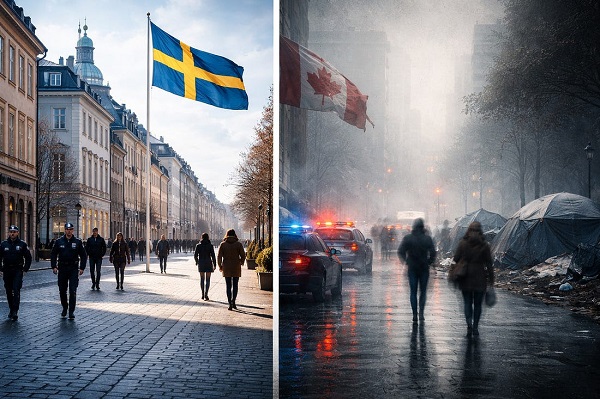
Sweden Fixed What Canada Won’t Even Name

New Poll Shows Ontarians See Oil & Gas as Key to Jobs, Economy, and Trade

How to talk about housing at the holiday dinner table

Alberta Next Panel calls for less Ottawa—and it could pay off
-
 Bruce Dowbiggin2 days ago
In Contentious Canada Reality Is Still Six Degrees Of Hockey
-
 Alberta1 day ago
The Canadian Energy Centre’s biggest stories of 2025
-
 Business1 day ago
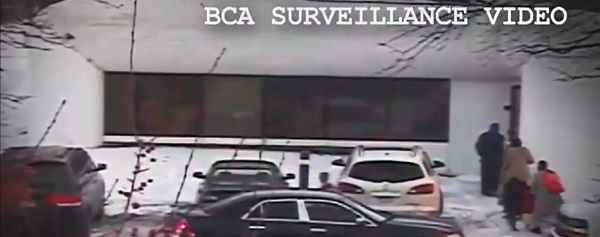
Resurfaced Video Shows How Somali Scammers Used Day Care Centers To Scam State
-
 Business2 days ago
DOOR TO DOOR: Feds descend on Minneapolis day cares tied to massive fraud
-
 Business2 days ago
Canada needs serious tax cuts in 2026
-
 Business1 day ago
Ottawa Is Still Dodging The China Interference Threat
-
 Business1 day ago
Minneapolis day care filmed empty suddenly fills with kids
-
 Business1 day ago
Disclosures reveal Minnesota politician’s husband’s companies surged thousands-fold amid Somali fraud crisis