
Travel
Todayville Travel goes on a Yukon road trip Part 2 – Dawson City and the Dempster Highway


2nd in a 3-part series on a Yukon road trip – Dawson City and the Dempster Highway
Upon our return from six weeks exploring Canada’s north, friends enquired, “So what was your favourite place?” And each time, gazing distantly while recalling the amazing scenery, people and places we encountered, I answered: “Haven’t a clue.”
But Dawson City, Yukon is a good start.
I love Dawson. Unlike cruise-ship destinations on the nearby Alaska coast, Dawson is genuinely quaint. Colorful clapboard buildings line the streets, interspersed with heritage houses leaning drunkenly on a permafrost foundation.

Diamond Tooth Gertie’s is Dawson’s historic casino and dance hall. This landmark saloon was established over a century ago and, while Gertie herself is getting a little long in the tooth, the can-can girls are still high-kicking a vaudeville act each evening at 8:30pm, 10:30pm and midnight. Happy hour at Gertie’s is from midnight to 1am. The manager at our RV park – located a short walk from Gertie’s – winked when she said “the later the show the more the skin.” I suggested to my wife Florence – purely for journalistic purposes – that we take in the evening’s final performance.

“…Their public throes of ecstasy are disconcerting. And should a birder confirm the presence of an olive-sided flycatcher by its loud and clear “quick-three-beers” call – well, just stay out of the way...”
Our June arrival coincided with the midnight sun’s long summer appearance. It may seem frivolous to remark that it doesn’t get dark here in summer, but until you’ve actually experienced this phenomenon, it is hard to appreciate. Darkness never descends; not tonight nor the next nor the night after that. Daylight is a 24/7 thing for six weeks.

There is no respite from the light. One’s natural daily rhythm quickly shuts down, confused, as if dragged through perpetual jet lag. Soon you are eating dinner at 11:45pm, hanging out on the dusky streets ‘til all hours and sleeping past noon; 4am is just an overcast day, juxtaposed with the usual night sounds of street-laughter and squealing car tires. Birds sing non-stop. One night, in this altered circadian state, I found myself and my ukulele busking for cash at 3am outside the venerable Westminster Hotel with a couple of young Quebecois. And we didn’t do badly – after two hours I’d donated only thirty bucks.

Summer here is difficult to digest, but a season of endless darkness would be interminable, unimaginable. Only after a full winter hunkered down in the snow and ice of Yukon can one proclaim himself a genuine “sourdough”. A somewhat easier feat is attaining “sour toe” certification, awarded to all those who slurp up a $5 shot of Yukon Jack whiskey containing a pickled human toe – which your lips must touch. (I am now a proud member of the Sour Toe Club. Fortunately I was nearly as pickled as the toe when the deed was consummated.)

Although the Klondike gold rush ended more than a century ago, Dawson retains its frontier spirit. The streets are full of entrepreneurs and oddballs. Young drifters seek adventure, mingling with cagy old-timers. Secretive men and women still comb nearby creeks, moiling for gold. Astute shopkeepers mine tourist’s pockets. Individuals all, Dawson folk march to the beat of no one’s drum but their own.

Every person I’ve met who’s been to Yukon (don’t say the Yukon, that’s a dead giveaway you are a newcomer, a Cheechako, from the “outside”) returns home gushing about the Klondike story, an epic period in Canadian history. I too am now a convert.
On our last night in town, just shy of midnight, we drove to an overlook offering a panoramic view of Dawson far below. We chatted with a lovely young aboriginal woman picking wild herbs from the steep cliff-face. “I make tea with spruce tips, labrador, cranberry bush leaves… and sage,” she said, reaching for a sprig over the precarious edge. “The caribou pass through here in October. They love sage. Come look.”

The caribou may not suffer from vertigo but I wasn’t going near that precipice. Nearby another woman watched, quietly slurping beer – the same precocious gal who had inducted me into the Sour Toe hall of fame the night before. Dawson is not a big place.
Properly schooled in the art of brewing tea from local ingredients, we departed for a late night game of golf. We arrived at the Top of the World golf course after midnight, so I thought it fitting to ask the proprietress for the twilight rate. She looked at me blankly, shielding her gaze from the sun’s glare.

I decided not to quibble over the green fees, paid the full fare of $24, and off we teed into the grassy tundra. On the sixth hole sunset and sunrise collided, shared only by our twosome – and competing packs of wolves baying at the spectacle.
In the morning, seeking even more vitamin D, we headed further into the perpetual sunlight, north up the Dempster Highway toward Inuvik and the Arctic Ocean. Our tour up this narrow gravel road began with a stop at Tombstone Territorial Park where we chanced upon a weekend gathering of birders. Have you ever met a birder? At the risk of mixing metaphors I must say these odd ducks are strange cats. They make Trekkies look undedicated. Anyone who gets up early to tromp through muskeg in search of a lesser scaup or hooded merganser needs to have their head examined.
It is uncomfortable watching a birder identify the elusive Ruddy Duck. Their public throes of ecstasy are disconcerting. And should a birder confirm the presence of an olive-sided flycatcher by its loud and clear “quick-three-beers” call – well, just stay out of the way. But this obsession with things winged is surprisingly contagious. We attended an evening lecture at the Tombstone amphitheater where a bright young woman spoke on, “Why Birds Sing.” It’s about sex and war. Male birds make song to attract mates and to fend off territorial rivals; no need for physical confrontation. Have the birdbrains out-evolved man? Could we send our best tenors out to resolve border disputes? Think of the savings on anti-personnel weaponry.
After two days with our feathered friends we elected to fly the coop and continue our slow, muddy journey up the Dempster.

Our goal was the Arctic Circle but the owner of Eagle Plains Motel (the only accommodation and gas stop for hundreds of kilometers in either direction) told us that we should carry on a little further, over the Yukon border and into the Northwest Territories to see real tundra landscape. So we did. But the weather was miserable, the visibility poor and the shoulderless road hazardous. Our plan to bicycle across the Arctic Circle line was cancelled. Our bikes, hanging off the back of the van, looked like they’d been dipped in chocolate.
We retraced our path in search of the nearest wand wash. Back in Dawson and $23 in loonies later the RV began to reappear from its dark, molten lacquer.

There are different ways to experience our great north. You can read Pierre Berton novels which, while informative, are also useful as a sleep-aid – or you can go explore an abandoned Yukon River dredge yourself. And bring a pan – there’s still plenty of gold in them thar hills.
Next time: Kluane National Park, Yukon
Gerry Feehan QC is an award-winning travel writer and photographer. He and his wife Florence live in Red Deer, AB and Kimberley, BC.
.

Click below to read Part 1 in Gerry’s 3-part series on the Yukon.

Thanks to these amazing local companies who make Todayville Travel possible.


Click here to visit our Travel section and see more of Gerry’s stories.


From the Fraser Institute
By Alex Whalen and Jake Fuss
This holiday season, many Canadians will fly to spend time to with family and friends. But air travellers in Canada consistently report frustration with service, cost and choice. In its recent budget, the Carney government announced it will consider “options for the privatization of airports.” What does this mean for Canadians?
Up until the 1990s, the federal government served as both the owner and operator of Canada’s major airports. The Chrétien government partially privatized and transferred the operation of major airports to not-for-profit airport authorities, while the federal government remained the owner of the land. Since then, the federal government has effectively been the landlord for Canada’s airports, collecting rent each year from the not-for-profit operating authorities.
What would full privatization of airports look like?
If the government allows private for-profit businesses to own Canada’s major airports, their incentives would be to operate as efficiently as possible, serve customers and generate profits. Currently, there’s little incentive to compete as the operating authorities are largely unaccountable because they only report to government officials in a limited form, rather than reporting directly to shareholders as they would under privatization. Private for-profit airports exist in many other countries, and research has shown they are often less costly for passengers and more innovative.
Yet, privatization of airports should be only the first step in a broader package of reforms to improve air travel in Canada. The federal government should also open up competition by creating the conditions for new airports, new airlines and new investment. Currently, Canada restricts foreign ownership of Canadian airlines, while also restricting foreign airlines from flying within Canada. Consequently, Canadians are left with little choice when booking air travel. Opening up the industry by reversing these policies would force incumbent airlines to compete with a greater number of airlines, generating greater choice and likely lower costs for consumers.
Moreover, the federal government should reduce the taxes and fees on air travel that contribute to the cost of airline tickets. Indeed, according to our recent research, among peer countries, Canada has among the most expensive air travel taxes and fees. These costs get passed on to consumers, so it’s no surprise that Canada consistently ranks as a very expensive country for air travel.
If the Carney government actually privatizes Canada’s airports, this would be a good first step to introducing greater competition in an industry where it’s badly needed. But to truly deliver for Canadians, the government must go much further and overhaul the numerous policies, taxes and fees that limit competition and drive up costs.

Alex Whalen
Director, Atlantic Canada Prosperity, Fraser Institute

Jake Fuss
Director, Fiscal Studies, Fraser Institute
International
America first at the national parks: Trump hits Canadians and other foreign visitors with $100 fee
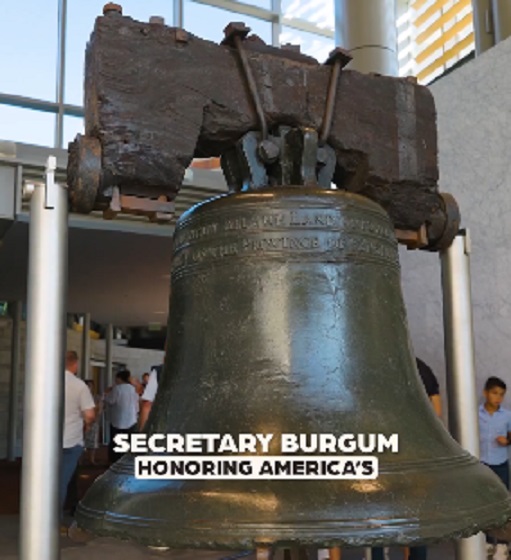

Foreign visitors heading to America’s crown-jewel national parks will soon face a steeper bill, as the Trump administration moves to prioritize U.S. taxpayers who already bankroll the system. The Department of the Interior announced Tuesday that starting in 2026, non-residents will be charged an additional $100 at 11 of the country’s busiest parks — a list that includes the Grand Canyon, Yellowstone, Yosemite, Acadia, Everglades, and other iconic destinations. The change accompanies a sharp increase in the cost of an annual all-parks pass for foreign tourists, which will jump to $250, more than triple the current rate. Americans and permanent residents will continue paying $80.
Interior Secretary Doug Burgum framed the policy as a straightforward matter of fairness. “President Trump’s leadership always puts American families first,” he said, arguing that U.S. households already subsidize the National Park System and deserve affordable access while international tourists contribute “their fair share” to the upkeep and expansion of the park network. It’s a pitch that aligns with Trump’s broader push to restore what he calls a sense of ownership and pride in the country’s natural treasures, and to make sure the burden of maintaining them doesn’t fall solely on American families.
We’re making it easier & more affordable for Americans to experience the beauty & freedom of our public lands!
In 2026, we’re launching:
– America-first pricing 💵
– Digital passes 📱
– Patriotic pass designs 🇺🇸
– Expanded motorcycle access 🏍️
– 5 additional fee-free days 🗓️ pic.twitter.com/a2SvHNBdSP— Secretary Doug Burgum (@SecretaryBurgum) November 25, 2025
The National Park Service recorded nearly 332 million visits in 2024 across its 63 designated national parks — a staggering figure that has placed heavy pressure on trails, facilities, and staff. While some parks charge per-vehicle fees and others by the individual, the $80 “America the Beautiful” pass covers the holder and all passengers or up to four adults. Under the new rules, foreign visitors who purchase the $250 annual pass will avoid the extra $100 at the 11 high-traffic parks, but all other overseas travelers will pay the surcharge at the gate.
The administration says the approach follows a July executive order from President Trump, aimed at preserving parkland “for American families” by ensuring those who don’t support the system through taxes help shoulder the cost of its growing maintenance needs. Burgum’s department also highlighted that U.S. visitors will continue to enjoy “patriotic fee-free days” tied to national observances — including President’s Day, Veterans Day, and Flag Day, which coincides with Trump’s birthday — while foreign visitors will pay full freight.
The move is expected to generate significant revenue from international tourism while reinforcing a message that has become central to Trump’s agenda: America’s natural wonders belong first to the taxpayers who fund them, and protecting access for those families comes before subsidizing the travel of visitors from abroad.


Why Japan wants Western Canadian LNG

Disclosures reveal Minnesota politician’s husband’s companies surged thousands-fold amid Somali fraud crisis
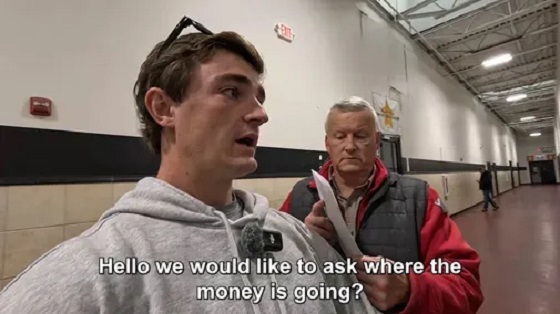
Mainstream media missing in action as YouTuber blows lid off massive taxpayer fraud

Trump confirms first American land strike against Venezuelan narco networks
-
International1 day ago
Trump confirms first American land strike against Venezuelan narco networks
-
 Business1 day ago
How convenient: Minnesota day care reports break-in, records gone
-
 Opinion2 days ago
Globally, 2025 had one of the lowest annual death rates from extreme weather in history
-
 Business1 day ago
The great policy challenge for governments in Canada in 2026
-
 International5 hours ago
Maduro says he’s “ready” to talk
-
 Bruce Dowbiggin6 hours ago
The Rise Of The System Engineer: Has Canada Got A Prayer in 2026?
-
 International5 hours ago
LOCKED AND LOADED: Trump threatens U.S. response if Iran slaughters protesters