
Health
Last day for fans at the Player’s Championship


PGA Commissioner Jay Monahan has just held a news conference to announce the PGA’s plans moving forward this weekend and beyond.
The Player’s Championship will continue this weekend without fans after today. The thoughts are that the players can continue because they play outside, the players distance themselves anyway, and there is little to no need for any physical contact.
Here’s the statement from their Website.
The PGA TOUR is aware of rapidly changing developments regarding COVID-19. With the information currently available, THE PLAYERS Championship will continue as scheduled, although we will absolutely continue to review recommendations from the Centers for Disease Control, World Health Organization and local health administrations. This is obviously a very fluid situation that requires constant review, communication and transparency, and we are dedicated to all three aspects. The PGA TOUR will provide an additional update by 12 p.m. ET on Thursday.
In the meantime, players in the field have been notified to be prepared to play Round 1, as scheduled.
Fans who no longer wish to attend THE PLAYERS Championship may request a refund or exchange; details on how to do so will be announced shortly. Please visit PGATOUR.COM/THEPLAYERS for more information.
LISTEN: My date with self-isolation amid the Covid 19 scare – J’Lyn Nye Interview


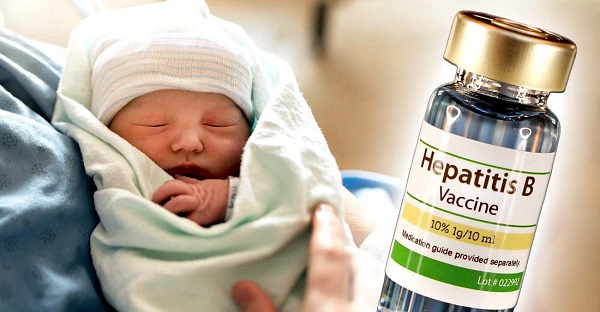

“While I question whether any baby should receive a vaccine against a rare disease in infancy, I am pleased that this is now a matter for parents and their healthcare practitioner to decide — not a state mandate based on a federal pharma-backed recommendation.”
Advisers to the Centers for Disease Control and Prevention (CDC) have voted to end a decades-long recommendation that all infants born in the U.S. receive the hepatitis B vaccine (Hep B) within 12-24 hours of birth.
Instead, for babies born to mothers who test negative for hepatitis B, the committee recommends that families determine whether to give their child the Hep B shot at birth through individual decision-making with their physician.
For infants who don’t get the birth dose, the committee recommends the initial dose of the vaccine not be administered until infants are at least 2 months old.
Three of the 11 committee members — Dr. Raymond Pollack, Dr. Cody Meissner and Dr. Joseph R. Hibbeln — opposed the recommendation. The remaining eight members supported it.
Andrew Johnson from the Centers for Medicare & Medicaid Services assured the committee that the language change will not affect Medicaid or insurance coverage of the vaccine.
For mothers whose hepatitis B status is unknown or who test positive, the birth dose recommendation remains in place.
Children’s Health Defense CEO Mary Holland, a long-time critic of the universal birth dose policy, welcomed the committee’s vote to “end the ill-considered universal recommendation for the Hep B birth vaccine dose.”
Holland added:
“The science behind that universal recommendation was a sham, based on thoroughly inadequate clinical trials. Hundreds of babies unquestionably died because of it. While I question whether any baby should receive a vaccine against a rare disease in infancy, I am pleased that this is now a matter for parents and their healthcare practitioner to decide — not a state mandate based on a federal pharma-backed recommendation.
“And while the ACIP [Advisory Committee on Immunization Practices] debate on this issue was tedious and rancorous at times, it is an extremely positive change that actual debate about childhood vaccines is occurring in government venues with impact. This is the transparency that Secretary Kennedy promised.”
Dr. Monique Yohanan, senior fellow for health policy at Independent Women, told The Defender there was never “a good science-based reason to have a universal vaccination that 99% of babies born in the United States are not at any risk,” and that the vote was “good news for babies.”
She added that she hoped it would “provide an opportunity to actually have outreach to the moms who are positive for hepatitis B, women who are immigrants, women who are IV drug users.” She said the previous policy was “performative compassion. And these are really underserved women who we ignored the outreach that they needed.”
The committee also voted 6-4 with one abstention that after the initial Hep B shot, parents should consult with healthcare providers to consider whether their child should have a serology test, which would show whether they had antibodies considered sufficient to protect them against the disease.
The committee voted to update the CDC Vaccines for Children (VFC) Program funding to match ACIP’s recommendations. Several committee members, including Meissner and Hibbeln, abstained from voting on the VFC resolution, protesting that they didn’t understand the implications of the vote — reflecting some of the disagreement that pervaded the two-day meeting.
The votes on the Hep B vaccine were originally scheduled for the September meeting, but were deferred to allow the CDC work group to put together more data to inform the committee’s decision.
Sunday’s vote was postponed from Saturday so members could have more time to review the language of the proposal.
Like flying in a plane that wasn’t safety tested?
The decision to postpone followed a contentious day-long meeting on Thursday, during which some members of the committee and liaisons from professional associations argued there was no need to change the recommendation, because there was no “evidence of harm” from the vaccine.
Advocates for changing the recommendation pointed to a near-complete lack of safety data — small clinical trials for the vaccines tracked infants for a week or less after the shot and little follow-up research on autoimmune and neurological disorders.
Big differences of opinion persisted at Sunday’s meeting.
ACIP member Retsef Levi, Ph.D., said that for parents whose children were at extremely low risk, the decision to give them the vaccine was analogous to flying in a plane — they wouldn’t get in a plane that hadn’t been safety tested, why should they give their child a vaccine that hadn’t been safety tested.
Meissner disagreed, saying, “We know vaccines are safe. There is no question that the COVID vaccine recommendations were dishonest, disingenuous, but the hepatitis B vaccine is very well established.”
In opening remarks, Dr. Robert Malone — who chaired the meeting because the newly named committee chairperson, Dr. Kirk Milhoun, is traveling — said “the credibility of the ACIP rests not on speed, but on rigor.”
Commenting on the heated discussions during Thursday’s meeting, Milhoun said that scientific debates are necessarily contentious.
“If they are not contentious, if they are not approached with rigor, then we end up with bad decisions. We end up with bad science. We must actively engage in responsible debate concerning contentious issues. We must boldly address change, risk new ideas, and conflicting hypotheses, which is the proper nature of evidence-based science.”
Dr. Jason Goldman, a liaison to the ACIP for the American College of Physicians, attacked opposing viewpoints as unscientific. Goldman said the Hep B vaccine discussion was “an unnecessary solution looking for a problem.”
‘If adults won’t go for the shots, then give them to babies’
The Hep B vaccine has been universally recommended for infants since 1991. The first shot is currently given within 24 hours after birth to prevent infection with hepatitis B from mothers who carry the disease — less than 0.5% of mothers.
Mothers can be tested in the hospital to determine whether they have the disease, and current tests have a 100% accuracy rate, according to FDA ex officio ACIP participant Tracy Beth Høeg, M.D., Ph.D.
However, a 1991 New York Times article posted on Substack yesterday by Dr. Meryl Nass showed that when the universal shot was rolled out, the goal was not to prevent maternal transmission — the goal was to prevent adult cases, at a time when adult cases were deemed a national crisis. However, adults commonly didn’t get the shot.
“If adults won’t go for the shots, then give them to babies,” the article said.
Following Thursday’s meeting, legacy media attacked the committee and the CDC’s presenters and highlighted charges of misinformation by liaison members. Liaisons are nonvoting members from professional medical organizations who can offer their opinions and advice to the committee.
Representatives from some of those groups, including the American Academy of Pediatrics (AAP) and the American Medical Association, were disinvited in August from participation in the workgroups due to conflicts of interest.
Since then, the AAP has boycotted the ACIP meetings
At the start of today’s meeting, Meissner castigated AAP for this move. He said he was concerned that by not participating, they would be seen as being more focused on making a political statement than attending to the health of children.
He said that pediatricians should be part of the discussions. “Refusal to participate in the ACIP meetings does not appear to be in the best interest of children.”
Immediately following today’s vote, the Times quoted “experts” from some of the staunchest advocates for all vaccines on the childhood schedule, such as the director of the Center for Infectious Disease Research & Policy, Michael Osterholm, Ph.D., saying that the vote shows federal health authorities can no longer be trusted.
Osterholm, a member of the COVID-19 Advisory Board under the Biden administration, is one of the key players in the “Vaccine Integrity Project,” funded by iAlumbra, a nonprofit founded by Walmart heiress and philanthropist Christy Walton. The project plans to make its own vaccine recommendations.
This Substack is reader-supported.
To receive new posts and support my work, consider becoming a free or paid subscriber.
Vaccine recommendations ‘should not be treated as mandates’
During the day-and-a-half-long discussion about the Hep B vaccine, several committee members, including Dr. Evelyn Griffin, raised concerns that the birth recommendation posed challenges for informed consent, because mothers who had just delivered babies were not in a position to calmly evaluate risks and benefits.
Others, including Levi, argued that the vaccine requirements for children to attend school effectively functioned as mandates.
Liaison members universally disagreed that the recommendations were mandates and argued that ACIP recommendations were really only recommendations, and parents could do what they wanted.
CDC ex officio member, Dr. Adam Langer, who was opposed to changing the recommendation, said that the recommendations had come to function as mandates, but that was not the intention. He proposed the committee make a formal statement that “all vaccine recommendations are recommendations. They should not be treated as mandates.”
He added that mandates put in place by state and local jurisdictions were “problematic.”
“We have a lot of challenges with our culture and our traditions in this country, with telling people what they must and must not do. But that’s not what we’re saying here. We’re saying that at the population level, in the majority of cases, this is what the sign shows is the best practice.”
He said providers should always make the best decision for the individual patient they are working with. “That’s the reason why you’ve been entrusted with a license to practice medicine.”
Watch the ACIP meeting here:
 |
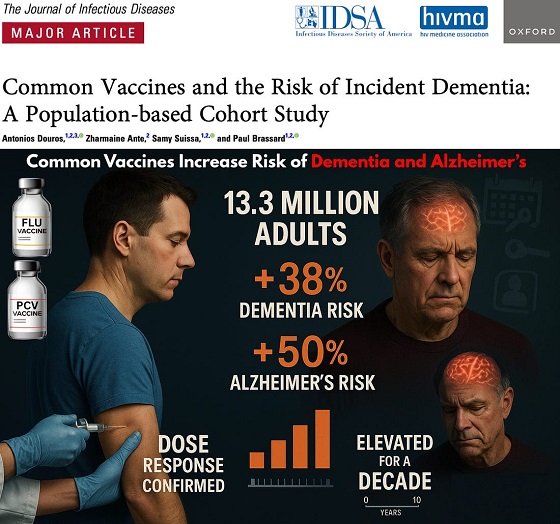

The single largest vaccine–dementia study ever conducted (n=13.3 million) finds risk intensifies with more doses, remains elevated for a full decade, and is strongest after flu and pneumococcal shots.
The single largest and most rigorous study ever conducted on vaccines and dementia — spanning 13.3 million UK adults — has uncovered a deeply troubling pattern: those who received common adult vaccines faced a significantly higher risk of both dementia and Alzheimer’s disease.
The risk intensifies with more doses, remains elevated for a full decade, and is strongest after influenza and pneumococcal vaccination. With each layer of statistical adjustment, the signal doesn’t fade — it becomes sharper, more consistent, and increasingly difficult to explain away.
And critically, these associations persisted even after adjusting for an unusually wide range of potential confounders, including age, sex, socioeconomic status, BMI, smoking, alcohol-related disorders, hypertension, atrial fibrillation, heart failure, coronary artery disease, stroke/TIA, peripheral vascular disease, diabetes, chronic kidney and liver disease, depression, epilepsy, Parkinson’s disease, cancer, traumatic brain injury, hypothyroidism, osteoporosis, and dozens of medications ranging from NSAIDs and opioids to statins, antiplatelets, immunosuppressants, and antidepressants.
Even after controlling for this extensive list, the elevated risks remained strong and remarkably stable.
Vaccinated Adults Had a 38% Higher Risk of Dementia
The primary adjusted model showed that adults receiving common adult vaccines (influenza, pneumococcal, shingles, tetanus, diphtheria, pertussis) had a:
38% increased risk of developing dementia (OR 1.38)
This alone dismantles the narrative of “vaccines protect the brain,” but the deeper findings are far worse.
Alzheimer’s Disease Risk Is Even Higher — 50% Increased Risk
Buried in the supplemental tables is a more shocking result: when the authors restricted analyses to Alzheimer’s disease specifically, the association grew even stronger.
50% increased risk of Alzheimer’s (Adjusted OR 1.50)
This indicates the effect is not random. The association intensifies for the most devastating subtype of dementia.
Clear Dose–Response Pattern: More Vaccines = Higher Risk
 |
The authors ran multiple dose–response models, and every one of them shows the same pattern:
Dementia (all types)
From eTable 2:
- 1 vaccine dose → Adjusted OR 1.26 (26% higher risk)
- 2–3 doses → Adjusted OR 1.32 (32% higher risk)
- 4–7 doses → Adjusted OR 1.42 (42% higher risk)
- 8–12 doses → Adjusted OR 1.50 (50% higher risk)
- ≥13 doses → Adjusted OR 1.55 (55% higher risk)
Alzheimer’s Disease (AD) Shows the Same—and Even Stronger—Trend
From eTable 7:
- 1 dose → Adjusted OR 1.32 (32% higher risk)
- 2–3 doses → Adjusted OR 1.41 (41% higher risk)
- ≥4 doses → Adjusted OR 1.61 (61% higher risk)
This is one of the most powerful and unmistakable signals in epidemiology.
Time–Response Curve: Risk Peaks Soon After Vaccination and Remains Elevated for Years
 |
Another signal strongly inconsistent with mere bias: a time-response relationship.
The highest dementia risk occurs 2–4.9 years after vaccination (Adjusted OR 1.56). The risk then slowly attenuates but never returns to baseline, remaining elevated across all time windows.
After 12.5 years, the risk is still meaningfully elevated (Adjusted OR 1.28) — a persistence incompatible with short-term “detection bias” and suggestive of a long-lasting biological impact.
This pattern is what you expect from a biological trigger with long-latency neuroinflammatory or neurodegenerative consequences.
Even After a 10-Year Lag, the Increased Risk Does Not Disappear
When the authors apply a long 10-year lag — meant to eliminate early detection bias — the elevated risk persists:
- Dementia: OR 1.20
- Alzheimer’s: OR 1.26
If this were simply “people who see doctors more often get diagnosed earlier,” the association should disappear under long lag correction.
Influenza and Pneumococcal Vaccines Drive the Signal
Two vaccines show particularly strong associations:
Influenza vaccine
- Dementia: OR 1.39 → 39% higher risk
- Alzheimer’s: OR 1.49 → 49% higher risk
Pneumococcal vaccine
- Dementia: OR 1.12 → 12% higher risk
- Alzheimer’s: OR 1.15 → 15% higher risk
And again, both exhibit dose–response escalation — the hallmark pattern of a genuine exposure–outcome relationship.
Taken together, the findings across primary, supplemental, dose–response, time–response, stratified, and sensitivity analyses paint the same picture:
• A consistent association between cumulative vaccination and increased dementia risk
• A stronger association for Alzheimer’s than for general dementia
• A dose–response effect — more vaccines, higher risk
• A time–response effect — risk peaks after exposure and persists long-term
• Influenza and pneumococcal vaccines strongly drive the signal
• The association remains after 10-year lag correction and active comparator controls
This is what a robust epidemiologic signal looks like.
In the largest single study ever conducted on vaccines and dementia, common adult vaccinations were associated with a 38% higher risk of dementia and a 50% higher risk of Alzheimer’s disease. The risk increases with more doses, persists for a decade, and is strongest for influenza and pneumococcal vaccines.
Epidemiologist and Foundation Administrator, McCullough Foundation
Support our mission: mcculloughfnd.org
Please consider following both the McCullough Foundation and my personal account on X (formerly Twitter) for further content.
FOCAL POINTS (Courageous Discourse) is a reader-supported publication.
To receive new posts and support my work, consider becoming a free or paid subscriber.


A look inside the ‘floatel’ housing B.C.’s LNG workforce
Trump Deals Biden’s EV Dreams A Death Blow

Alberta will use provincial laws to stop Canadian gov’t from trying to confiscate legal firearms

FBI may have finally nabbed the Jan. 6 pipe bomber
-
Automotive2 days ago
Trump Deals Biden’s EV Dreams A Death Blow
-
 Focal Points2 days ago
Pharma Bombshell: President Trump Orders Complete Childhood Vaccine Schedule Review
-
 Alberta2 days ago
Premier Smith: Canadians support agreement between Alberta and Ottawa and the major economic opportunities it could unlock for the benefit of all
-
 Opinion2 days ago
Country music star Paul Brandt asks Parliament to toughen laws against child porn
-
 Automotive2 days ago
Canada’s EV Mandate Is Running On Empty
-
 Business1 day ago
Why Does Canada “Lead” the World in Funding Racist Indoctrination?
-
 Business1 day ago
Loblaws Owes Canadians Up to $500 Million in “Secret” Bread Cash
-
 Dan McTeague1 day ago
Will this deal actually build a pipeline in Canada?