
Education
Kindergarten Registration For Local Catholic Schools Starts January 9th

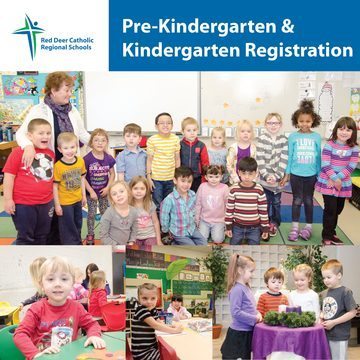
- Programming will be based upon registration.
École Camille J. Lerouge School
Pre-Kindergarten to Grade 9
French Immersion
5530-42A Avenue, Red Deer
403-347-7830
- Full day Tuesday/Thursday or Wednesday/Friday and scheduled Mondays.
Father Henri Voisin School
Pre-Kindergarten to Grade 5
60 Clearview Drive, Red Deer
403-341-4548
- Full day Tuesday/Thursday or Wednesday/Friday and scheduled Mondays.
Holy Family School
Pre-Kindergarten to Grade 5
69 Douglas Avenue, Red Deer
403-341-3777
- Full day Tuesday/Thursday or Wednesday/Friday and scheduled Mondays.
Maryview School
Pre-Kindergarten to Grade 5
3829 – 39 Street, Red Deer
403-347-1455
- Half day morning or afternoon class Monday – Friday.
St. Elizabeth Seton School
Pre-Kindergarten to Grade 5
35 Addinell Avenue, Red Deer
403-343-6017
- Full day Tuesday/Thursday or Wednesday/Friday and scheduled Mondays.
- Half day afternoon class Monday–Friday.
St. Martin de Porres School
Kindergarten to Grade 5
3911 – 57A Avenue, Red Deer
403-347-5650
- Full day Tuesday/Thursday or Wednesday/Friday and scheduled Mondays.
St. Patrick’s Community School (Year-round Pre-Kindergarten to Grade 9)
56 Holt Street, Red Deer, AB
403-343-3238
- Full day Tuesday/Thursday or Wednesday/Friday and scheduled Mondays.
St. Teresa of Avila School
Pre-Kindergarten to Grade 5
190 Glendale Boulevard, Red Deer
403-346-0505
- Full day Tuesday/Thursday or Wednesday/Friday and scheduled Mondays.
RURAL SCHOOLS
École Our Lady of the Rosary School
Pre-Kindergarten to Grade 2
English & French Immersion
4520 Ryder’s Ridge Boulevard, Sylvan Lake
403-343-2568
- Full day English or French Tuesday/Thursday or Wednesday/Friday and scheduled Mondays.
Holy Trinity Catholic School
Pre-Kindergarten to Grade 9
6610 – 57 Street, Olds
403-556-9444
- Full day, everyday Monday – Friday.
St. Gregory the Great Catholic School
Pre-Kindergarten – Grade 9
105 Cottonwood Drive, Blackfalds
- Full day Tuesday/Thursday or Wednesday/Friday and scheduled Mondays.
St. Marguerite Bourgeoys Catholic School
Pre-Kindergarten to Grade 9
English & French Immersion
4453 – 51 Avenue, Innisfail
403-227-2123
- Full day, everyday Monday – Friday.
- Full day Tuesday/Thursday and scheduled Mondays.
St. Matthew Catholic School
Pre-Kindergarten to Grade 8
5735 – 58 Street, Rocky Mountain House
403-845-2836
- Full day Monday/Wednesday or Tuesday/Thursday and scheduled Fridays.
(Photos courtesy of Red Deer Catholic Regional School Division)


From LifeSiteNews
By Ray Hilbrich
Great Salt Bay Community School gave the teen daughter a chest binder and told her they would keep her ‘gender transition’ a secret
A Maine mother has asked the Supreme Court to hear her parental rights case alleging that her daughter’s school concealed the child’s “gender transition” from her.
According to a December 22 petition by the Goldwater Institute, Maine mother, Amber Lavigne, said she had no idea that a school social worker advised her 13-year old daughter about “gender transitioning.”
In December 2022, Lavigne found a chest binder while cleaning her daughter’s room, which was revealed to have been given to her by a Great Salt Bay Community School social worker. Chest binders are garments used to flatten the female chest in order to create a more masculine appearance. The counselor agreed with Lavigne’s daughter to keep the “gender transition” a secret from her mother.
“This situation is really about my parental rights being violated,” stated Lavigne, adding, “It’s about a social worker who had never even had a conversation with me encouraging my child to keep secrets from me and telling my child that he wasn’t going to tell me about it so my child could keep it from me too.”
Lavigne was originally denied an appeal of the school’s parental rights violation when the First Circuit Court of Appeals refused to hear her claim.
“I have three kids who need an education and I would love to be able to send them to a public school, but in the current environment I’m not comfortable with that,” stated Lavigne.
The case closely resembles a December 22 decision by the U.S. District Court for the Southern District of California, which rebuked the state for attempting to exclude parents from their children’s “social transition.” The court’s injunction grants parents the right to disclosure if their children present “gender incongruence” at school.
“Parents and guardians have a federal constitutional right to be informed if their public school student child expresses gender incongruence,” states the court-ordered reminder for California public schools.
“Teachers and school staff have a federal constitutional right to accurately inform the parent or guardian of their student when the student expresses gender incongruence. These federal constitutional rights are superior to any state or local laws, state or local regulations, or state or local policies to the contrary.”
With the precedence of cases like the District Court of California, the Goldwater Institute promised to continue the fight for parents’ rights over public schools.
“As the Supreme Court considers the case, the Goldwater Institute will continue to fight for the rights of parents like Amber and stand up against public schools across the country that try and usurp the role of parents.”

From the Fraser Institute
Odds are, you can’t tell whether this sentence was written by AI. Schools across Canada face the same problem. And happily, some are finding simple solutions.
Manitoba’s Division Scolaire Franco-Manitobaine recently issued new guidelines for teachers, to only assign optional homework and reading in grades Kindergarten to six, and limit homework in grades seven to 12. The reason? The proliferation of generative artificial intelligence (AI) chatbots such as ChatGPT make it very difficult for teachers, juggling a heavy workload, to discern genuine student work from AI-generated text. In fact, according to Division superintendent Alain Laberge, “Most of the [after-school assignment] submissions, we find, are coming from AI, to be quite honest.”
This problem isn’t limited to Manitoba, of course.
Two provincial doors down, in Alberta, new data analysis revealed that high school report card grades are rising while scores on provincewide assessments are not—particularly since 2022, the year ChatGPT was released. Report cards account for take-home work, while standardized tests are written in person, in the presence of teaching staff.
Specifically, from 2016 to 2019, the average standardized test score in Alberta across a range of subjects was 64 while the report card grade was 73.3—or 9.3 percentage points higher). From 2022 and 2024, the gap increased to 12.5 percentage points. (Data for 2020 and 2021 are unavailable due to COVID school closures.)
In lieu of take-home work, the Division Scolaire Franco-Manitobaine recommends nightly reading for students, which is a great idea. Having students read nightly doesn’t cost schools a dime but it’s strongly associated with improving academic outcomes.
According to a Programme for International Student Assessment (PISA) analysis of 174,000 student scores across 32 countries, the connection between daily reading and literacy was “moderately strong and meaningful,” and reading engagement affects reading achievement more than the socioeconomic status, gender or family structure of students.
All of this points to an undeniable shift in education—that is, teachers are losing a once-valuable tool (homework) and shifting more work back into the classroom. And while new technologies will continue to change the education landscape in heretofore unknown ways, one time-tested winning strategy is to go back to basics.
And some of “the basics” have slipped rapidly away. Some college students in elite universities arrive on campus never having read an entire book. Many university professors bemoan the newfound inability of students to write essays or deconstruct basic story components. Canada’s average PISA scores—a test of 15-year-olds in math, reading and science—have plummeted. In math, student test scores have dropped 35 points—the PISA equivalent of nearly two years of lost learning—in the last two decades. In reading, students have fallen about one year behind while science scores dropped moderately.
The decline in Canadian student achievement predates the widespread access of generative AI, but AI complicates the problem. Again, the solution needn’t be costly or complicated. There’s a reason why many tech CEOs famously send their children to screen-free schools. If technology is too tempting, in or outside of class, students should write with a pencil and paper. If ChatGPT is too hard to detect (and we know it is, because even AI often can’t accurately detect AI), in-class essays and assignments make sense.
And crucially, standardized tests provide the most reliable equitable measure of student progress, and if properly monitored, they’re AI-proof. Yet standardized testing is on the wane in Canada, thanks to long-standing attacks from teacher unions and other opponents, and despite broad support from parents. Now more than ever, parents and educators require reliable data to access the ability of students. Standardized testing varies widely among the provinces, but parents in every province should demand a strong standardized testing regime.
AI may be here to stay and it may play a large role in the future of education. But if schools deprive students of the ability to read books, structure clear sentences, correspond organically with other humans and complete their own work, they will do students no favours. The best way to ensure kids are “future ready”—to borrow a phrase oft-used to justify seesawing educational tech trends—is to school them in the basics.

Paige MacPherson
Senior Fellow, Education Policy, Fraser Institute


Trump confirms first American land strike against Venezuelan narco networks

The U.S. Just Removed a Dictator and Canada is Collateral Damage
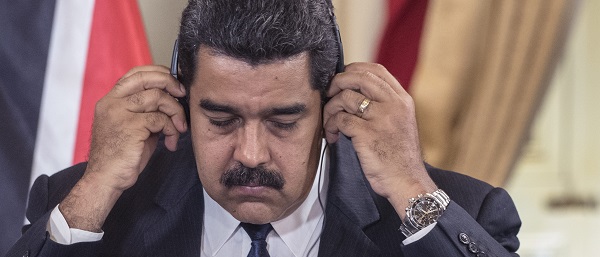
Scathing Indictment Claims Nicolás Maduro Orchestrated Drug-Fueled ‘Culture Of Corruption’ Which Plagued Entire Region

US Justice Department Accusing Maduro’s Inner Circle of a Narco-State Conspiracy
-
Daily Caller2 days ago
Scathing Indictment Claims Nicolás Maduro Orchestrated Drug-Fueled ‘Culture Of Corruption’ Which Plagued Entire Region
-
 Business2 days ago
Virtue-signalling devotion to reconciliation will not end well
-
 Opinion2 days ago
Hell freezes over, CTV’s fabrication of fake news and our 2026 forecast is still searching for sunshine
-
 Daily Caller2 days ago
Trump Says US Going To Run Venezuela After Nabbing Maduro
-
 COVID-192 days ago
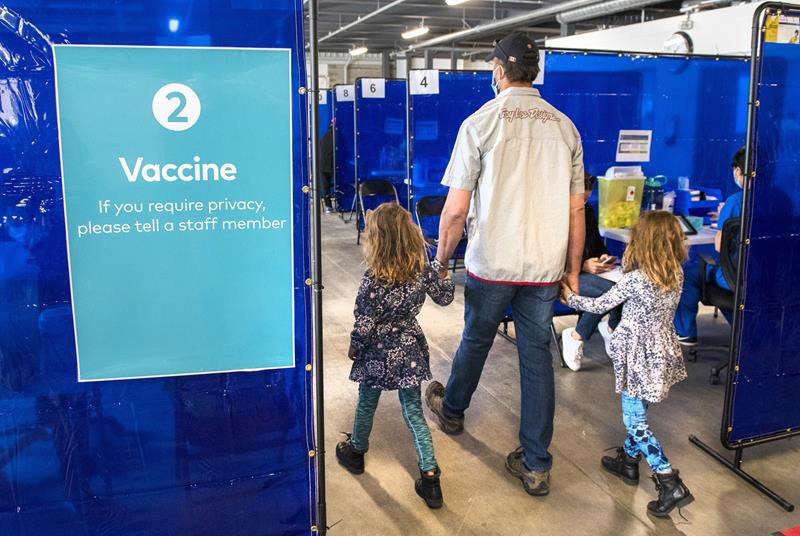
A new study proves, yet again, that the mRNA Covid jabs should NEVER have been approved for young people.
-
 Environment7 hours ago
Left-wing terrorists sabotage German power plant, causing massive power outage
-
 Frontier Centre for Public Policy9 hours ago
Is Canada still worth the sacrifice for immigrants?
-
 Energy6 hours ago
Trump’s Venezuela Move: A $17 Trillion Reset of Global Geopolitics and a Pivotal Shift in US Energy Strategy