
Travel
Flights restart at Hong Kong airport as protesters apologize


HONG KONG — Flights resumed at Hong Kong’s airport Wednesday after two days of disruptions marked by outbursts of violence that highlight the hardening positions of pro-democracy protesters and the authorities in the semi-autonomous Chinese city.
About three dozen protesters remained camped in the airport’s arrivals area a day after a mass demonstration and frenzied mob violence forced more than 100 flight cancellations. Additional identification checks were in place, but check-in counters were open and flights appeared to be operating normally.
Protesters spread pamphlets and posters across the floor in a section of the terminal but were not impeding travellers. Online, they also circulated letters and promotional materials apologizing to travellers and the general public for inconveniences during the past five days of airport occupations.
“It is not our intention to cause delays to your travels and we do not want to cause inconvenience to you,” said an emailed statement from a group of protesters. “We ask for your understanding and forgiveness as young people in Hong Kong continue to fight for freedom and democracy.”
The airport’s management said it had obtained “an interim injunction to restrain persons from unlawfully and wilfully obstructing or interfering” with airport operations. It said an area of the airport had been set aside for demonstrations, but no protests would be allowed outside the designated area.
The airport had closed check-in for remaining flights late Tuesday afternoon as protesters swarmed the terminal and blocked access to immigration for departing passengers. Those cancellations were in addition to 200 flights cancelled on Monday.
Hong Kong police said they arrested five people during clashes with pro-democracy protesters at the airport Tuesday night.
Assistant Commissioner of Police Operations Mak Chin-ho said the men, aged between 17 and 28, were arrested for illegal assembly. Two were also charged with assaulting a police officer and possessing offensive weapons as riot police sought to clear the terminal.
More than 700 protesters have been arrested in total since early June, mostly men in their 20s and 30s, but also including women, teenagers and septuagenarians.
Mak gave no further details, but said additional suspects were expected to be arrested, including those who assaulted an officer after stripping him of his baton and pepper spray, prompting him to draw his gun to fend them off.
Hong Kong law permits life imprisonment for those who commit violent acts or acts that might interfere with flight safety at an airport.
More than 74 million travellers pass through Hong Kong’s airport each year, making it “not an appropriate place of protest,” Mak said.
“Hong Kong police have always facilitated peaceful and orderly protests over the years, but the extremely radical and violent acts have certainly crossed the line and are to be most severely condemned,” he said. “The police pledge to all citizens of Hong Kong that we will take steps to bring all culprits to justice.”
That was backed up by a statement on a newly launched government website set up to provide the latest information on the crisis, which said, “The police will take relentless enforcement action to bring the persons involved to justice.”
Hong Kong airline Cathay Pacific said in a statement it had cancelled 272 flights over the past two days, affecting more than 55,000 passengers, while 622 departures and arrivals went ahead.
Cathay also said it has fired two pilots, in an apparent response to their involvement in activity related to pro-democracy protests.
They included one pilot who is “currently involved in legal proceedings.” The airline said earlier this week one of its pilots has been charged with rioting after being arrested during a protest.
It said the second fired pilot “misused company information,” but gave no further details. The Hong Kong Free Press reported that the pilot posted a photo of a cockpit screen on an online forum used by protesters.
The airport disruptions have escalated a summer of demonstrations aimed at what many Hong Kong residents see as an increasing erosion of the freedoms they were promised in 1997 when Communist Party-ruled mainland China took over what had been a British colony.
While Hong Kong’s crucial travel industry suffers major losses, the city’s reputation as a well-regulated centre for finance is also taking a hit. Some 21 countries and regions have issued travel safety alerts for their citizens travelling to Hong Kong, saying protests have become more violent and unpredictable.
The demonstrators are demanding Hong Kong leader Carrie Lam step down and scrap proposed legislation under which some suspects could be sent to mainland China, where critics say they could face torture and unfair or politically charged trials.
Lam has rejected calls for dialogue, saying Tuesday the protesters were threatening to push their home into an “abyss.”
In a statement Wednesday, the Chinese Cabinet’s liaison office in Hong Kong said the protesters had “entirely ruptured legal and moral bottom lines” and would face swift and severe repercussions under Hong Kong’s legal system.
“Their behaviour shows extreme contempt for the law, seriously damages Hong Kong’s international image and deeply hurts the feelings of the broad masses of their mainland compatriots,” the statement said.
Most of the protesters left the airport Tuesday after officers armed with pepper spray and swinging batons tried to enter the terminal, fighting with demonstrators who barricaded entrances with luggage carts. Riot police clashed briefly with the demonstrators, leading to several injuries and prompting at least one officer to draw a handgun on his assailants.
The burst of violence included protesters beating up at least two men they suspected of being undercover Chinese agents. Airport security appeared unable to control the crowd, and paramedics later took both men away. Police have acknowledged using “decoy” officers, and some protesters over the weekend were seen being arrested by men dressed like demonstrators — in black and wearing face masks.
Hu Xijin, editor-in-chief of the Global Times, identified one of the men as a journalist at the nationalistic Chinese tabloid.
“Fu Guohao, reporter of GT website is being seized by demonstrators at HK airport,” Hu wrote on his Twitter account. “I affirm this man being tied in this video is the reporter himself. He has no other task except for reporting.”
Protesters on Wednesday apologized that some of them had become “easily agitated and over-reacted.” On posters, the demonstrators said they have been “riddled with paranoia and rage” after discovering undercover police officers in their ranks.
Earlier this week, the central government in Beijing issued an ominous characterization of the protest movement as something approaching “terrorism” — a label it routinely applies to nonviolent protests of government policies on the environment or in minority regions such as Xinjiang and Tibet.
President Donald Trump tweeted that U.S. intelligence believes that the Chinese government is moving troops to its border with Hong Kong and that, “Everyone should be calm and safe!”
While China has yet to threaten using the army — as it did against pro-democracy protesters in Beijing in 1989 — recent police exercises across Hong Kong’s border with mainland China were a sign of its ability to crush the demonstrations, even at a cost to Hong Kong’s reputation as a safe haven for business and international exchange.
Images on the internet showed armoured personnel carriers belonging to the People’s Armed Police driving in a convoy Monday toward the site of the exercises.
___
Associated Press video journalist Katie Tam in Hong Kong and writer Kelvin Chan in London contributed to this report.
Vincent Thian And Yanan Wang, The Associated Press


From the Fraser Institute
By Alex Whalen and Jake Fuss
This holiday season, many Canadians will fly to spend time to with family and friends. But air travellers in Canada consistently report frustration with service, cost and choice. In its recent budget, the Carney government announced it will consider “options for the privatization of airports.” What does this mean for Canadians?
Up until the 1990s, the federal government served as both the owner and operator of Canada’s major airports. The Chrétien government partially privatized and transferred the operation of major airports to not-for-profit airport authorities, while the federal government remained the owner of the land. Since then, the federal government has effectively been the landlord for Canada’s airports, collecting rent each year from the not-for-profit operating authorities.
What would full privatization of airports look like?
If the government allows private for-profit businesses to own Canada’s major airports, their incentives would be to operate as efficiently as possible, serve customers and generate profits. Currently, there’s little incentive to compete as the operating authorities are largely unaccountable because they only report to government officials in a limited form, rather than reporting directly to shareholders as they would under privatization. Private for-profit airports exist in many other countries, and research has shown they are often less costly for passengers and more innovative.
Yet, privatization of airports should be only the first step in a broader package of reforms to improve air travel in Canada. The federal government should also open up competition by creating the conditions for new airports, new airlines and new investment. Currently, Canada restricts foreign ownership of Canadian airlines, while also restricting foreign airlines from flying within Canada. Consequently, Canadians are left with little choice when booking air travel. Opening up the industry by reversing these policies would force incumbent airlines to compete with a greater number of airlines, generating greater choice and likely lower costs for consumers.
Moreover, the federal government should reduce the taxes and fees on air travel that contribute to the cost of airline tickets. Indeed, according to our recent research, among peer countries, Canada has among the most expensive air travel taxes and fees. These costs get passed on to consumers, so it’s no surprise that Canada consistently ranks as a very expensive country for air travel.
If the Carney government actually privatizes Canada’s airports, this would be a good first step to introducing greater competition in an industry where it’s badly needed. But to truly deliver for Canadians, the government must go much further and overhaul the numerous policies, taxes and fees that limit competition and drive up costs.

Alex Whalen
Director, Atlantic Canada Prosperity, Fraser Institute

Jake Fuss
Director, Fiscal Studies, Fraser Institute
International
America first at the national parks: Trump hits Canadians and other foreign visitors with $100 fee

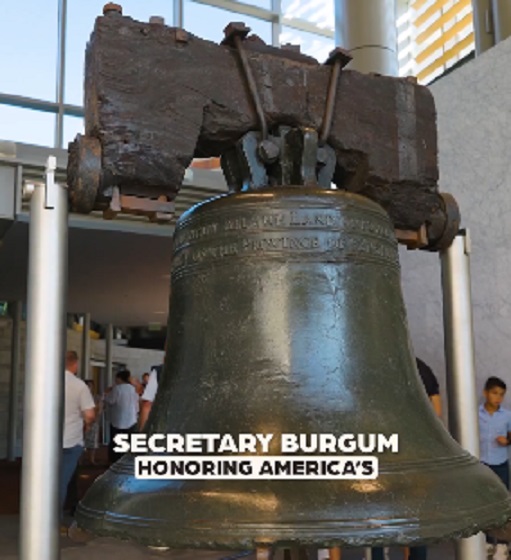

Foreign visitors heading to America’s crown-jewel national parks will soon face a steeper bill, as the Trump administration moves to prioritize U.S. taxpayers who already bankroll the system. The Department of the Interior announced Tuesday that starting in 2026, non-residents will be charged an additional $100 at 11 of the country’s busiest parks — a list that includes the Grand Canyon, Yellowstone, Yosemite, Acadia, Everglades, and other iconic destinations. The change accompanies a sharp increase in the cost of an annual all-parks pass for foreign tourists, which will jump to $250, more than triple the current rate. Americans and permanent residents will continue paying $80.
Interior Secretary Doug Burgum framed the policy as a straightforward matter of fairness. “President Trump’s leadership always puts American families first,” he said, arguing that U.S. households already subsidize the National Park System and deserve affordable access while international tourists contribute “their fair share” to the upkeep and expansion of the park network. It’s a pitch that aligns with Trump’s broader push to restore what he calls a sense of ownership and pride in the country’s natural treasures, and to make sure the burden of maintaining them doesn’t fall solely on American families.
We’re making it easier & more affordable for Americans to experience the beauty & freedom of our public lands!
In 2026, we’re launching:
– America-first pricing 💵
– Digital passes 📱
– Patriotic pass designs 🇺🇸
– Expanded motorcycle access 🏍️
– 5 additional fee-free days 🗓️ pic.twitter.com/a2SvHNBdSP— Secretary Doug Burgum (@SecretaryBurgum) November 25, 2025
The National Park Service recorded nearly 332 million visits in 2024 across its 63 designated national parks — a staggering figure that has placed heavy pressure on trails, facilities, and staff. While some parks charge per-vehicle fees and others by the individual, the $80 “America the Beautiful” pass covers the holder and all passengers or up to four adults. Under the new rules, foreign visitors who purchase the $250 annual pass will avoid the extra $100 at the 11 high-traffic parks, but all other overseas travelers will pay the surcharge at the gate.
The administration says the approach follows a July executive order from President Trump, aimed at preserving parkland “for American families” by ensuring those who don’t support the system through taxes help shoulder the cost of its growing maintenance needs. Burgum’s department also highlighted that U.S. visitors will continue to enjoy “patriotic fee-free days” tied to national observances — including President’s Day, Veterans Day, and Flag Day, which coincides with Trump’s birthday — while foreign visitors will pay full freight.
The move is expected to generate significant revenue from international tourism while reinforcing a message that has become central to Trump’s agenda: America’s natural wonders belong first to the taxpayers who fund them, and protecting access for those families comes before subsidizing the travel of visitors from abroad.


‘Almost Sounds Made Up’: Jeffrey Epstein Was Bill Clinton Plus-One At Moroccan King’s Wedding, Per Report

Argentina’s Milei delivers results free-market critics said wouldn’t work

Danielle Smith slams Skate Canada for stopping events in Alberta over ban on men in women’s sports
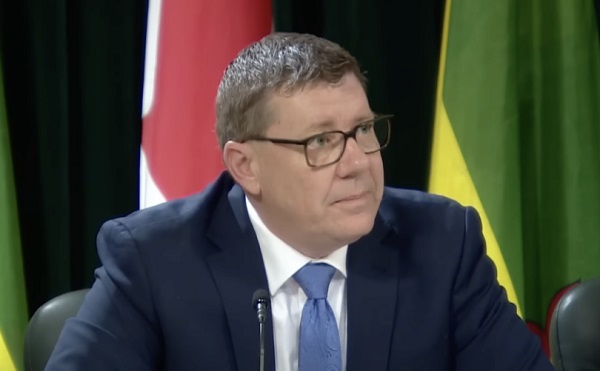
Saskatchewan woman approved for euthanasia urged to seek medical help in Canada rather than US
-
Daily Caller2 days ago
‘Almost Sounds Made Up’: Jeffrey Epstein Was Bill Clinton Plus-One At Moroccan King’s Wedding, Per Report
-
Business18 hours ago
Argentina’s Milei delivers results free-market critics said wouldn’t work
-
 Alberta2 days ago
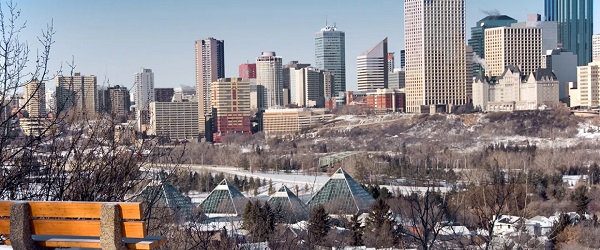
Housing in Calgary and Edmonton remains expensive but more affordable than other cities
-
 Business1 day ago
State of the Canadian Economy: Number of publicly listed companies in Canada down 32.7% since 2010
-
 International1 day ago
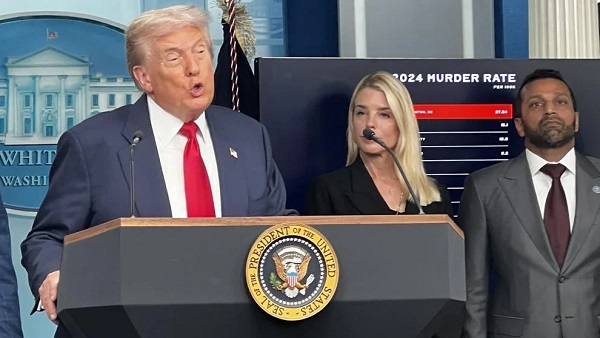
DOJ fails to fully comply with Friday deadline for Epstein files release
-
 Bruce Dowbiggin1 day ago
Hunting Poilievre Covers For Upcoming Demographic Collapse After Boomers
-
 Business2 days ago
Trump signs order reclassifying marijuana as Schedule III drug
-
 Alberta1 day ago
Alberta’s new diagnostic policy appears to meet standard for Canada Health Act compliance