
Agriculture
Farm families honoured for +100 years on the land


Farm families honoured at Ukrainian Village
August 01, 2018
Alberta families who have farmed the same land for 100 years or more are being recognized with Century Farm and Ranch awards.
Recipients of the award receive a bronze plaque to commemorate this significant milestone. A total of 96 families are being recognized across the province, including 17 families who will be honoured at the Ukrainian Cultural Heritage Village on Aug. 2.
“Agriculture is at the core of who we are as Albertans. It’s an integral part of the foundation of our province’s cultural heritage, our strong economy and our vibrant rural communities. It is an honour to recognize these founding families and their legacy. Our government continues to support the sustainable growth of our local food industry and the hard-working entrepreneurs in this sector.”
Oneil Carlier, Minister of Agriculture and Forestry
“There are not very many farms that make it to 100 years in one family. We feel very lucky to have stayed together on this land. I’ve been here from the time when we were seeding land with a team of four horses to the modern tractors now. I have to say, I prefer the air conditioned cabs!”
Steve Holowaychuk of Smoky Lake, Century Farm and Ranch Award recipient
Since 1993, more than 1,750 families have received the Government of Alberta’s Century Farm and Ranch awards.
Agriculture is the province’s largest renewable industry, with exports valued at more than $11 billion annually. There are more than 40,000 farms in Alberta, totalling more than 50 million acres.
Alberta Century Farm and Ranch Award recipients being recognized at the Ukrainian Cultural Heritage Village:
- The Austin Family of Paradise Valley
- The Botten Family of Boyle
- The Cadieux Family of Lac La Biche
- The Chomik Family of Bruce
- The Flack Family of Spedden
- The Fletcher Family of Wainwright
- The Francis Family of Ardrossan
- The Giebelhaus Family of Bruce
- The Goldsmith Family of Dewberry
- The Holowaychuk Family of Smoky Lake
- The Johnson Family of Lloydminster
- The Kiziak Family of Derwent
- The Koles Family of Willingdon
- The Lundgren Family of St. Paul
- The Minailo Family of Willingdon
- The Skoreyko Family of Bellis
- The Zazula Family of St. Michael

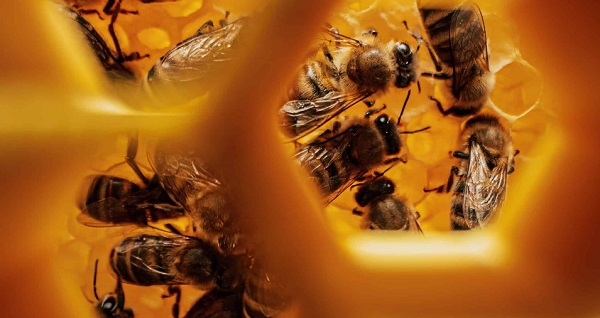

Canada’s Bee Apocalypse began in 2008. That was the year the Canadian Association of Professional Apiculturists (CAPA) first reported unusually high rates of winter bee colony losses. At 35 percent, the winter die-off that year was more than twice the normal 15 percent rate of attrition.
“Successive annual losses at [these] levels … are unsustainable by Canadian beekeepers,” the CAPA warned. This set off an avalanche of dire media reports that now appear on a regular basis. Among the many examples over the years: Huge Honey Bee Losses Across Canada” and “Canada’s bee colonies see worst loss in 20 years”. As each of these stories reminds readers, the disappearance of honey bees will doom our food supply, given their crucial role in pollinating crops including canola, soyabeans, apples, tomatoes and berries.
This year the black-and-yellow striped Cassandras are back at work, with headlines shouting “Scientists warn of severe honeybee losses in 2025” and “The Bees are Disappearing Again”. If it’s spring, the bees must be disappearing. Again.
It is, however, mathematically impossible for any species to be in an allegedly continuous and calamitous state of decline over nearly two decades and never actually reduce in number. For despite the steady supply of grave warnings regarding their imminent collapse, Canada’s bees are actually buzzing with life.
In 2007, according to Statistics Canada, there were 589,000 honey bee colonies in Canada,; in 2024, they reached 829,000, just shy of 2021’s all-time high of 834,000. Figuring a conservative summertime average of 50,000 bees per colony, that means there are approximately 12 billion more honey bees in Canada today than when the Bee Apocalypse first hit.
As for beekeepers, their numbers have also been growing steadily, and now stand at 15,430 – the most recorded since 1988. As CAPA’s report acknowledges, “the Canadian beekeeping industry has been resilient and able to grow, as proven by the overall increase in the number of bee colonies since 2007 despite the difficulties faced every winter.”
How is this possible? As is usually the case where there’s a need to be filled, the market holds the answer.
It is true that Canadian honey bees face a long list of threats and challenges ranging from mites and viruses to Canada’s harsh winters. It is also true that they perform a crucial service in pollinating crops, the value of which is estimated at $7 billion annually. However, this underscores the fact that bees are a livestock bred for a particular agricultural purpose, no different from cattle, chickens or pen-raised salmon. They are a business.
And in spite of its alleged status as an environmental totem, the honey bee isn’t even native to North America. It was first imported by European settlers for its honey-making abilities in the 1600s. Since then, it has been cultivated with deliberate commercial intent – allowing it to outcompete native pollinators such as bumble bees and butterflies even though it is poorly suited to the local winter. (This highlights the irony of all those native-plant pollinator gardens virtuously installed in neighbourhoods across Canada that end up supporting an invasive honey bee population.)
The significance of the bee economy means that when a beehive collapses over the winter for whatever reason, beekeepers have plenty of motivation to regenerate that colony as swiftly as possible. While hives can create their own queens over time, this can be a slow process given the cold Canadian climate. The better option is to simply buy a new queen from a warmer country.
In 2024, Canada imported 300,000 queens worth $12 million, mostly from the U.S., Italy, Australia and Chile. That works out to $40 each. In a miracle of nature, each of these new queens can lay up to 2,500 eggs a day, and each egg takes just two to three weeks to reach full maturity as a worker or drone. It is also possible to import entire “bee packages” that include a queen and 8,000 to 10,000 bees.
As a result, even a devastating 50 percent winter loss rate, something that has occurred only rarely in Canada in individual provinces and never nationally, isn’t necessarily fatal to any beekeeping operation. The beekeeper can purchase imported queens in April, split their existing colonies and be back in business by May or June.
And regardless of the honey bee’s apparent difficulties with Canada’s unforgiving weather (efforts are ongoing to breed a hardier Canadian variant), there’s no shortage of bees worldwide. Earlier this year, the German statistical agency reported the global beehive count rose from 69 million in 1990 to 102 million in 2023. Another study looking back to 1961 by New Zealand researchers found the number of honey bee colonies has “nearly doubled” over this time, while honey production has “almost tripled.” As the New Zealand report observes, “Headlines of honey bee colony losses have given an
impression of large-scale global decline of the bee population that endangers beekeeping, and that the world is on the verge of mass starvation.” Such claims, the authors note, are “somewhat inaccurate.” In truth, things have never been better for bees around the world.
Here in Canada, the ability to import queens from other countries, together with their prodigious reproductive capabilities, backstops the amazing resiliency of the bee industry. Yes, bees die. Sometimes in large numbers. But – and this is the bit the headlines always ignore – they come back. Because the market needs them to come back.
If there is a real threat to Canada’s bee population, it’s not environmental. It’s the risk that unencumbered trade in bees might somehow be disrupted by tariffs or similar bone-headed human interventions. Left on their own, bees have no problem keeping busy.
The longer, original version of this story first appeared at C2CJournal.ca
Agriculture
Canada Greenlights Mass Culling of 400 Research Ostriches Despite Full Recovery from Bird Flu Months Ago


 Nicolas Hulscher, MPH
Federal court upholds CFIA’s reckless cull order—setting a dangerous precedent for the unscientific mass depopulation of genetically important animals.
In March, I interviewed Katie Pasitney of Universal Ostrich and Connie Shields to discuss the alarming implications of the Canadian Food Inspection Agency (CFIA) order to cull 400 research ostriches at Universal Ostrich Farm in British Columbia over bird flu:
Canada Orders Mass Culling of 400 Research Ostriches Over Bird Flu, Refuses to Test Surviving Birds for Natural Immunity
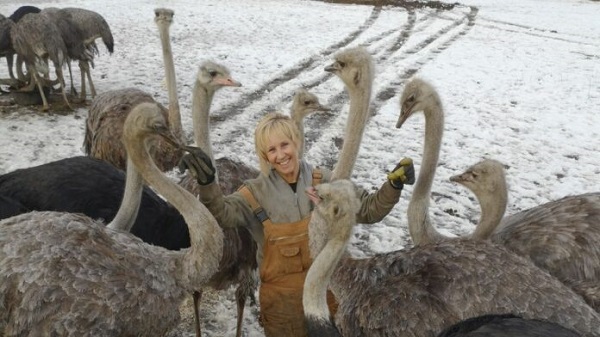
·The Canadian Food Inspection Agency (CFIA) has ordered the culling of 400 ostriches at Universal Ostrich Farm in British Columbia, citing concerns over H5N1 bird flu. However, this decision is not based on sound science and could have serious consequences for both food security and medical research.
Universal Ostrich Farm is a research facility focused on studying the unique antibody-producing capabilities of ostriches. Their research has demonstrated potential in neutralizing viruses, bacteria, and even COVID-19, making it an important contribution to medical science.
In December 2024, the CFIA claimed that two deceased ostriches—which had been lying outside for over 16 hours—tested positive for H5N1 via PCR testing. Just 41 minutes after receiving these results, the CFIA signed an order to cull the entire flock.
The CFIA initially granted the farm an exemption, recognizing the birds as “genetically important.” Later, without clear justification, they reversed this decision, ordering their destruction.
Despite the importance of this research, the CFIA has refused to conduct further testing on the birds and has banned the farm from conducting its own tests, under threat of heavy fines and possible imprisonment. Why is the Canadian government refusing to study the potential antibodies ostriches have developed against H5N1 bird flu?
On January 31, 2025, a court granted a temporary stay of execution, halting the cull. However, the CFIA is appealing this decision, which means the culling could still proceed.

Today, we have received news that the reckless mass cull order will proceed despite their ostriches having already recovered months ago and developed natural immunity against H5N1:

Official Announcement: Federal Court Decision in Universal Ostrich Farms Inc. v. Canadian Food Inspection Agency
Dear friends and supporters,
We are absolutely devastated to share today’s Federal Court decision, issued on May 13, 2025. The court ruled in favour of the Canadian Food Inspection Agency (CFIA), upholding their order to destroy our beloved ostriches and rejecting our plea to save them.
The court’s decision accepted the CFIA’s justification under the Health of Animals Act and their use of the Stamping-Out Policy, which mandates the destruction of animals to control disease outbreaks, regardless of their health status. The court confirmed the CFIA’s approach, prioritizing trade obligations over the welfare of our animals.
In addition, we’ve been ordered to pay $15,000 in CFIA’s legal costs. You can read the full decision here: (2025 FC 878). https://saveourostriches.com/wp-content/uploads/2025/05/JR-T-294-25-and-T-432-25-Final.pdf
We are heartbroken by this outcome and uncertain about the future of our farm. As we navigate this incredibly difficult time, we ask for your patience and continued support. If you are able, please consider making a donation to help us manage the financial and emotional toll this has taken.
Thank you,
Universal Ostrich Farm
http://SaveOurOstriches.com
This deeply misguided decision sets a dangerous precedent for the Canadian government to recklessly depopulate animals at will.
By upholding the CFIA’s reckless cull order, despite the ostriches’ recovery and natural immunity, the court has prioritized trade protocols over scientific inquiry, animal welfare, and the advancement of life-saving medical research.
Epidemiologist and Foundation Administrator, McCullough Foundation
www.mcculloughfnd.org
Please consider following both the McCullough Foundation and my personal account on X (formerly Twitter) for further content.

The Quiet Invasion: How Transnational Crime and Chinese State Actors Infiltrated Vancouver and Eroded Canada’s Sovereignty

Boxing authority says allegedly male competitor should return Olympic medal won against women

Canada’s euthanasia regime is not health care, but a death machine for the unwanted

Alberta’s government is investing $5 million to help launch the world’s first direct air capture centre at Innisfail
-
 Alberta7 hours ago
Alberta Independence Seekers Take First Step: Citizen Initiative Application Approved, Notice of Initiative Petition Issued
-
 Automotive1 day ago
Electric vehicle sales are falling hard in BC, and it is time to recognize reality.
-
 Automotive1 day ago
Power Struggle: Electric vehicles and reality
-
 Business9 hours ago
Canada Caves: Carney ditches digital services tax after criticism from Trump
-
 Business1 day ago
Trump on Canada tariff deadline: ‘We can do whatever we want’
-
 Crime9 hours ago
Suspected ambush leaves two firefighters dead in Idaho
-
 Brownstone Institute2 days ago
FDA Exposed: Hundreds of Drugs Approved without Proof They Work
-
 Energy1 day ago
China undermining American energy independence, report says