
Business
My European Favourites – Segovia, Spain

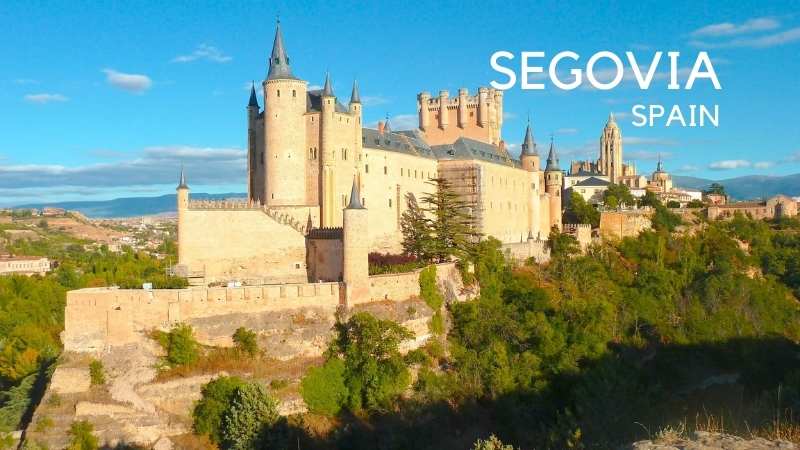
 Spain is one of our favourite countries to visit in Europe. The warm sunshine, the history, the architecture, the gastronomy, and above all, the passionate and friendly people make it a desirable location. We have been to Spain with sightseeing groups, school groups and soccer groups. Madrid, the Spanish capital is always included in our itineraries. In addition to exploring the city, there are numerous worthwhile day trips to surrounding towns. Segovia is one of those towns.
Segovia is located about an hour northwest from Madrid and the day trip is sometimes combined with a stop in the nearby medieval walled city of Ávila. Segovia is just inside the large northwestern Castile and León region of Spain. The region consists of an expansive high plateau surrounded by a ring of mountains.
Segovia’s old town is perched high on a rocky hill surrounded by the Eresma and Clamores rivers. Declared a UNESCO World Heritage site in 1985, the old town features an impressive cathedral, numerous Roman churches, a Jewish quarter, and the striking Alcazar or castle. The town is full of Roman and medieval structures including the massive Roman aqueduct.
A Brief History Of Segovia
There was already a settlement by the Aravaci, a Celtic people, for over 600 years in Segovia prior to the Romans arriving in 96 BC. The Romans installed a military installation here to control access to the Douro River region in the north, and they built the aqueduct to bring in fresh water from the surrounding mountains. After the Romans left, Segovia was inhabited by people from northern Europe until the Spanish invasion by the Moors in the early 8th century.

Panoramic view of Segovia with the Cathedral at the centre.
After the reconquest by Christian Kin Alphonso VI in 1079, Segovia was resettled by Christians. Numerous parishes and monasteries were established in area. Due to its location on main trading routes, Segovia reached its golden age during the middle ages due to the foundation of a cloth industry. The town experienced a rise in the Jewish population and became an important centre for wool and textiles.
In the 13th century, Alfonso X, King of Castile, León and Galicia, made Segovia his residence.
Later in the 15th century Henry IV, King of Castile, also made Segovia his residence, built important buildings, renovated the Alcazar, and made Segovia the site of the Royal Mint.
Segovia is also known as the place where Isabella the Catholic pronounced herself Queen of Castile in the church of San Miguel in 1474. Afterwards, she married king Ferdinand II, King of Aragon, to create a unified Spain. They are probably best known for financing the voyages of Christopher Columbus.
In the mid 16th century there was a revolt by the citizens of Castile against King Charles I and his administration. The “War of the Communities of Castile” lasted 18 months from April 1520 to October 1521. One of the rebel leaders, Juan Bravo, was from Segovia and has a statue in the main square. He was captured in the Battle of Villalar along with two other prominent rebel leaders. They were beheaded the following day. Despite the rebellion Segovia remained prosperous and the population grew to approximately 27,000.
Segovia’s decline started with an outbreak of the plague in the late 16th century and then mostly by the subsequent 17th century collapse of the textile industry. By 1694, the population dropped to just 8,000. Later attempts to revive the textile industry by King Charles III failed. In 1764 a military academy, the Royal School of Artillery, was established and is still in operation. In 1808, during the Napoleonic wars, Segovia was sacked by French troops.
19th century Spain had three Carlist Wars related to claims to the throne of Spain. During the first Carlist War, Segovia was unsuccessfully attacked. Since then, it has escaped military destruction, including during the Spanish Civil war from 1936 to 1939 that pitted the Republicans against the Nationalists led by Francisco Franco. In fact, since 1920 the population of Segovia has grown from 16,000 to over 50,000 in the early 80s. The population has stabilized in the last 40 years and the economy along with it.

The Roman Aqueduct, the Candido restaurant, and the aqueduct from the Plaza del Azoguejo.
The Roman Aqueduct
Our walking tour begins at the Plaza del Azoguejo and you can find a google map of our walk at www.azorcan.net/media to follow along. Once a market place, the plaza is located at the foot of the colossal Aqueduct of Segovia. The 28.5 meters tall aqueduct bridge, known locally as El Puente (the bridge), is one of the best preserved in the world. Built by the Romans at the end of the 1st century from stacked granite, the aqueduct transported water over 15 kilometers over rolling hills from the Sierra mountains to the town. The pillars and arches are solid rock with very little mortar in between. The aqueduct continued to supply water for many centuries after being built by the Romans and is one of the most recognizable landmarks in Spain.
The Artillery Academy of Segovia, which recently celebrated a 250 year anniversary in Segovia, is located a few blocks from the plaza in a former 15th century Franciscan convent with an interesting Gothic cloister.
Located in a half-timbered house on the south side of the Plaza del Azoguejo, you will find the famous Cándido restaurant. Since 1905, three generations of the Cándido family have been serving their famous suckling pig, stews and wines. The official Tourist Office of Segovia is located across the square from the Cándido. From the plaza, we will walk up the Calle Cervantes. Calle means street, and this one is named after the most famous Spanish literary figure, Miguel de Cervantes. Cervantes is best known for being the author of the literary classic, Don Quixote.

The Miradouro de la Canaleja, the panoramic view, and an interesting building at the viewpoint.
The Medina de la Campo and the Jewish Quarter
About 200 meters from the Plaza del Azoguejo, we arrive at an observation terrace named the Mirador de la Canaleja. Here we can admire a fantastic panoramic view of the lower town’s pastel colored buildings with red roof tops.
There is an interesting light blue building on the north side of the Mirador with three stacked sunrooms. We walk along the side of this building on the Calle Juan Bravo, the street named after Segovia’s rebel leader. A few steps away on the right is the eye-catching Casa de los Picos. The 15th century historic Gothic-Renaissance building is decorated with numerous pyramids or diamond tips made from granite and now houses the School of Art and Superior Design.

The Palacio de Cascales façade, the narrow Calle de Juan Bravo, and the Casa de los Picos.
A bit further on the Calle Juan Bravo we will come upon a little plaza on the left that leads to the Palacio de Cascales. The palace is known by a few names from its past including the Aspiroz or the del Conde Alpuente. Nowadays, it is used for the offices of the Ministry of Development of the Junta de Castilla y León. The palace was built in the 15th century by a prominent knight from Segovia named, Alonso Cascales. Its façade features Gothic windows, a unique pattern on the walls, and a Moorish or Mudejar arch kept from the original Arab building that was once there.

The Church of San Martin, statue of Juan Bravo in front of the Tower of Lozoya, and one of our school soccer academy groups.
A short distance away along the Calle Juan Bravo is the square of Medina del Campo. The square contains three notable buildings, the house of Juan Bravo, the Tower of Lozoya and the Church of San Martin. The 14th century rectangular shaped Tower of Lozoya, was once used as an armoury. The tower is now used to exhibit contemporary art. The 12th century catholic Church of San Martin, at the centre of the square, is an interesting mix of Arabic and Romanesque elements.
Moving forward on the Calle Juan Bravo, we will reach the small square Plaza Corpus. The square is named after the Corpus Christi Church which is located on the left side of the square. The church was once the largest Jewish Synagogue in Segovia starting in the 13th century. You can visit the interesting church that was converted from a synagogue in 1410 as it is open to the public.
At the Plaza Corpus you will reach a fork in the rod. The Calle la Juderia Vieja (Old Jewish Quarter Street) is on the left, and as the name implies, it leads to the Jewish Quarter. We will take the Calle Isabella la Catolica (Isabella the Catholic) on the right to the Plaza Mayor (Main Square).

Entrance to the Corpus Christi Church. The town hall and cathedral on the Plaza Mayor.
Plaza Mayor
The Plaza Mayor is the central hub of the town of Segovia. The large rectangular cobblestone square has a performance gazebo at its centre surrounded by trees. The square was once a market place in medieval times, and Segovia’s citizens still meet here to celebrate festivals and to enjoy the numerous bars and restaurants spilling onto the square from the arcades. The square still hosts a market every Thursday. The La Concepción on the north side of the square is a bit pricy, but its terrace is a great place from which to people watch. Next to the restaurant is the 17th century Segovia town hall.
On the east side of the Plaza Mayor is the Juan Bravo Theatre. Built in 1917 and refurbished in the 1980s, it is the principal theatre of Segovia. A few steps away on the south east of the square behind the luxury priced Villena restaurant is the 16th century gothic San Miguel Church.
The church is famous for being the place where, in 1474, Isabella the Catholic was crowned Queen of Castile. Exploring the maze of alleys and squares behind the San Miguel Church, you will find various interesting and moderately priced bars and restaurants. The El Sitio and the El Figon de los Comuneros are two great choices for lunch.

The Segovia Cathedral on the Plaza Mayor and a panoramic view of the cathedral and its tall tower.
Located on the west side of the square, the main building on the Plaza Mayor is the Cathedral of the Assumption. As the highest point of Segovia, the cathedral, built in late gothic style between 1525-1577, can be seen for miles around. Construction began after the original cathedral, located near the Alczar, burned in 1520. The cathedral can be toured and the view from the cathedral tower is memorable.

The Tower of John II at the entrance to the Alcazar, the Weapons Patio and the Clock Yard.
Segovia Alcazar
From the cathedral, we will walk about 600 meters on the Calle Marques del Arco which becomes the Calle Daoiz to the Plaza la Reina Victoria Eugenia (Square of Queen Victoria Eugenia). The Queen’s square is a nice garden located at the forefront of the entrance to the Alcazar. In addition to the imposing castle façade, there are great views of the Spanish countryside from the garden. On the left, there is a building called the Casa de la Química. There is a cafeteria there with a nice terrace with an amazing view of the town. There are better places for a meal, but it’s a good place to enjoy a drink under the shade of a patio umbrella on a hot day.
Like most fortresses, the Alcazar is built on an elevated area that offers a natural defensive advantage. The Alcazar’s site, on a large rock promontory at the spur of the Eresma and Clamores rivers, was a fort during the Roman occupation in the 1st century. Since Roman times, the castle has been rebuilt and expanded many times over hundreds of years by different people including the Romans, the Muslim Umayyad Dynasty in the 8th century and eventually the Spanish in the 12th century. Over time, the Alcazar has been used as a fortress, a royal palace, a prison, and a military school. The picturesque Alcazar is now a museum, a major tourist attraction, and one of the most recognizable castles in Europe. The original building from the 13th century was painstakingly restored after a devastating fire in 1862.

Statue of Ferdinand VI, the Armoury, the Throne Room, the Chapel and a panoramic view.
Approaching the Alcazar from the Queen’s square, we are faced with the imposing Tower of John II and the draw bridge. Once inside there are two staircases with 156 steps leading to the top of the tower where you can enjoy a great view of Segovia. Entering further, we arrive at the first major open area of the fortress, the Parade or Weapons Patio with a colonnade and upper walk way. This is the largest open space in the Alcazar, and along with the next outdoor area, the Clock Yard, has a great deal of Moorish influence.
At the back of the fortress, there is the Armoury with medieval flags, lances, swords, knights armour and even armour for horses. The “V” shaped well terrace at the very back looks like the bow of a boat gives the castle the appearance of being a large rock ship. The Alcazar’s garden, with shrubs in geometric shapes, is also located at the back of the castle.

The Alabaster Hall, stained glass with the Spanish coat of arms and the Armoury.
Other interesting rooms include the Chapel, Throne Room, Royal Bedrooms, a Pineapple Room, the Alabaster Hall and the Kings Hall with 52 sculptures of kings that ruled the area for hundreds of years. The Museum of the Royal Artillery School in the Alcazar contains documents, scale models, weapons and uniforms from the 18th and 19th centuries. At the base of the castle and along exterior of the city walls there is a network of connected gardens and wooded areas.

The Monastery of Santa Maria del Parral and the Church of Vera Cruz.
View from the Alcazar
From the Alcazar’s Tower of John II, you will have a great view of the surrounding area’s rolling hills, churches and monasteries. You can’t miss the impressive 15th century Monastery of Santa Maria del Parral that was founded by Henry IV of Spain. The monastery’s church was built in gothic style, while the later built bell tower has a Romanesque top. The monastery, currently owned by the Order of St. Jerome, has four interesting cloisters in built in various architectural styles.
Looking to the left from the monastery, we see the tower of the Romaesque Church of San Marcos at the bottom of a winding road. As we look up along the road, we will see the larger Convent of San Juan de la Cruz on the left and the unique Church of Vera Cruz on the right. The Church of the Vera Cruz was founded by the Knights of the Order of the Holy Sepulchre of Jerusalem in 1208. The Romanesque style church was built in the shape of a twelve-sided polygon with three semi-circular chapels. The design of the church was inspired by the Holy Sepulchre in Jerusalem that the order was named after.

El Sitio restaurant, sucking pig, patatas bravas, tapas and sangria.
Dinner
Segovia is a great place to enjoy traditional Spanish cuisine and in restaurants with matching architecture and atmosphere. The local specialities include roasted suckling pig (cochinillo), suckling lamb (lechazo), Cantimpalos chorizos, wild mushrooms and a traditional layer cake named Ponche Segoviano.
One of the best places to enjoy a meal in Segovia is near the aqueduct. We have already mentioned the famous Candido restaurant and dinner upstairs with a view of the illuminated aqueduct as a backdrop is a memorable experience.
On the Calle De Cevantes, not far from the aqueduct, there are two more great restaurants serving traditional dishes. The Conde Duque, one of the oldest restaurants in Segovia, has a unique interior while the Asador El Bernardino has a terrace with a great view.
On the Plaza Mayor, we wrote about enjoying a drink and people watching at La Concepción. Near the square we have three recommendations. El Figon de los Comuneros is a great place for sampling local tapas. At El Sitio you can have a nice traditional meal or try their pinchos in the bar area. The Restaurante Jose Maria has excellent wines, a tasting menu and a nice selection of tapas at the bar.
After dinner at any of these restaurants, you may want to take a walk of the historic centre with all the town’s monuments lit up.
Let’s Go To Segovia
Segovia is a great place to visit at any time of year, and you can easily spend a couple of days exploring the town’s historic buildings, walls, churches, monuments, narrow streets, shops, museums, bars, cafes and restaurants. The town is also known for two special religious events, the Holy Easter Week (Semana Santa) and the Three Kings parade (los Reyes Magos) held on January 5th.
Segovia is well worth the journey from the hustle and bustle of Madrid and is one of my favourite destinations in Spain. If you get a chance to visit the town, I think you will agree.

Explore Europe With Us
Azorcan Global Sport, School and Sightseeing Tours have taken thousands to Europe on their custom group tours since 1994. Visit azorcan.net to see all our custom tour possibilities for your group of 26 or more. Individuals can join our “open” signature sport, sightseeing and sport fan tours including our popular Canada hockey fan tours to the World Juniors.
At azorcan.net/media you can read our newsletters, listen to our podcasts and view maps related tour all of our “My European Favourites” stories.
Images compliments of Paul Almeida and Azorcan Tours.


People criticize capitalism. A recent Axios-Generation poll says, “College students prefer socialism to capitalism.”
Why?
Because they believe absurd myths. Like the claim that the Soviet Union “wasn’t real socialism.”
Socialism guru Noam Chomsky tells students that. He says the Soviet Union “was about as remote from socialism as you could imagine.”
Give me a break.
The Soviets made private business illegal.
If that’s not socialism, I’m not sure what is.
“Socialism means abolishing private property and … replacing it with some form of collective ownership,” explains economist Ben Powell. “The Soviet Union had an abundance of that.”
Socialism always fails. Look at Venezuela, the richest country in Latin America about 40 years ago. Now people there face food shortages, poverty, misery and election outcomes the regime ignores.
But Al Jazeera claims Venezuela’s failure has “little to do with socialism, and a lot to do with poor governance … economic policies have failed to adjust to reality.”
“That’s the nature of socialism!” exclaims Powell. “Economic policies fail to adjust to reality. Economic reality evolves every day. Millions of decentralized entrepreneurs and consumers make fine tuning adjustments.”
Political leaders can’t keep up with that.
Still, pundits and politicians tell people, socialism does work — in Scandinavia.
“Mad Money’s Jim Cramer calls Norway “as socialist as they come!”
This too is nonsense.
“Sweden isn’t socialist,” says Powell. “Volvo is a private company. Restaurants, hotels, they’re privately owned.”
Norway, Denmark and Sweden are all free market economies.
Denmark’s former prime minister was so annoyed with economically ignorant Americans like Bernie Sanders calling Scandanavia “socialist,” he came to America to tell Harvard students that his country “is far from a socialist planned economy. Denmark is a market economy.”
Powell says young people “hear the preaching of socialism, about equality, but they don’t look on what it actually delivers: poverty, starvation, early death.”
For thousands of years, the world had almost no wealth creation. Then, some countries tried capitalism. That changed everything.
“In the last 20 years, we’ve seen more humans escape extreme poverty than any other time in human history, and that’s because of markets,” says Powell.
Capitalism makes poor people richer.
Former Rep. Jamaal Bowman (D-N.Y.) calls capitalism “slavery by another name.”
Rep. Alexandria Ocasio-Cortez (D-N.Y.) claims, “No one ever makes a billion dollars. You take a billion dollars.”
That’s another myth.
People think there’s a fixed amount of money. So when someone gets rich, others lose.
But it’s not true. In a free market, the only way entrepreneurs can get rich is by creating new wealth.
Yes, Steve Jobs pocketed billions, but by creating Apple, he gave the rest of us even more. He invented technology that makes all of us better off.
“I hope that we get 100 new super billionaires,” says economist Dan Mitchell, “because that means 100 new people figured out ways to make the rest of our lives better off.”
Former Labor Secretary Robert Reich advocates the opposite: “Let’s abolish billionaires,” he says.
He misses the most important fact about capitalism: it’s voluntary.
“I’m not giving Jeff Bezos any money unless he’s selling me something that I value more than that money,” says Mitchell.
It’s why under capitalism, the poor and middle class get richer, too.
“The economic pie grows,” says Mitchell. “We are much richer than our grandparents.”
When the media say the “middle class is in decline,” they’re technically right, but they don’t understand why it’s shrinking.
“It’s shrinking because more and more people are moving into upper income quintiles,” says Mitchell. “The rich get richer in a capitalist society. But guess what? The rest of us get richer as well.”
I cover more myths about socialism and capitalism in my new video.
From the Fraser Institute
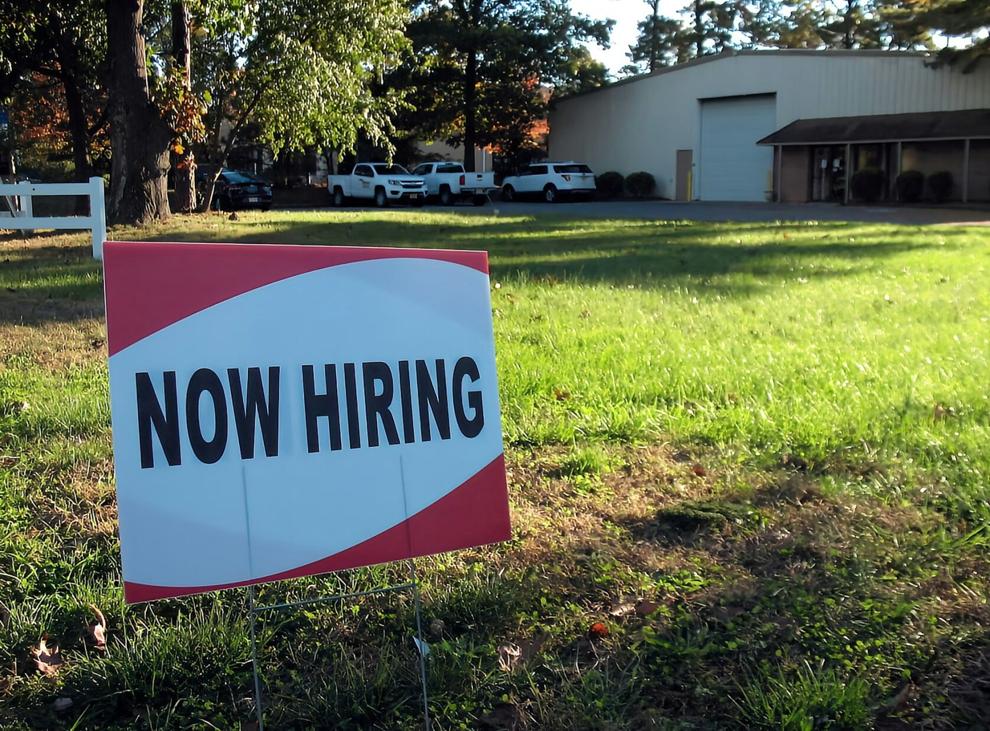
A report published by the Fraser Institute reaffirms just how much more economically free some states are compared with others. These are places where citizens are allowed to make more of their economic choices. Their taxes are lighter, and their regulatory burdens are easier. The benefits for workers, consumers and businesses have been clear for a long time.
There’s another group of states to watch: “movers” that have become much freer in recent decades. These are states that may not be the freest, but they have been cutting taxes and red tape enough to make a big difference.
How do they fare?
I recently explored this question using 22 years of data from the same Economic Freedom of North America index. The index uses 10 variables encompassing government spending, taxation and labour regulation to assess the degree of economic freedom in each of the 50 states.
Some states, such as New Hampshire, have long topped the list. It’s been in the top five for three decades. With little room to grow, the Granite State’s level of economic freedom hasn’t budged much lately. Others, such as Alaska, have significantly improved economic freedom over the last two decades. Because it started so low, it remains relatively unfree at 43rd out of 50.
Three states—North Carolina, North Dakota and Idaho—have managed to markedly increase and rank highly on economic freedom.
In 2000, North Carolina was the 19th most economically free state in the union. Though its labour market was relatively unhindered by the state’s government, its top marginal income tax rate was America’s ninth-highest, and it spent more money than most states.
From 2013 to 2022, North Carolina reduced its top marginal income tax rate from 7.75 per cent to 4.99 per cent, reduced government employment and allowed the minimum wage to fall relative to per-capita income. By 2022, it had the second-freest labour market in the country and was ninth in overall economic freedom.
North Dakota took a similar path, reducing its 5.54 per cent top income tax rate to 2.9 per cent, scaling back government employment, and lowering its minimum wage to better reflect local incomes. It went from the 27th most economically free state in the union in 2000 to the 10th freest by 2022.
Idaho saw the most significant improvement. The Gem State has steadily improved spending, taxing and labour market freedom, allowing it to rise from the 28th most economically free state in 2000 to the eighth freest in 2022.
We can contrast these three states with a group that has achieved equal and opposite distinction: California, Delaware, New Jersey and Maryland have managed to decrease economic freedom and end up among the least free overall.
What was the result?
The economies of the three liberating states have enjoyed almost twice as much economic growth. Controlling for inflation, North Carolina, North Dakota and Idaho grew an average of 41 per cent since 2010. The four repressors grew by just 24 per cent.
Among liberators, statewide personal income grew 47 per cent from 2010 to 2022. Among repressors, it grew just 26 per cent.
In fact, when it comes to income growth per person, increases in economic freedom seem to matter even more than a state’s overall, long-term level of freedom. Meanwhile, when it comes to population growth, placing highly over longer periods of time matters more.
The liberators are not unique. There’s now a large body of international evidence documenting the freedom-prosperity connection. At the state level, high and growing levels of economic freedom go hand-in-hand with higher levels of income, entrepreneurship, in-migration and income mobility. In economically free states, incomes tend to grow faster at the top and bottom of the income ladder.
These states suffer less poverty, homelessness and food insecurity and may even have marginally happier, more philanthropic and more tolerant populations.
In short, liberation works. Repression doesn’t.


Georgia county admits illegally certifying 315k ballots in 2020 presidential election
Alberta Next Panel calls to reform how Canada works

Canadian government launches trial version of digital ID for certain licenses, permits

The Top News Stories That Shaped Canadian Energy in 2025 and Will Continue to Shape Canadian Energy in 2026
-
 Bruce Dowbiggin12 hours ago
Be Careful What You Wish For In 2026: Mark Carney With A Majority
-
 Frontier Centre for Public Policy2 days ago
Tent Cities Were Rare Five Years Ago. Now They’re Everywhere
-
 International21 hours ago
No peace on earth for ISIS: Trump orders Christmas strikes after Christian massacres
-
 Fraser Institute21 hours ago
Carney government sowing seeds for corruption in Ottawa
-
 Energy12 hours ago
New Poll Shows Ontarians See Oil & Gas as Key to Jobs, Economy, and Trade
-
 Alberta21 hours ago
Alberta Next Panel calls for less Ottawa—and it could pay off
-
 Daily Caller20 hours ago
US Halts Construction of Five Offshore Wind Projects Due To National Security
-
Business8 hours ago
Socialism vs. Capitalism