
Business
You are paying for our governments’ debt addiction



From the Fraser Institute
By Jake Fuss and Grady Munro

Ottawa and the provinces will together spend $82 billion on debt interest this year—equivalent to the total amount spent on K-12 education in Canada during 2020-21.
Budget season is approaching and while government debt has been increasing rapidly for years in Canada, today’s relatively high interest rates have made it more expensive to borrow money than in the recent past.
According to our new study published by the Fraser Institute, between 2007-08 and 2023-24 federal and provincial government net debt (i.e., total debt minus financial assets) has increased by roughly $1.0 trillion in inflation-adjusted dollars. Though pandemic-induced deficits explain part of that, fully 58 per cent of the run-up in debt occurred before COVID. That deserves emphasis: our current debt problems are not mainly the result of the pandemic.
Because both federal and provincial governments borrow—municipal governments not so much—Canadians face different government debt burdens depending on where they live. Newfoundland and Labradorians currently owe the largest combined (federal and provincial) government debt in Canada at $67,471 per person. Ontarians are not far behind at $60,609 while Albertans are in the best shape at $42,293.
In terms of debt-to-GDP ratios, the four Atlantic provinces are all currently above 85 per cent, which means it would take more than four out of every five dollars generated in the economy of each Atlantic province this year to pay off their combined federal and provincial debt.
Nova Scotians are worst off, with combined debt equivalent to 97 per cent of what their economy produces in a year. The national average debt-to-GDP ratio is projected to be 76 per cent this year, up significantly from before the pandemic.
Despite a surge in revenues, few Canadian governments are forecasting surpluses for the current fiscal year. Instead, Ottawa and the majority of provinces have chosen to increase their spending and debt and, in most cases, incur deficits for years to come.
This is a worrying trend, as many governments were already on unsustainable debt trajectories that they are now making worse. Governments need to restrain spending and move towards balanced budgets in the short term, while the economy is in relatively good shape, not put off difficult decisions for someone else to take at some future date.
Debt means always having to pay interest. Because their debts have grown and interest rates are higher than they have been for some time, Ottawa and the provinces will together spend $82 billion on debt interest this year—equivalent to the total amount spent on K-12 education in Canada during 2020-21.
Money that goes to interest can’t pay for tax cuts or spending on health care or education. It drives a wedge between the taxes we pay and the services we actually receive. And it burdens, not just today’s taxpayers, but future generations, too.
Growing government debt is not just another unpleasant COVID symptom. It was a problem well before COVID and it’s getting worse even though COVID is now mainly over. This budget season, our federal and provincial governments need to get their fiscal houses in order and stop their debt binging before it spirals even further out of control.
Authors:



From LifeSiteNews
Of the Royal Canadian Mounted Police’s fleet of 1,200 drones, 79% pose national security risks due to them being made in China
Canada’s top police force spent millions on now near-useless and compromised security drones, all because they were made in China, a nation firmly controlled by the Communist Chinese Party (CCP) government.
An internal report by the Royal Canadian Mounted Police (RCMP) to Canada’s Senate national security committee revealed that $34 million in taxpayer money was spent on a fleet of 973 Chinese-made drones.
Replacement drones are more than twice the cost of the Chinese-made ones between $31,000 and $35,000 per unit. In total, the RCMP has about 1,228 drones, meaning that 79 percent of its drone fleet poses national security risks due to them being made in China.
The RCMP said that Chinese suppliers are “currently identified as high security risks primarily due to their country of origin, data handling practices, supply chain integrity and potential vulnerability.”
In 2023, the RCMP put out a directive that restricted the use of the made-in-China drones, putting them on duty for “non-sensitive operations” only, however, with added extra steps for “offline data storage and processing.”
The report noted that the “Drones identified as having a high security risk are prohibited from use in emergency response team activities involving sensitive tactics or protected locations, VIP protective policing operations, or border integrity operations or investigations conducted in collaboration with U.S. federal agencies.”
The RCMP earlier this year said it was increasing its use of drones for border security.
Senator Claude Carignan had questioned the RCMP about what kind of precautions it uses in contract procurement.
“Can you reassure us about how national security considerations are taken into account in procurement, especially since tens of billions of dollars have been announced for procurement?” he asked.
“I want to make sure national security considerations are taken into account.”
The use of the drones by Canada’s top police force is puzzling, considering it has previously raised awareness of Communist Chinese interference in Canada.
Indeed, as reported by LifeSiteNews, earlier in the year, an RCMP internal briefing note warned that agents of the CCP are targeting Canadian universities to intimidate them and, in some instances, challenge them on their “political positions.”
The final report from the Foreign Interference Commission concluded that operatives from China may have helped elect a handful of MPs in both the 2019 and 2021 Canadian federal elections. It also concluded that China was the primary foreign interference threat to Canada.
Chinese influence in Canadian politics is unsurprising for many, especially given former Prime Minister Justin Trudeau’s past admiration for China’s “basic dictatorship.”
As reported by LifeSiteNews, a Canadian senator appointed by Trudeau told Chinese officials directly that their nation is a “partner, not a rival.”
China has been accused of direct election meddling in Canada, as reported by LifeSiteNews.
As reported by LifeSiteNews, an exposé by investigative journalist Sam Cooper claims there is compelling evidence that Carney and Trudeau are strongly influenced by an “elite network” of foreign actors, including those with ties to China and the World Economic Forum. Despite Carney’s later claims that China poses a threat to Canada, he said in 2016 the Communist Chinese regime’s “perspective” on things is “one of its many strengths.”


Europe calls it transparency, but it looks a lot like teaching the internet who’s allowed to speak.
|
When the European Commission fined X €120 million on December 5, officials could not have been clearer. This, they said, was not about censorship. It was just about “transparency.”
They repeat it so often you start to wonder why.
The fine marks the first major enforcement of the Digital Services Act, Europe’s new censorship-driven internet rulebook.
It was sold as a consumer protection measure, designed to make online platforms safer and more accountable, and included a whole list of censorship requirements, fining platforms that don’t comply.
The Commission charged X with three violations: the paid blue checkmark system, the lack of advertising data, and restricted data access for researchers.
None of these touches direct content censorship. But all of them shape visibility, credibility, and surveillance, just in more polite language.
Musk’s decision to turn blue checks into a subscription feature ended the old system where establishment figures, journalists, politicians, and legacy celebrities got verification.
The EU called Musk’s decision “deceptive design.” The old version, apparently, was honesty itself. Before, a blue badge meant you were important. After, it meant you paid. Brussels prefers the former, where approved institutions get algorithmic priority, and the rest of the population stays in the queue.
The new system threatened that hierarchy. Now, anyone could buy verification, diluting the aura of authority once reserved for anointed voices.
Reclaim The Net is sustained by its readers.
Your support fuels the fight for privacy, free speech and digital civil liberties while giving you access to exclusive content, practical how to guides, premium features and deeper dives into freedom-focused tech.
Become a supporter here.
However, that’s not the full story. Under the old Twitter system, verification was sold as a public service, but in reality it worked more like a back-room favor and a status purchase.
The main application process was shut down in 2010, so unless you were already famous, the only way to get a blue check was to spend enough money on advertising or to be important enough to trigger impersonation problems.
Ad Age reported that advertisers who spent at least fifteen thousand dollars over three months could get verified, and Twitter sales reps told clients the same thing. That meant verification was effectively a perk reserved for major media brands, public figures, and anyone willing to pay. It was a symbol of influence rationed through informal criteria and private deals, creating a hierarchy shaped by cronyism rather than transparency.
Under the new X rules, everyone is on a level playing field.
Government officials and agencies now sport gray badges, symbols of credibility that can’t be purchased. These are the state’s chosen voices, publicly marked as incorruptible. To the EU, that should be a safeguard.
The second and third violations show how “transparency” doubles as a surveillance mechanism. X was fined for limiting access to advertising data and for restricting researchers from scraping platform content. Regulators called that obstruction. Musk called it refusing to feed the censorship machine.
The EU’s preferred researchers aren’t neutral archivists. Many have been documented coordinating with governments, NGOs, and “fact-checking” networks that flagged political content for takedown during previous election cycles.
They call it “fighting disinformation.” Critics call it outsourcing censorship pressure to academics.
Under the DSA, these same groups now have the legal right to demand data from platforms like X to study “systemic risks,” a phrase broad enough to include whatever speech bureaucrats find undesirable this month.
The result is a permanent state of observation where every algorithmic change, viral post, or trending topic becomes a potential regulatory case.
The advertising issue completes the loop. Brussels says it wants ad libraries to be fully searchable so users can see who’s paying for what. It gives regulators and activists a live feed of messaging, ready for pressure campaigns.
The DSA doesn’t delete ads; it just makes it easier for someone else to demand they be deleted.
That’s how this form of censorship works: not through bans, but through endless exposure to scrutiny until platforms remove the risk voluntarily.
The Commission insists, again and again, that the fine has “nothing to do with content.”
That may be true on a direct level, but the rules shape content all the same. When governments decide who counts as authentic, who qualifies as a researcher, and how visibility gets distributed, speech control doesn’t need to be explicit. It’s baked into the system.
Brussels calls it user protection. Musk calls it punishment for disobedience. This particular DSA fine isn’t about what you can say, it’s about who’s allowed to be heard saying it.
TikTok escaped similar scrutiny by promising to comply. X didn’t, and that’s the difference. The EU prefers companies that surrender before the hearing. When they don’t, “transparency” becomes the pretext for a financial hammer.
The €120 million fine is small by tech standards, but symbolically it’s huge.
It tells every platform that “noncompliance” means questioning the structure of speech the EU has already defined as safe.
In the official language of Brussels, this is a regulation. But it’s managed discourse, control through design, moderation through paperwork, censorship through transparency.
And the louder they insist it isn’t, the clearer it becomes that it is.
|
|
|
|
Reclaim The Net Needs Your
With your help, we can do more than hold the line. We can push back. We can expose censorship, highlight surveillance overreach, and amplify the voices of those being silenced.
If you have found value in our work, please consider becoming a supporter.
Your support does more than keep us independent. It also gives you access to exclusive content, deep dive exploration of freedom focused technology, member-only features, and practical how-to posts that help you protect your rights in the real world.
You help us expand our reach, educate more people, and continue this fight.
Please become a supporter today.
Thank you for your support.
|


Tech Mogul Gives $6 Billion To 25 Million Kids To Boost Trump Investment Accounts
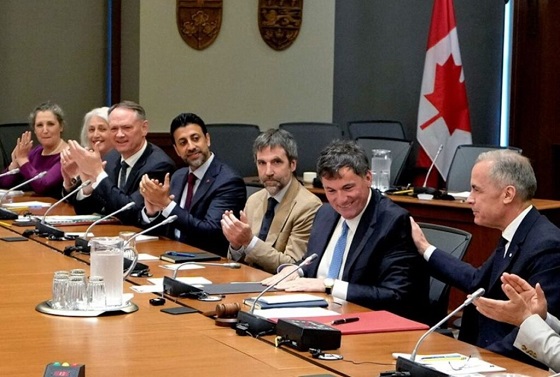
Carney’s Toronto cabinet meetings cost $530,000

Recent price declines don’t solve Toronto’s housing affordability crisis

Health Canada report finds euthanasia now accounts for over 5% of deaths nationwide

Alberta Sports Hall of Fame Announces Class of 2026 Inductees

Integration Or Indignation: Whose Strategy Worked Best Against Trump?
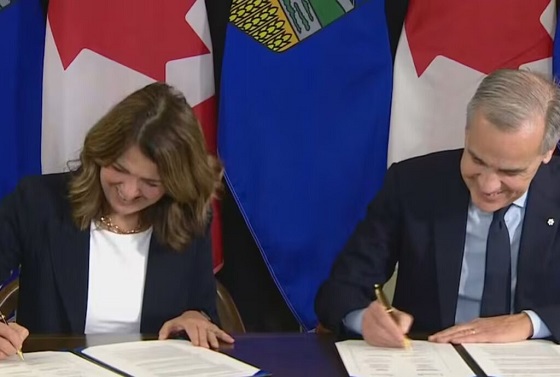
What the Data Shows About the New Canada-Alberta Pipeline Opportunity
-
 Business1 day ago
Why Does Canada “Lead” the World in Funding Racist Indoctrination?
-
 Automotive2 days ago
Trump Deals Biden’s EV Dreams A Death Blow
-
 Media1 day ago
They know they are lying, we know they are lying and they know we know but the lies continue
-
 Automotive2 days ago
Canada’s EV Mandate Is Running On Empty
-
 Focal Points1 day ago
The West Needs Bogeymen (Especially Russia)
-
 Censorship Industrial Complex1 day ago
US Condemns EU Censorship Pressure, Defends X
-
 Dan McTeague1 day ago
Will this deal actually build a pipeline in Canada?
-
 Business1 day ago
Loblaws Owes Canadians Up to $500 Million in “Secret” Bread Cash