
Alberta
Working to avoid future US tariffs, Alberta signs onto U.S. energy pact

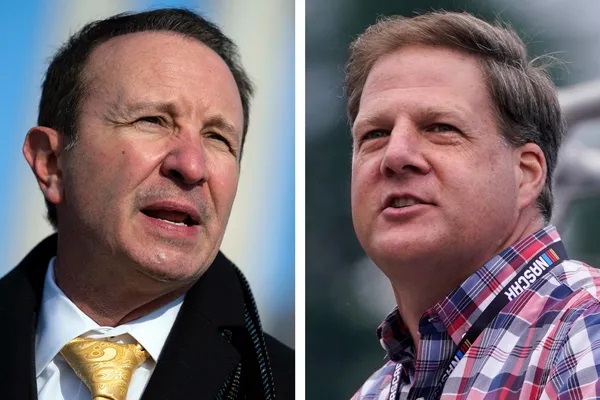

Louisiana Governor Jeff Landry and New Hampshire Governor Chris Sununu of the Governors’ Coalition for Energy Security
Premier Danielle Smith has joined the Governors’ Coalition for Energy Security to further support advocacy of Alberta’s energy and environmental interests with key U.S. states.
The coalition was established in September 2024 by U.S. State governors Jeff Landry (Louisiana) and Chris Sununu (New Hampshire) with the aim of ensuring energy security, lower energy costs, increased reliability, sustainable economic development and sensible management of energy resources and the environment. With 12 U.S. states already signatories to the coalition, Alberta is the first non-U.S. state to enter into this agreement.

By expanding energy ties with the U.S. and promoting cross-border energy trade and participation, Alberta is helping to build upon its North American Energy strategy. Alberta already accounts for 56 per cent of all oil imports to the U.S. – twice as much as Mexico, Saudi Arabia and Iraq combined – which is helping to drive job creation and prosperity on both sides of the border. Natural gas also plays an important role in North America’s energy mix. Alberta is the largest producer of natural gas in Canada and remains positioned to support the U.S. in filling their domestic supply gaps.
“I am honoured to join the Governors’ Coalition for Energy Security and would like to extend my sincere thanks to governors Landry and Sununu for the invitation. Alberta plays a vital role in North American energy security, serving as the largest supplier of crude oil and natural gas to the United States. With 200 billion barrels of recoverable oil, 200 trillion cubic feet of recoverable natural gas, significant natural gas liquids and ample pore space for carbon capture, Alberta’s contribution is set to grow even further as we look to work with the Trump Administration and other U.S. partners to increase our pipeline capacity to our greatest friend and ally, the United States. We are proud to collaborate with this coalition of allied states in advancing energy security, reliability and affordability for Americans and Canadians.”
“Our mission as an organization has not changed but Alberta’s welcome arrival to our group sparked a conversation about what our core mission is, and that is ensuring energy security in all its forms. Our members all share the common goal of enhancing and protecting energy options for our people and businesses, which leads to lower energy costs, increased reliability, sustainable economic development and wise management of energy resources and the environment. I welcome Premier Smith and the insights she will bring as the leader from a fellow energy-producing province, that like my state, is under a federal system of government where national imperatives are not always aligned with state or provincial interests.”
Alberta is a global leader in emissions reduction technology and clean energy solutions. The province has captured about 14 million tonnes of carbon dioxide through carbon capture, utilization and storage technology, and has the ability to support the U.S. in developing new infrastructure and supply chains for future energy markets in the areas of hydrogen, renewables, small modular reactors and others.
Alberta is also unlocking its untapped geological potential to help meet the increasing demand for minerals – many of which are used worldwide to manufacture batteries, cell phones, energy storage cells and other products. This includes the province’s lithium sector where Alberta’s government is supporting several innovative projects to develop new ways to extract and concentrate lithium faster and with higher recovery rates that are less capital and energy intensive and have a smaller land-use footprint.
As part of this coalition, Alberta looks forward to sharing best practices with states that already have expertise in these areas.
Quick facts
- The U.S. is Alberta’s largest trading partner, with C$188 billion in bilateral trade in 2023.
- In 2023, energy products accounted for approximately C$133.6 billion, or more than 80 per cent of Alberta’s exports to the U.S.
- The Governors’ Coalition for Energy Security’s 12 signatory states include Louisiana, New Hampshire, Indiana (Governor Eric Holcomb), Alabama (Governor Kay Ivey), Georgia (Governor Brian Kemp), Tennessee (Governor Bill Lee), South Dakota (Governor Kristi Noem), Mississippi (Governor Tate Reeves), Arkansas (Governor Sarah Huckabee Sanders), Oklahoma (Governor Kevin Stitt), Wyoming (Governor Mark Gordon) and Virginia (Governor Glenn Youngkin).


From the Canadian Energy Centre
Canada’s energy landscape changed significantly in 2025, with mounting U.S. economic pressures reinforcing the central role oil and gas can play in safeguarding the country’s independence.
Here are the Canadian Energy Centre’s top five most-viewed stories of the year.
5. Alberta’s massive oil and gas reserves keep growing – here’s why

The Northern Lights, aurora borealis, make an appearance over pumpjacks near Cremona, Alta., Thursday, Oct. 10, 2024. CP Images photo
Analysis commissioned this spring by the Alberta Energy Regulator increased the province’s natural gas reserves by more than 400 per cent, bumping Canada into the global top 10.
Even with record production, Alberta’s oil reserves – already fourth in the world – also increased by seven billion barrels.
According to McDaniel & Associates, which conducted the report, these reserves are likely to become increasingly important as global demand continues to rise and there is limited production growth from other sources, including the United States.
4. Canada’s pipeline builders ready to get to work

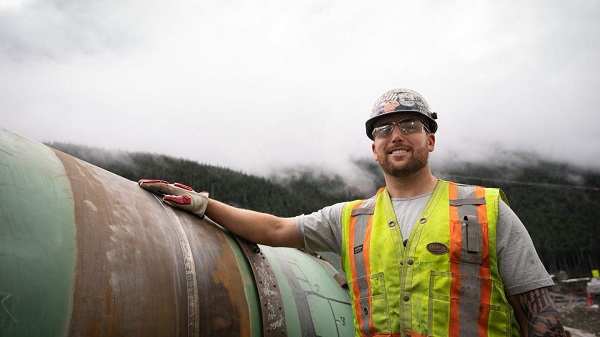
Photo courtesy Coastal GasLink
Canada could be on the cusp of a “golden age” for building major energy projects, said Kevin O’Donnell, executive director of the Mississauga, Ont.-based Pipe Line Contractors Association of Canada.
That eagerness is shared by the Edmonton-based Progressive Contractors Association of Canada (PCA), which launched a “Let’s Get Building” advocacy campaign urging all Canadian politicians to focus on getting major projects built.
“The sooner these nation-building projects get underway, the sooner Canadians reap the rewards through new trading partnerships, good jobs and a more stable economy,” said PCA chief executive Paul de Jong.
3. New Canadian oil and gas pipelines a $38 billion missed opportunity, says Montreal Economic Institute

Steel pipe in storage for the Trans Mountain Pipeline expansion in 2022. Photo courtesy Trans Mountain Corporation
In March, a report by the Montreal Economic Institute (MEI) underscored the economic opportunity of Canada building new pipeline export capacity.
MEI found that if the proposed Energy East and Gazoduq/GNL Quebec projects had been built, Canada would have been able to export $38 billion worth of oil and gas to non-U.S. destinations in 2024.
“We would be able to have more prosperity for Canada, more revenue for governments because they collect royalties that go to government programs,” said MEI senior policy analyst Gabriel Giguère.
“I believe everybody’s winning with these kinds of infrastructure projects.”
2. Keyera ‘Canadianizes’ natural gas liquids with $5.15 billion acquisition

Keyera Corp.’s natural gas liquids facilities in Fort Saskatchewan, Alta. Photo courtesy Keyera Corp.
In June, Keyera Corp. announced a $5.15 billion deal to acquire the majority of Plains American Pipelines LLP’s Canadian natural gas liquids (NGL) business, creating a cross-Canada NGL corridor that includes a storage hub in Sarnia, Ontario.
The acquisition will connect NGLs from the growing Montney and Duvernay plays in Alberta and B.C. to markets in central Canada and the eastern U.S. seaboard.
“Having a Canadian source for natural gas would be our preference,” said Sarnia mayor Mike Bradley.
“We see Keyera’s acquisition as strengthening our region as an energy hub.”
1. Explained: Why Canadian oil is so important to the United States

Enbridge’s Cheecham Terminal near Fort McMurray, Alberta is a key oil storage hub that moves light and heavy crude along the Enbridge network. Photo courtesy Enbridge
The United States has become the world’s largest oil producer, but its reliance on oil imports from Canada has never been higher.
Many refineries in the United States are specifically designed to process heavy oil, primarily in the U.S. Midwest and U.S. Gulf Coast.
According to the Alberta Petroleum Marketing Commission, the top five U.S. refineries running the most Alberta crude are:
- Marathon Petroleum, Robinson, Illinois (100% Alberta crude)
- Exxon Mobil, Joliet, Illinois (96% Alberta crude)
- CHS Inc., Laurel, Montana (95% Alberta crude)
- Phillips 66, Billings, Montana (92% Alberta crude)
- Citgo, Lemont, Illinois (78% Alberta crude)
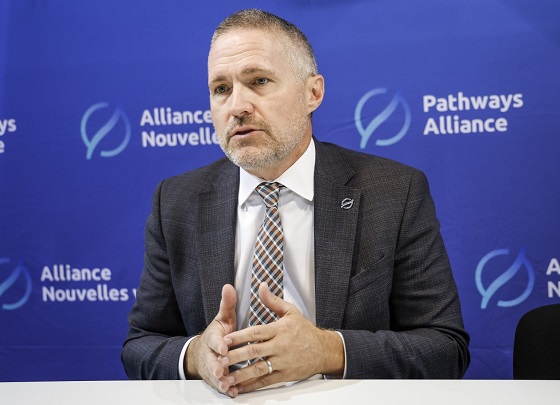
Pathways Alliance CEO Kendall Dilling is interviewed at the World Petroleum Congress in Calgary, Monday, Sept. 18, 2023.THE CANADIAN PRESS/Jeff McIntosh
From Resource Works
Carbon capture gives biggest bang for carbon tax buck CCS much cheaper than fuel switching: report
Canada’s climate change strategy is now joined at the hip to a pipeline. Two pipelines, actually — one for oil, one for carbon dioxide.
The MOU signed between Ottawa and Alberta two weeks ago ties a new oil pipeline to the Pathways Alliance, which includes what has been billed as the largest carbon capture proposal in the world.
One cannot proceed without the other. It’s quite possible neither will proceed.
The timing for multi-billion dollar carbon capture projects in general may be off, given the retreat we are now seeing from industry and government on decarbonization, especially in the U.S., our biggest energy customer and competitor.
But if the public, industry and our governments still think getting Canada’s GHG emissions down is a priority, decarbonizing Alberta oil, gas and heavy industry through CCS promises to be the most cost-effective technology approach.
New modelling by Clean Prosperity, a climate policy organization, finds large-scale carbon capture gets the biggest bang for the carbon tax buck.
Which makes sense. If oil and gas production in Alberta is Canada’s single largest emitter of CO2 and methane, it stands to reason that methane abatement and sequestering CO2 from oil and gas production is where the biggest gains are to be had.
A number of CCS projects are already in operation in Alberta, including Shell’s Quest project, which captures about 1 million tonnes of CO2 annually from the Scotford upgrader.
What is CO2 worth?
Clean Prosperity estimates industrial carbon pricing of $130 to $150 per tonne in Alberta and CCS could result in $90 billion in investment and 70 megatons (MT) annually of GHG abatement or sequestration. The lion’s share of that would come from CCS.
To put that in perspective, 70 MT is 10% of Canada’s total GHG emissions (694 MT).
The report cautions that these estimates are “hypothetical” and gives no timelines.
All of the main policy tools recommended by Clean Prosperity to achieve these GHG reductions are contained in the Ottawa-Alberta MOU.
One important policy in the MOU includes enhanced oil recovery (EOR), in which CO2 is injected into older conventional oil wells to increase output. While this increases oil production, it also sequesters large amounts of CO2.
Under Trudeau era policies, EOR was excluded from federal CCS tax credits. The MOU extends credits and other incentives to EOR, which improves the value proposition for carbon capture.
Under the MOU, Alberta agrees to raise its industrial carbon pricing from the current $95 per tonne to a minimum of $130 per tonne under its TIER system (Technology Innovation and Emission Reduction).
The biggest bang for the buck
Using a price of $130 to $150 per tonne, Clean Prosperity looked at two main pathways to GHG reductions: fuel switching in the power sector and CCS.
Fuel switching would involve replacing natural gas power generation with renewables, nuclear power, renewable natural gas or hydrogen.
“We calculated that fuel switching is more expensive,” Brendan Frank, director of policy and strategy for Clean Prosperity, told me.
Achieving the same GHG reductions through fuel switching would require industrial carbon prices of $300 to $1,000 per tonne, Frank said.
Clean Prosperity looked at five big sectoral emitters: oil and gas extraction, chemical manufacturing, pipeline transportation, petroleum refining, and cement manufacturing.
“We find that CCUS represents the largest opportunity for meaningful, cost-effective emissions reductions across five sectors,” the report states.

Fuel switching requires higher carbon prices than CCUS.
Measures like energy efficiency and methane abatement are included in Clean Prosperity’s calculations, but again CCS takes the biggest bite out of Alberta’s GHGs.
“Efficiency and (methane) abatement are a portion of it, but it’s a fairly small slice,” Frank said. “The overwhelming majority of it is in carbon capture.”

From left, Alberta Minister of Energy Marg McCuaig-Boyd, Shell Canada President Lorraine Mitchelmore, CEO of Royal Dutch Shell Ben van Beurden, Marathon Oil Executive Brian Maynard, Shell ER Manager, Stephen Velthuizen, and British High Commissioner to Canada Howard Drake open the valve to the Quest carbon capture and storage facility in Fort Saskatchewan Alta, on Friday November 6, 2015. Quest is designed to capture and safely store more than one million tonnes of CO2 each year an equivalent to the emissions from about 250,000 cars. THE CANADIAN PRESS/Jason Franson
Credit where credit is due
Setting an industrial carbon price is one thing. Putting it into effect through a workable carbon credit market is another.
“A high headline price is meaningless without higher credit prices,” the report states.
“TIER credit prices have declined steadily since 2023 and traded below $20 per tonne as of November 2025. With credit prices this low, the $95 per tonne headline price has a negligible effect on investment decisions and carbon markets will not drive CCUS deployment or fuel switching.”
Clean Prosperity recommends a kind of government-backstopped insurance mechanism guaranteeing carbon credit prices, which could otherwise be vulnerable to political and market vagaries.
Specifically, it recommends carbon contracts for difference (CCfD).
“A straight-forward way to think about it is insurance,” Frank explains.
Carbon credit prices are vulnerable to risks, including “stroke-of-pen risks,” in which governments change or cancel price schedules. There are also market risks.
CCfDs are contractual agreements between the private sector and government that guarantees a specific credit value over a specified time period.
“The private actor basically has insurance that the credits they’ll generate, as a result of making whatever low-carbon investment they’re after, will get a certain amount of revenue,” Frank said. “That certainty is enough to, in our view, unlock a lot of these projects.”
From the perspective of Canadian CCS equipment manufacturers like Vancouver’s Svante, there is one policy piece still missing from the MOU: eligibility for the Clean Technology Manufacturing (CTM) Investment tax credit.
“Carbon capture was left out of that,” said Svante co-founder Brett Henkel said.
Svante recently built a major manufacturing plant in Burnaby for its carbon capture filters and machines, with many of its prospective customers expected to be in the U.S.
The $20 billion Pathways project could be a huge boon for Canadian companies like Svante and Calgary’s Entropy. But there is fear Canadian CCS equipment manufacturers could be shut out of the project.
“If the oil sands companies put out for a bid all this equipment that’s needed, it is highly likely that a lot of that equipment is sourced outside of Canada, because the support for Canadian manufacturing is not there,” Henkel said.
Henkel hopes to see CCS manufacturing added to the eligibility for the CTM investment tax credit.
“To really build this eco-system in Canada and to support the Pathways Alliance project, we need that amendment to happen.”
Resource Works News


Rulings could affect energy prices everywhere: Climate activists v. the energy industry in 2026

China Stages Massive Live-Fire Encirclement Drill Around Taiwan as Washington and Japan Fortify
Land use will be British Columbia’s biggest issue in 2026

Mainstream media missing in action as YouTuber blows lid off massive taxpayer fraud
The Canadian Energy Centre’s biggest stories of 2025

Why Japan wants Western Canadian LNG

The Global Push for Government Mandated Digital IDs And Why You Should Worry
-
 Energy21 hours ago
The U.S. Just Removed a Dictator and Canada is Collateral Damage
-
 Haultain Research19 hours ago
Trying to Defend Maduro’s Legitimacy
-
 Business1 day ago
Vacant Somali Daycares In Viral Videos Are Also Linked To $300 Million ‘Feeding Our Future’ Fraud
-
International1 day ago
Trump Says U.S. Strike Captured Nicolás Maduro and Wife Cilia Flores; Bondi Says Couple Possessed Machine Guns
-
 International21 hours ago
U.S. Claims Western Hemispheric Domination, Denies Russia Security Interests On Its Own Border
-
 International1 day ago
“Captured and flown out”: Trump announces dramatic capture of Maduro
-
International22 hours ago
US Justice Department Accusing Maduro’s Inner Circle of a Narco-State Conspiracy
-
International18 hours ago
“It’s Not Freedom — It’s the First Step Toward Freedom”