
C2C Journal
Wisdom of Our Elders: The Contempt for Memory in Canadian Indigenous Policy



By Peter Best

What do children owe their parents? Love, honour and respect are a good start. But what about parents who were once political figures – does the younger generation owe a duty of care to the beliefs of their forebears?
Two recent cases in Canada highlight the inter-generational conflict at play in Canada over Indigenous politics. One concerns Prime Minister Mark Carney and his father Robert. The other, a recent book on the life of noted aboriginal thinker William Wuttunee edited by his daughter Wanda. In each case, the current generation has let its ancestors down – and left all of Canada worse off.
William Wuttunee was born in 1928 in a one-room log cabin on a reserve in Saskatchewan, where he endured a childhood of poverty and hardship. Education was his release, and he went on to become the first aboriginal to practice law in Western Canada; he also served as the inaugural president of the National Indian Council in 1961.
Wuttunee rose to prominence with his controversial 1971 book Ruffled Feathers, that argued for an end to Canadian’s Indian Reserve system, which he believed trapped his people in poverty and despair. He dreamed of a Canada where Indigenous people lived side-by-side all other Canadians and enjoyed the same rights and benefits.
Such an argument for true racial equality put Wuttunee at odds with the illiberal elite of Canada’s native community, who still believe in a segregated, race-based relationship between Indigenous people and the rest of Canada. For telling truth to power, Wuttunee was ostracized from the native political community and banned from his own reserve. He died in 2015.
This year, William’s daughter Wanda had the opportunity to rectify the past mistreatment of her father. In the new book Still Ruffling Feathers – Let Us Put Our Minds Together, Wanda, an academic at the University of Manitoba, and several other contributors claim to “fearlessly engage” with her father’s ideas. Unfortunately, the authors mostly seek to bury, rather than
praise, Wuttunee’s vision of one Canada for all.
Wanda claims her father’s desire for a treaty-free, reserve-free Canada would be problematic today because it would have required giving up all the financial and legal goodies that have since been showered upon Indigenous groups. But there is a counterfactual to consider. What if Indigenous Canadians had simply enjoyed the same incremental gains in income, health and other social indicators as the rest of the country during this time?
Ample evidence on the massive and longstanding gap between native and non-native Canadians across a wide variety of socio-economic indicators suggest that integration would have been the better bet. The life expectancy for Indigenous Albertans, for example, is a shocking 19 years shorter than for a non-native Albertans. William Wuttunee was right all along about the damage done by the reserve system. And yet nearly all of the contributors to Wanda’s new book refuse to admit this fact.
The other current example concerns Robert Carney, who had a long and distinguished career in aboriginal education. When the future prime minister was a young boy, Robert was the principal of a Catholic day school in Fort Smith, Northwest Territories; he later became a government administrator and a professor of education. What he experienced throughout his
lifetime led the elder Carney to become an outspoken defender of Canada’s now-controversial residential schools.
When the 1996 Royal Commission on Aboriginal Peoples (RCAP) attacked the legacy of residential schools, Carney penned a sharp critique. He pointed out that the schools were not jails despite frequent claims that students were there against their will; in fact, parents had to sign an application form to enroll their children in a residential school. Carney also bristled at
the lack of context in the RCAP report, noting that the schools performed a key social welfare function in caring for “sick, dying, abandoned and orphaned children.”
In the midst of the 2025 federal election campaign, Mark Carney was asked if he agreed with his father’s positive take on residential schools. “I love my father, but I don’t share those views,” he answered. Some Indigenous activists have subsequently accused Robert Carney of residential school “denialism” and “complicity” in the alleged horrors of Canada’s colonial education system.
Like Wanda Wuttunee, Mark Carney let his father down by distancing himself from his legacy for reasons of political expediency. He had an opportunity to offer Canadians a courageous and fact-based perspective on a subject of great current public interest by drawing upon his intimate connection with an expert in the field. Instead, Mark Carney caved to the
requirements of groupthink. As a result, his father now stands accused of complicity in a phony genocide.
As for William Wuttunee, he wanted all Canadians – native and non-native alike – to be free from political constraints. He rejected racial segregation, discrimination and identity politics in all forms. And yet in “honouring” his life’s work, his daughter misrepresents his legacy by sidestepping the core truths of his central belief.
No one doubts that Wanda Wuttunee and Mark Carney each loved their dads, as any son or daughter should. And there is no requirement that a younger generation must accept without question whatever their parents thought. But in the case of Wuttunee and Carney, both offspring have deliberately chosen to tarnish their fathers’ legacies in obedience to a poisonous
ideology that promotes the entirely un-Canadian ideal of permanent racial segregation and inequity. And all of Canada is the poorer for it.
Peter Best is a retired lawyer living in Sudbury, Ontario. The original, longer version of this story first appeared in C2CJournal.ca.

Artificial Intelligence
The Emptiness Inside: Why Large Language Models Can’t Think – and Never Will

This is a special preview article from the:
Early attempts at artificial intelligence (AI) were ridiculed for giving answers that were confident, wrong and often surreal – the intellectual equivalent of asking a drunken parrot to explain Kant. But modern AIs based on large language models (LLMs) are so polished, articulate and eerily competent at generating answers that many people assume they can know and, even
better, can independently reason their way to knowing.
This confidence is misplaced. LLMs like ChatGPT or Grok don’t think. They are supercharged autocomplete engines. You type a prompt; they predict the next word, then the next, based only on patterns in the trillions of words they were trained on. No rules, no logic – just statistical guessing dressed up in conversation. As a result, LLMs have no idea whether a sentence is true or false or even sane; they only “know” whether it sounds like sentences they’ve seen before. That’s why they often confidently make things up: court cases, historical events, or physics explanations that are pure fiction. The AI world calls such outputs
“hallucinations”.
But because the LLM’s speech is fluent, users instinctively project self-understanding onto the model, triggered by the same human “trust circuits” we use for spotting intelligence. But it is fallacious reasoning, a bit like hearing someone speak perfect French and assuming they must also be an excellent judge of wine, fashion and philosophy. We confuse style for substance and
we anthropomorphize the speaker. That in turn tempts us into two mythical narratives: Myth 1: “If we just scale up the models and give them more ‘juice’ then true reasoning will eventually emerge.”
Bigger LLMs do get smoother and more impressive. But their core trick – word prediction – never changes. It’s still mimicry, not understanding. One assumes intelligence will magically emerge from quantity, as though making tires bigger and spinning them faster will eventually make a car fly. But the obstacle is architectural, not scalar: you can make the mimicry more
convincing (make a car jump off a ramp), but you don’t convert a pattern predictor into a truth-seeker by scaling it up. You merely get better camouflage and, studies have shown, even less fidelity to fact.
Myth 2: “Who cares how AI does it? If it yields truth, that’s all that matters. The ultimate arbiter of truth is reality – so cope!”
This one is especially dangerous as it stomps on epistemology wearing concrete boots. It effectively claims that the seeming reliability of LLM’s mundane knowledge should be extended to trusting the opaque methods through which it is obtained. But truth has rules. For example, a conclusion only becomes epistemically trustworthy when reached through either: 1) deductive reasoning (conclusions that must be true if the premises are true); or 2) empirical verification (observations of the real world that confirm or disconfirm claims).
LLMs do neither of these. They cannot deduce because their architecture doesn’t implement logical inference. They don’t manipulate premises and reach conclusions, and they are clueless about causality. They also cannot empirically verify anything because they have no access to reality: they can’t check weather or observe social interactions.
Attempting to overcome these structural obstacles, AI developers bolt external tools like calculators, databases and retrieval systems onto an LLM system. Such ostensible truth-seeking mechanisms improve outputs but do not fix the underlying architecture.
The “flying car” salesmen, peddling various accomplishments like IQ test scores, claim that today’s LLMs show superhuman intelligence. In reality, LLM IQ tests violate every rule for conducting intelligence tests, making them a human-prompt engineering skills competition rather than a valid assessment of machine smartness.
Efforts to make LLMs “truth-seeking” by brainwashing them to align with their trainer’s preferences through mechanisms like RLHF miss the point. Those attempts to fix bias only make waves in a structure that cannot support genuine reasoning. This regularly reveals itself through flops like xAI Grok’s MechaHitler bravado or Google Gemini’s representing America’s Founding Fathers as a lineup of “racialized” gentlemen.
Other approaches exist, though, that strive to create an AI architecture enabling authentic thinking:
Symbolic AI: uses explicit logical rules; strong on defined problems, weak on ambiguity;
Causal AI: learns cause-and-effect relationships and can answer “what if” questions;
Neuro-symbolic AI: combines neural prediction with logical reasoning; and
Agentic AI: acts with the goal in mind, receives feedback and improves through trial-and-error.
Unfortunately, the current progress in AI relies almost entirely on scaling LLMs. And the alternative approaches receive far less funding and attention – the good old “follow the money” principle. Meanwhile, the loudest “AI” in the room is just a very expensive parrot.
LLMs, nevertheless, are astonishing achievements of engineering and wonderful tools useful for many tasks. I will have far more on their uses in my next column. The crucial thing for users to remember, though, is that all LLMs are and will always remain linguistic pattern engines, not epistemic agents.
The hype that LLMs are on the brink of “true intelligence” mistakes fluency for thought. Real thinking requires understanding the physical world, persistent memory, reasoning and planning that LLMs handle only primitively or not all – a design fact that is non-controversial among AI insiders. Treat LLMs as useful thought-provoking tools, never as trustworthy sources. And stop waiting for the parrot to start doing philosophy. It never will.
The original, full-length version of this article was recently published as Part I of a two-part series in C2C Journal. Part II can be read here.
Gleb Lisikh is a researcher and IT management professional, and a father of three children, who lives in Vaughan, Ontario and grew up in various parts of the Soviet Union.
C2C Journal
Learning the Truth about “Children’s Graves” and Residential Schools is More Important than Ever

This is a special preview article from the:
By Tom Flanagan
When the book Grave Error was published by True North in late 2023, it became an instant best-seller. People wanted to read the book because it contained well-documented information not readily available elsewhere concerning the history of Canada’s Indian Residential Schools (IRS) and the facts surrounding recent claims about “unmarked graves.”
Dead Wrong: How Canada Got the Residential School Story So Wrong is the just-published sequel to Grave Error. Edited by Chris Champion and me, with chapters written by knowledgeable academics, journalists, researchers and even several contributors who once worked directly in residential schools or dedicated Indian hospitals, Dead Wrong was published because the struggle for accurate information on this contentious subject continues. Let me share with you a little of what’s in Dead Wrong.
Outrageously, the New York Times, the world’s most influential newspaper among liberals and “progressives”, has never retracted its outrageously false headline that “mass graves” were uncovered at Kamloops in 2021. Journalist Jonathan Kay exposes that scandal.
With similarly warped judgment, the legacy media were enthused about last year’s so-called documentary Sugarcane, a feature-length film sponsored by National Geographic and nominated for an Academy Award. The only reporter to spot Sugarcane’s dozens of egregious factual errors was independent journalist Michelle Stirling; her expose is included in Dead Wrong.
In spring 2024, the small Interior B.C. city of Quesnel made national news when the mayor’s wife bought ten copies of Grave Error for distribution to friends. After noisy protests by people who had never read the book, Quesnel city council voted to censure Mayor Ron Paull and tried to force him from office. It’s all described in Dead Wrong.
Also not to be forgotten is how the Law Society of B.C. has forced upon its members training materials that assert against all evidence that children’s remains have been discovered at Kamloops. As told by James Pew, B.C. MLA Dallas Brodie was expelled not from the NDP but from the Conservative caucus for daring to point out this obvious and incontrovertible
falsehood. But the facts are that ground-penetrating radar (used at the former Kamloops IRS) can detect only “anomalies” or “disturbances”, not identify what those might be; that no excavations have been carried out; and that no human remains whatsoever, let alone “215 children’s bodies”, have been found there. Brodie is completely correct.
Then there is the story of Jim McMurtry, suspended by the Abbotsford District School Board shortly after the May 2021 Kamloops announcement. McMurtry’s offence was to tell students the truth that, while some Indigenous students did die in residential schools, the main cause was tuberculosis. His own book The Scarlet Lesson is excerpted in Dead Wrong.
Historian Ian Gentles and former IRS teacher Pim Wiebel offer a richly detailed analysis of health and medical conditions in the schools. They show that these were much better than what prevailed in the Indian reserves from which most students came.
Another important contribution to understanding the medical issues is by Dr. Eric Schloss, narrating the history of the Charles Camsell Indian Hospital in Edmonton. IRS facilities usually included small clinics, but students with serious problems were often transferred to Indian Hospitals for more intensive care. Schloss, who worked in the Camsell, describes how it delivered state-of-the-art medicine, probably better than the care available to most non-native children anywhere in Canada at the time.
Rodney Clifton’s contribution, “They would call me a ‘Denier,’” describes his personal experiences working in two IRS in the 1960s. Clifton does not tell stories of hunger, brutal punishment and suppression of Indigenous culture, but of games, laughter and trying to learn native languages from his Indian and Inuit charges.
And far from the IRS system being a deliberate, sustained program of cultural genocide, as Toronto lawyer and historian Greg Piasetzki explains, the historical fact is that “Canada Wanted to Close All Residential Schools in the 1940s. Here’s why it couldn’t.” That’s because for many Aboriginal parents, particularly single parents and/or those with large numbers of children,
residential schools were the best deal available. In addition to schooling their kids, they offered paid employment to large numbers of Indigenous Canadians as cooks, janitors, farmers and health care workers, and later as teachers and even principals.
Another gravely important issue is the recent phenomenon of charging critics with “residential school denialism.” This is a false accusation hurled by true believers in what has become known as the “Kamloops narrative”, aimed at shutting down criticism or questions. A key event in this process was when NDP MP Leah Gazan in 2022 persuaded the House of Commons to approve a
resolution “That, in the opinion of the House this government must recognize what happened in Canada’s Indian residential schools as genocide.”
In 2024, Gazan took the next step by introducing a private member’s bill to criminalize dissent about the IRS system. Remember, the slur of “denialist” is a term drawn from earlier debates about the Holocaust. Gazan’s bill failed to pass, but she reintroduced it in 2025. Had such provisions been in force back in 2021, it might well have become a crime to point out that the
Kamloops GPR survey had identified soil anomalies, not buried bodies. Frances Widdowson examines this sordid political campaign of denunciation.
As the proponents of the Kamloops narrative fail to provide convincing hard evidence for it, they hope to mobilize the authority of the state to stamp out dissent. One of the main goals behind publication of Dead Wrong is to head off this drive toward authoritarianism.
Happily, Dead Wrong is already an Amazon best-seller based on pre-publication orders. The struggle for truth continues.
The original, full-length version of this article was recently published by C2C Journal.
Tom Flanagan is the author of many books on Indigenous history and policy, including (with C.P. Champion) the best-selling Grave Error: How the Media Misled Us and the Truth about Residential Schools.

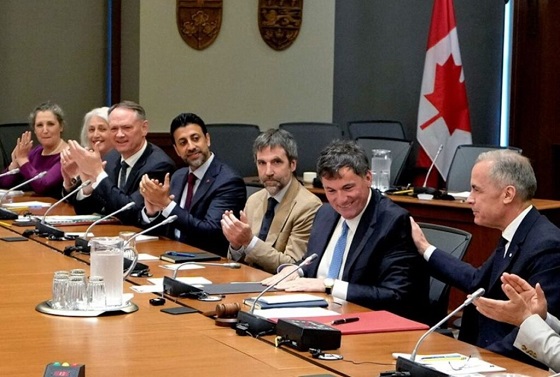
Carney’s Toronto cabinet meetings cost $530,000

Integration Or Indignation: Whose Strategy Worked Best Against Trump?

What the Data Shows About the New Canada-Alberta Pipeline Opportunity

While Trump has southern border secure, hundreds of thousands of illegal immigrants still flooding in from Canada

Alberta Sports Hall of Fame Announces Class of 2026 Inductees

Alberta will use provincial laws to stop Canadian gov’t from trying to confiscate legal firearms

The Trickster Politics of the Tanker Ban are Hiding a Much Bigger Reckoning for B.C.
-
 Business2 days ago
Canada invests $34 million in Chinese drones now considered to be ‘high security risks’
-
 Health2 days ago
CDC Vaccine Panel Votes to End Universal Hep B Vaccine for Newborns
-
 Business2 days ago
The EU Insists Its X Fine Isn’t About Censorship. Here’s Why It Is.
-
 Great Reset2 days ago
Surgery Denied. Death Approved.
-
 Business2 days ago
The Climate-Risk Industrial Complex and the Manufactured Insurance Crisis
-
 Economy2 days ago
Affordable housing out of reach everywhere in Canada
-
 Health2 days ago
The Data That Doesn’t Exist
-
 Crime1 day ago
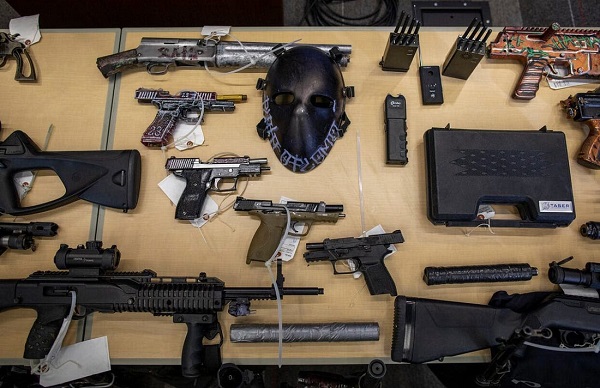
Inside the Fortified Sinaloa-Linked Compound Canada Still Can’t Seize After 12 Years of Legal War