
Business
Will Paramount turn the tide of legacy media and entertainment?




From the Daily Caller News Foundation

The recent leadership changes at Paramount Skydance suggest that the company may finally be ready to correct course after years of ideological drift, cultural activism posing as programming, and a pattern of self-inflicted financial and reputational damage.
Nowhere was this problem more visible than at CBS News, which for years operated as one of the most partisan and combative news organizations. Let’s be honest, CBS was the worst of an already left biased industry that stopped at nothing to censor conservatives. The network seemed committed to the idea that its viewers needed to be guided, corrected, or morally shaped by its editorial decisions.
This culminated in the CBS and 60 Minutes segment with Kamala Harris that was so heavily manipulated and so structurally misleading that it triggered widespread backlash and ultimately forced Paramount to settle a $16 million dispute with Donald Trump. That was not merely a legal or contractual problem. It was an institutional failure that demonstrated the degree to which political advocacy had overtaken journalistic integrity.
Dear Readers:
As a nonprofit, we are dependent on the generosity of our readers.
Please consider making a small donation of any amount here.
Thank you!
For many longtime viewers across the political spectrum, that episode represented a clear breaking point. It became impossible to argue that CBS News was simply leaning left. It was operating with a mission orientation that prioritized shaping narratives rather than reporting truth. As a result, trust collapsed. Many of us who once had long-term professional, commercial, or intellectual ties to Paramount and CBS walked away.
David Ellison’s acquisition of Paramount marks the most consequential change to the studio’s identity in a generation. Ellison is not anchored to the old Hollywood ecosystem where cultural signaling and activist messaging were considered more important than story, audience appeal, or shareholder value.
His professional history in film and strategic business management suggests an approach grounded in commercial performance, audience trust, and brand rebuilding rather than ideological identity. That shift matters because Paramount has spent years creating content and news coverage that seemed designed to provoke or instruct viewers rather than entertain or inform them. It was an approach that drained goodwill, eroded market share, and drove entire segments of the viewing public elsewhere.
The appointment of Bari Weiss as the new chief editor of CBS News is so significant. Weiss has built her reputation on rejecting ideological conformity imposed from either side. She has consistently spoken out against antisemitism and the moral disorientation that emerges when institutions prioritize political messaging over honesty.
Her brand centers on the belief that journalism should clarify rather than obscure. During President Trump’s recent 60 Minutes interview, he praised Weiss as a “great person” and credited her with helping restore integrity and editorial seriousness inside CBS. That moment signaled something important. Paramount is no longer simply rearranging executives. It is rethinking identity.
The appointment of Makan Delrahim as Chief Legal Officer was an early indicator. Delrahim’s background at the Department of Justice, where he led antitrust enforcement, signals seriousness about governance, compliance, and restoring institutional discipline.
But the deeper and more meaningful shift is occurring at the ownership and editorial levels, where the most politically charged parts of Paramount’s portfolio may finally be shedding the habits that alienated millions of viewers.The transformation will not be immediate. Institutions develop habits, internal cultures, and incentive structures that resist correction. There will be internal opposition, particularly from staff and producers who benefited from the ideological culture that defined CBS News in recent years.
There will be critics in Hollywood who see any shift toward balance as a threat to their influence. And there will be outside voices who will insist that any move away from their preferred political posture is regression.
But genuine reform never begins with instant consensus. It begins with leadership willing to be clear about the mission.
Paramount has the opportunity to reclaim what once made it extraordinary. Not as a symbol. Not as a message distribution vehicle. But as a studio that understands that good storytelling and credible reporting are not partisan aims. They are universal aims. Entertainment succeeds when it connects with audiences rather than instructing them. Journalism succeeds when it pursues truth rather than victory.
In an era when audiences have more viewing choices than at any time in history, trust is an economic asset. Viewers are sophisticated. They recognize when they are being lectured rather than engaged. They know when editorial goals are political rather than informational. And they are willing to reward any institution that treats them with respect.
There is now reason to believe Paramount understands this. The leadership is changing. The tone is changing. The incentives are being reassessed.
It is not the final outcome. But it is a real beginning. As the great Winston Churchill once said; “Now this is not the end. It is not even the beginning of the end. But it is, perhaps, the end of the beginning”.
For the first time in a long time, the door to cultural realignment in legacy media is open. And Paramount is standing at the threshold and has the capability to become a market leader once again. If Paramount acts, the industry will follow.
Bill Flaig and Tom Carter are the Co-Founders of The American Conservatives Values ETF, Ticker Symbol ACVF traded on the New York Stock Exchange. Ticker Symbol ACVF
Learn more at www.InvestConservative.com

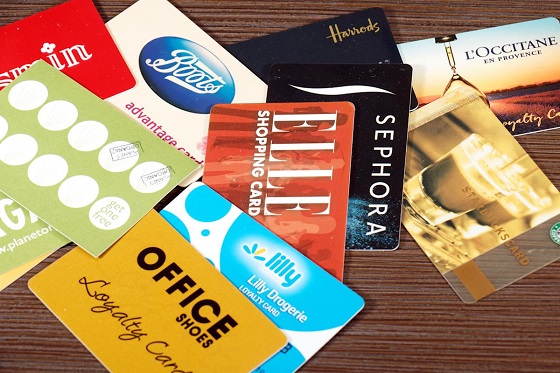

You’ve certainly been asked (begged!) to join up for at least one loyalty “points” program – like PC Optimum, Aeroplan, or Hilton Honors – over the years. And the odds are that you’re currently signed up for at least one of them. In fact, the average person apparently belongs to at no less than 14 programs. Although, ironically, you’ll need to sign up to an online equivalent of a loyalty program to read the source for that number.
Well all that warm, fuzzy “belonging” comes with some serious down sides. Let’s see how much they might cost us.
To be sure, there’s real money involved here. Canadians redeem at least two billion dollars in program rewards each year, and payouts will often represent between one and ten percent of the original purchase value.
At the same time, it’s estimated that there could be tens of billions of unredeemed dollars due to expirations, shifting program terms, and simple neglect. So getting your goodies isn’t automatic.
The Audit is a reader-supported publication.
To receive new posts and support my work, consider becoming a free or paid subscriber.
Just why do consumer-facing corporations agree to give away so much money in the fist place?
As you probably already know, it’s about your data. Businesses are willing to pay cold, hard cash in exchange for detailed descriptions of your age, sex, ethnicity, wealth, location, employment status, hobbies, preferences, medical conditions, political leanings, and, of course, shopping habits.
Don’t believe it works? So then why, after all these years, are points programs still giving away billions of dollars?
Every time you participate in such a program, the data associated with that activity will be collected and aggregated along with everything else known about you. It’s more than likely that points-based data is being combined with everything connected to your mobile phone account, email addresses, credit cards, provincial health card, and – possibly – your Social Insurance number. The depth and accuracy of your digital profile improves daily.
What happens to all that data? A lot of it is shared with – or sold to – partners or affiliates for marketing purposes. Some of it is accidentally (or intentionally) leaked to organized criminal gangs driving call center-related scams. But it’s all about getting to know you better in ways that maximize someone’s profits.
One truly scary way this data is used involves surveillance pricing (also known as price discrimination) – particularly as it’s described in a recent post by Professor Sylvain Charlebois.
The idea is that retailers will use your digital profile to adjust the prices you pay at the cash register or when you’re shopping online. The more loyal you are as a customer, the more you’ll pay. That’s because regular (“loyal”) customers are already reliable revenue sources. Companies don’t need to spend anything to build a relationship with you. But they’re more than willing to give up a few percentage points to gain new friends.
I’m not talking about the kind of price discrimination that might lead to higher prices for sales in, say, urban locations to account for higher real estate and transportation costs. Those are just normal business decisions.
What Professor Charlebois described is two customers paying different prices for the same items in the same stores. In fact, a recent Consumer Reports experiment in the U.S. involving 437 shoppers in four cities found the practice to be quite common.
But the nasty bit here is that there’s growing evidence that retailers are using surveillance pricing in grocery stores for basic food items. Extrapolating from the Consumer Reports study, such pricing could be adding $1,200 annually to a typical family’s spending on basic groceries.
I’m not sure what the solution is. It’s way too late to “unenroll” from our loyalty accounts. And government intervention would probably just end up making things worse.
But perhaps getting the word out about what’s happening could spark justified mistrust in the big retailers. No retailer enjoys dealing with grumpy customers.
Be grumpy.
The Audit is a reader-supported publication.
To receive new posts and support my work, consider becoming a free or paid subscriber.
Business
Largest fraud in US history? Independent Journalist visits numerous daycare centres with no children, revealing massive scam


A young journalist has uncovered perhaps the largest fraud scheme in US history.
He certainly isn’t a polished reporter with many years of experience, but 23 year old independent journalist Nick Shirley seems to be getting the job done. Shirley has released an incredible video which appears to outline fraud after fraud after fraud in what appears to be a massive taxpayer funded scheme involving up to $9 Billion Dollars.
In one day of traveling around Minneapolis-St. Paul, Shirley appears to uncover over $100 million in fraudulent operations.
🚨 Here is the full 42 minutes of my crew and I exposing Minnesota fraud, this might be my most important work yet. We uncovered over $110,000,000 in ONE day. Like it and share it around like wildfire! Its time to hold these corrupt politicians and fraudsters accountable
We ALL… pic.twitter.com/E3Penx2o7a
— Nick shirley (@nickshirleyy) December 26, 2025


Religion on trial: what could happen if Canada passes its new hate speech legislation

Australian PM booed at Bondi vigil as crowd screams “shame!”

Mortgaging Canada’s energy future — the hidden costs of the Carney-Smith pipeline deal
The “Disruptor-in-Chief” places Canada in the crosshairs

UK Police Pilot AI System to Track “Suspicious” Driver Journeys

Canada’s EV gamble is starting to backfire

End Supply Management—For the Sake of Canadian Consumers
-
 Haultain Research2 hours ago
Sweden Fixed What Canada Won’t Even Name
-
 Business1 day ago
“Magnitude cannot be overstated”: Minnesota aid scam may reach $9 billion
-
 Censorship Industrial Complex23 hours ago
US Under Secretary of State Slams UK and EU Over Online Speech Regulation, Announces Release of Files on Past Censorship Efforts
-
 Business2 days ago
Socialism vs. Capitalism
-
Business1 day ago
Largest fraud in US history? Independent Journalist visits numerous daycare centres with no children, revealing massive scam
-
 Energy2 days ago
Canada’s debate on energy levelled up in 2025
-
 Daily Caller2 days ago
Is Ukraine Peace Deal Doomed Before Zelenskyy And Trump Even Meet At Mar-A-Lago?
-
Business1 hour ago
What Do Loyalty Rewards Programs Cost Us?