
Agriculture
While Europeans Vacation, Denmark Attacks Livestock Farmers With Cow Tax


From Heartland Daily News
By Andrew Weiss

Economics aside, this policy will have no effect on global temperatures. Even if the entire European Union halted all emissions (including livestock) the global temperatures would be reduced by only 0.12 degrees Celsius by the year 2100, assuming the highest climate sensitivity to carbon.
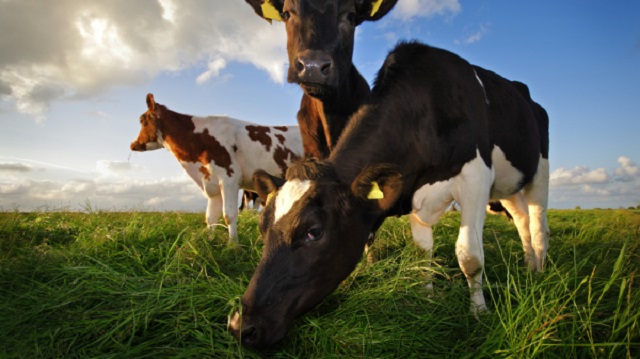
As Europeans generate greenhouse gas emissions by driving or flying off on their long summer holidays, Denmark is trying to lower those emissions by taxing cow burps and flatulence to combat climate change.
The Danish government believes that taxing methane produced by animals will improve the lives of citizens by lowering global temperatures. Therefore, beginning in 2030, livestock farmers will be taxed $17 per ton of carbon dioxide-equivalent emitted by their livestock. That tax will increase to $43 by 2035.
The average cow emits the CO2 equivalent of about three tons per year in methane, so each cow will cost farmers $50 in 2030, reaching about $125 by 2035.
Other livestock such as sheep and pigs are also subject to the methane tax, but they emit less methane because of differences in the chemistry of their digestive systems.
But two professors—William A. van Wijngaarden of York University in Canada and William Happer of Princeton University—argue that restrictions on methane emissions are “not justified by facts.”
CO2 currently makes up about 420 ppm (parts per million), which is 0.042% of the atmosphere. Methane is a much lower 1.9 ppm, or about 0.0002% of the atmosphere.
Methane is increasing in the atmosphere at a rate of about 0.0076 ppm per year, while CO2 is increasing at a rate 300 times faster, or 2.3 ppm a year.
The methane molecule is about 30 times better at trapping heat than the carbon dioxide molecule. Therefore, methane contributes about one-tenth the warming of CO2.
Effect on the Economy
Denmark’s new animal tax will raise food prices. Prices for beef and milk will go up, percolating throughout the nation’s economy. Denmark’s economy contracted 1.8% last quarter and the inflation rate is 2.1%, but expect to see inflation increase with the new animal tax. The tax will disproportionately affect middle-income earners and the poor.
At the same time, farmers will see smaller profit margins. Some farmers will reduce their numbers of cows and shift to other animals or grain. Others might sell their farms and change occupations.
In America, the majority of beef farms are run by small operations. According to the U.S. Department of Agriculture, 54% of farms with beef cattle had fewer than 20 cows. On such a farm, raising a cow costs about $900 per year.
A U.S. methane tax identical to Denmark’s would be the same as an additional 15% tax on cattle. This would be devastating to small ranchers who are already pinched by increased overhead costs.
The Danish policy taxes carbon at $43 per ton. This so-called social cost of carbon is priced even higher here in America, and is an easily manipulated price tag that the government puts on carbon emissions.
Last fall, the U.S. Environmental Protection Agency proposed $190 per ton as the social cost of carbon to make its policies seem worth the regulatory burden. If taxed at this price level, a 20-cow operation would owe Uncle Sam an additional $11,000 per year.
Effect on Carbon Emissions
All 1.5 million cows in Denmark account for about 0.1% of the European Union’s annual 3.6 billion tons of greenhouse emissions.
The chart below compares greenhouse gas emissions by Danish cattle to emissions in all of Denmark and in the entire European Union.

When it comes to the atmospheric concentration of carbon dioxide, CO2 emitted in Denmark is no different than CO2 emitted anywhere else in the world.
If Danish lawmakers are concerned about CO2-caused climate change, the cost of the tax policy needs to be weighed against the global effect on emissions.
In 2022, India emitted 189 million metric tons more than it did in 2021. This is more than four times the entire carbon footprint of Denmark.
Effect on Global Climate
Economics aside, this policy will have no effect on global temperatures. Even if the entire European Union halted all emissions (including livestock) the global temperatures would be reduced by only 0.12 degrees Celsius by the year 2100, assuming the highest climate sensitivity to carbon.

These numbers are calculated using The Heritage Foundation’s climate calculator, which uses a government climate model. (You can use the calculator for yourself here.)
From Denmark to California
Although such policies may seem unlikely to take hold in freedom-loving America, similarly intrusive regulations already have been implemented across multiple sectors. These regulations affect everything in the U.S. from large-scale power plants and the automotive industry to everyday household items such as gas stoves, water heaters, and lawn equipment.
In some states, including New York and California, building codes now prohibit gas hookups in many new construction projects, denying residents the right to decide for themselves what energy sources to use.
As of Jan. 1, it became illegal to buy gas-powered lawn equipment such as lawnmowers, leaf blowers, or chainsaws in California. This law will cost landscaping businesses over $1 billion and raise the price of landscaping services, causing some to lose their jobs and business closures.
It is time to stop perpetuating the fairy tale that taxing cow burps will reduce global temperatures. Such regulations only increase food costs and inflation in general, making poverty even worse.
Andrew Weiss is a research assistant for domestic policy at The Heritage Foundation.
Originally published by The Daily Signal. Republished with permission.


A new program funded by the Sustainable Canadian Agricultural Partnership will accelerate expansion in Alberta greenhouses and vertical farms.
Albertans want to keep their hard-earned money in the province and support producers by choosing locally grown, high-quality produce. The new three-year, $10-milllion Growing Greenhouses program aims to stimulate industry growth and provide fresh fruit and vegetables to Albertans throughout the year.
“Everything our ministry does is about ensuring Albertans have secure access to safe, high-quality food. We are continually working to build resilience and sustainability into our food production systems, increase opportunities for producers and processors, create jobs and feed Albertans. This new program will fund technologies that increase food production and improve energy efficiency.”
“Through this investment, we’re supporting Alberta’s growers and ensuring Canadians have access to fresh, locally-grown fruits and vegetables on grocery shelves year-round. This program strengthens local communities, drives innovation, and creates new opportunities for agricultural entrepreneurs, reinforcing Canada’s food system and economy.”
The Growing Greenhouses program supports the controlled environment agriculture sector with new construction or expansion improvements to existing greenhouses and vertical farms that produce food at a commercial scale. It also aligns with Alberta’s Buy Local initiative launched this year as consumers will be able to purchase more local produce all year-round.
The program was created in alignment with the needs identified by the greenhouse sector, with a goal to reduce seasonal import reliance entering fall, which increases fruit and vegetable prices.
“This program is a game-changer for Alberta’s greenhouse sector. By investing in expansion and innovation, we can grow more fresh produce year-round, reduce reliance on imports, and strengthen food security for Albertans. Our growers are ready to meet the demand with sustainable, locally grown vegetables and fruits, and this support ensures we can do so while creating new jobs and opportunities in communities across the province. We are very grateful to the Governments of Canada and Alberta for this investment in our sector and for working collaboratively with us.”
Sustainable Canadian Agricultural Partnership (Sustainable CAP)
Sustainable CAP is a five-year, $3.5-billion investment by federal, provincial and territorial governments to strengthen competitiveness, innovation and resiliency in Canada’s agriculture, agri-food and agri-based products sector. This includes $1 billion in federal programs and activities and $2.5 billion that is cost-shared 60 per cent federally and 40 per cent provincially/territorially for programs that are designed and delivered by provinces and territories.
Quick facts
- Alberta’s greenhouse sector ranks fourth in Canada:
- 195 greenhouses produce $145 million in produce and 60 per cent of them operate year-round.
- Greenhouse food production is growing by 6.2 per cent annually.
- Alberta imports $349 million in fresh produce annually.
- The program supports sector growth by investing in renewable and efficient energy systems, advanced lighting systems, energy-saving construction, and automation and robotics systems.
Related information
From the Fraser Institute
By Annika Segelhorst and Elmira Aliakbari
Canadians care about the environment and breathing clean air. In 2023, the share of Canadians concerned about the state of outdoor air quality was 7 in 10, according to survey results from Abacus Data. Yet Canada outperforms most comparable high-income countries on air quality, suggesting a gap between public perception and empirical reality. Overall, Canada ranks 8th for air quality among 31 high-income countries, according to our recent study published by the Fraser Institute.
A key determinant of air quality is the presence of tiny solid particles and liquid droplets floating in the air, known as particulates. The smallest of these particles, known as fine particulate matter, are especially hazardous, as they can penetrate deep into a person’s lungs, enter the blood stream and harm our health.
Exposure to fine particulate matter stems from both natural and human sources. Natural events such as wildfires, dust storms and volcanic eruptions can release particles into the air that can travel thousands of kilometres. Other sources of particulate pollution originate from human activities such as the combustion of fossil fuels in automobiles and during industrial processes.
The World Health Organization (WHO) and the Canadian Council of Ministers of the Environment (CCME) publish air quality guidelines related to health, which we used to measure and rank 31 high-income countries on air quality.
Using data from 2022 (the latest year of consistently available data), our study assessed air quality based on three measures related to particulate pollution: (1) average exposure, (2) share of the population at risk, and (3) estimated health impacts.
The first measure, average exposure, reflects the average level of outdoor particle pollution people are exposed to over a year. Among 31 high-income countries, Canadians had the 5th-lowest average exposure to particulate pollution.
Next, the study considered the proportion of each country’s population that experienced an annual average level of fine particle pollution greater than the WHO’s air quality guideline. Only 2 per cent of Canadians were exposed to fine particle pollution levels exceeding the WHO guideline for annual exposure, ranking 9th of 31 countries. In other words, 98 per cent of Canadians were not exposed to fine particulate pollution levels exceeding health guidelines.
Finally, the study reviewed estimates of illness and mortality associated with fine particle pollution in each country. Canada had the fifth-lowest estimated death and illness burden due to fine particle pollution.
Taken together, the results show that Canada stands out as a global leader on clean air, ranking 8th overall for air quality among high-income countries.

Canada’s record underscores both the progress made in achieving cleaner air and the quality of life our clean air supports.

Annika Segelhorst
Junior Economist

Elmira Aliakbari


The Recall Trap: 21 Alberta MLA’s face recall petitions

Taxpayers Federation calls on politicians to reject funding for new Ottawa Senators arena

Canada’s free speech record is cracking under pressure

Canada considers creating national ID system using digital passports for domestic use

Albertans give most on average but Canadian generosity hits lowest point in 20 years

100 Catholic schoolchildren rescued, Nigeria promises release of remaining hostages
Claims about ‘unmarked graves’ don’t withstand scrutiny
-
 Daily Caller1 day ago
Paris Climate Deal Now Decade-Old Disaster
-
 armed forces2 days ago
Ottawa’s Newly Released Defence Plan Crosses a Dangerous Line
-
 Alberta1 day ago
Alberta’s huge oil sands reserves dwarf U.S. shale
-
 Business19 hours ago
Ottawa Pretends To Pivot But Keeps Spending Like Trudeau
-
 Energy18 hours ago
Liberals Twisted Themselves Into Pretzels Over Their Own Pipeline MOU
-
 Censorship Industrial Complex16 hours ago
How Wikipedia Got Captured: Leftist Editors & Foreign Influence On Internet’s Biggest Source of Info
-
 Indigenous1 day ago
Residential school burials controversy continues to fuel wave of church arsons, new data suggests
-
 International1 day ago
FBI didn’t think it had cause to raid Trump but DOJ did it anyway