
Business
When politicians gamble, taxpayers lose



From the Canadian Taxpayers Federation
Author: Jay Goldberg

Trudeau and Ford bragged about how a $5 billion giveaway to Honda is going to generate 1,000 jobs. In case you’re thinking of doing the math, that’s $5 million per job.
Politicians are rolling the dice on the electric vehicle industry with your money.
If they bet wrong, and there’s a good chance they have, hardworking Canadians will be left holding the bag.
Prime Minister Justin Trudeau and Premier Doug Ford announced a $5-billion agreement with Honda, giving another Fortune 500 automaker a huge wad of taxpayer cash.
Then Trudeau released a video on social media bragging about “betting big” on the electric vehicle industry in Canada. The “betting” part of Trudeau’s statement tells you everything you need to know about why this is a big mistake.
Governments should never “bet” with taxpayer money. That’s the reality of corporate welfare: when governments give taxpayer money to corporations with few strings attached, everyday Canadians are left hoping and praying that politicians put the chips on the right numbers.
And these are huge bets.
When Trudeau and Ford announced this latest giveaway to Honda, the amount of taxpayer cash promised to the electric vehicle sector reached $57 billion. That’s more than the federal government plans to spend on health care this year.
Governments should never gamble with taxpayer money and there are at least three key reasons why this Honda deal is a mistake.
First, governments haven’t even proven themselves capable of tracking how many jobs are created through their corporate welfare schemes.
Trudeau and Ford bragged about how a $5 billion giveaway to Honda is going to generate 1,000 jobs. In case you’re thinking of doing the math, that’s $5 million per job.
Five million dollars per job is already outrageous. But some recent reporting from the Globe and Mail shows why corporate welfare in general is a terrible idea.
The feds don’t even have a proper mechanism for verifying if jobs are actually created after handing corporations buckets of taxpayer cash. So, while 1,000 jobs are promised through the Honda deal, the government isn’t capable of confirming whether those measly 1,000 jobs will materialize.
Second, betting on the electric vehicle industry comes with risk.
Trudeau and Ford gave the Ford Motor Company nearly $600 million to retool a plant in Oakville to build electric cars instead of gasoline powered ones back in 2020. But just weeks ago, Ford announced plans to delay the conversion for another three years, citing slumping electric vehicle sales.
Look into Ford’s quarterly reports and the danger of betting on electric vehicles becomes clear as day: Ford’s EV branch lost $1.3 billion in the first quarter of 2024. Reports also show Ford lost $130,000 on every electric vehicle sold.
The decline of electric vehicle demand isn’t limited to Ford. In the United States, electric vehicle sales fell by 7.3 per cent between the last quarter of 2023 and the first quarter of 2024.
Even Tesla’s sales were down 13 per cent in the first quarter of this year compared to the first quarter of 2023.
A Bloomberg headline from early April read “Tesla’s sales miss by the most ever in brutal blow for EVs.”
There’s certainly a risk in betting on electric vehicles right now.
Third, there’s the question of opportunity cost. Imagine what else our governments could be doing with $57 billion?
For about the same amount of money, the federal government could suspend the federal sales tax for an entire year. The feds could also use $57 billion to double health-care spending or build 57 new hospitals.
The solution for creating jobs isn’t to hand a select few companies buckets of cash just to lure them to Canada. Politicians should be focusing on creating the right environment for any company, large or small, to grow without a government handout.
To do that, Canada must be more competitive with lower business taxes, less red tape and more affordable energy. That’s a real recipe for success that doesn’t involve gambling with taxpayer cash.
It’s time for our politicians to kick their corporate welfare addiction. Until they do, Canadians will be left paying the price.


From the Fraser Institute
According to a recent study, living standards in Canada have declined over the past five years. And the country’s economic growth has been “ugly.” Crucially, all 10 provinces are experiencing this economic stagnation—there are no exceptions to Canada’s “ugly” growth record. In 2026, reversing this trend should be the top priority for the Carney government and provincial governments across the country.
Indeed, demographic and economic data across the country tell a remarkably similar story over the past five years. While there has been some overall economic growth in almost every province, in many cases provincial populations, fuelled by record-high levels of immigration, have grown almost as quickly. Although the total amount of economic production and income has increased from coast to coast, there are more people to divide that income between. Therefore, after we account for inflation and population growth, the data show Canadians are not better off than they were before.
Let’s dive into the numbers (adjusted for inflation) for each province. In British Columbia, the economy has grown by 13.7 per cent over the past five years but the population has grown by 11.0 per cent, which means the vast majority of the increase in the size of the economy is likely due to population growth—not improvements in productivity or living standards. In fact, per-person GDP, a key indicator of living standards, averaged only 0.5 per cent per year over the last five years, which is a miserable result by historic standards.
A similar story holds in other provinces. Prince Edward Island, Nova Scotia, Quebec and Saskatchewan all experienced some economic growth over the past five years but their populations grew at almost exactly the same rate. As a result, living standards have barely budged. In the remaining provinces (Newfoundland and Labrador, New Brunswick, Ontario, Manitoba and Alberta), population growth has outstripped economic growth, which means that even though the economy grew, living standards actually declined.
This coast-to-coast stagnation of living standards is unique in Canadian history. Historically, there’s usually variation in economic performance across the country—when one region struggles, better performance elsewhere helps drive national economic growth. For example, in the early 2010s while the Ontario and Quebec economies recovered slowly from the 2008/09 recession, Alberta and other resource-rich provinces experienced much stronger growth. Over the past five years, however, there has not been a “good news” story anywhere in the country when it comes to per-person economic growth and living standards.
In reality, Canada’s recent record-high levels of immigration and population growth have helped mask the country’s economic weakness. With more people to buy and sell goods and services, the overall economy is growing but living standards have barely budged. To craft policies to help raise living standards for Canadian families, policymakers in Ottawa and every provincial capital should remove regulatory barriers, reduce taxes and responsibly manage government finances. This is the great policy challenge for governments across the country in 2026 and beyond.

Ben Eisen
Senior Fellow, Fraser Institute

Jake Fuss
Director, Fiscal Studies, Fraser Institute


A Minneapolis day care run by Somali immigrants is claiming that a mysterious break-in wiped out its most sensitive records, even as police say officers were never told that anything was actually stolen — a discrepancy that’s drawing sharp attention amid Minnesota’s spiraling child care fraud scandal.
According to the center’s manager, Nasrulah Mohamed, someone forced their way into Nakomis Day Care Center earlier this week by entering through a rear kitchen area, damaging a wall and accessing the office. Mohamed told reporters the intruder made off with “important documentation,” including children’s enrollment records, employee files, and checkbooks tied to the facility’s operations.
But a preliminary report from the Minneapolis Police Department tells a different story. Police say no loss was reported to officers at the time of the call. While the department confirmed the center later contacted police with additional information, an updated report was not immediately available.
Video released by the day care purporting to show damage from the incident depicts a hole punched through drywall inside what appears to be a utility closet, with stacks of cinder blocks visible just behind the wall — imagery that has only fueled skepticism as investigators continue to unravel what authorities have described as one of the largest fraud schemes ever tied to Minnesota’s human services programs.
Mohamed blamed the alleged break-in on fallout from a viral investigation by YouTuber Nick Shirley, who recently toured nearly a dozen Minnesota day care sites while questioning whether they were legitimately operating. Shirley’s video has racked up more than 110 million views. Mohamed insisted the coverage unfairly targeted Somali operators and said his center has since received what he described as hateful and threatening messages.
A manager at the Nokomis Daycare Center in Minneapolis detailed "extensive vandalism" at the facility during a Wednesday news conference.
Manager Nasrulah Mohamed reported that the suspect stole important employee and client documents, an incident he attributed to YouTuber Nick… pic.twitter.com/71nNTSXdTT
— FOX 9 (@FOX9) December 31, 2025
“This is devastating news, and we don’t know why this is targeting our Somali community,” Mohamed said, calling Shirley’s reporting false. Nakomis Day Care Center was not among the facilities featured in the video.
The break-in claim surfaced as law enforcement and federal officials continue to expose a massive fraud network centered in Minneapolis, involving food assistance, housing, and child care payments. Authorities say at least $1 billion has already been identified as fraudulent, with federal prosecutors warning the total could climb as high as $9 billion. Ninety-two people have been charged so far, 80 of them Somali immigrants.
Late Tuesday, the U.S. Department of Health and Human Services announced it was freezing all federal child care payments to Minnesota unless the state can prove the funds are being used lawfully. The payments totaled roughly $185 million in 2025 alone.
Minnesota Gov. Tim Walz, under intensifying scrutiny for allowing fraud to metastasize for years, responded by attacking the Trump administration rather than addressing the substance of the findings. “This is Trump’s long game,” Walz wrote on X Tuesday night, claiming the administration was politicizing fraud enforcement to defund programs — despite federal officials pointing to documented abuse and ongoing criminal cases.
Meanwhile, questions continue to swirl around facilities already flagged by investigators. Reporters visiting several sites highlighted in Shirley’s video found at least one — Quality “Learing” Center — operating with children inside despite state officials previously saying it had been shut down. The Minnesota Department of Children, Youth, and Families later issued a confusing clarification, saying the center initially reported it would close but later claimed it would remain open.
As Minnesota scrambles to respond to the funding freeze and mounting arrests, the conflicting accounts surrounding the Nakomis Day Care incident underscore a broader problem confronting state leaders: a system so riddled with gaps and contradictions that even basic facts — like whether records were actually stolen — are now in dispute, while taxpayers are left holding the bill.


Alberta Next Panel calls for less Ottawa—and it could pay off

“Magnitude cannot be overstated”: Minnesota aid scam may reach $9 billion

Largest fraud in US history? Independent Journalist visits numerous daycare centres with no children, revealing massive scam

US Under Secretary of State Slams UK and EU Over Online Speech Regulation, Announces Release of Files on Past Censorship Efforts

Sweden Fixed What Canada Won’t Even Name
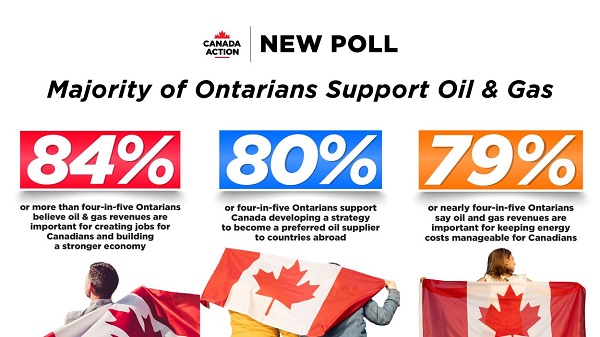
New Poll Shows Ontarians See Oil & Gas as Key to Jobs, Economy, and Trade

Socialism vs. Capitalism
-
 Business1 day ago
Dark clouds loom over Canada’s economy in 2026
-
 Business1 day ago
The Real Reason Canada’s Health Care System Is Failing
-
 Addictions1 day ago
Coffee, Nicotine, and the Politics of Acceptable Addiction
-
 Business1 day ago
Federal funds FROZEN after massive fraud uncovered: Trump cuts off Minnesota child care money
-
 Opinion21 hours ago
Globally, 2025 had one of the lowest annual death rates from extreme weather in history
-
 International6 hours ago
Trump confirms first American land strike against Venezuelan narco networks
-
Business5 hours ago
How convenient: Minnesota day care reports break-in, records gone
-
Business5 hours ago
The great policy challenge for governments in Canada in 2026