
Business
What Do Loyalty Rewards Programs Cost Us?

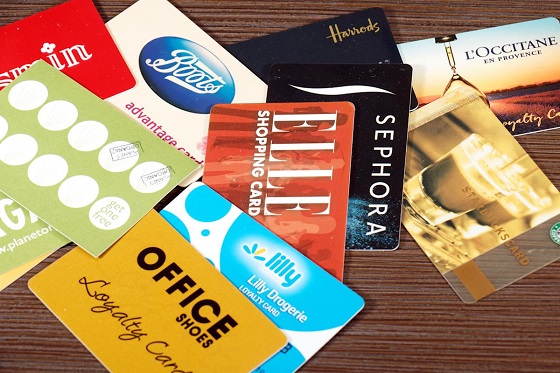


You’ve certainly been asked (begged!) to join up for at least one loyalty “points” program – like PC Optimum, Aeroplan, or Hilton Honors – over the years. And the odds are that you’re currently signed up for at least one of them. In fact, the average person apparently belongs to at no less than 14 programs. Although, ironically, you’ll need to sign up to an online equivalent of a loyalty program to read the source for that number.

Well all that warm, fuzzy “belonging” comes with some serious down sides. Let’s see how much they might cost us.
To be sure, there’s real money involved here. Canadians redeem at least two billion dollars in program rewards each year, and payouts will often represent between one and ten percent of the original purchase value.
At the same time, it’s estimated that there could be tens of billions of unredeemed dollars due to expirations, shifting program terms, and simple neglect. So getting your goodies isn’t automatic.
The Audit is a reader-supported publication.
To receive new posts and support my work, consider becoming a free or paid subscriber.
Just why do consumer-facing corporations agree to give away so much money in the fist place?
As you probably already know, it’s about your data. Businesses are willing to pay cold, hard cash in exchange for detailed descriptions of your age, sex, ethnicity, wealth, location, employment status, hobbies, preferences, medical conditions, political leanings, and, of course, shopping habits.
Don’t believe it works? So then why, after all these years, are points programs still giving away billions of dollars?
Every time you participate in such a program, the data associated with that activity will be collected and aggregated along with everything else known about you. It’s more than likely that points-based data is being combined with everything connected to your mobile phone account, email addresses, credit cards, provincial health card, and – possibly – your Social Insurance number. The depth and accuracy of your digital profile improves daily.
What happens to all that data? A lot of it is shared with – or sold to – partners or affiliates for marketing purposes. Some of it is accidentally (or intentionally) leaked to organized criminal gangs driving call center-related scams. But it’s all about getting to know you better in ways that maximize someone’s profits.
One truly scary way this data is used involves surveillance pricing (also known as price discrimination) – particularly as it’s described in a recent post by Professor Sylvain Charlebois.
The idea is that retailers will use your digital profile to adjust the prices you pay at the cash register or when you’re shopping online. The more loyal you are as a customer, the more you’ll pay. That’s because regular (“loyal”) customers are already reliable revenue sources. Companies don’t need to spend anything to build a relationship with you. But they’re more than willing to give up a few percentage points to gain new friends.
I’m not talking about the kind of price discrimination that might lead to higher prices for sales in, say, urban locations to account for higher real estate and transportation costs. Those are just normal business decisions.
What Professor Charlebois described is two customers paying different prices for the same items in the same stores. In fact, a recent Consumer Reports experiment in the U.S. involving 437 shoppers in four cities found the practice to be quite common.
But the nasty bit here is that there’s growing evidence that retailers are using surveillance pricing in grocery stores for basic food items. Extrapolating from the Consumer Reports study, such pricing could be adding $1,200 annually to a typical family’s spending on basic groceries.
I’m not sure what the solution is. It’s way too late to “unenroll” from our loyalty accounts. And government intervention would probably just end up making things worse.
But perhaps getting the word out about what’s happening could spark justified mistrust in the big retailers. No retailer enjoys dealing with grumpy customers.
Be grumpy.
The Audit is a reader-supported publication.
To receive new posts and support my work, consider becoming a free or paid subscriber.

Business
Largest fraud in US history? Independent Journalist visits numerous daycare centres with no children, revealing massive scam


A young journalist has uncovered perhaps the largest fraud scheme in US history.
He certainly isn’t a polished reporter with many years of experience, but 23 year old independent journalist Nick Shirley seems to be getting the job done. Shirley has released an incredible video which appears to outline fraud after fraud after fraud in what appears to be a massive taxpayer funded scheme involving up to $9 Billion Dollars.
In one day of traveling around Minneapolis-St. Paul, Shirley appears to uncover over $100 million in fraudulent operations.
🚨 Here is the full 42 minutes of my crew and I exposing Minnesota fraud, this might be my most important work yet. We uncovered over $110,000,000 in ONE day. Like it and share it around like wildfire! Its time to hold these corrupt politicians and fraudsters accountable
We ALL… pic.twitter.com/E3Penx2o7a
— Nick shirley (@nickshirleyy) December 26, 2025


Federal prosecutors say Minnesota’s exploding social-services fraud scandal may now rival nearly the entire economy of Somalia, with as much as $9 billion allegedly stolen from taxpayer-funded programs in what authorities describe as industrial-scale abuse that unfolded largely under the watch of Democrat Gov. Tim Walz. The staggering new estimate is almost nine times higher than the roughly $1 billion figure previously suspected and amounts to about half of the $18 billion in federal funds routed through Minnesota-run social-services programs since 2018, according to prosecutors. “The magnitude cannot be overstated,” First Assistant U.S. Attorney Joe Thompson said Thursday, stressing that investigators are still uncovering massive schemes. “This is not a handful of bad actors. It’s staggering, industrial-scale fraud. Every day we look under a rock and find another $50 million fraud operation.”
Authorities say the alleged theft went far beyond routine overbilling. Dozens of defendants — the vast majority tied to Minnesota’s Somali community — are accused of creating sham businesses and nonprofits that claimed to provide housing assistance, food aid, or health-care services that never existed, then billing state programs backed by federal dollars. Thompson said the opportunity became so lucrative it attracted what he called “fraud tourism,” with out-of-state operators traveling to Minnesota to cash in. Charges announced Thursday against six more people bring the total number of defendants to 92.
BREAKING: First Assistant U.S. Attorney Joe Thompson revealed that 14 state Medicaid programs have cost Minnesota $18 billion since 2018, including more than $3.5 billion in 2024 alone.
Thompson stated, "Now, I'm sure everyone is wondering how much of this $18 billion was… pic.twitter.com/hCNDBuCTYH
— FOX 9 (@FOX9) December 18, 2025
Among the newly charged are Anthony Waddell Jefferson, 37, and Lester Brown, 53, who prosecutors say traveled from Philadelphia to Minnesota after spotting what they believed was easy money in the state’s housing assistance system. The pair allegedly embedded themselves in shelters and affordable-housing networks to pose as legitimate providers, then recruited relatives and associates to fabricate client notes. Prosecutors say they submitted about $3.5 million in false claims to the state’s Housing Stability Services Program for roughly 230 supposed clients.
Other cases show how deeply the alleged fraud penetrated Minnesota’s health-care programs. Abdinajib Hassan Yussuf, 27, is accused of setting up a bogus autism therapy nonprofit that paid parents to enroll children regardless of diagnosis, then billed the state for services never delivered, netting roughly $6 million. Another defendant, Asha Farhan Hassan, 28, allegedly participated in a separate autism scheme that generated $14 million in fraudulent reimbursements, while also pocketing nearly $500,000 through the notorious Feeding Our Future food-aid scandal. “Roughly two dozen Feeding Our Future defendants were getting money from autism clinics,” Thompson said. “That’s how we learned about the autism fraud.”
The broader scandal began to unravel in 2022 when Feeding Our Future collapsed under federal investigation, but prosecutors say only in recent months has the true scope of the alleged theft come into focus. Investigators allege large sums were wired overseas or spent on luxury vehicles and other high-end purchases. The revelations have fueled political fallout in Minnesota and prompted renewed federal scrutiny of immigration-linked fraud as well as criticism of state oversight failures. Walz, who is seeking re-election in 2026 after serving as Kamala Harris’ running mate in 2024, defended his administration Thursday, saying, “We will not tolerate fraud, and we will continue to work with federal partners to ensure fraud is stopped and fraudsters are caught.” Prosecutors, however, made clear the investigation is far from finished — and warned the final tally could climb even higher.

There’s No Bias at CBC News, You Say? Well, OK…

Religion on trial: what could happen if Canada passes its new hate speech legislation

Australian PM booed at Bondi vigil as crowd screams “shame!”
The “Disruptor-in-Chief” places Canada in the crosshairs

Mortgaging Canada’s energy future — the hidden costs of the Carney-Smith pipeline deal
Canada’s EV gamble is starting to backfire

UK Police Pilot AI System to Track “Suspicious” Driver Journeys
-
Business1 day ago
“Magnitude cannot be overstated”: Minnesota aid scam may reach $9 billion
-
 Censorship Industrial Complex22 hours ago
US Under Secretary of State Slams UK and EU Over Online Speech Regulation, Announces Release of Files on Past Censorship Efforts
-
 Haultain Research16 mins ago
Sweden Fixed What Canada Won’t Even Name
-
 Business2 days ago
Socialism vs. Capitalism
-
 Energy2 days ago
Canada’s debate on energy levelled up in 2025
-
 Daily Caller2 days ago
Is Ukraine Peace Deal Doomed Before Zelenskyy And Trump Even Meet At Mar-A-Lago?
-
Business24 hours ago
Largest fraud in US history? Independent Journalist visits numerous daycare centres with no children, revealing massive scam