
Uncategorized
Votes on Senate bills seen as progress even if they fail


WASHINGTON — The Senate is taking a new approach to ending the partial government shutdown by actually taking votes instead of just pointing fingers.

But competing bills appear likely to fail Thursday, caught in a poisonous Washington impasse.
Either measure would reopen federal agencies and pay 800,000 federal workers who are days from missing yet another
Twin defeats might spur the two sides into a more serious effort to strike a compromise. Almost every proposal needs 60 votes to advance in the Senate, which is under 53-47 Republican control.
“It’s hard to imagine 60 votes developing for either one,” said Sen. Roy Blunt, R-Mo.
With the impacts of the shutdown becoming increasingly painful, however, lawmakers on both sides were trumpeting their willingness to compromise in the battle over border security and immigration issues such as protection against deportation for so-called Dreamer immigrants brought to the country illegally as children.
“It’s clear what the president wants. It’s clear what we want. If you have a negotiation, both parties are going to put on the table what they want,” said House Majority Leader Steny Hoyer, D-Md. “By definition a successful negotiation gets to a place where both sides feel they got something, right?”
But starting negotiations is a tripping point. Democrats insist on opening the government first rather than reward Trump’s tactics, while Republicans warn that immediately reopening the government would give Democrats too much leverage in any talks.
“No shutdown. No hostages,” said Rep. Ruben Gallegos, D-Ariz. “You get nothing in return until to release the hostages.”
The partial shutdown began just before Christmas after Trump indicated that he wouldn’t sign a stopgap spending bill backed by top Republicans like Majority Leader Mitch McConnell, R-Ky., who shepherded a bill funding the government up to Feb. 8 through the Senate. The House passed a plan with wall funding as one of the last gasps of the eight-year GOP majority.
On Thursday, almost five weeks later, House Democrats continued work on a package that would ignore Trump’s demand for $5.7 billion for a wall with Mexico and would instead pay for other ideas aimed at protecting the border.
Details of Democrats’ border security plan and its cost remained a work in progress. Party leaders said it would include money for scanning devices and other technological tools for improving security at ports of entry and along the boundary, plus funds for more border agents and immigration judges.
“If his $5.7 billion is about border security, then we see ourselves fulfilling that request, only doing it with what I like to call using a smart wall,” said No. 3 House Democratic leader Jim Clyburn, D-S.C.
A poll by The Associated Press-NORC Center for Public Affairs Research released Wednesday was the latest indicator that the shutdown is hurting Trump with the general public. While his approval among Republicans remains strong, just 34
The Senate GOP bill would temporarily shield from deportation 700,000 “Dreamers,” protections Trump has tried terminating. He’s also offered temporary protections for people who fled violence or natural disasters in several countries — another program the president has curtailed.
With Democrats eager to show they’re trying to end the impasse, the House used mostly party-line votes Wednesday to approve one measure reopening government agencies through February. By a similar tally, the chamber voted to finance most shuttered agencies through September.
Growing numbers of House Democrats say the party should show where it stands on border security.
“Right now it’s a vacuum and the president is offering fake plans to stop drug smuggling,” said Rep. Peter DeFazio, D-Ore. Offering a Democratic alternative “helps the possibility of beginning a real negotiation,” he said.
___
AP Congressional Correspondent Lisa Mascaro and writers Laurie Kellman and Matthew Daly contributed to this report.
Andrew Taylor And Alan Fram, The Associated Press




The cost of the bureaucracy increased by $6 billion last year, according to newly released numbers in Public Accounts disclosures. The Canadian Taxpayers Federation is calling on Prime Minister Mark Carney to immediately shrink the bureaucracy.
“The Public Accounts show the cost of the federal bureaucracy is out of control,” said Franco Terrazzano, CTF Federal Director. “Tinkering around the edges won’t cut it, Carney needs to take urgent action to shrink the bloated federal bureaucracy.”
The federal bureaucracy cost taxpayers $71.4 billion in 2024-25, according to the Public Accounts. The cost of the federal bureaucracy increased by $6 billion, or more than nine per cent, over the last year.
The federal bureaucracy cost taxpayers $39.6 billion in 2015-16, according to the Public Accounts. That means the cost of the federal bureaucracy increased 80 per cent over the last 10 years. The government added 99,000 extra bureaucrats between 2015-16 and 2024-25.
Half of Canadians say federal services have gotten worse since 2016, despite the massive increase in the federal bureaucracy, according to a Leger poll.
Not only has the size of the bureaucracy increased, the cost of consultants, contractors and outsourcing has increased as well. The government spent $23.1 billion on “professional and special services” last year, according to the Public Accounts. That’s an 11 per cent increase over the previous year. The government’s spending on professional and special services more than doubled since 2015-16.
“Taxpayers should not be paying way more for in-house government bureaucrats and way more for outside help,” Terrazzano said. “Mere promises to find minor savings in the federal bureaucracy won’t fix Canada’s finances.
“Taxpayers need Carney to take urgent action and significantly cut the number of bureaucrats now.”
Table: Cost of bureaucracy and professional and special services, Public Accounts
| Year | Bureaucracy | Professional and special services |
|
$71,369,677,000 |
$23,145,218,000 |
|
|
$65,326,643,000 |
$20,771,477,000 |
|
|
$56,467,851,000 |
$18,591,373,000 |
|
|
$60,676,243,000 |
$17,511,078,000 |
|
|
$52,984,272,000 |
$14,720,455,000 |
|
|
$46,349,166,000 |
$13,334,341,000 |
|
|
$46,131,628,000 |
$12,940,395,000 |
|
|
$45,262,821,000 |
$12,950,619,000 |
|
|
$38,909,594,000 |
$11,910,257,000 |
|
|
$39,616,656,000 |
$11,082,974,000 |

From the Daily Caller News Foundation
By Jason Hopkins
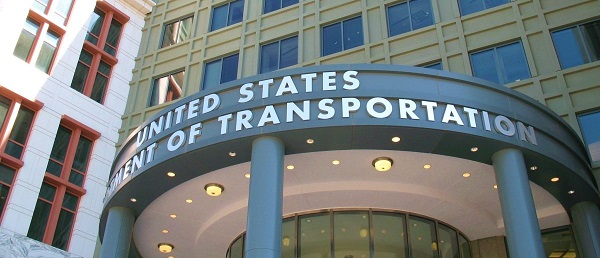
The Trump administration is creating a first-of-its-kind task force aimed at ushering in a new “Golden Age” of beautiful infrastructure across the U.S.
The Department of Transportation (DOT) will announce the establishment of the Beautifying Transportation Infrastructure Council (BTIC) on Thursday, the Daily Caller News Foundation exclusively learned. The BTIC seeks to advise Transportation Secretary Sean Duffy on design and policy ideas for key infrastructure projects, including highways, bridges and transit hubs.
“What happened to our country’s proud tradition of building great, big, beautiful things?” Duffy said in a statement shared with the DCNF. “It’s time the design for America’s latest infrastructure projects reflects our nation’s strength, pride, and promise.”
“We’re engaging the best and brightest minds in architectural design and engineering to make beautiful structures that move you and bring about a new Golden Age of Transportation,” Duffy continued.
Mini scoop – here is the DOT’s rollout of its Beautifying Transportation Infrastructure Council, which will be tasked with making our buildings beautiful again. pic.twitter.com/
9iV2xSxdJM — Jason Hopkins (@jasonhopkinsdc) October 23, 2025
The DOT is encouraging nominations of the country’s best architects, urban planners, artists and others to serve on the council, according to the department. While ensuring that efficiency and safety remain a top priority, the BTIC will provide guidance on projects that “enhance” public areas and develop aesthetic performance metrics.
The new council aligns with an executive order signed by President Donald Trump in August 2025 regarding infrastructure. The “Making Federal Architecture Beautiful Again” order calls for federal public buildings in the country to “respect regional architectural heritage” and aims to prevent federal construction projects from using modernist and brutalist architecture styles, instead returning to a classical style.
“The Founders, in line with great societies before them, attached great importance to Federal civic architecture,” Trump’s order stated. “They wanted America’s public buildings to inspire the American people and encourage civic virtue.”
“President George Washington and Secretary of State Thomas Jefferson consciously modeled the most important buildings in Washington, D.C., on the classical architecture of ancient Athens and Rome,” the order continued. “Because of their proven ability to meet these requirements, classical and traditional architecture are preferred modes of architectural design.”
The DOT invested millions in major infrastructure projects since Trump’s return to the White House. Duffy announced in August a $43 million transformation initiative of the New York Penn Station in New York City and in September unveiledmajor progress in the rehabilitation and modernization of Washington Union Station in Washington, D.C.
The BTIC will comprise up to 11 members who will serve two-year terms, with the chance to be reappointed, according to the DOT. The task force will meet biannually. The deadline for nominations will end Nov. 21.


Why Does Canada “Lead” the World in Funding Racist Indoctrination?
US Condemns EU Censorship Pressure, Defends X

Will this deal actually build a pipeline in Canada?
The West Needs Bogeymen (Especially Russia)

Loblaws Owes Canadians Up to $500 Million in “Secret” Bread Cash

They know they are lying, we know they are lying and they know we know but the lies continue

The day the ‘King of rock ‘n’ roll saved the Arizona memorial
-
 Alberta1 day ago
The Recall Trap: 21 Alberta MLA’s face recall petitions
-
 illegal immigration1 day ago
US Notes 2.5 million illegals out and counting
-
 International1 day ago
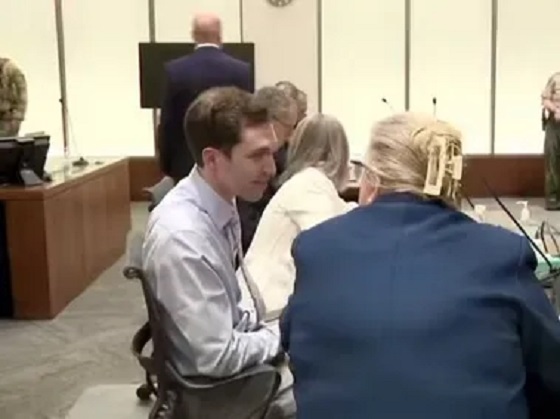
Tyler Robinson shows no remorse in first court appearance for Kirk assassination
-
 2025 Federal Election2 days ago
Too Close for Comfort: Carney Floor Crosser Comes From a Riding Tainted by PRC Interference
-
 Business2 days ago
High-speed rail between Toronto and Quebec City a costly boondoggle for Canadian taxpayers
-
 Business2 days ago
The world is no longer buying a transition to “something else” without defining what that is
-
 Energy1 day ago
Canada’s future prosperity runs through the northwest coast
-
 Daily Caller18 hours ago
‘There Will Be Very Serious Retaliation’: Two American Servicemen, Interpreter Killed In Syrian Attack