“They survived a horrible, horrible situation. They survived on nothing; on twigs and leaves.”
From Alberta SPCA
Watch Valour’s Amazing Story
The large, male horse runs with vigor when called for breakfast. Valour lives at an equine-facilitated healing ranch northwest of Edmonton where he doesn’t have to worry about food. When the human clients arrive at Infiniti Trails 4 Healing, Valour and the other horses on the ranch offer their soothing equine talents to help people relax and move energy around their bodies. It is a stress-free life for a horse that has endured his share of distress.
There was a time not too long ago when Valour could never count on his next meal. The Alberta SPCA was called out to a property in April of 2018 because neighbours had discovered skinny horses tucked away on a winter pasture far from the eyes of passersby. One horse was already dead and the others were in poor shape. Valour was one of those horses.
Valour at Equine-Facilitated Healing Ranch
“The first time I saw him, he walked up to me and put his head in my chest and he sighed,” says Alberta SPCA Peace Officer Karen Stevenson, who was the first to see the stallion.
Peace Officer Karen Stevenson
Peace Officer Stevenson found four horses that were still alive, but Valour was in the poorest health. She classified his body condition to be a one out of nine. He was so weak, Stevenson lead him out of the deep snow to conserve his energy.
“I was worried if he went down he wasn’t going to get up,” says Stevenson. “Valour stopped and placed his head on my chest and my heart broke. I knew this horse would probably die.”
The Peace Officer immediately started formulating a plan to get the horses out of the situation, but it takes a team of people and the right equipment to load and transport horses, and she didn’t have that with her. Stevenson had to hope Valour could survive one more night on his own.
“I took a minute and rubbed his head and he sighed,” recalls Stevenson. “I told him, ‘Fight like you have never fought before. Give me one more night, I will be back tomorrow with a lot of good people who are going to get you out of this nightmare’.”
Stevenson then started walking back to her truck. As she did, she looked back at the horse who was clearly heartbroken to see his new friend leaving.
“When I turned back, Valour was looking at me for a while and then he just dropped his head as if he was going to give up,” Stevenson explains. “In my five years with the Alberta SPCA, this was the hardest time I’ve ever had walking away from animals.”
Valour – April 2018
Valour Taken Into Protective Custody
A team from the Alberta SPCA arrived at the property the next morning to seize the horses and get them help. However, Stevenson’s heart sank when she first arrived and couldn’t find Valour. She was convinced he hadn’t made it through the night.
“I walked the field and then I saw the saddest picture ever,” says Stevenson. “He was standing in the willows trying to eat twigs and dry leaves.”
The next challenge was figuring out a way to get the horses into the trailer as the team did not know if they were halter broken. However, all it took was a pail of grain and a whistle and the horses came stampeding over.
“I had to run through the snow. I thought they were going to run me over. I have never seen horses so hungry.”
The four horses were transported to an equine veterinarian to begin the road to recovery. For Valour, however, the prognosis was still very dire. The paint horse was in rough shape.
Valour In The Days & Weeks After Being Seized
“They went right to the feed and it was four of them,” explains Dr. Melissa Hittinger, a veterinarian contracted by the Alberta SPCA. “But by that afternoon [Valour] went down and he stayed down for over a month, on and off.”
In the process, Valour developed extensive rub sores all over his body, and he was losing hair. Often in situations like this, horses are euthanized, but Valour seemed to have a fighting spirit. The medical team attached a harness to the stallion and would lift him back to his feet, hoping that he just needed a little time to regain his strength.
“In our experience with them, once they are down, they are done.”
“In our experience with them, once they are down, they are done,” explains Dr. Hittinger, referring to horses that go down. “With him [though] it was like, ‘Oh, thanks, I needed that,’ and then he just tootled off.”
There were a few times it seemed Valour would not recover. But each time the team contemplated euthanasia, they would find Valour on his feet. He was not willing to give up, so neither were they.
And slowly, Valour started to regain all the muscle he had lost. Slowly, the weight went back on. Slowly, the strength of a stallion came back and the personality of a vibrant horse emerged.
Valour’s Progression Over The Summer of 2018
Valour Heads To New Home
Valour’s impressive recovery meant that he was now ready to move to a permanent home. The decision was made to send him to Michele Keehn to use at her equine-facilitated healing ranch. The horse who embraced the help of so many people was now ready to start paying it forward.
“He’s very aware. He’s… always watching what’s going on,” says Keehn. “He’s very vibrant and strong, curious, but very sure. He’s got this sureness about himself, this confidence.”
Valour During Equine-Facilitated Healing Session
On this day, Valour has a special visitor. Peace Officer Karen Stevenson has come to see the horse she rescued, and the environment he now lives in. She is fighting back tears as she sees a horse that is very different than the one she feared would not survive the night one year earlier.
Emotional Reunion
As Stevenson walks out of the barn, she slowly walks up to Valour and puts her arms around his neck. She whispers to him, “Hi buddy. I told you I would get you better. I told you to fight hard and that we would get you a better life. You did so good, you did so good. You did it.”
This is a surreal moment for the veteran Peace Officer. She rarely gets to see the animals she saves once they have arrived at the caretaking facility. Most animals are gifted to organizations that find new homes for them and Alberta SPCA Peace Officers are not a part of that process. Stevenson is soaking up this opportunity to see how much her efforts make a difference.
Karen & Valour – April 2019
“They survived a horrible, horrible situation. They survived on nothing; on twigs and leaves.”
“They survived a horrible, horrible situation. They survived on nothing; on twigs and leaves,” recalls Stevenson.
And while this moment is both emotional and rewarding, Stevenson is quick to deflect the accolades.
“It wasn’t just me, it was everybody [at the Alberta SPCA],” Stevenson says. “It was everybody who comes to work every day. It was everybody who puts in hours and hears sad stories and just works tirelessly to get this result.”
On this day, Valour appears proud to be showing off his new home. At one point, he lies down and rolls in the dirt, and then quickly pops back up. It’s a bold reminder of how far Valour has come, from a horse so thin and weak he could not stand, to a horse that jumps to his feet with ease.
He seems to be soaking up the attention. And Stevenson is enjoying watching him live his best life.
“I can guarantee you that every peace officer who starts their day tries to make stories like this happen,” says Stevenson.
And she whispers to Valour, “Enjoy it buddy, you deserve this. You fought so long and hard. Enjoy it.”
It’s clear Valour has every intention of doing just that.
Before & After
April 2018 Shortly After Being Seized
April 2019 at Equine-Facilitated Healing Ranch
Make A Donation Today
The care and recovery for neglected horses is expensive. Please consider making a tax deductible donation to support the important work of the Alberta SPCA.
After 15 years as a TV reporter with Global and CBC and as news director of RDTV in Red Deer, Duane set out on his own 2008 as a visual storyteller. During this period, he became fascinated with a burgeoning online world and how it could better serve local communities. This fascination led to Todayville, launched in 2016.
Canadians are told dairy farmers need protection. The newest numbers tell a different story
Every once in a while, someone inside a tightly protected system decides to say the quiet part out loud. That is what Joel Fox, a dairy farmer from the Trenton, Ont., area, did recently in the Ontario Farmer newspaper.
In a candid open letter, Fox questioned why established dairy farmers like himself continue to receive increasingly large government payouts, even though the sector is not shrinking but expanding. For readers less familiar with the system, supply management is the federal framework that controls dairy production through quotas and sets minimum prices to stabilize farmer income.
His piece, titled “We continue to privatize gains, socialize losses,” did not come from an economist or a critic of supply management. It came from someone who benefits from it. Yet his message was unmistakable: the numbers no longer add up.
Fox’s letter marks something we have not seen in years, a rare moment of internal dissent from a system that usually speaks with one voice. It is the first meaningful crack since the viral milk-dumping video by Ontario dairy farmer Jerry Huigen, who filmed himself being forced to dump thousands of litres of perfectly good milk because of quota rules. Huigen’s video exposed contradictions inside supply management, but the system quickly closed ranks until now. Fox has reopened a conversation that has been dormant for far too long.
In his letter, Fox admitted he would cash his latest $14,000 Dairy Direct Payment Program cheque, despite believing the program wastes taxpayer money. The Dairy Direct Payment Program was created to offset supposed losses from trade agreements like the Comprehensive Economic and Trade Agreement (CETA), the Comprehensive and Progressive Agreement for Trans-Pacific Partnership (CPTPP) and the Canada–United States–Mexico Agreement (CUSMA).
During those negotiations, Ottawa promised compensation because the agreements opened a small share of Canada’s dairy market, roughly three to five per cent, to additional foreign imports. The expectation was that this would shrink the domestic market. But those “losses” were only projections based on modelling and assumptions about future erosion in market share. They were predictions, not actual declines in production or demand. In reality, domestic dairy demand has strengthened.
Which raises the obvious question: why are we compensating dairy farmers for producing less when they are, in fact, producing more?
This month, dairy farmers received another one per cent quota increase, on top of several increases totalling four to five per cent in recent years. Quota only goes up when more milk is needed.
If trade deals had actually harmed the sector, quota would be going down, not up. Instead, Canada’s population has grown by nearly six million since 2015, processors have expanded and consumption has held steady. The market is clearly expanding.
Understanding what quota is makes the contradiction clearer. Quota is a government-created financial asset worth $24,000 to $27,000 per kilogram of butterfat. A mid-sized dairy farm may hold about $2.5 million in quota. Over the past few years, cumulative quota increases of five per cent or more have automatically added $120,000 to $135,000 to the value of a typical farm’s quota, entirely free.
Larger farms see even greater windfalls. Across the entire dairy system, these increases represent hundreds of millions of dollars in newly created quota value, likely exceeding $500 million in added wealth, generated not through innovation or productivity but by a regulatory decision.
That wealth is not just theoretical. Farm Credit Canada, a federal Crown corporation, accepts quota as collateral. When quota increases, so does a farmer’s borrowing power. Taxpayers indirectly backstop the loans tied to this government-manufactured asset. The upside flows privately; the risk sits with the public.
Yet despite rising production, rising quota values, rising equity and rising borrowing capacity, Ottawa continues issuing billions in compensation. Between 2019 and 2028, nearly $3 billion will flow to dairy farmers through the Dairy Direct Payment Program. Payments are based on quota holdings, meaning the largest farms receive the largest cheques. New farmers, young farmers and those without quota receive nothing. Established farms collect compensation while their asset values grow.
The rationale for these payments has collapsed. The domestic market did not shrink. Quota did not contract. Production did not fall. The compensation continues only because political promises are easier to maintain than to revisit.
What makes Fox’s letter important is that it comes from someone who gains from the system. When insiders publicly admit the compensation makes no economic sense, policymakers can no longer hide behind familiar scripts. Fox ends his letter with blunt honesty: “These privatized gains and socialized losses may not be good for Canadian taxpayers … but they sure are good for me.”
Canada is not being asked to abandon its dairy sector. It is being asked to face reality. If farmers are producing more, taxpayers should not be compensating them for imaginary declines. If quota values keep rising, Ottawa should not be writing billion-dollar cheques for hypothetical losses.
Fox’s letter is not a complaint; it is an opportunity. If insiders are calling for honesty, policymakers should finally be willing to do the same.
Dr. Sylvain Charlebois is a Canadian professor and researcher in food distribution and policy. He is senior director of the Agri-Food Analytics Lab at Dalhousie University and co-host of The Food Professor Podcast. He is frequently cited in the media for his insights on food prices, agricultural trends, and the global food supply chain.
Troy Media empowers Canadian community news outlets by providing independent, insightful analysis and commentary. Our mission is to support local media in helping Canadians stay informed and engaged by delivering reliable content that strengthens community connections and deepens understanding across the country.
Trump is forcing the Canadian government to confront what it has long avoided: an end to supply management
U.S. President Donald Trump’s deeply harmful tariff rampage has put the Canada-U.S.-Mexico Agreement (CUSMA) under renewed strain. At the centre of that uncertainty is Canada’s supply management system, an economically costly and politically protected regime Ottawa has long refused to reform.
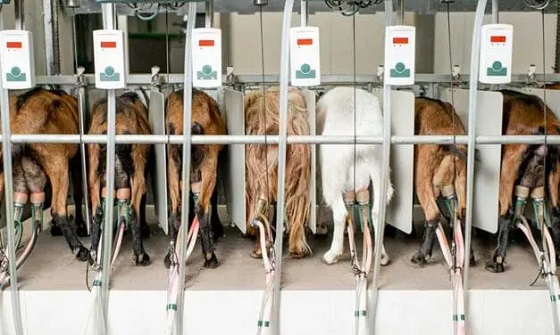
Supply management uses quotas and fixed prices for milk, eggs and poultry with the intention of matching supply with demand while restricting imports. Producers need quota in order to produce and sell output legally. Given the thousands of farmers spread across the country, combined with the fact that the quotas are specific to milk, eggs, chickens and turkey, the bureaucracy (and number of bureaucrats) required is huge and extremely costly. Department of Agriculture and Agri-Food 2024-25 transfer payments included $4.8 billion for “Supply Management Initiatives.”
The bureaucrats often get it wrong. Canada’s most recent chicken production cycle saw one of the worst supply shortfalls in more than 50 years. Preset quota limits stopped farmers from responding to meet demand, leaving consumers with higher grocery bills for 11th-hour imports. The reality is that accurately predicting demand is impossible.
The dysfunction doesn’t stop with chicken. Egg imports under the shortage allocation program had already topped 14 million dozen by mid-year. Our trading partners are taking full advantage. Chile, for example, is on track to double chicken exports.
The cost to consumers is considerable. Pre-pandemic research estimates the average Canadian family pays $300 to $444 extra for food as a result of supply management. And since, as a share of their income, lower-income Canadians spend three times as much as middle-income Canadians and almost five times as much as upper-income Canadians, the impact on them is proportionally much greater.
It’s no surprise that farmers are anxious to protect their monopoly. In most cases, they have paid hefty sums for their quota. If the price of their product were allowed to fall to free-market levels, the value of their quota would go to zero. In addition, the Dairy Farmers of Canada argue that supply management means “the right amount of food is produced,” producers get a “fair return,” and import restrictions guarantee access to “homegrown food,” all of which is debatable.
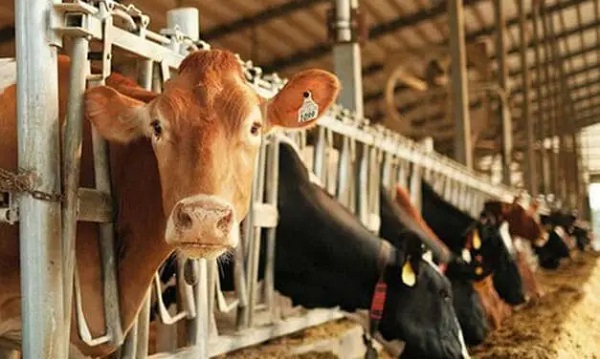
All price-fixing systems create problems. Dairy cattle are not machines. A cow’s milk production varies. If a farmer gets more milk than his quota, the excess must be dumped. When governments limit the supply of any item, its value always rises. Dairy quotas, by their very nature, have become a valuable commodity, selling for more than $25,000 per “cow equivalent.” That means a 100-head dairy farm is worth at least $2,500,000 in quota alone, a value that exists only because of the legislated ability to charge higher-than-market prices.
Dairy isn’t the only sector where government-regulated quotas have become very valuable. The West Coast fishery is another. Commercial fishery quotas for salmon and halibut have become valuable commodities worth millions of dollars, completely out of reach for independent fishers, turning them into de facto employees of quota holders.
While of relatively limited national importance, supply management is of major political significance in Quebec. As George Mason University and Montreal Economic Institute economist Vincent Geloso notes, “In 17 ridings provincially, people under supply management are strong enough to change the outcome of the election.”
That brings us back to the upcoming CUSMA negotiations. Under CUSMA, the U.S. gets less than five per cent of Canada’s agricultural products market. Given that President Trump has been a long-standing critic of supply management, especially in dairy, it’s certain to be targeted.
Looking to pre-empt concessions, supply-managed farmer associations lobbied the federal government to pass legislation keeping supply management off the table in any future trade negotiations. This makes voters in those 17 Quebec ridings happy, but it’s certain to enrage Trump, starting the CUSMA negotiations off on a decidedly adversarial note. As Concordia University economist Moshe Lander says: “The government seems willing even to accept tariffs and damage to the Canadian economy rather than put dairy supply management on the table.”
Parliament can pass whatever laws it likes, but Trump has made it clear that ending supply management, especially in dairy, is one of his main goals in the CUSMA review. It’s hard to see how a deal can be made without substantial reform. That will make life difficult for the federal Liberals. But the president will be doing Canadian consumers a big favour.
Gwyn Morgan is a retired business leader who has been a director of five global corporations.
Troy Media empowers Canadian community news outlets by providing independent, insightful analysis and commentary. Our mission is to support local media in helping Canadians stay informed and engaged by delivering reliable content that strengthens community connections and deepens understanding across the country.