
COVID-19
Vaccines: Assessing Canada’s COVID Response




 David Clinton
I planned to be “first in line” for the shots as soon as my age cohort became eligible. By early March however, COVID itself dropped by the house, leading to the most uncomfortable (although non life-threatening) week of my life.
It’s been five years since COVID hit and one part of me wants to stuff it all in a closet somewhere and forget about it. But perhaps certain events – and especially government errors and overreach – should be documented. So this post will identify actions at all levels of government from those early days that, given our understanding of the threat available through the benefit hindsight, were both misguided and damaging.
I haven’t completely forgotten the mood through the early months in 2020. Politicians faced near-unanimous public demand for an aggressive response. Much of that sentiment was the result of messaging coming from foreign governments (mostly in the U.S.). But the local sentiment was definitely there.
To be fair, Governments got some things right and, taking into account the chaos and uncertainty of those early months, even some of their mistakes were understandable. But it’s the job of government to lead. And to avoid making choices – even popular choices – that will lead to predictable harms.
Vaccine mandates starting in 2021 were a case in point. Federal authority largely stemmed from the 2005 Quarantine Act and the Contraventions Act that allowed officials to issue tickets for non-compliance with the Quarantine Act. Provincial mandates were based on laws like Ontario’s Emergency Management and Civil Protection Act. The question isn’t whether the mandates and their enforcement were legal, but whether they caused more harm than good.
As the first vaccines started arriving in Canada around February 2021, I planned to be “first in line” for the shots as soon as my age cohort became eligible. By early March however, COVID itself dropped by the house, leading to the most uncomfortable (although non life-threatening) week of my life.
After recovering, my family doctor advised me to wait three months before getting the shots so my body could get back to normal. During those months, I got access to preprint results from the Israeli study into natural immunity which showed that:
Natural immunity confers longer lasting and stronger protection against infection, symptomatic disease and hospitalization caused by the Delta variant of SARS-CoV-2, compared to the BNT162b2 two-dose vaccine-induced immunity
Those results were later confirmed by CDC and NEJM studies, among others.
Given that context, I didn’t see any justification for exposing myself to even minimal health risks associated with vaccines. Which meant that, despite demonstrably posing no threat to public health, I would (at various times) be unable to:
- Board domestic commercial flights, VIA Rail, Rocky Mountaineer trains, and cruise ships within Canada
- Board international flights or trains departing Canada
- Freely return to Canada through an overland point of entry
- Upon return to Canada, bypass the 14 day quarantine under the Quarantine Act
- Upon return to Canada via air, bypass the three day quarantine in (expensive) government-approved hotels
- Engage in ‘non-essential” activities like restaurants, gyms, events (details varied from province to province)
- Enter Parliament
- Seek employment in federally regulated air, rail, and marine sectors
What should Canadian governments have done? Remove restrictions on individuals with natural immunity, obviously. Which, by the way, would have come with the valuable bonus of entirely avoiding the truckers protest and consequent confrontations.
If authorities were reluctant to take us at our word on immunity, they could have followed the European Union’s lead by emulating their Digital COVID Certificate for proof of recovery. Were they worried about people without immunity creating fake certificates? Hard to take that one seriously. There were more fake vaccine passports littering the streets of Ontario than abandoned Toronto Maple Leafs car window flags in a normal early May.
In the end, my own suffering was negligible. I didn’t really want to visit family in the U.S. all that much anyway. But for millions of other Canadians, the real-world stakes were far higher. And all that’s besides the billions of dollars wasted during those years’ government policies.
To be sure, resisting unscientific street-level calls for vaccine mandates would have required courage. But shouldn’t acts of courage be a source of pride for public officials?

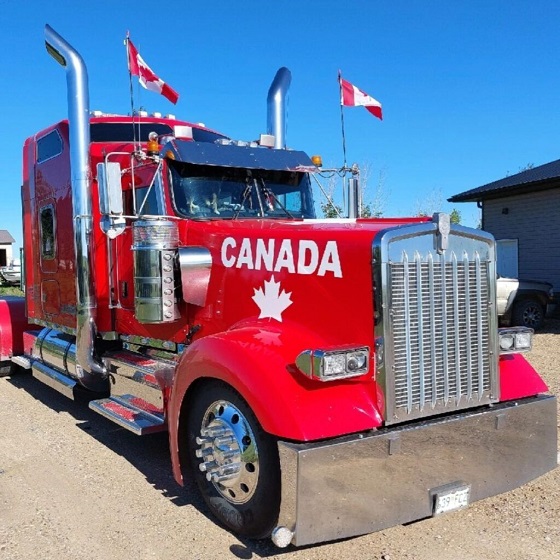
From LifeSiteNews

A judge ruled that the Ontario Court of Justice is already ‘satisfied’ with Chris Barber’s sentence and taking away his very livelihood would be ‘disproportionate.’
A Canadian judge has dismissed a demand from Canadian government lawyers to seize Freedom Convoy leader Chris Barber’s “Big Red” semi-truck.
On Friday, Ontario Court of Justice Judge Heather Perkins-McVey denied the Crown’s application seeking to forfeit Barber’s truck.
She ruled that the court is already “satisfied” with Barber’s sentence and taking away his very livelihood would be “disproportionate.”
“This truck is my livelihood,” said Barber in a press release sent to LifeSiteNews.
“Trying to permanently seize it for peacefully protesting was wrong, and I’m relieved the court refused to allow that to happen,” he added.
Criminal defense lawyer Marwa Racha Younes was welcoming of the ruling as well, stating, “We find it was the right decision in the circumstances and are happy with the outcome.”
John Carpay, president of the Justice Centre for Constitutional Freedoms (JCCF), said the decision is “good news for all Canadians who cherish their Charter freedom to assemble peacefully.”
READ: Freedom Convoy protester appeals after judge dismissed challenge to frozen bank accounts
“Asset forfeiture is an extraordinary power, and it must not be used to punish Canadians for participating in peaceful protest,” he added in the press release.
As reported recently by LifeSiteNews, the Canadian government claimed that Barber’s truck is an “offence-related property” relating to his involvement in the 2022 protests against Canada’s COVID mandates.
At this time, the court ruling ends any forfeiture proceedings for the time being, however Barber will continue to try and appeal his criminal conviction and house arrest sentence.
Barber’s truck, a 2004 Kenworth long-haul he uses for business, was a focal point in the 2022 protests. He drove it to Ottawa, where it was parked for an extended period of time, but he complied when officials asked him to move it.
On October 7, 2025, after a long trial, Ontario Court Justice Perkins-McVey sentenced Barber and Tamara Lich, the other Freedom Convoy leader, to 18 months’ house arrest. They had been declared guilty of mischief for their roles as leaders of the 2022 protest against COVID mandates, and as social media influencers.
Lich and Barber have filed appeals of their own against their house arrest sentences, arguing that the trial judge did not correctly apply the law on their mischief charges.
Government lawyers for the Crown have filed an appeal of the acquittals of Lich and Barber on intimidation charges.
The pair’s convictions came after a nearly two-year trial despite the nonviolent nature of the popular movement.

From LifeSiteNews
Protestor Evan Blackman’s legal team argues Trudeau’s Emergencies Act-based bank account freezes were punitive state action tied directly to protest participation.
A Freedom Convoy protester whose bank accounts were frozen by the Canadian government says a judge erred after his ruling did not consider the fact that the funds were frozen under the Emergencies Act, as grounds for a stay of proceedings.
In a press release sent out earlier this week, the Justice Centre for Constitutional Freedoms (JCCF) said that Freedom Convoy protestor Evan Blackman will challenge a court ruling in his criminal case via an appeal with the Ontario Superior Court of Justice.
“This case raises serious questions about how peaceful protest is treated in Canada and about the lasting consequences of the federal government’s unlawful use of the Emergencies Act,” noted constitutional lawyer Chris Fleury. “The freezing of protestors’ bank accounts was part of a coordinated effort to suppress dissent, and courts ought to be willing to scrutinize that conduct.”
Blackman was arrested on February 18, 2022, during the police crackdown on Freedom Convoy protests against COVID restrictions, which was authorized by the Emergencies Act (EA). The EA was put in place by former Prime Minister Justin Trudeau’s Liberal government, which claimed the protests were violent, despite no evidence that this was the case.
Blackman’s three bank accounts with TD Bank were frozen due to his participation in the Freedom Convoy, following a directive ordered by Trudeau.
As reported by LifeSiteNews, in November of this year, Blackman was convicted at his retrial even though he had been acquitted at his original trial. In 2023, Blackman’s “mischief” and “obstructing police” charges were dismissed by a judge due to lack of evidence and the “poor memory of a cop regarding key details of the alleged criminal offences.”
His retrial resulted in Blackman getting a conditional discharge along with 12 months’ probation and 122 hours of community service, along with a $200 victim fine surcharge.
After this, Blackman’s application for a stay of proceedings was dismissed by the court. He had hoped to have his stay of proceedings, under section 24(1) of the Charter of Rights and Freedoms, allowed. However, the judge ruled that the freezing of his bank accounts was legally not related to his arrest, and because of this, the stay of proceedings lacked standing.
The JCCF disagreed with this ruling, noting, it “stands in contrast to a Federal Court decision finding that the government’s invocation of the Emergencies Act was unreasonable and violated Canadians’ Charter rights, including those targeted by the financial measures used against Freedom Convoy protestors.”
As of press time, a hearing date has not been scheduled.
In 2024, Federal Court Justice Richard Mosley ruled that Trudeau was “not justified” in invoking the Emergencies Act.
In early 2022, the Freedom Convoy saw thousands of Canadians from coast to coast come to Ottawa to demand an end to COVID mandates in all forms. Despite the peaceful nature of the protest, Trudeau’s federal government enacted the EA in mid-February.
After the protesters were cleared out, which was achieved through the freezing of bank accounts of those involved without a court order as well as the physical removal and arrest of demonstrators, Trudeau revoked the EA on February 23, 2022.


Canadian gov’t considers sharing census data on gender-confused children

Residential school burials controversy continues to fuel wave of church arsons, new data suggests
Canada’s sudden rediscovery of energy ambition has been greeted with a familiar charge: hypocrisy
Paris Climate Deal Now Decade-Old Disaster
RFK Jr reversing Biden-era policies on gender transition care for minors
Canada Hits the Brakes on Population
Why is Canada paying for dairy ‘losses’ during a boom?
-
 Health2 days ago
FDA warns ‘breast binder’ manufacturers to stop marketing to gender-confused girls
-
 Agriculture2 days ago
Supply Management Is Making Your Christmas Dinner More Expensive
-
 International2 days ago
2025: The Year The Narrative Changed
-
 Business1 day ago
There’s No Bias at CBC News, You Say? Well, OK…
-
 Uncategorized23 hours ago
Mortgaging Canada’s energy future — the hidden costs of the Carney-Smith pipeline deal
-
 Daily Caller2 days ago
Trump Reportedly Escalates Pressure On Venezuela With Another Oil Tanker Seizure
-
 International23 hours ago
Australian PM booed at Bondi vigil as crowd screams “shame!”
-
 Opinion1 day ago
Religion on trial: what could happen if Canada passes its new hate speech legislation