
Uncategorized
US, Russian crew in Russian space centre after failed launch


MOSCOW — A U.S. astronaut and his Russian crewmate arrived Friday at the Russian space

NASA’s Nick Hague and Roscosmos’ Alexei Ovchinin blasted off to the International Space Station from the Russia-leased Baikonur cosmodrome in Kazakhstan on Thursday, but their Soyuz rocket failed two minutes after the launch, triggering an emergency that sent their capsule into a steep, harrowing fall back to Earth.
U.S. and Russian space officials said the astronauts were in good condition after enduring gravitational force that was six-to-seven times more than is felt on Earth.
Roscosmos chief Dmitry Rogozin promised that Hague and Ovchinin will be given a chance soon to perform a stint on the orbiting outpost.
“The boys will certainly fly their mission,” Rogozin tweeted, posting a picture in which he sits with the two astronauts aboard a Moscow-bound plane. “We plan that they will fly in the spring.”
Russian space officials said Hague and Rogozin will spend a couple of days at Star City, Russia’s main space training
“They are in good health and don’t need any medical assistance,” said Vyacheslav Rogozhnikov, chief of the Russian Federal Medical and Biological Agency.
The aborted mission dealt another blow to the troubled Russian space program that currently serves as the only way to deliver astronauts to the orbiting outpost.
Sergei Krikalyov, the head of Roscosmos’ manned programs, said the launch went awry after one of the rocket’s four boosters failed to jettison about two minutes into the flight, damaging the main stage and triggering the emergency landing.
He said a panel of experts is looking into the specific reason that prevented the booster’s separation.
“We will need to look and analyze the specific cause — whether it was a cable, a pyro or a nut,” he said. “We need more data.”
Krikalyov said all Soyuz launches have been suspended pending the investigation. Preliminary findings are expected later this month.
There was no immediate word on whether the current space station crew of an American, a Russian and a German might need to extend its own six-month mission.
A Soyuz capsule attached to the station which they use to ride back to Earth is designed for a 200-day mission, meaning that their stay in orbit could only be extended briefly.
“We don’t have an opportunity to extend it for a long time,” Krikalyov said.
NASA said flight controllers could operate the space station without anyone on board if the Russian rockets remain grounded.
Krikalyov emphasized that Roscosmos will do its best not to leave the orbiting outpost unoccupied.
“The station could fly in an unmanned mode, but will do all we can to avoid it,” he said. “The conservation of the station is possible, but it’s undesirable.”
While the Russian program has been dogged by a string of problems with unmanned launches in recent years, Thursday’s incident was the first manned failure since September 1983, when a Soyuz exploded on the launch pad.
Roscosmos pledged to fully share all relevant information with NASA, which pays up to $82 million per Soyuz seat to the space station.
___
Nataliya Vasilyeva in Moscow contributed to this report.
Vladimir Isachenkov, The Associated Press

Uncategorized
Mortgaging Canada’s energy future — the hidden costs of the Carney-Smith pipeline deal


Much of the commentary on the Carney-Smith pipeline Memorandum of Understanding (MOU) has focused on the question of whether or not the proposed pipeline will ever get built.
That’s an important topic, and one that deserves to be examined — whether, as John Robson, of the indispensable Climate Discussion Nexus, predicted, “opposition from the government of British Columbia and aboriginal groups, and the skittishness of the oil industry about investing in a major project in Canada, will kill [the pipeline] dead.”
But I’m going to ask a different question: Would it even be worth building this pipeline on the terms Ottawa is forcing on Alberta? If you squint, the MOU might look like a victory on paper. Ottawa suspends the oil and gas emissions cap, proposes an exemption from the West Coast tanker ban, and lays the groundwork for the construction of one (though only one) million barrels per day pipeline to tidewater.
But in return, Alberta must agree to jack its industrial carbon tax up from $95 to $130 per tonne at a minimum, while committing to tens of billions in carbon capture, utilization, and storage (CCUS) spending, including the $16.5 billion Pathways Alliance megaproject.
Here’s the part none of the project’s boosters seem to want to mention: those concessions will make the production of Canadian hydrocarbon energy significantly more expensive.
As economist Jack Mintz has explained, the industrial carbon tax hike alone adds more than $5 USD per barrel of Canadian crude to marginal production costs — the costs that matter when companies decide whether to invest in new production. Layer on the CCUS requirements and you get another $1.20–$3 per barrel for mining projects and $3.60–$4.80 for steam-assisted operations.
While roughly 62% of the capital cost of carbon capture is to be covered by taxpayers — another problem with the agreement, I might add — the remainder is covered by the industry, and thus, eventually, consumers.
Total damage: somewhere between $6.40 and $10 US per barrel. Perhaps more.
“Ultimately,” the Fraser Institute explains, “this will widen the competitiveness gap between Alberta and many other jurisdictions, such as the United States,” that don’t hamstring their energy producers in this way. Producers in Texas and Oklahoma, not to mention Saudi Arabia, Venezuela, or Russia, aren’t paying a dime in equivalent carbon taxes or mandatory CCUS bills. They’re not so masochistic.
American refiners won’t pay a “low-carbon premium” for Canadian crude. They’ll just buy cheaper oil or ramp up their own production.
In short, a shiny new pipe is worthless if the extra cost makes barrels of our oil so expensive that no one will want them.
And that doesn’t even touch on the problem for the domestic market, where the higher production cost will be passed onto Canadian consumers in the form of higher gas and diesel prices, home heating costs, and an elevated cost of everyday goods, like groceries.
Either way, Canadians lose.
So, concludes Mintz, “The big problem for a new oil pipeline isn’t getting BC or First Nation acceptance. Rather, it’s smothering the industry’s competitiveness by layering on carbon pricing and decarbonization costs that most competing countries don’t charge.” Meanwhile, lurking underneath this whole discussion is the MOU’s ultimate Achilles’ heel: net-zero.
The MOU proudly declares that “Canada and Alberta remain committed to achieving Net-Zero greenhouse gas emissions by 2050.” As Vaclav Smil documented in a recent study of Net-Zero, global fossil-fuel use has risen 55% since the 1997 Kyoto agreement, despite trillions spent on subsidies and regulations. Fossil fuels still supply 82% of the world’s energy.
With these numbers in mind, the idea that Canada can unilaterally decarbonize its largest export industry in 25 years is delusional.
This deal doesn’t secure Canada’s energy future. It mortgages it. We are trading market access for self-inflicted costs that will shrink production, scare off capital, and cut into the profitability of any potential pipeline. Affordable energy, good jobs, and national prosperity shouldn’t require surrendering to net-zero fantasy.If Ottawa were serious about making Canada an energy superpower, it would scrap the anti-resource laws outright, kill the carbon taxes, and let our world-class oil and gas compete on merit. Instead, we’ve been handed a backroom MOU which, for the cost of one pipeline — if that! — guarantees higher costs today and smothers the industry that is the backbone of the Canadian economy.
This MOU isn’t salvation. It’s a prescription for Canadian decline.

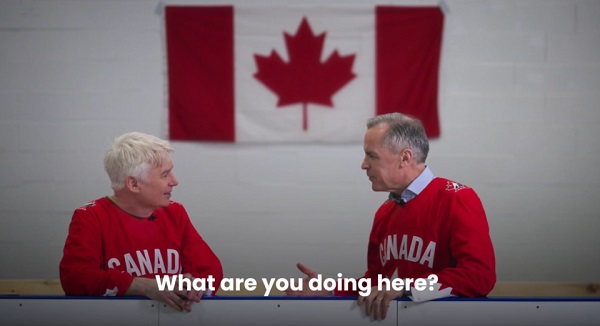

The cost of the bureaucracy increased by $6 billion last year, according to newly released numbers in Public Accounts disclosures. The Canadian Taxpayers Federation is calling on Prime Minister Mark Carney to immediately shrink the bureaucracy.
“The Public Accounts show the cost of the federal bureaucracy is out of control,” said Franco Terrazzano, CTF Federal Director. “Tinkering around the edges won’t cut it, Carney needs to take urgent action to shrink the bloated federal bureaucracy.”
The federal bureaucracy cost taxpayers $71.4 billion in 2024-25, according to the Public Accounts. The cost of the federal bureaucracy increased by $6 billion, or more than nine per cent, over the last year.
The federal bureaucracy cost taxpayers $39.6 billion in 2015-16, according to the Public Accounts. That means the cost of the federal bureaucracy increased 80 per cent over the last 10 years. The government added 99,000 extra bureaucrats between 2015-16 and 2024-25.
Half of Canadians say federal services have gotten worse since 2016, despite the massive increase in the federal bureaucracy, according to a Leger poll.
Not only has the size of the bureaucracy increased, the cost of consultants, contractors and outsourcing has increased as well. The government spent $23.1 billion on “professional and special services” last year, according to the Public Accounts. That’s an 11 per cent increase over the previous year. The government’s spending on professional and special services more than doubled since 2015-16.
“Taxpayers should not be paying way more for in-house government bureaucrats and way more for outside help,” Terrazzano said. “Mere promises to find minor savings in the federal bureaucracy won’t fix Canada’s finances.
“Taxpayers need Carney to take urgent action and significantly cut the number of bureaucrats now.”
Table: Cost of bureaucracy and professional and special services, Public Accounts
| Year | Bureaucracy | Professional and special services |
|
$71,369,677,000 |
$23,145,218,000 |
|
|
$65,326,643,000 |
$20,771,477,000 |
|
|
$56,467,851,000 |
$18,591,373,000 |
|
|
$60,676,243,000 |
$17,511,078,000 |
|
|
$52,984,272,000 |
$14,720,455,000 |
|
|
$46,349,166,000 |
$13,334,341,000 |
|
|
$46,131,628,000 |
$12,940,395,000 |
|
|
$45,262,821,000 |
$12,950,619,000 |
|
|
$38,909,594,000 |
$11,910,257,000 |
|
|
$39,616,656,000 |
$11,082,974,000 |


Chinese Billionaire Tried To Build US-Born Baby Empire As Overseas Elites Turn To American Surrogates
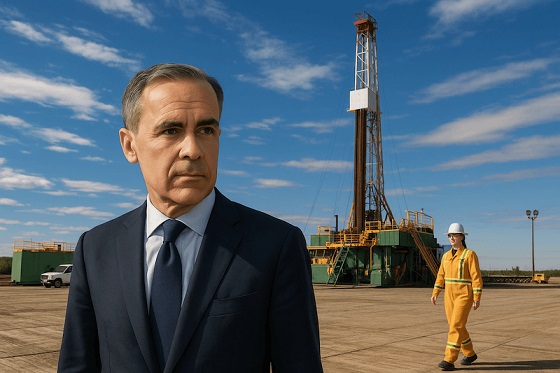
Canada’s sudden rediscovery of energy ambition has been greeted with a familiar charge: hypocrisy

Brown University shooter dead of apparent self-inflicted gunshot wound

Paris Climate Deal Now Decade-Old Disaster

Canadian gov’t considers sharing census data on gender-confused children

Residential school burials controversy continues to fuel wave of church arsons, new data suggests
Major tax changes in 2026: Report
-
 International2 days ago
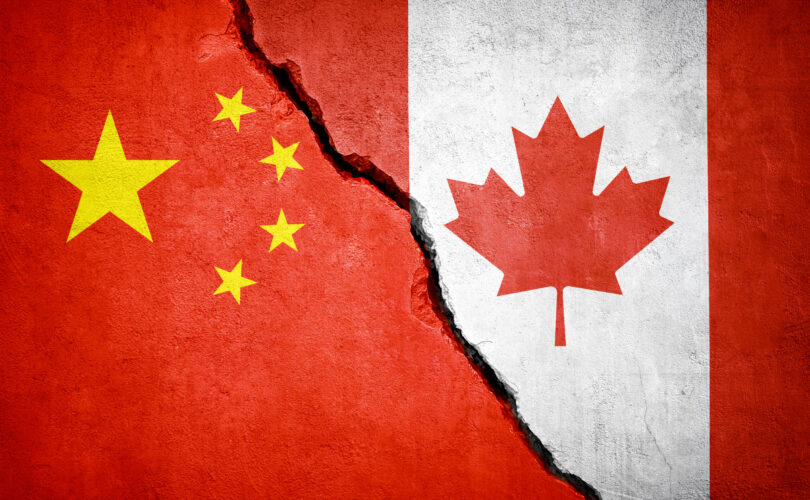
Ottawa is still dodging the China interference threat
-
 Business17 hours ago
There’s No Bias at CBC News, You Say? Well, OK…
-
 espionage2 days ago
Carney Floor Crossing Raises Counterintelligence Questions aimed at China, Former Senior Mountie Argues
-
 Business1 day ago
Taxing food is like slapping a surcharge on hunger. It needs to end
-
 International1 day ago
2025: The Year The Narrative Changed
-
 COVID-192 days ago
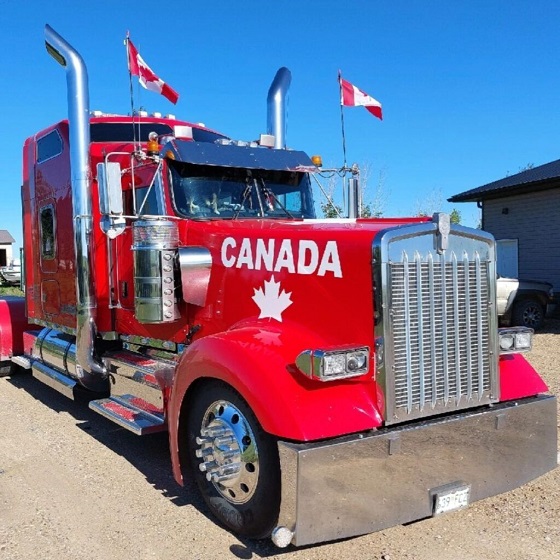
Judge denies Canadian gov’t request to take away Freedom Convoy leader’s truck
-
 Energy2 days ago
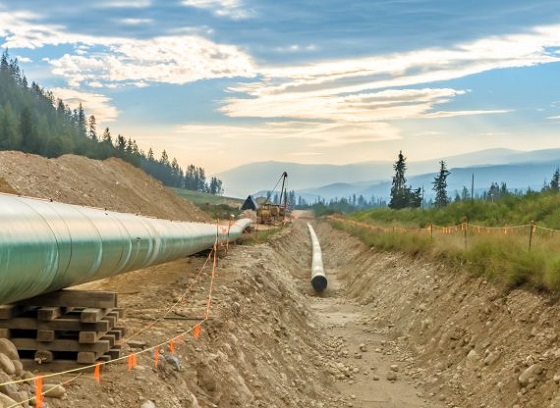
75 per cent of Canadians support the construction of new pipelines to the East Coast and British Columbia
-
 Health1 day ago
FDA warns ‘breast binder’ manufacturers to stop marketing to gender-confused girls