
Uncategorized
US official: US intel says prince ordered Khashoggi killing


WASHINGTON — U.S. intelligence officials have concluded that Saudi Crown Prince Mohammed bin Salman ordered the killing of journalist Jamal Khashoggi, a U.S. official said. The Saudi government has denied the claim.

The conclusion will bolster efforts in Congress to further punish the close U.S. ally for the killing. The Trump administration this past week penalized 17 Saudi officials for their alleged role in the killing, but American lawmakers have called on the administration to curtail arms sales to Saudi Arabia or take other harsher punitive measures.
The U.S. official familiar with the intelligence agencies’ conclusion was not authorized to discuss it publicly and spoke only condition of anonymity Friday. The conclusion was first reported by The Washington Post.
Saudi Arabia’s top diplomat has said the crown prince had “absolutely” nothing to do with the killing.
The United States will “follow the facts,” Pence said, while trying to find a way of preserving a “strong and historic partnership” with Saudi Arabia.
Khashoggi, a Saudi who lived in the United States, was a columnist for the Post and often criticized the royal family. He was killed Oct. 2 at the Saudi Consulate in Istanbul. Turkish and Saudi authorities say he was killed inside the consulate by a team from the kingdom after he went there to get marriage documents.
This past week, U.S. intelligence officials briefed members of the Senate and House intelligence committees and the Treasury Department announced economic sanctions on 17 Saudi officials suspected of being responsible for or complicit in the killing.
Among those targeted for sanctions were Mohammed al-Otaibi, the diplomat in charge of the consulate, and Maher Mutreb, who was part of the crown prince’s entourage on trips abroad.
The sanctions freeze any assets the 17 may have in the U.S. and prohibit any Americans from doing business with them.
Also this past week, the top prosecutor in Saudi Arabia announced he will seek the death penalty against five men suspected in the killing. The prosecutor’s announcement sought to quiet the global outcry over Khashoggi’s death and distance the killers and their operation from the kingdom’s leadership, primarily the crown prince.
President Donald Trump has called the killing a botched operation that was carried out very poorly and has said “the
But he has resisted calls to cut off arms sales to the kingdom and has been reluctant to antagonize the Saudi rulers. Trump considers the Saudis vital allies in his Mideast agenda.
The Post, citing unnamed sources, also reported that U.S. intelligence agencies reviewed a phone call that the prince’s brother, Khalid bin Salman, had with Khashoggi. The newspaper said the prince’s brother, who is the current Saudi ambassador to the United States, told Khashoggi he would be safe in going to the Saudi Consulate in Istanbul to retrieve the documents he needed to get married.
The newspaper said it was not known whether the ambassador knew Khashoggi would be killed. But it said he made the call at the direction the crown prince, and the call was intercepted by U.S. intelligence.
Fatimah Baeshen, a spokesperson for the Saudi Embassy in Washington, said that claim was false.
She said in a statement issued to The Associated Press that the ambassador met Khashoggi in person once in late September 2017. After that, they communicated via text messages, she said. The last text message the ambassador sent to Khashoggi was on Oct. 26, 2017, she said.
Baeshen said the ambassador did not discuss with Khashoggi “anything related to going to Turkey.”
“Ambassador Prince Khalid bin Salman has never had any phone conversations with him,” she said.
“You are welcome to check the phone records and
The ambassador himself tweeted: “The last contact I had with Mr. Khashoggi was via text on Oct. 26, 2017. I never talked to him by phone and certainly never suggested he go to Turkey for any reason. I ask the U.S. government to release any information regarding this claim.”
Deb Riechmann, The Associated Press



The cost of the bureaucracy increased by $6 billion last year, according to newly released numbers in Public Accounts disclosures. The Canadian Taxpayers Federation is calling on Prime Minister Mark Carney to immediately shrink the bureaucracy.
“The Public Accounts show the cost of the federal bureaucracy is out of control,” said Franco Terrazzano, CTF Federal Director. “Tinkering around the edges won’t cut it, Carney needs to take urgent action to shrink the bloated federal bureaucracy.”
The federal bureaucracy cost taxpayers $71.4 billion in 2024-25, according to the Public Accounts. The cost of the federal bureaucracy increased by $6 billion, or more than nine per cent, over the last year.
The federal bureaucracy cost taxpayers $39.6 billion in 2015-16, according to the Public Accounts. That means the cost of the federal bureaucracy increased 80 per cent over the last 10 years. The government added 99,000 extra bureaucrats between 2015-16 and 2024-25.
Half of Canadians say federal services have gotten worse since 2016, despite the massive increase in the federal bureaucracy, according to a Leger poll.
Not only has the size of the bureaucracy increased, the cost of consultants, contractors and outsourcing has increased as well. The government spent $23.1 billion on “professional and special services” last year, according to the Public Accounts. That’s an 11 per cent increase over the previous year. The government’s spending on professional and special services more than doubled since 2015-16.
“Taxpayers should not be paying way more for in-house government bureaucrats and way more for outside help,” Terrazzano said. “Mere promises to find minor savings in the federal bureaucracy won’t fix Canada’s finances.
“Taxpayers need Carney to take urgent action and significantly cut the number of bureaucrats now.”
Table: Cost of bureaucracy and professional and special services, Public Accounts
| Year | Bureaucracy | Professional and special services |
|
$71,369,677,000 |
$23,145,218,000 |
|
|
$65,326,643,000 |
$20,771,477,000 |
|
|
$56,467,851,000 |
$18,591,373,000 |
|
|
$60,676,243,000 |
$17,511,078,000 |
|
|
$52,984,272,000 |
$14,720,455,000 |
|
|
$46,349,166,000 |
$13,334,341,000 |
|
|
$46,131,628,000 |
$12,940,395,000 |
|
|
$45,262,821,000 |
$12,950,619,000 |
|
|
$38,909,594,000 |
$11,910,257,000 |
|
|
$39,616,656,000 |
$11,082,974,000 |

From the Daily Caller News Foundation
By Jason Hopkins
The Trump administration is creating a first-of-its-kind task force aimed at ushering in a new “Golden Age” of beautiful infrastructure across the U.S.
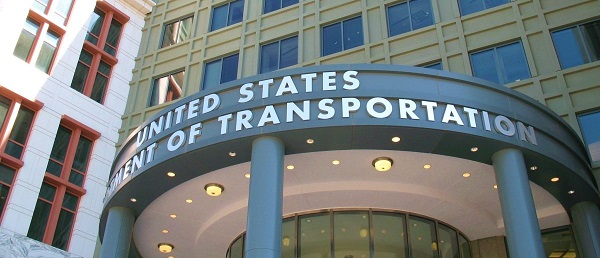
The Department of Transportation (DOT) will announce the establishment of the Beautifying Transportation Infrastructure Council (BTIC) on Thursday, the Daily Caller News Foundation exclusively learned. The BTIC seeks to advise Transportation Secretary Sean Duffy on design and policy ideas for key infrastructure projects, including highways, bridges and transit hubs.
“What happened to our country’s proud tradition of building great, big, beautiful things?” Duffy said in a statement shared with the DCNF. “It’s time the design for America’s latest infrastructure projects reflects our nation’s strength, pride, and promise.”
“We’re engaging the best and brightest minds in architectural design and engineering to make beautiful structures that move you and bring about a new Golden Age of Transportation,” Duffy continued.
Mini scoop – here is the DOT’s rollout of its Beautifying Transportation Infrastructure Council, which will be tasked with making our buildings beautiful again. pic.twitter.com/
9iV2xSxdJM — Jason Hopkins (@jasonhopkinsdc) October 23, 2025
The DOT is encouraging nominations of the country’s best architects, urban planners, artists and others to serve on the council, according to the department. While ensuring that efficiency and safety remain a top priority, the BTIC will provide guidance on projects that “enhance” public areas and develop aesthetic performance metrics.
The new council aligns with an executive order signed by President Donald Trump in August 2025 regarding infrastructure. The “Making Federal Architecture Beautiful Again” order calls for federal public buildings in the country to “respect regional architectural heritage” and aims to prevent federal construction projects from using modernist and brutalist architecture styles, instead returning to a classical style.
“The Founders, in line with great societies before them, attached great importance to Federal civic architecture,” Trump’s order stated. “They wanted America’s public buildings to inspire the American people and encourage civic virtue.”
“President George Washington and Secretary of State Thomas Jefferson consciously modeled the most important buildings in Washington, D.C., on the classical architecture of ancient Athens and Rome,” the order continued. “Because of their proven ability to meet these requirements, classical and traditional architecture are preferred modes of architectural design.”
The DOT invested millions in major infrastructure projects since Trump’s return to the White House. Duffy announced in August a $43 million transformation initiative of the New York Penn Station in New York City and in September unveiledmajor progress in the rehabilitation and modernization of Washington Union Station in Washington, D.C.
The BTIC will comprise up to 11 members who will serve two-year terms, with the chance to be reappointed, according to the DOT. The task force will meet biannually. The deadline for nominations will end Nov. 21.

Carney’s Toronto cabinet meetings cost $530,000

While Trump has southern border secure, hundreds of thousands of illegal immigrants still flooding in from Canada

Integration Or Indignation: Whose Strategy Worked Best Against Trump?
What the Data Shows About the New Canada-Alberta Pipeline Opportunity
Alberta Sports Hall of Fame Announces Class of 2026 Inductees

The Trickster Politics of the Tanker Ban are Hiding a Much Bigger Reckoning for B.C.

FBI may have finally nabbed the Jan. 6 pipe bomber
-
 espionage2 days ago
Western Campuses Help Build China’s Digital Dragnet With U.S. Tax Funds, Study Warns
-
 Bruce Dowbiggin2 days ago
Wayne Gretzky’s Terrible, Awful Week.. And Soccer/ Football.
-
 Business1 day ago
Canada invests $34 million in Chinese drones now considered to be ‘high security risks’
-
 Health2 days ago
CDC Vaccine Panel Votes to End Universal Hep B Vaccine for Newborns
-
 Agriculture2 days ago
Canada’s air quality among the best in the world
-
 Business2 days ago
The EU Insists Its X Fine Isn’t About Censorship. Here’s Why It Is.
-
 Great Reset1 day ago
Surgery Denied. Death Approved.
-
 Business1 day ago
The Climate-Risk Industrial Complex and the Manufactured Insurance Crisis