
Uncategorized
US official: US intel says prince ordered Khashoggi killing


WASHINGTON — U.S. intelligence officials have concluded that Saudi Crown Prince Mohammed bin Salman ordered the killing of journalist Jamal Khashoggi, a U.S. official said. The Saudi government has denied the claim.

The conclusion will bolster efforts in Congress to further punish the close U.S. ally for the killing. The Trump administration this past week penalized 17 Saudi officials for their alleged role in the killing, but American lawmakers have called on the administration to curtail arms sales to Saudi Arabia or take other harsher punitive measures.
The U.S. official familiar with the intelligence agencies’ conclusion was not authorized to discuss it publicly and spoke only condition of anonymity Friday. The conclusion was first reported by The Washington Post.
Saudi Arabia’s top diplomat has said the crown prince had “absolutely” nothing to do with the killing.
The United States will “follow the facts,” Pence said, while trying to find a way of preserving a “strong and historic partnership” with Saudi Arabia.
Khashoggi, a Saudi who lived in the United States, was a columnist for the Post and often criticized the royal family. He was killed Oct. 2 at the Saudi Consulate in Istanbul. Turkish and Saudi authorities say he was killed inside the consulate by a team from the kingdom after he went there to get marriage documents.
This past week, U.S. intelligence officials briefed members of the Senate and House intelligence committees and the Treasury Department announced economic sanctions on 17 Saudi officials suspected of being responsible for or complicit in the killing.
Among those targeted for sanctions were Mohammed al-Otaibi, the diplomat in charge of the consulate, and Maher Mutreb, who was part of the crown prince’s entourage on trips abroad.
The sanctions freeze any assets the 17 may have in the U.S. and prohibit any Americans from doing business with them.
Also this past week, the top prosecutor in Saudi Arabia announced he will seek the death penalty against five men suspected in the killing. The prosecutor’s announcement sought to quiet the global outcry over Khashoggi’s death and distance the killers and their operation from the kingdom’s leadership, primarily the crown prince.
President Donald Trump has called the killing a botched operation that was carried out very poorly and has said “the
But he has resisted calls to cut off arms sales to the kingdom and has been reluctant to antagonize the Saudi rulers. Trump considers the Saudis vital allies in his Mideast agenda.
The Post, citing unnamed sources, also reported that U.S. intelligence agencies reviewed a phone call that the prince’s brother, Khalid bin Salman, had with Khashoggi. The newspaper said the prince’s brother, who is the current Saudi ambassador to the United States, told Khashoggi he would be safe in going to the Saudi Consulate in Istanbul to retrieve the documents he needed to get married.
The newspaper said it was not known whether the ambassador knew Khashoggi would be killed. But it said he made the call at the direction the crown prince, and the call was intercepted by U.S. intelligence.
Fatimah Baeshen, a spokesperson for the Saudi Embassy in Washington, said that claim was false.
She said in a statement issued to The Associated Press that the ambassador met Khashoggi in person once in late September 2017. After that, they communicated via text messages, she said. The last text message the ambassador sent to Khashoggi was on Oct. 26, 2017, she said.
Baeshen said the ambassador did not discuss with Khashoggi “anything related to going to Turkey.”
“Ambassador Prince Khalid bin Salman has never had any phone conversations with him,” she said.
“You are welcome to check the phone records and
The ambassador himself tweeted: “The last contact I had with Mr. Khashoggi was via text on Oct. 26, 2017. I never talked to him by phone and certainly never suggested he go to Turkey for any reason. I ask the U.S. government to release any information regarding this claim.”
Deb Riechmann, The Associated Press

Uncategorized
Mortgaging Canada’s energy future — the hidden costs of the Carney-Smith pipeline deal


Much of the commentary on the Carney-Smith pipeline Memorandum of Understanding (MOU) has focused on the question of whether or not the proposed pipeline will ever get built.
That’s an important topic, and one that deserves to be examined — whether, as John Robson, of the indispensable Climate Discussion Nexus, predicted, “opposition from the government of British Columbia and aboriginal groups, and the skittishness of the oil industry about investing in a major project in Canada, will kill [the pipeline] dead.”
But I’m going to ask a different question: Would it even be worth building this pipeline on the terms Ottawa is forcing on Alberta? If you squint, the MOU might look like a victory on paper. Ottawa suspends the oil and gas emissions cap, proposes an exemption from the West Coast tanker ban, and lays the groundwork for the construction of one (though only one) million barrels per day pipeline to tidewater.
But in return, Alberta must agree to jack its industrial carbon tax up from $95 to $130 per tonne at a minimum, while committing to tens of billions in carbon capture, utilization, and storage (CCUS) spending, including the $16.5 billion Pathways Alliance megaproject.
Here’s the part none of the project’s boosters seem to want to mention: those concessions will make the production of Canadian hydrocarbon energy significantly more expensive.
As economist Jack Mintz has explained, the industrial carbon tax hike alone adds more than $5 USD per barrel of Canadian crude to marginal production costs — the costs that matter when companies decide whether to invest in new production. Layer on the CCUS requirements and you get another $1.20–$3 per barrel for mining projects and $3.60–$4.80 for steam-assisted operations.
While roughly 62% of the capital cost of carbon capture is to be covered by taxpayers — another problem with the agreement, I might add — the remainder is covered by the industry, and thus, eventually, consumers.
Total damage: somewhere between $6.40 and $10 US per barrel. Perhaps more.
“Ultimately,” the Fraser Institute explains, “this will widen the competitiveness gap between Alberta and many other jurisdictions, such as the United States,” that don’t hamstring their energy producers in this way. Producers in Texas and Oklahoma, not to mention Saudi Arabia, Venezuela, or Russia, aren’t paying a dime in equivalent carbon taxes or mandatory CCUS bills. They’re not so masochistic.
American refiners won’t pay a “low-carbon premium” for Canadian crude. They’ll just buy cheaper oil or ramp up their own production.
In short, a shiny new pipe is worthless if the extra cost makes barrels of our oil so expensive that no one will want them.
And that doesn’t even touch on the problem for the domestic market, where the higher production cost will be passed onto Canadian consumers in the form of higher gas and diesel prices, home heating costs, and an elevated cost of everyday goods, like groceries.
Either way, Canadians lose.
So, concludes Mintz, “The big problem for a new oil pipeline isn’t getting BC or First Nation acceptance. Rather, it’s smothering the industry’s competitiveness by layering on carbon pricing and decarbonization costs that most competing countries don’t charge.” Meanwhile, lurking underneath this whole discussion is the MOU’s ultimate Achilles’ heel: net-zero.
The MOU proudly declares that “Canada and Alberta remain committed to achieving Net-Zero greenhouse gas emissions by 2050.” As Vaclav Smil documented in a recent study of Net-Zero, global fossil-fuel use has risen 55% since the 1997 Kyoto agreement, despite trillions spent on subsidies and regulations. Fossil fuels still supply 82% of the world’s energy.
With these numbers in mind, the idea that Canada can unilaterally decarbonize its largest export industry in 25 years is delusional.
This deal doesn’t secure Canada’s energy future. It mortgages it. We are trading market access for self-inflicted costs that will shrink production, scare off capital, and cut into the profitability of any potential pipeline. Affordable energy, good jobs, and national prosperity shouldn’t require surrendering to net-zero fantasy.If Ottawa were serious about making Canada an energy superpower, it would scrap the anti-resource laws outright, kill the carbon taxes, and let our world-class oil and gas compete on merit. Instead, we’ve been handed a backroom MOU which, for the cost of one pipeline — if that! — guarantees higher costs today and smothers the industry that is the backbone of the Canadian economy.
This MOU isn’t salvation. It’s a prescription for Canadian decline.

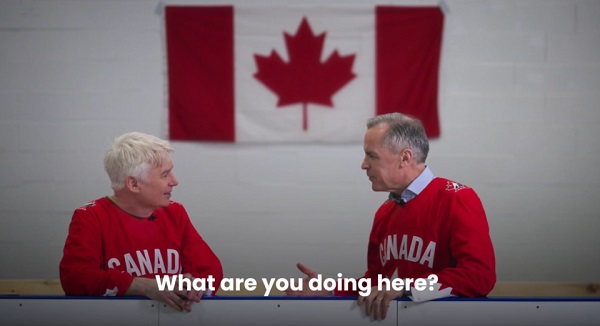

The cost of the bureaucracy increased by $6 billion last year, according to newly released numbers in Public Accounts disclosures. The Canadian Taxpayers Federation is calling on Prime Minister Mark Carney to immediately shrink the bureaucracy.
“The Public Accounts show the cost of the federal bureaucracy is out of control,” said Franco Terrazzano, CTF Federal Director. “Tinkering around the edges won’t cut it, Carney needs to take urgent action to shrink the bloated federal bureaucracy.”
The federal bureaucracy cost taxpayers $71.4 billion in 2024-25, according to the Public Accounts. The cost of the federal bureaucracy increased by $6 billion, or more than nine per cent, over the last year.
The federal bureaucracy cost taxpayers $39.6 billion in 2015-16, according to the Public Accounts. That means the cost of the federal bureaucracy increased 80 per cent over the last 10 years. The government added 99,000 extra bureaucrats between 2015-16 and 2024-25.
Half of Canadians say federal services have gotten worse since 2016, despite the massive increase in the federal bureaucracy, according to a Leger poll.
Not only has the size of the bureaucracy increased, the cost of consultants, contractors and outsourcing has increased as well. The government spent $23.1 billion on “professional and special services” last year, according to the Public Accounts. That’s an 11 per cent increase over the previous year. The government’s spending on professional and special services more than doubled since 2015-16.
“Taxpayers should not be paying way more for in-house government bureaucrats and way more for outside help,” Terrazzano said. “Mere promises to find minor savings in the federal bureaucracy won’t fix Canada’s finances.
“Taxpayers need Carney to take urgent action and significantly cut the number of bureaucrats now.”
Table: Cost of bureaucracy and professional and special services, Public Accounts
| Year | Bureaucracy | Professional and special services |
|
$71,369,677,000 |
$23,145,218,000 |
|
|
$65,326,643,000 |
$20,771,477,000 |
|
|
$56,467,851,000 |
$18,591,373,000 |
|
|
$60,676,243,000 |
$17,511,078,000 |
|
|
$52,984,272,000 |
$14,720,455,000 |
|
|
$46,349,166,000 |
$13,334,341,000 |
|
|
$46,131,628,000 |
$12,940,395,000 |
|
|
$45,262,821,000 |
$12,950,619,000 |
|
|
$38,909,594,000 |
$11,910,257,000 |
|
|
$39,616,656,000 |
$11,082,974,000 |


Australian PM booed at Bondi vigil as crowd screams “shame!”
Mortgaging Canada’s energy future — the hidden costs of the Carney-Smith pipeline deal
The “Disruptor-in-Chief” places Canada in the crosshairs
Canada’s EV gamble is starting to backfire

UK Police Pilot AI System to Track “Suspicious” Driver Journeys
End Supply Management—For the Sake of Canadian Consumers

Canadian government launches trial version of digital ID for certain licenses, permits
-
 Business1 day ago
“Magnitude cannot be overstated”: Minnesota aid scam may reach $9 billion
-
 Haultain Research8 hours ago
Sweden Fixed What Canada Won’t Even Name
-
 Business1 day ago
Largest fraud in US history? Independent Journalist visits numerous daycare centres with no children, revealing massive scam
-
 Censorship Industrial Complex1 day ago
US Under Secretary of State Slams UK and EU Over Online Speech Regulation, Announces Release of Files on Past Censorship Efforts
-
 Daily Caller2 days ago
Is Ukraine Peace Deal Doomed Before Zelenskyy And Trump Even Meet At Mar-A-Lago?
-
 Business8 hours ago
What Do Loyalty Rewards Programs Cost Us?