Connect with us
[the_ad id="89560"]

Carbon Tax

Trump targets Washington’s climate laws in recent executive order

Published

4 minute read

From The Center Square

By 

President Donald Trump signed an executive order on Tuesday targeting state-level climate policies – including Washington state’s Climate Commitment Act – calling them unconstitutional and harmful to domestic energy production

The executive order directs attorneys general to take action against state laws and policies that address climate change or involve environmental justice, carbon or greenhouse gas emissions, and funds to collect carbon penalties or carbon taxes.

That includes Washington’s CCA that requires emitters to either reduce their carbon footprint or purchase “allowances” via a cap-and-trade program, which sets a limit on emissions from the state’s largest polluters: oil refineries, utilities, and manufacturers.

The CCA’s cap lowers over time with the goal of getting to carbon neutrality by 2050. While the program has generated billions in revenue, only 11% directly funds emissions-reducing projects, with the rest supports climate resilience, public health programs, and infrastructure planning, as previously reported by The Center Square,

According to a press release from The White House, the executive order targets these state laws and policies because they “burden the use of domestic energy resources and that are unconstitutional, preempted by federal law, or otherwise unenforceable.”

Gov. Bob Ferguson does not believe the executive order has enough teeth to impact the state’s CCA.

“Voters upheld the Climate Commitment Act by a landslide, with 61% approval,” Ferguson told The Center Square in an email. “I am confident we will be able to preserve this and other important laws protecting our climate and investments in clean energy from this latest attack by the Trump administration.”

The Washington Department of Transportation told The Center Square it is working with federal and state partners to seek clarification about the implications and next steps of federal funding actions.

The Department of Ecology did not respond to The Center Square’s request for comment.

If U.S. Attorney General Pam Bondi does go after the CCA and other environmental policies, Washington officials may argue that it’s within the state’s authority to regulate emissions for public health.

For example, The federal Clean Air Act allows states, including Washington, to adopt more stringent motor vehicle emission standards than the federal minimums in certain circumstances.

The 2007 Supreme Court decision Massachusetts v. EPA affirmed states’ standing to sue over carbon emissions, ruling that greenhouse gases endanger public health and are subject to regulation under the Clean Air Act.

This wouldn’t be the first time the state defended its environmental laws against federal challenges from the Trump administration.

Washington also fought emissions rollbacks during the first Trump administration when Ferguson was state attorney general.

One key victory came in 2024, when Washington helped defend California’s right to set stricter vehicle emission standards.

While Ferguson has not commented on the executive order, New York Governor Kathy Hochul and New Mexico Governor Michelle Lujan Grisham – co-chairs of the U.S. Climate Alliance – issued a joint statement on Tuesday that states that the federal government cannot “unilaterally strip states’ independent constitutional authority.”

“We will keep advancing solutions to the climate crisis that safeguard Americans’ fundamental right to clean air and water, create good-paying jobs, grow the clean energy economy, and make our future healthier and safer,” the statement said.

Business

Higher carbon taxes in pipeline MOU are a bad deal for taxpayers

Published on

By Franco Terrazzano

The Canadian Taxpayers Federation is criticizing the Memorandum of Understanding between the federal and Alberta governments for including higher carbon taxes.

“Hidden carbon taxes will make it harder for Canadian businesses to compete and will push Canadian entrepreneurs to shift production south of the border,” said Franco Terrazzano, CTF Federal Director. “Politicians should not be forcing carbon taxes on Canadians with the hope that maybe one day we will get a major project built.

“Politicians should be scrapping all carbon taxes.”

The federal and Alberta governments released a memorandum of understanding. It includes an agreement that the industrial carbon tax “will ramp up to a minimum effective credit price of $130/tonne.”

“It means more than a six times increase in the industrial price on carbon,” Prime Minister Mark Carney said while speaking to the press today.

Carney previously said that by “changing the carbon tax … We are making the large companies pay for everybody.”

Leger poll shows 70 per cent of Canadians believe businesses pass most or some of the cost of the industrial carbon tax on to consumers. Meanwhile, just nine per cent believe businesses pay most of the cost.

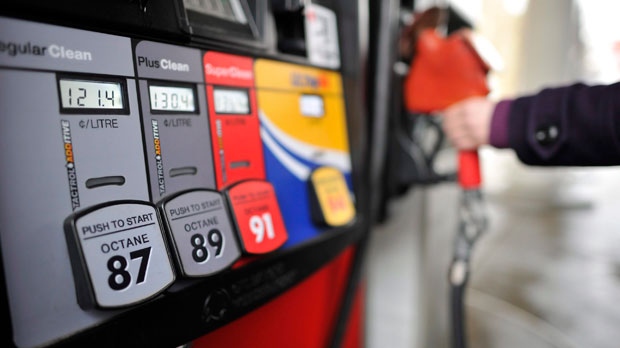
“It doesn’t matter what politicians label their carbon taxes, all carbon taxes make life more expensive and don’t work,” Terrazzano said. “Carbon taxes on refineries make gas more expensive, carbon taxes on utilities make home heating more expensive and carbon taxes on fertilizer plants increase costs for farmers and that makes groceries more expensive.

“The hidden carbon tax on business is the worst of all worlds: Higher prices and fewer Canadian jobs.”

Continue Reading

Alberta

Carney forces Alberta to pay a steep price for the West Coast Pipeline MOU

Published on

From the Fraser Institute

By Kenneth P. Green

The stiffer carbon tax will make Alberta’s oil sector more expensive and thus less competitive at a time when many analysts expect a surge in oil production. The costs of mandated carbon capture will similarly increase costs in the oilsands and make the province less cost competitive.

As we enter the final days of 2025, a “deal” has been struck between Carney government and the Alberta government over the province’s ability to produce and interprovincially transport its massive oil reserves (the world’s 4th-largest). The agreement is a step forward and likely a net positive for Alberta and its citizens. However, it’s not a second- or even third-best option, but rather a fourth-best option.

The agreement is deeply rooted in the development of a particular technology—the Pathways carbon capture, utilization and storage (CCUS) project, in exchange for relief from the counterproductive regulations and rules put in place by the Trudeau government. That relief, however, is attached to a requirement that Alberta commit to significant spending and support for Ottawa’s activist industrial policies. Also, on the critical issue of a new pipeline from Alberta to British Columbia’s coast, there are commitments but nothing approaching a guarantee.

Specifically, the agreement—or Memorandum of Understanding (MOU)—between the two parties gives Alberta exemptions from certain federal environmental laws and offers the prospect of a potential pathway to a new oil pipeline to the B.C. coast. The federal cap on greenhouse gas (GHG) emissions from the oil and gas sector will not be instituted; Alberta will be exempt from the federal “Clean Electricity Regulations”; a path to a million-barrel-per day pipeline to the BC coast for export to Asia will be facilitated and established as a priority of both governments, and the B.C. tanker ban may be adjusted to allow for limited oil transportation. Alberta’s energy sector will also likely gain some relief from the “greenwashing” speech controls emplaced by the Trudeau government.

In exchange, Alberta has agreed to implement a stricter (higher) industrial carbon-pricing regime; contribute to new infrastructure for electricity transmission to both B.C. and Saskatchewan; support through tax measures the building of a massive “sovereign” data centre; significantly increase collaboration and profit-sharing with Alberta’s Indigenous peoples; and support the massive multibillion-dollar Pathways project. Underpinning the entire MOU is an explicit agreement by Alberta with the federal government’s “net-zero 2050” GHG emissions agenda.

The MOU is probably good for Alberta and Canada’s oil industry. However, Alberta’s oil sector will be required to go to significantly greater—and much more expensive—lengths than it has in the past to meet the MOU’s conditions so Ottawa supports a west coast pipeline.

The stiffer carbon tax will make Alberta’s oil sector more expensive and thus less competitive at a time when many analysts expect a surge in oil production. The costs of mandated carbon capture will similarly increase costs in the oilsands and make the province less cost competitive. There’s additional complexity with respect to carbon capture since it’s very feasibility at the scale and time-frame stipulated in the MOU is questionable, as the historical experience with carbon capture, utilization and storage for storing GHG gases sustainably has not been promising.

These additional costs and requirements are why the agreement is the not the best possible solution. The ideal would have been for the federal government to genuinely review existing laws and regulations on a cost-benefit basis to help achieve its goal to become an “energy superpower.” If that had been done, the government would have eliminated a host of Trudeau-era regulations and laws, or at least massively overhauled them.

Instead, the Carney government, and now with the Alberta government, has chosen workarounds and special exemptions to the laws and regulations that still apply to everyone else.

Again, it’s very likely the MOU will benefit Alberta and the rest of the country economically. It’s no panacea, however, and will leave Alberta’s oil sector (and Alberta energy consumers) on the hook to pay more for the right to move its export products across Canada to reach other non-U.S. markets. It also forces Alberta to align itself with Ottawa’s activist industrial policy—picking winning and losing technologies in the oil-production marketplace, and cementing them in place for decades. A very mixed bag indeed.

Kenneth P. Green

Senior Fellow, Fraser Institute
Continue Reading

Trending

X