
From The Center Square
By


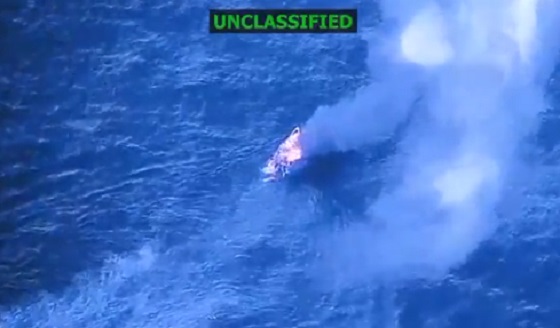

President Donald Trump told Congress that the U.S. is engaged in “armed conflict” with drug cartels in the Caribbean shortly after ordering four military strikes on suspected drug boats in the region.
“The President determined that the United States is in a non-international armed conflict with these designated terrorist organizations,” according to the confidential notice the administration sent to Congress. Trump directed the U.S. Department of War to “conduct operations against them pursuant to the law of armed conflict.”
“The United States has now reached a critical point where we must use force in self-defense and defense of others against the ongoing attacks by these designated terrorist organizations,” the memo said.
Trump ordered military strikes on Sept. 2, Sept. 15, Sept. 19 and Oct. 3 on suspected drug boats in the Caribbean. Trump said the Venezuelan gang Tren de Aragua was using the boats to smuggle drugs to the U.S.
On his second day in office in his second term, Trump issued an executive order designating Mexican cartels, the Venezuelan gang Tren de Aragua, and Salvadoran La Mara Salvatrucha (known as MS-13), as foreign terrorist organizations and specially designated global terrorists under the U.S. Constitution, Immigration and Nationality Act and International Emergency Economic Powers Act.
The U.S. said the four boat strikes resulted in 21 deaths. The Sept. 2 attack killed 11. The strike on Sept. 15 killed three, as did the strike on Sept. 19. The Oct. 3 attack killed four. U.S. officials have released a few details about the strikes. Trump posted videos of two strikes on social media. He told reporters about the third. U.S. Secretary of War Pete Hegseth posted a video of the fourth strike, which killed four people, on social media on Friday.
“Our intelligence, without a doubt, confirmed that this vessel was trafficking narcotics, the people onboard were narco-terrorists, and they were operating on a known narco-trafficking transit route,” the secretary of War wrote. “These strikes will continue until the attacks on the American people are over!!!!”
Earlier this morning, on President Trump's orders, I directed a lethal, kinetic strike on a narco-trafficking vessel affiliated with Designated Terrorist Organizations in the USSOUTHCOM area of responsibility. Four male narco-terrorists aboard the vessel were killed in the… pic.twitter.com/QpNPljFcGn
— Secretary of War Pete Hegseth (@SecWar) October 3, 2025
David Bier, director of immigration studies at the Cato Institute, said the military strikes were a significant change in U.S. policy and could pose legal challenges.
“The strikes are both illegal and unconstitutional,” he told The Center Square. “The law is clear that the military is only authorized to intercept vessels to communicate with them and refer them to civilian law enforcement. The Constitution prohibits war without congressional authorization, and even in a war, the military may not intentionally kill civilians.”
After one of the U.S. strikes against a speedboat, agents from the Dominican Republic’s National Drug Control Directorate and the Dominican Republic Navy seized 377 packages of suspected cocaine about 80 nautical miles south of Beata Island, Pedernales province.
Bier said President Barack Obama and Trump, during their first terms, used the military to kill suspected terrorists abroad, but not drug suspects.
“There is some precedent for the U.S. covertly helping foreign countries use their militaries to kill drug suspects, which was exposed in 2011 when the CIA helped kill a U.S. missionary in Peru,” he said.
However, Trump’s tactics won’t dent drug supplies in the U.S significantly, Bier said.
“It will certainly reduce drug trafficking by boats near Venezuela, but will do little to reduce total supply coming to the United States because drug trafficking is a global phenomenon with a variety of channels,” Bier told The Center Square.
The White House said the president is protecting Americans.
“As we have said many times, the President acted in line with the law of armed conflict to protect our country from those trying to bring deadly poison to our shores, and he is delivering on his promise to take on the cartels and eliminate these national security threats from murdering more Americans,” White House spokesperson Anna Kelly said.
After the first boat strike on Sept. 2, Trump warned smugglers operating in the area.
“The strike occurred while the terrorists were at sea in International waters transporting illegal narcotics, heading to the United States,” Trump wrote in a social media post. “The strike resulted in 11 terrorists killed in action. No U.S. Forces were harmed in this strike. Please let this serve as notice to anybody even thinking about bringing drugs into the United States of America. BEWARE!”
In late September, Colombian President Gustavo Petro called for a criminal investigation into Trump and other U.S. officials after the deadly strikes on suspected drug boats in the Caribbean. Petro said “unarmed young people are being shot at with missiles in the open seas” moments after taking the podium at the annual meeting of the U.N. General Assembly in New York City.
“Criminal proceedings must be opened against those officials, who are from the U.S., even if it includes the highest-ranking official who gave the order: President Trump,” Petro said.
Vice President J.D. Vance has defended the strikes over the objections of some members of his own party.
“Killing cartel members who poison our fellow citizens is the highest and best use of our military,” Vance wrote Sept. 6 on social media.
U.S. Sen. Rand Paul, R-Ky., pushed back.
“Vance says killing people he accuses of a crime is the ‘highest and best use of the military.’ Did he ever read To Kill a Mockingbird? Did he ever wonder what might happen if the accused were immediately executed without trial or representation?? What a despicable and thoughtless sentiment it is to glorify killing someone without a trial,” Paul responded.


After the CDC ACIP panel voted 8-3 to drop the hepatitis B vaccine for millions of healthy babies born from seronegative mothers, President Trump who has previously said the ACIP schedule is a “disgrace” has ordered a review of the US vaccine schedule in relationship to the countries. Alter AI assisted in this review.
 |
Based on the 2025 immunization schedules published by health authorities worldwide — including the CDC/ACIP (U.S.), Public Health England/UKHSA, Health Canada, Australia’s Department of Health, and the EU’s national public health programs — there are significant differences in how intensively children are vaccinated from birth to age 18.
Although all developed countries recommend broadly similar vaccines (targeting diphtheria, measles, polio, etc.), the United States stands at the top in total injections and doses, followed by Canada, France/Germany, the UK, Australia, Sweden, and Japan.
 United States — Approx. 30–32 vaccine doses (counts combination products as single dose) before age 18
The 2025 CDC/ACIP schedule (see CDC PDF schedule, 2025) remains the most aggressive among Western nations.
By age one, a typical American baby receives 20+ doses spanning nine diseases (Hepatitis B, Rotavirus, DTaP, Hib, Pneumococcal, Polio, COVID‑19, Influenza, RSV). By age two, 32 individual antigens including monoclonal antibodies have been received in utero and after birth.
By age six, most children have accumulated around 27 to 29 doses, and around 30–32 total doses by age 18 (including HPV, meningococcal, Tdap boosters, annual flu shots, and now COVID boosters). Doses include combination products, so the number of antigens is much greater approximately 72-93 depending on maternal injections and other factors.
The U.S. uniquely begins vaccination at birth with Hepatitis B (now restricted to ~25,000 seropositive/carrier mothers) and adds multiple annual vaccines regardless of local exposure risk. It also promotes simultaneous injection of up to six vaccines at once (“combination vaccines” or same-visit stacking), magnifying early childhood exposure to adjuvants and preservatives.
 Canada — ≈ 25–28 doses
Canada’s national and provincial schedules (see Health Canada) mirror the U.S., but some provinces delay or skip optional vaccines (like flu or COVID‑19 for healthy children). Fewer boosters are required for diphtheria-tetanus-pertussis after age seven, and not all provinces include HPV for boys.
Canada therefore averages 2–4 fewer total doses than the United States.
 France /
  Germany — ≈ 22–25 doses
European Union countries vary widely:
European nations also tend to delay vaccination start ages to 8–12 weeks instead of giving Hep B or other shots at birth, resulting in fewer injections during infancy and more gradual immune stimulation.
 United Kingdom — ≈ 20–21 doses
The UK’s NHS and UKHSA recommend a smaller, slower schedule than North America’s. Infants receive about 16–18 doses by age 5, increasing to 20–21 by age 18.
Notably:
 Australia — ≈ 20 doses
Australia’s National Immunisation Program (NIP) mirrors the UK more closely than the U.S.
Infants start at 6–8 weeks, not at birth (Hep B exception). Only one influenza vaccine per year is recommended, and chickenpox is given later. No universal COVID vaccine for healthy under‑5s.
Total injections: about 20 by adulthood.
 Sweden /
  Norway — ≈ 16–18 doses
Nordic countries follow some of the world’s most minimalist Western schedules:
Children typically receive around 16–18 total injections before 18 — roughly half the U.S. burden — without suffering higher rates of “vaccine‑preventable” illness, challenging the dogma that more vaccines equal better outcomes.
 Japan — ≈ 14–16 doses
Historically the most cautious industrialized nation, Japan delayed and later reduced its vaccine schedule after serious adverse events in the 1990s.
Although it now recommends many standard vaccines, lower frequency, single-antigen use, and minimal early‑life stacking mean the total doses remain lowest in the developed world, around 14–16 through adolescence.
Japan’s infant mortality and autism rates are lower than in the U.S., prompting renewed scientific interest in whether slower schedules might lower iatrogenic risk.
 Summary — Total Vaccine Doses (Ages 0–18 Years)
Rank Country Approx. cumulative doses Notes on schedule intensity 1 United States 30–32 Most intensive; starts at birth; annual flu + COVID 2 Canada 25–28 Slightly milder than U.S.; fewer mandatory boosters 3 France / Germany 22–25 Similar core vaccines; delayed start; selective flu use 4 United Kingdom 20–21 No varicella or universal flu/COVID; efficient combinations 5 Australia ≈ 20 Spaced schedule; limited COVID coverage 6 Sweden / Norway 16–18 Simplified; no birth or seasonal routine vaccines 7 Japan 14–16 Most delayed; minimal birth and combination doses
 Interpretation
The data show a clear gradient: the United States vaccinates children more frequently and at earlier ages than any other Western nation, often stacking combinations before immune maturity. Nations with slower, smaller schedules — Sweden and Japan most notably — maintain equal or superior child health metrics, casting doubt on the premise that maximal dosing guarantees better outcomes.
The U.S. model prioritizes population‑wide compliance and theoretical herd immunity, while Europe and Japan incorporate a more individualized risk‑based approach. Given the expanding scientific literature on rising childhood allergic and neuropsychiatric illnesses, these cross‑national differences underscore the need for independent, transparent studies comparing long‑term health outcomes by cumulative vaccine burden — something major regulatory agencies have conspicuously avoided.
FOCAL POINTS (Courageous Discourse) is a reader-supported publication.
To receive new posts and support my work, consider becoming a free or paid subscriber.
Please subscribe to FOCAL POINTS as a paying ($5 monthly) or founder member so we can continue to bring you the truth.
Peter A. McCullough, MD, MPH

By Emily Kopp
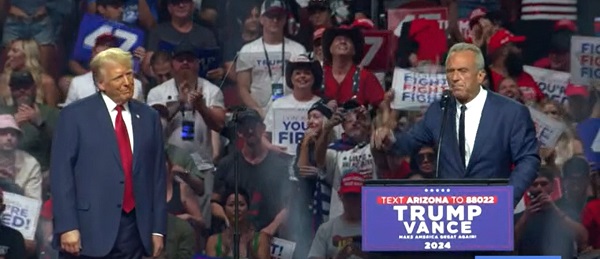
President Donald Trump will direct his top health officials to conduct a systematic review of the childhood vaccinations schedule by reviewing those of other high-income countries and update domestic recommendations if the schedules abroad appear superior, according to a memorandum obtained by the Daily Caller News Foundation.
“In January 2025, the United States recommended vaccinating all children for 18 diseases, including COVID-19, making our country a high outlier in the number of vaccinations recommended for all children,” the memo will state. “Study is warranted to ensure that Americans are receiving the best, scientifically-supported medical advice in the world.”
Trump directs the secretary of the Health and Human Services (HHS) and the director of the Centers for Disease Control and Prevention to adopt best practices from other countries if deemed more medically sound. The memo cites the contrast between the U.S., which recommends vaccination for 18 diseases, and Denmark, which recommends vaccinations for 10 diseases; Japan, which recommends vaccinations for 14 diseases; and Germany, which recommends vaccinations for 15 diseases.
Dear Readers:
As a nonprofit, we are dependent on the generosity of our readers.
Please consider making a small donation of any amount here.
Thank you!
HHS Secretary Robert F. Kennedy Jr. has long been a critic of the U.S. childhood vaccination schedule.
The Trump Administration ended the blanket recommendation for all children to get annual COVID-19 vaccine boosters in perpetuity. Food and Drug Administration (FDA) Commissioner Marty Makary and Chief Medical Officer Vinay Prasad announced in May that the agency would not approve new COVID booster shots for children and healthy non-elderly adults without clinical trials demonstrating the benefit. On Friday, Prasad told his staff at the Center for Biologics Evaluation and Research that a review by career staff traced the deaths of 10 children to the COVID vaccine, announced new changes to vaccine regulation, and asked for “introspection.”
Trump’s memo follows a two-day meeting of vaccine advisors to the Centers for Disease Control and Prevention in which the committee adopted changes to U.S. policy on Hepatitis B vaccination that bring the country’s policy in alignment with 24 peer nations.

Total vaccines in January 2025 before the change in COVID policy. Credit: ACIP
The meeting included a presentation by FDA Center for Drug Evaluation and Research Director Tracy Beth Høeg showing the discordance between the childhood vaccination schedule in the U.S. and those of other developed nations.
“Why are we so different from other developed nations, and is it ethically and scientifically justified?” Høeg asked. “We owe our children science-based recommendations here in the United States.”









A look inside the ‘floatel’ housing B.C.’s LNG workforce
Trump Orders Review Of Why U.S. Childhood Vaccination Schedule Has More Shots Than Peer Countries

US Energy Secretary says price of energy determined by politicians and policies
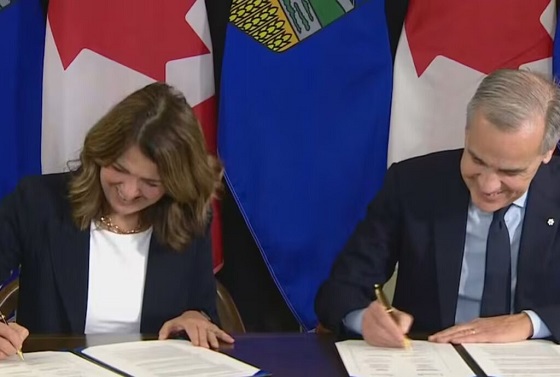
What the Data Shows About the New Canada-Alberta Pipeline Opportunity
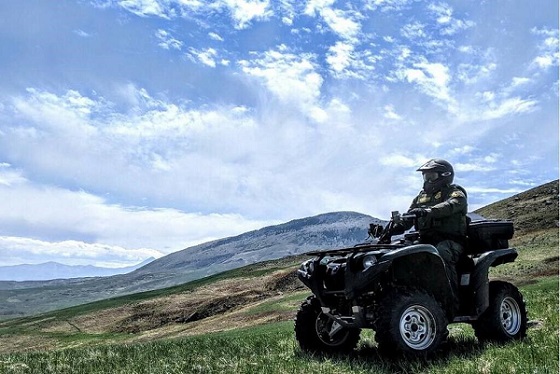
While Trump has southern border secure, hundreds of thousands of illegal immigrants still flooding in from Canada

Canadian bishops condemn Liberal ‘hate speech’ proposal that could criminalize quoting Scripture
Alberta will use provincial laws to stop Canadian gov’t from trying to confiscate legal firearms
Canadian legislator introduces bill to establish ‘Freedom Convoy Recognition Day’ as a holiday

