
Uncategorized
Trump renews Mueller attacks as Russia report release looms


WASHINGTON — President Donald Trump took a victory lap after special counsel Robert Mueller concluded his Russia investigation. It may have been premature.

The scramble to frame the investigation’s findings in the best political light is sure to be renewed in coming days when Mueller’s report is expected to be released in redacted form. Now that the American public will get a look at details beyond the four-page investigation summary written by Attorney General William Barr, some Trump allies are concerned that the president was too quick to declare complete triumph and they’re pushing the White House to launch a pre-emptive attack.
Trump seems to be of the same mind.
“The Democrats will never be satisfied, no matter what they get, how much they get, or how many pages they get,” Trump tweeted Monday, two days after he blasted “Bob Mueller’s team of 13 Trump Haters & Angry Democrats.”
With the goal to discredit what’s coming, Trump and his allies have unleashed a series of broadsides against Mueller’s team and the Democrats pushing for full release of the final report. No longer is the president agreeing that Mueller acted
“You’re darn right I’m going after them again,” Rudy Giuliani, one of Trump’s attorneys, told The Associated Press. “I never thought they did their job in a professional manner. … Only because there is overwhelming evidence that the president didn’t do anything wrong, they were forced to admit they couldn’t find anything on him. They sure tried.”
After Washington waited nearly two years for Mueller to conduct his investigation, Barr released a letter last month stating that the special counsel found no evidence the Trump campaign “conspired or
Mueller’s team, which was barely quoted in Barr’s letter, has made clear that it did not exonerate the president. And Democrats immediately called for Mueller to testify and for his entire 400-page report to be released.
That didn’t stop the president’s allies from declaring victory.
They falsely claimed Mueller had exonerated Trump, painted House Democrats’ investigations as partisan overreach and planned to target news outlets and individual reporters they believe promoted the collusion story. The president himself seethed at a Michigan rally that the whole thing was an attempt “to tear up the fabric of our great democracy.”
While the president unleashed his personal grievances, his team seized on any exculpatory information in Barr’s letter, hoping to swiftly define the conversation, according to six White House officials and outside advisers who spoke on condition of anonymity because they were not authorized to publicly discuss private deliberations.
Those officials and advisers acknowledged that the victory lap was deliberately premature.
Trump’s inner circle knows there will likely be further releases of embarrassing or politically damaging information. Barr’s letter, for instance, hinted that there would be at least one unknown action by the president that Mueller examined as a possible act of obstruction. A number of White House aides have privately said they are eager for Russia stories, good or bad, to fade from the headlines. And there is fear among some presidential confidants that the rush to spike the football could backfire if bombshell new information emerged.
“I think they did what they had to do. Regardless of what Barr reported, they needed to claim vindication,” said Republican strategist Alex Conant, who worked on Sen. Marco Rubio’s 2016 presidential campaign. “First impressions are important. And the first impression of the Mueller report was very good for Trump.”
Sen. Richard Burr, R-N.C., the chairman of the House Intelligence Committee, suggested the full report may raise new questions for Trump but would not contain anything that would threaten the presidency.
“I personally believe not all of it is going to be great for the White House,” Burr said. He added that he didn’t know what’s in the Mueller report, “but there are going to be things that maybe cause some people to say, ‘Oh, gosh, I didn’t know that existed.’ Now, does it reach a threshold? Apparently not.”
Trump’s GOP allies in Congress are also hedging their bets by continuing to cast doubt on the origins of Mueller’s investigation.
The top Republican on the House Intelligence Committee, California Rep. Devin Nunes, told Fox News on Sunday that he was sending eight criminal referrals to the Justice Department, apparently linked to investigations he started in the last Congress about the beginnings of the Russia probe.
The host of the Fox News program, Maria Bartiromo, told Nunes that he “ought to be taking a victory lap here” after Barr’s memo said there was no evidence of Russian collusion. But, in a signal that Trump’s allies planned to remain on the offensive, Nunes responded: “There’s no really time for victory laps because people have to be held accountable for this nonsense that happened.”
___
Lemire reported from New York. Associated Press writers Catherine Lucey and Lisa Mascaro contributed to this report from Washington.
___
Follow Lemire on Twitter at http://twitter.com/@JonLemire , Miller at http://twitter.com/@zekejmiller and Jalonick at http://twitter.com/@MCJalonick .
Jonathan Lemire, Zeke Miller And Mary Clare Jalonick, The Associated Press

Uncategorized
Mortgaging Canada’s energy future — the hidden costs of the Carney-Smith pipeline deal


Much of the commentary on the Carney-Smith pipeline Memorandum of Understanding (MOU) has focused on the question of whether or not the proposed pipeline will ever get built.
That’s an important topic, and one that deserves to be examined — whether, as John Robson, of the indispensable Climate Discussion Nexus, predicted, “opposition from the government of British Columbia and aboriginal groups, and the skittishness of the oil industry about investing in a major project in Canada, will kill [the pipeline] dead.”
But I’m going to ask a different question: Would it even be worth building this pipeline on the terms Ottawa is forcing on Alberta? If you squint, the MOU might look like a victory on paper. Ottawa suspends the oil and gas emissions cap, proposes an exemption from the West Coast tanker ban, and lays the groundwork for the construction of one (though only one) million barrels per day pipeline to tidewater.
But in return, Alberta must agree to jack its industrial carbon tax up from $95 to $130 per tonne at a minimum, while committing to tens of billions in carbon capture, utilization, and storage (CCUS) spending, including the $16.5 billion Pathways Alliance megaproject.
Here’s the part none of the project’s boosters seem to want to mention: those concessions will make the production of Canadian hydrocarbon energy significantly more expensive.
As economist Jack Mintz has explained, the industrial carbon tax hike alone adds more than $5 USD per barrel of Canadian crude to marginal production costs — the costs that matter when companies decide whether to invest in new production. Layer on the CCUS requirements and you get another $1.20–$3 per barrel for mining projects and $3.60–$4.80 for steam-assisted operations.
While roughly 62% of the capital cost of carbon capture is to be covered by taxpayers — another problem with the agreement, I might add — the remainder is covered by the industry, and thus, eventually, consumers.
Total damage: somewhere between $6.40 and $10 US per barrel. Perhaps more.
“Ultimately,” the Fraser Institute explains, “this will widen the competitiveness gap between Alberta and many other jurisdictions, such as the United States,” that don’t hamstring their energy producers in this way. Producers in Texas and Oklahoma, not to mention Saudi Arabia, Venezuela, or Russia, aren’t paying a dime in equivalent carbon taxes or mandatory CCUS bills. They’re not so masochistic.
American refiners won’t pay a “low-carbon premium” for Canadian crude. They’ll just buy cheaper oil or ramp up their own production.
In short, a shiny new pipe is worthless if the extra cost makes barrels of our oil so expensive that no one will want them.
And that doesn’t even touch on the problem for the domestic market, where the higher production cost will be passed onto Canadian consumers in the form of higher gas and diesel prices, home heating costs, and an elevated cost of everyday goods, like groceries.
Either way, Canadians lose.
So, concludes Mintz, “The big problem for a new oil pipeline isn’t getting BC or First Nation acceptance. Rather, it’s smothering the industry’s competitiveness by layering on carbon pricing and decarbonization costs that most competing countries don’t charge.” Meanwhile, lurking underneath this whole discussion is the MOU’s ultimate Achilles’ heel: net-zero.
The MOU proudly declares that “Canada and Alberta remain committed to achieving Net-Zero greenhouse gas emissions by 2050.” As Vaclav Smil documented in a recent study of Net-Zero, global fossil-fuel use has risen 55% since the 1997 Kyoto agreement, despite trillions spent on subsidies and regulations. Fossil fuels still supply 82% of the world’s energy.
With these numbers in mind, the idea that Canada can unilaterally decarbonize its largest export industry in 25 years is delusional.
This deal doesn’t secure Canada’s energy future. It mortgages it. We are trading market access for self-inflicted costs that will shrink production, scare off capital, and cut into the profitability of any potential pipeline. Affordable energy, good jobs, and national prosperity shouldn’t require surrendering to net-zero fantasy.If Ottawa were serious about making Canada an energy superpower, it would scrap the anti-resource laws outright, kill the carbon taxes, and let our world-class oil and gas compete on merit. Instead, we’ve been handed a backroom MOU which, for the cost of one pipeline — if that! — guarantees higher costs today and smothers the industry that is the backbone of the Canadian economy.
This MOU isn’t salvation. It’s a prescription for Canadian decline.


The cost of the bureaucracy increased by $6 billion last year, according to newly released numbers in Public Accounts disclosures. The Canadian Taxpayers Federation is calling on Prime Minister Mark Carney to immediately shrink the bureaucracy.
“The Public Accounts show the cost of the federal bureaucracy is out of control,” said Franco Terrazzano, CTF Federal Director. “Tinkering around the edges won’t cut it, Carney needs to take urgent action to shrink the bloated federal bureaucracy.”
The federal bureaucracy cost taxpayers $71.4 billion in 2024-25, according to the Public Accounts. The cost of the federal bureaucracy increased by $6 billion, or more than nine per cent, over the last year.
The federal bureaucracy cost taxpayers $39.6 billion in 2015-16, according to the Public Accounts. That means the cost of the federal bureaucracy increased 80 per cent over the last 10 years. The government added 99,000 extra bureaucrats between 2015-16 and 2024-25.
Half of Canadians say federal services have gotten worse since 2016, despite the massive increase in the federal bureaucracy, according to a Leger poll.
Not only has the size of the bureaucracy increased, the cost of consultants, contractors and outsourcing has increased as well. The government spent $23.1 billion on “professional and special services” last year, according to the Public Accounts. That’s an 11 per cent increase over the previous year. The government’s spending on professional and special services more than doubled since 2015-16.
“Taxpayers should not be paying way more for in-house government bureaucrats and way more for outside help,” Terrazzano said. “Mere promises to find minor savings in the federal bureaucracy won’t fix Canada’s finances.
“Taxpayers need Carney to take urgent action and significantly cut the number of bureaucrats now.”
Table: Cost of bureaucracy and professional and special services, Public Accounts
| Year | Bureaucracy | Professional and special services |
|
$71,369,677,000 |
$23,145,218,000 |
|
|
$65,326,643,000 |
$20,771,477,000 |
|
|
$56,467,851,000 |
$18,591,373,000 |
|
|
$60,676,243,000 |
$17,511,078,000 |
|
|
$52,984,272,000 |
$14,720,455,000 |
|
|
$46,349,166,000 |
$13,334,341,000 |
|
|
$46,131,628,000 |
$12,940,395,000 |
|
|
$45,262,821,000 |
$12,950,619,000 |
|
|
$38,909,594,000 |
$11,910,257,000 |
|
|
$39,616,656,000 |
$11,082,974,000 |


Alberta’s new diagnostic policy appears to meet standard for Canada Health Act compliance
RFK Jr reversing Biden-era policies on gender transition care for minors
Geopolitics no longer drives oil prices the way it used to

Canadian university censors free speech advocate who spoke out against Indigenous ‘mass grave’ hoax

Top constitutional lawyer warns against Liberal bills that could turn Canada into ‘police state’
Ex-FDA Commissioners Against Higher Vaccine Standards Took $6 Million From COVID Vaccine Makers
There’s No Bias at CBC News, You Say? Well, OK…
-
 Energy2 days ago
Western Canada’s supply chain for Santa Claus
-
Alberta2 days ago
Ottawa-Alberta agreement may produce oligopoly in the oilsands
-
 Energy2 days ago
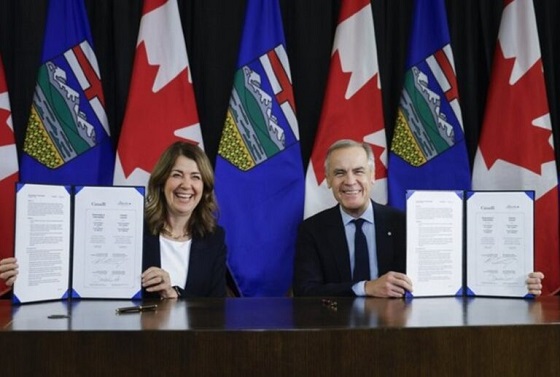
The Top News Stories That Shaped Canadian Energy in 2025 and Will Continue to Shape Canadian Energy in 2026
-
 International2 days ago
$2.6 million raised for man who wrestled shotgun from Bondi Beach terrorist
-
 armed forces22 hours ago
Remembering Afghanistan and the sacrifices of our military families
-
 Opinion22 hours ago
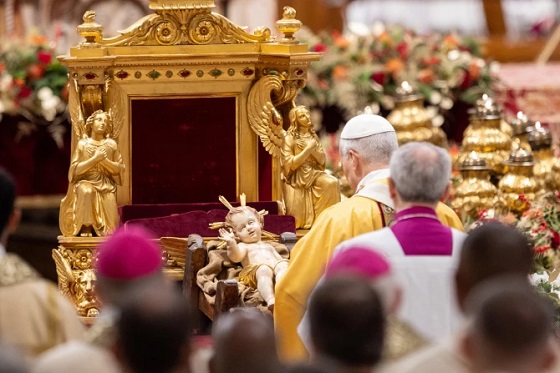
Pope Leo XIV’s Christmas night homily
-
 Fraser Institute22 hours ago
How to talk about housing at the holiday dinner table
-
 Frontier Centre for Public Policy21 hours ago
Tent Cities Were Rare Five Years Ago. Now They’re Everywhere