Connect with us
[the_ad id="89560"]

Business

Trump promises tariff revenue, fair trade and more jobs

Published

3 minute read

From The Center Square

By 

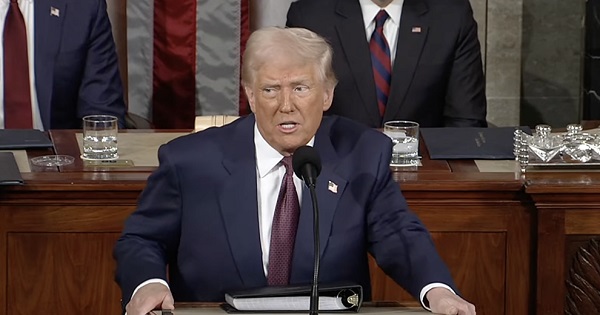
President Donald Trump told Congress on Tuesday that tariffs would make America rich again, but predicted minor “disturbances” on the path ahead.

Trump said he would put reciprocal tariffs on foreign countries starting April 2.

“Whatever they tariff us, we tariff them. Whatever they tax us, we tax them,” Trump said. “If they do non-monetary tariffs to keep us out of their market, then we do non-monetary barriers to keep them out of our market. We will take in trillions of dollars and create jobs like we have never seen before.”

Trump didn’t detail the potential disturbance in his speech, but economists and business groups have raised concerns about higher prices for U.S. consumers.

Trump also promised Congress would balance the federal budget and reduce taxes. Making good on those promises could come with challenges.

Trump previously said he wants a balanced budget, but his promise to extend the tax cuts in the 2017 Tax Cuts and Jobs Act could make that difficult for both the House and Senate. Extending the tax rates could cost about $4 trillion in federal revenue, independent groups say.

In the past 50 years, the federal government has ended with a fiscal year-end budget surplus four times, most recently in 2001. Congress has run a deficit every year since then.

During his inauguration, Trump touted the benefits of tariffs. He said tariff revenue would make the U.S. “rich as hell ” and lower the tax burden on American taxpayers.

Trump’s comments Tuesday before a joint session of Congress came after he put 25% tariffs on Mexico and Canada and added an additional 10% duty on imports from China. He has said he plans to keep those tariffs in place until Mexico and Canada stop illegal immigration and drug trafficking at the U.S. borders.

The tariffs spooked investors on Wall Street, causing a second day of market losses Tuesday. Consumers and economists have raised concerns about higher prices on a wide range of products as a result of the tariffs.

Tariffs are taxes on imported goods paid by the importer, which are often passed along to consumers through higher prices on the imported products.

Canada responded with plans to put 25% tariffs on nearly $100 billion of U.S. imports. Mexico said it would retaliate with moves to be announced Sunday. China filed a complaint with the World Trade Organization.

The U.S. Chamber of Commerce and the American Farm Bureau Federation called on Trump to change course on tariffs.

Later Tuesday, Commerce Secretary Howard Lutnick said Trump could announce trade compromises with Canada and Mexico as soon as Wednesday.

Before Post

Todayville is a digital media and technology company. We profile unique stories and events in our community. Register and promote your community event for free.

Follow Author

Alberta

Emissions Reduction Alberta offering financial boost for the next transformative drilling idea

Published on

From the Canadian Energy Centre

$35-million Alberta challenge targets next-gen drilling opportunities

‘All transformative ideas are really eligible’

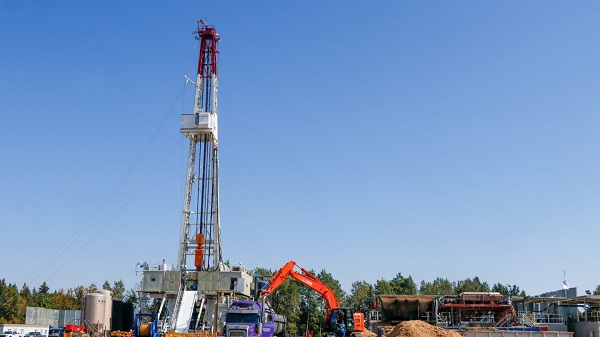
Forget the old image of a straight vertical oil and gas well.

In Western Canada, engineers now steer wells for kilometres underground with remarkable precision, tapping vast energy resources from a single spot on the surface.

The sector is continually evolving as operators pursue next-generation drilling technologies that lower costs while opening new opportunities and reducing environmental impacts.

But many promising innovations never reach the market because of high development costs and limited opportunities for real-world testing, according to Emissions Reduction Alberta (ERA).

That’s why ERA is launching the Drilling Technology Challenge, which will invest up to $35 million to advance new drilling and subsurface technologies.

“The focus isn’t just on drilling, it’s about building our future economy, helping reduce emissions, creating new industries and making sure we remain a responsible leader in energy development for decades to come,” said ERA CEO Justin Riemer.

And it’s not just about oil and gas. ERA says emerging technologies can unlock new resource opportunities such as geothermal energy, deep geological CO₂ storage and critical minerals extraction.

“Alberta’s wealth comes from our natural resources, most of which are extracted through drilling and other subsurface technologies,” said Gurpreet Lail, CEO of Enserva, which represents energy service companies.

ERA funding for the challenge will range from $250,000 to $8 million per project.

Eligible technologies include advanced drilling systems, downhole tools and sensors; AI-enabled automation and optimization; low-impact rigs and fluids; geothermal and critical mineral drilling applications; and supporting infrastructure like mobile labs and simulation platforms.

“All transformative ideas are really eligible for this call,” Riemer said, noting that AI-based technologies are likely to play a growing role.

“I think what we’re seeing is that the wells of the future are going to be guided by smart sensors and real-time data. You’re going to have a lot of AI-driven controls that help operators make instant decisions and avoid problems.”

Applications for the Drilling Technology Challenge close January 29, 2026.

Continue Reading

armed forces

Global Military Industrial Complex Has Never Had It So Good, New Report Finds

Published on


From the Daily Caller News Foundation

By Wallace White

The global war business scored record revenues in 2024 amid multiple protracted proxy conflicts across the world, according to a new industry analysis released on Monday.

The top 100 arms manufacturers in the world raked in $679 billion in revenue in 2024, up 5.9% from the year prior, according to a new Stockholm International Peace Research Institute (SIPRI) study. The figure marks the highest ever revenue for manufacturers recorded by SIPRI as the group credits major conflicts for supplying the large appetite for arms around the world.

“The rise in the total arms revenues of the Top 100 in 2024 was mostly due to overall increases in the arms revenues of companies based in Europe and the United States,” SIPRI said in their report. “There were year-on-year increases in all the geographical areas covered by the ranking apart from Asia and Oceania, which saw a slight decrease, largely as a result of a notable drop in the total arms revenues of Chinese companies.”

Notably, Chinese arms manufacturers saw a large drop in reported revenues, declining 10% from 2023 to 2024, according to SIPRI. Just off China’s shores, Japan’s arms industry saw the largest single year-over-year increase in revenue of all regions measured, jumping 40% from 2023 to 2024.

American companies dominate the top of the list, which measures individual companies’ revenue, with Lockheed Martin taking the top spot with $64,650,000,000 of arms revenue in 2024, according to the report. Raytheon Technologies, Northrop Grumman and BAE Systems follow shortly after in revenue,

The Czechoslovak Group recorded the single largest jump in year-on-year revenue from 2023 to 2024, increasing its haul by 193%, according to SIPRI. The increase is largely driven by their crucial role in supplying arms and ammunition to Ukraine.

The Pentagon contracted one of the group’s subsidiaries in August to build a new ammo plant in the U.S. to replenish artillery shell stockpiles drained by U.S. aid to Ukraine.

“In 2024 the growing demand for military equipment around the world, primarily linked to rising geopolitical tensions, accelerated the increase in total Top 100 arms revenues seen in 2023,” the report reads. “More than three quarters of companies in the Top 100 (77 companies) increased their arms revenues in 2024, with 42 reporting at least double-digit percentage growth.”

Continue Reading

Trending

X