
National
Trudeau must prove he won’t tax our homes



From the Canadian Taxpayers Federation
Author: Franco Terrazzano

Actions speak louder the words. That’s especially true when those words come from a politician with a track record of breaking promises and hiking taxes.
Prime Minister Justin Trudeau says he won’t send the taxman after Canadians’ homes. But if Trudeau wants Canadians to believe he won’t impose a home equity tax, there’s one thing he must do: end the CRA’s home reporting requirement.
In 2016, the Trudeau government made it mandatory for Canadians to report the sale of their primary residence even though it’s tax-exempt. If you sell your home, the CRA wants to know how much money you received from that sale. But if the taxman isn’t taxing it, why is the taxman asking that question? Is the CRA just curious?
Official Opposition Leader Pierre Poilievre confirmed to the Canadian Taxpayers Federation he would remove this reporting requirement if he forms government.
Trudeau must do the same. Otherwise, Canadians should worry a home equity tax is right around the corner. As Toronto Sun Columnist Brian Lilley recently wrote, “For Justin Trudeau and his Liberal Party, taxing your primary residence is a bad idea they just can’t quit.”
On June 25, Trudeau attended “a private town hall about generational fairness,” hosted by Generation Squeeze, a group advocating for home taxes.
What do you notice about the theme of that town hall? The government recently used the cloak of generational fairness to impose its capital gains tax hike.
The Trudeau government also spent hundreds of thousands funding and promoting a report from Generation Squeeze that complained of the “housing wealth windfalls gained by many home owners while they sleep and watch TV.”
The report recommended charging a tax on the value of homes above $1 million. The tax would cost Canadians up to $5.8 billion every year, and it would hit many normal Canadians. In British Columbia and Toronto, the typical home price is above $1 million.
Trying to improve affordability with tax hikes is like trying to boil water with your freezer. Higher taxes won’t make homes affordable. Consider this insight 50 pages into the report.
“Owners of homes valued over $1 million that include informal rental suites may try to recover the surtax by passing some of its cost on to renters,” reads the report.
It turns out higher taxes can make things cost more.
The head of Generation Squeeze was invited to a cabinet ministers’ retreat in Charlottetown last summer.
Documents uncovered by the CTF show staff in the prime minister’s office met twice with the head of Generation Squeeze, which included “a briefing about the tax policy recommendation.”
Trudeau has an appetite for taxing people’s homes. His recent capital gains tax hike will impact Canadians who sell secondary residences and cottages. He imposed a so-called anti-flipping home tax. And Trudeau taxes homes the government deems “underused.”
With Trudeau scrounging through the couch cushions looking for more money to paper over his deficits, Canadians should worry a home equity tax is next.
A home equity tax would come with a big bill for a young couple looking to upgrade to a family home or for grandparents who rely on the equity in their home to fund their golden years.
As an example, Canadians that bought their Toronto home for $250,000 in 1980 and sold it for $1.2 million today would pay between $50,000 and $190,000, depending on the type of home equity tax.
The Trudeau government has repeatedly flirted with home equity taxes. The only way for Trudeau to put Canadians’ minds at ease is to act and remove the requirement for taxpayers to report the sale of their home to the CRA.


From the Frontier Centre for Public Policy
By Conrad Eder
Conrad Eder supports universal health care, but not Canada’s broken version. Despite massive spending, Canadians face brutal wait times. He argues it’s time to allow private options, as other countries do, without abandoning universality.
It’s not about money. It’s about the rules shaping how Canada’s health care system works
Canada’s health care system isn’t failing because it lacks funding or public support. It’s failing because governments have tied it to restrictive rules that block private medical options used in other developed countries to deliver timely care.
Canada spends close to $400 billion a year on health care, placing it among the highest-spending countries in the Organization for Economic Co-operation and Development (OECD). Yet the system continues to struggle with some of the longest waits for care, the fewest doctors per capita and among the lowest numbers of hospital beds in the OECD. This is despite decades of spending increases, including growth of 4.5 per cent in 2023 and 5.7 per cent in 2024, according to estimates from the Canadian Institute for Health Information.
Canadians are losing confidence that government spending is the solution. In fact, many don’t even think it’s making a difference.
And who could blame them? Median health care wait times reached 30 weeks in 2024, up from 27.7 weeks in 2023, which was up from 27.4 weeks in 2022, according to annual surveys by the Fraser Institute.
Nevertheless, politicians continue to tout our universal health care system as a source of national pride and, according to national surveys, 74 per cent of Canadians agree. Yet only 56 per cent are satisfied with it. This gap reveals that while Canadians value universal health care in principle, they are frustrated with it in practice.
But it isn’t universal health care that’s the problem; it’s Canada’s uniquely restrictive version of it. In most provinces, laws restrict physicians from working simultaneously in public and private systems and prohibit private insurance for medically necessary services covered by medicare, constraints that do not exist in most other universal health care systems.
The United Kingdom, France, Germany and the Netherlands all maintain universal health care systems. Like Canada, they guarantee comprehensive insurance coverage for essential health care services. Yet they achieve better access to care than Canada, with patients seeing doctors sooner and benefiting from shorter surgical wait times.
In Germany, there are both public and private hospitals. In France, universal insurance covers procedures whether patients receive them in public hospitals or private clinics. In the Netherlands, all health insurance is private, with companies competing for customers while coverage remains guaranteed. In the United Kingdom, doctors working in public hospitals are allowed to maintain private practices.
All of these countries preserved their commitment to universal health care while allowing private alternatives to expand choice, absorb demand and deliver better access to care for everyone.
Only 26 per cent of Canadians can get same-day or next-day appointments with their family doctor, compared to 54 per cent of Dutch and 47 per cent of English patients. When specialist care is needed, 61 per cent of Canadians wait more than a month, compared to 25 per cent of Germans. For elective surgery, 90 per cent of French patients undergo procedures within four months, compared to 62 per cent of Canadians.
If other nations can deliver timely access to care while preserving universal coverage, so can Canada. Two changes, inspired by our peers, would preserve universal coverage and improve access for all.
First, allow physicians to provide services to patients in both public and private settings. This flexibility incentivizes doctors to maximize the time they spend providing patient care, expanding service capacity and reducing wait times for all patients. Those in the public system benefit from increased physician availability, as private options absorb demand that would otherwise strain public resources.
Second, permit private insurance for medically necessary services. This would allow Canadians to obtain coverage for private medical services, giving patients an affordable way to access health care options that best suit their needs. Private insurance would enable Canadians to customize their health coverage, empowering patients and supporting a more responsive health care system.
These proposals may seem radical to Canadians. They are not. They are standard practice everywhere else. And across the OECD, they coexist with universal health care. They can do the same in Canada.
Alberta has taken an important first step by allowing some physicians to work simultaneously in public and private settings through its new dual-practice model. More Canadian provinces should follow Alberta’s lead and go one step further by removing legislative barriers that prohibit private health insurance for medically necessary services. Private insurance is the natural complement to dual practice, transforming private health care from an exclusive luxury into a viable option for Canadian families.
Canadians take pride in their health care system. That pride should inspire reform, not prevent it. Canada’s health care crisis is real. It’s a crisis of self-imposed constraints preventing our universal system from functioning at the level Canadians deserve.
Policymakers can, and should, preserve universal health care in this country. But maintaining it will require a willingness to learn from those who have built systems that deliver universality and timely access to care, something Canada’s current system does not.
Conrad Eder is a policy analyst at the Frontier Centre for Public Policy.

From the Fraser Institute
The dawn of a new year is an opportune time to ponder the recent performance of Canada’s $3.4 trillion economy. And the overall picture is not exactly cheerful.
Since the start of 2025, our principal trading partner has been ruled by a president who seems determined to unravel the post-war global economic and security order that provided a stable and reassuring backdrop for smaller countries such as Canada. Whether the Canada-U.S.-Mexico trade agreement (that President Trump himself pushed for) will even survive is unclear, underscoring the uncertainty that continues to weigh on business investment in Canada.
At the same time, Europe—representing one-fifth of the global economy—remains sluggish, thanks to Russia’s relentless war of choice against Ukraine, high energy costs across much of the region, and the bloc’s waning competitiveness. The huge Chinese economy has also lost a step. None of this is good for Canada.
Yet despite a difficult external environment, Canada’s economy has been surprisingly resilient. Gross domestic product (GDP) is projected to grow by 1.7 per cent (after inflation) this year. The main reason is continued gains in consumer spending, which accounts for more than three-fifths of all economic activity. After stripping out inflation, money spent by Canadians on goods and services is set to climb by 2.2 per cent in 2025, matching last year’s pace. Solid consumer spending has helped offset the impact of dwindling exports, sluggish business investment and—since 2023—lacklustre housing markets.
Another reason why we have avoided a sharper economic downturn is that the Trump administration has, so far, exempted most of Canada’s southbound exports from the president’s tariff barrage. This has partially cushioned the decline in Canada’s exports—particularly outside of the steel, aluminum, lumber and auto sectors, where steep U.S. tariffs are in effect. While exports will be lower in 2025 than the year before, the fall is less dramatic than analysts expected 6 to 8 months ago.
Although Canada’s economy grew in 2025, the job market lost steam. Employment growth has softened and the unemployment rate has ticked higher—it’s on track to average almost 7 per cent this year, up from 5.4 per cent two years ago. Unemployment among young people has skyrocketed. With the economy showing little momentum, employment growth will remain muted next year.
Unfortunately, there’s nothing positive to report on the investment front. Adjusted for inflation, private-sector capital spending has been on a downward trajectory for the last decade—a long-term trend that can’t be explained by Trump’s tariffs. Canada has underperformed both the United States and several other advanced economies in the amount of investment per employee. The investment gap with the U.S. has widened steadily since 2014. This means Canadian workers have fewer and less up-to-date tools, equipment and technology to help them produce goods and services compared to their counterparts in the U.S. (and many other countries). As a result, productivity growth in Canada has been lackluster, narrowing the scope for wage increases.
Preliminary data indicate that both overall non-residential investment and business capital spending on machinery, equipment and advanced technology products will be down again in 2025. Getting clarity on the future of the Canada-U.S. trade relationship will be key to improving the business environment for private-sector investment. Tax and regulatory policy changes that make Canada a more attractive choice for companies looking to invest and grow are also necessary. This is where government policymakers should direct their attention in 2026.


Remembering Afghanistan and the sacrifices of our military families

How to talk about housing at the holiday dinner table

Sweden Fixed What Canada Won’t Even Name
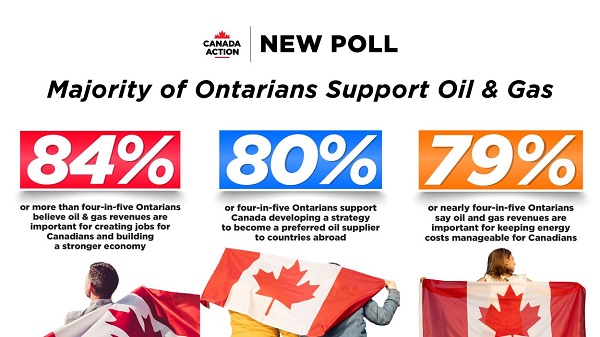
New Poll Shows Ontarians See Oil & Gas as Key to Jobs, Economy, and Trade

Alberta Next Panel calls for less Ottawa—and it could pay off

“Magnitude cannot be overstated”: Minnesota aid scam may reach $9 billion

Largest fraud in US history? Independent Journalist visits numerous daycare centres with no children, revealing massive scam
-
 Alberta2 days ago
The Canadian Energy Centre’s biggest stories of 2025
-
 Business2 days ago
Ottawa Is Still Dodging The China Interference Threat
-
 Business2 days ago
Resurfaced Video Shows How Somali Scammers Used Day Care Centers To Scam State
-
Business19 hours ago
Dark clouds loom over Canada’s economy in 2026
-
 Addictions15 hours ago
Coffee, Nicotine, and the Politics of Acceptable Addiction
-
 Business2 days ago
Minneapolis day care filmed empty suddenly fills with kids
-
 Business2 days ago
Disclosures reveal Minnesota politician’s husband’s companies surged thousands-fold amid Somali fraud crisis
-
Business18 hours ago
The Real Reason Canada’s Health Care System Is Failing