
Banks
“Trade-Based Money Laundering IS THE FENTANYL CRISIS”: Sources expose Chinese-Mexican-Canadian Crime Convergence



Prime Minister Justin Trudeau attends a dinner at the home of a United Front Work Department leader in Vancouver.

‘That famous picture of Trudeau at a Vancouver dinner with all those Chinese guys—They’re all in there’: Source on United Front money laundering suspects surveilled by US Agency
VANCOUVER and TORONTO — As debate rages over President Donald Trump’s disruptive tariffs on Canada, Mexico, and China—whether they represent a genuine war on fentanyl deaths tied to each nation’s role in the deadly supply chain, or merely a pretext for U.S. trade dominance—multiple Canadian and U.S. government sources have stepped forward to highlight a factor they believe North American citizens aren’t grasping amid Trump’s political rhetoric.

They point to the staggering scale and sophistication of trade-based money laundering orchestrated by Chinese Triads in Canada and Mexican cartels. This is a predominant concern in Canada, alongside revelations of so-called fentanyl superlabs hidden in rural areas, yet easily supplied by Canadian transportation hubs—shipping, rail, and trucking networks saturated with organized crime. These sources insist this little-understood form of criminal money laundering not only fuels fentanyl trafficking—ultimately linked to a complicit Beijing—but directly finances drug shipments initiated by Chinese networks in Toronto and Vancouver, sending fentanyl, methamphetamine, and cocaine across the Mexican border into California, specifically to trucking hubs around Los Angeles.
According to the primary source—a Canadian expert familiar with what they classify as an intricate trilateral partnership between Chinese Triads, the Chinese Communist Party’s United Front foreign influence networks, and Latin American cartels—these economic networks have effectively infiltrated multiple industries and commodities markets on Canada’s and Mexico’s west coasts, using them to conceal and amplify proceeds from fentanyl transactions.
In 2023, Canada’s financial watchdog, Fintrac, reported that Chinese networks had evolved beyond traditional casino-based laundering methods in Vancouver and Toronto, now mastering laundering through Canadian banks, law offices, real estate, and diaspora-based fraud networks. Yet according to The Bureau’s criminal intelligence source, these same networks—operating alongside the Sinaloa Cartel—also traffic in a range of commodities, from poached wildlife and agricultural staples like avocados and limes to rare Chinese delicacies such as geoduck, a phallic-shaped clam prized in hot pot and believed to have aphrodisiac properties.
The same source contends that while Canadian government agencies—including the RCMP, Fintrac, CBSA, and CSIS—understand the key players in the fentanyl trade, systemic issues within Canadian policing and prosecution allow these networks to operate with near impunity:
“The RCMP knows they have no framework within the Criminal Code, no resources, and no support from prosecution services. They just have no ability. And this whole thing with Trudeau saying that only 43 kilos of fentanyl—less than one percent—is coming from Canada is such a joke. It’s the interweaving of trade-based money laundering—if the public knew, it would blow their minds. I believe the U.S. government and Trump know it, and that’s why he’s doing what he’s doing.”
Put another way, what this expert and others argue is that the drug and trade wars engulfing the United States and China are not polarities—they are a single, intertwined conflict, with trade-based money laundering as the critical convergence. And the growing concern—that Canadian and Mexican governments might be benefiting from this illicit trade, perhaps even to the point of complicity—cannot be entirely dismissed.
The exposure of Canada’s prime minister to money laundering networks presents a layer of intrigue and troubling optics, likely recognized in Washington, according to four sources across Canada.
The primary source for this story—reinforcing explosive claims by other Canadian police experts in a recent investigation by The Bureau—provided specific new details, identifying major money laundering networks in Vancouver of concern to U.S. authorities. Among them were high-profile suspects openly acknowledged at a fundraising event attended by Prime Minister Justin Trudeau.
Specifically, the source identified Chinese individuals who had entered Canada on a private jet flagged by a U.S. government agency, which asked the RCMP to surveil them in Vancouver. These suspects were linked to a commercial real estate investor in Vancouver with direct ties to Beijing, and to organized crime figures connected to Beijing’s United Front in Canada.

The gates of an RCMP targeted property in Richmond, British Columbia.
The same individuals, notorious in elite Canadian enforcement circles, appeared in suspicious transaction reports and were central to a sweeping police intelligence investigation into vulnerabilities in Canada’s banking system. This investigation, known as Project Athena, was a major anti-gang initiative examining reports from Canada’s financial intelligence agency, Fintrac. Project Athena emerged after the collapse of its predecessor case, E-Pirate—reportedly Canada’s largest-ever drug money laundering probe—which targeted Chinese underground bankers in Vancouver and Toronto linked to the Sam Gor network, a Chinese syndicate dominated by the 14K, Big Circle, and Sun Yee On Triads.
As part of Project Athena, investigators uncovered a single money service bureau in Hong Kong that moved CAD $973 million over three years, primarily through Canadian banks. Several United Front and Triad-linked suspects from earlier investigations were tied to these transactions.
“That famous picture of Trudeau at a Vancouver dinner with all those Chinese guys—the ones we all know from various media reports? They’re all in there. They’re all in there moving money around,” the source said. “And this was just one money service bureau. Nearly a billion dollars in three years. So how many others are there?”
 |
Paul King Jin and a number of Toronto and Vancouver-based Sam Gor associates targeted in the E-Pirate probe survived a 2020 gang execution in a Richmond sushi diner; Jin’s alleged underground banking partner Jian Jun Zhu was shot to death.
Buttressing their case, the source pointed to a remarkable cache of technical evidence seized from an underground casino in Richmond, just south of Vancouver, detailing the complexity of trade-based money laundering.
The evidence came from a mid-level Chinese Triad operative working for one of the underground banking bosses exposed in the RCMP’s E-Pirate probe of Sam Gor’s casino money-laundry networks.
In this subsequent investigation into Richmond-based underground casinos, investigators uncovered over 1,000 messages—texts, videos, and calls—confirming what Canadian authorities had long suspected and what American intelligence had warned about: the convergence of Triads and Mexican cartels.
In a microcosm, a mid-level Sam Gor agent in Vancouver and their Mexican cartel counterpart, coordinating major transborder narcotics and money laundering schemes, exemplified how Chinese and Mexican transnational networks dominate North American fentanyl trafficking.
Beyond coded drug negotiations, the messages revealed a broad trafficking scheme involving food and various commodities. As the law enforcement source explained, Triads and cartels exploit these commodities to launder illicit profits, amass market share, and tighten their grip on global supply chains.
The conversations demonstrated how narcotics could be smuggled across the border into California as easily as fresh produce or seafood was funneled into international markets.
“It was stunning, absolutely stunning to see coded drug talk, of course, all of that, the usual stuff that we expected to see—how they were going to get it shipped over the border in Mexico, that they had the ability to deliver into the Los Angeles area just north of Los Angeles,” the Canadian expert recalled. “And they would pick it up at these huge truck stops and they would specify in detail which vehicle. But what was equally stunning, was the fact that these two guys were also involved in a wide array of other items, consumer goods, everything from avocados to limes to geoduck clams to lobster, to anything that made a buck and allowed them to launder funds and to move capital through the system. They were trade-based money laundering experts.”
It was similar to the phenomenon seen domestically with Hells Angels in Vancouver infiltrating trucking and construction—but now expanded internationally via cartels and Triads, triangulating trade between China, Mexico, and Canada, the source argued.
The Triads and cartels use false invoicing and front companies, trade-money laundering experts say, securing meth and fentanyl shipments into the United States in exchange for sending legal commodities to Mexico or China. Drug shipments are often concealed within legitimate and counterfeit goods manufactured in China.
“And so they start taking over industries. That’s why your price of limes is what it is today—because the cartels have cornered the market, trying to put those drug proceeds somewhere. So let’s start buying up commodities and controlling sectors. And that’s what this case was. It confirmed everything we had received and heard from the FBI and DEA in bulletins for many years.”
The source added that while this particular cache of communications involved methamphetamine and cocaine—referred to as “glass” and “girls” in coded narco communications—it did not directly pertain to fentanyl. However, the Triad operator and the Mexican cartel associate appeared to broach the subject, at which point the cartel operative redirected the Canada-based Triad to another handler in Mexico.
“The cartel guy he was speaking with on this particular phone was the one handling coke and meth,” the source said. “So it’s like, ‘Hey, I’m interested in this.’ ‘Oh, I don’t deal with that. That’s my associate. You’ll have to go through someone else.’ They segment it. It’s just such a tapestry—but we’re still asleep at the wheel here.”
 |
Prime Minister Justin Trudeau attends a dinner at the home of a United Front Work Department leader in Vancouver.
Disclosing the stunning connections and scale of Triad influence on Canada’s West Coast, the source said the “underling” whose device was seized—revealing hundreds of money laundering and drug transaction deals between the Triad and a Mexican cartel—was working for one of the targets in the E-Pirate investigation, a Vancouver underground banking boss.
That same boss was tracked by the RCMP in another shocking and illustrative incident involving two Chinese airline pilots passing through Vancouver who were caught smuggling bear-paw parts. Like any other travelers, the Chinese pilots underwent standard security checks and were found carrying contraband poached in Canada. Parts from bears—and even massive polar bear mounts harvested from northern Canada—are sold for significant profits to Chinese buyers, the expert explained.
In this case, when the Chinese pilots were released from jail, the individual who arrived to collect them was an underling of the E-Pirate underground banking boss—a major figure in Chinese organized crime in North America. This individual is also said to be responsible for the large-scale export of luxury vehicles from Vancouver to China, the Canadian expert said.
“We found out that a hundred-thousand-dollar Mercedes here in Vancouver is worth between three and five times that overseas. So there’s your money laundering right there.”
The process operates much like the drug-cash laundering schemes identified by U.S. experts, including former Trump administration senior investigator David Asher. Asher contends that the Department of Justice’s $3 billion USD TD Bank money laundering prosecution exposed how Chinese international students—under the direction of China’s United Front Work Department cells—were tasked with collecting and depositing drug cash into bank accounts, transforming illicit funds into real estate mortgages for powerful Chinese criminals operating behind the scenes.
A similar system using Chinese students operates in Vancouver’s luxury vehicle market and drug cash collection networks, a Canadian expert said, describing it as a “diversification” of narco-laundering.
“So imagine moving a hundred thousand dollars’ worth of capital here and walking away with a $400,000 net profit overseas,” the expert explained. “It’s perfect. Then you buy the chemicals, ship them to Mexico, make the meth, make the fentanyl, and move the product north through the States or by other routes. But that’s the part people are just not connecting and are not willing to contemplate.
“We’ve got to embrace the complexity of it all. Every conceivable way you can think of to move product—that’s what they’re doing. Land, sea, air. Because just like a good corporation or investor diversifies their financial portfolio to limit risk, the same logic applies to fentanyl trafficking.”
Meanwhile, Eastern Canadian counterparts agreed. One source—who could not be identified but has expertise in Canadian mortgage regulations and private due diligence on mortgage lending fraud—provided industry-based insight into the players involved in the RCMP’s Project Athena investigation and related Fintrac reports. These reports examined 48,000 pandemic-era banking transactions within the Chinese diaspora, involving Canadian banks and ‘money mule’ accounts—often fronted by Chinese students—used to fund fraudulent mortgages with funds wired from Hong Kong and China.
The industry source estimated that systemic fraud plagues the Greater Toronto real estate market. According to this source, up to 20 percent of home purchases involve fraudulent mortgage applications.
“I am the street-level witness of how banks finance criminal activity. Extrapolating my findings, the amount of money embedded in Canadian housing is enough to make one weep,” they said, estimating that more than CAD $1 trillion may have been laundered through Toronto real estate in this manner over the past 12 years.
 |
This Greater Toronto mansion was associated with the same Sam Gor Triad networks and United Front operatives active in Vancouver, police and intelligence sources say.
The source affirmed that their knowledge aligns with Fintrac’s findings on underground banking and diaspora lending, noting that beyond the Chinese migrant community, industry experts have identified similar investment and lending schemes within the Indian diaspora. Meanwhile, several Eastern Canadian police sources familiar with Fintrac’s findings on Chinese diaspora money flows—as well as large-scale vehicle theft and trade-based money laundering investigations—said they also believe Greater Toronto is a key money laundering and drug transport hub for the Triad-Cartel nexus, a concern Washington has expressed deep alarm over.
“One thing that isn’t being talked about on this side of the border in this recent activity is the pervasiveness of money laundering and its links to all of the criminality,” one police source said.
Another expert suggested that Greater Toronto could be the largest drug-trafficking market by volume in North America, adding that diaspora-based crime groups exert significant influence over all modes of transportation across Ontario, including air traffic. “So you have a few hundred more officers driving up and down the border routes now?” they said, chuckling derisively.
A U.S. government expert criticized Canada’s government and media—particularly reporting from The Globe and Mail that echoes Prime Minister Trudeau’s seizure data arguments—for failing to grasp the scale of fentanyl and illicit trade, calling the country’s focus on relatively small seizure data misleading.
This expert aligned with Canadian federal law enforcement officials who point to highly sophisticated, trade-based money laundering schemes linking Mexican cartels and Chinese Triad networks operating in Vancouver and Toronto. These networks, the U.S. expert explained, facilitate the cross-border flow of methamphetamine, cocaine, and fentanyl, using multi-commodity trade-based money laundering transactions to disguise their profits.
They suggested that Canada either lacks a full understanding of the issue or is failing to take U.S. concerns seriously. By not adopting a more forthright stance—particularly in assessing the scale of money laundering linked to illicit drugs and organized crime—they believe Canada is ultimately undermining its own interests. Meanwhile, U.S. authorities, they asserted, have a clearer and more comprehensive picture of the problem.
This could explain why, following his unexpected victory in the November 2024 election, President Donald Trump swiftly threatened tariffs on Canada and Mexico—a move that puzzled and stunned most observers.
Two Canadian sources suggested the decision was influenced, at least in part, by a bipartisan congressional report on fentanyl released in December.
“It’s certainly one of the most pressing and high-profile developments in the crisis,” one source said.
The congressional working group behind the report spent months expanding on the Select Committee’s bipartisan investigation, which, for the first time, documented how the Chinese Communist Party directly subsidizes the production of fentanyl precursors and analogues.
Lawmakers are now advancing three bipartisan bills aimed at bolstering law enforcement, expanding sanctions against Chinese-backed entities involved in drug trafficking, and imposing financial penalties on organizations that fail to enforce transparency measures to curb illicit drug flows.
“For too long, China has profited from the destruction of American lives, and the fentanyl crisis they are fueling knows no borders,” said Representative Dan Newhouse, chairman of the congressional working group. “As we continue fighting the immediate threat this drug poses, we are also going after the CCP and its central role in subsidizing, producing, and exporting the precursors that drive this epidemic.”
In response to Trump’s formal imposition of tariffs on Tuesday, Canada’s Finance Ministry issued a statement emphasizing the country’s efforts to combat fentanyl smuggling. “Less than 1 percent of fentanyl and illegal crossings into the United States come from Canada, yet the government launched a $1.3 billion border plan with new choppers, boots on the ground, more coordination, and increased resources to stop the flow of fentanyl,” the statement read.
That same day, U.S. Senator Jeanne Shaheen, ranking member of the Senate Foreign Relations Committee, issued a sharp rebuke of Trump’s economic policies following his joint address to Congress.
“President Trump’s address this evening laid bare a cynical and profoundly dangerous approach to America’s global leadership,” Shaheen said. “His 25 percent tariffs on Mexico and Canada—our closest trading partners—threaten to unravel decades of economic cooperation and will inevitably result in economic consequences for American workers and businesses.”
But a Canadian expert dismissed Canada’s efforts as insufficient.
“If you really want to do something lasting here—I mean, I don’t want to sound like I’m pro-Trump in that sense—but you’d have to have a leader in this country willing to crack open the Charter and the criminal code and make radical changes,” the expert said. “This is stuff Canada should have addressed 25 years ago. But through successive liberal governments, we’ve allowed it to continue, and now we’re caught with our pants down.
“If we think we can just start throwing numbers at this and that’ll fix it, that’s a mistake,” the expert continued. “The problem is the framework in Canada—it has made this attractive. The police know what’s going on, but they don’t have the tools to prosecute and disincentivize this. Trump knows this. Imagine it from his perspective: He’s surrounded by weaklings exploiting and killing Americans. He’s not wrong.”
Underscoring the paralysis of Canada’s federal police under the current legal framework, the source reiterated that a broken prosecutorial system not only fails to secure charges against entrenched Chinese and Mexican criminal networks but refuses to even consider cases.
“This is what happens when you’ve got such a decayed system—whether it’s the Charter of Rights, the Criminal Code, the prosecution services, or just the broader demoralization of policing, compounded by chronic resourcing issues for years,” the primary source for this story said. “They just go for the easy stuff. Anything complex—they don’t touch it. I don’t think they’ve tackled a serious file since the E-Pirate case collapsed. The prosecution service basically said, ‘Look, we’re dealing with the same resourcing issues. Don’t send us these complex files. We can’t handle anything with more than three names listed in your report.’”
The Bureau is a reader-supported publication. To receive new posts and support my work, consider becoming a free or paid subscriber.
Please support a public interest startup. We break international stories and this requires elite expertise, time and legal costs.

Banks
To increase competition in Canadian banking, mandate and mindset of bank regulators must change

From the Fraser Institute
By Lawrence L. Schembri and Andrew Spence
Canada’s weak productivity performance is directly related to the lack of competition across many concentrated industries. The high cost of financial services is a key contributor to our lagging living standards because services, such as payments, are essential input to the rest of our economy.
It’s well known that Canada’s banks are expensive and the services that they provide are outdated, especially compared to the banking systems of the United Kingdom and Australia that have better balanced the objectives of stability, competition and efficiency.
Canada’s banks are increasingly being called out by senior federal officials for not embracing new technology that would lower costs and improve productivity and living standards. Peter Rutledge, the Superintendent of Financial Institutions and senior officials at the Bank of Canada, notably Senior Deputy Governor Carolyn Rogers and Deputy Governor Nicolas Vincent, have called for measures to increase competition in the banking system to promote innovation, efficiency and lower prices for financial services.
The recent federal budget proposed several new measures to increase competition in the Canadian banking sector, which are long overdue. As a marker of how uncompetitive the market for financial services has become, the budget proposed direct interventions to reduce and even eliminate some bank service fees. In addition, the budget outlined a requirement to improve price and fee transparency for many transactions so consumers can make informed choices.
In an effort to reduce barriers to new entrants and to growth by smaller banks, the budget also proposed to ease the requirement that small banks include more public ownership in their capital structure.
At long last, the federal government signalled a commitment to (finally) introduce open banking by enacting the long-delayed Consumer Driven Banking Act. Open banking gives consumers full control over who they want to provide them with their financial services needs efficiently and safely. Consumers can then move beyond banks, utilizing technology to access cheaper and more efficient alternative financial service providers.
Open banking has been up and running in many countries around the world to great success. Canada lags far behind the U.K., Australia and Brazil where the presence of open banking has introduced lower prices, better service quality and faster transactions. It has also brought financing to small and medium-sized business who are often shut out of bank lending.
Realizing open banking and its gains requires a new payment mechanism called real time rail. This payment system delivers low-cost and immediate access to nonbank as well as bank financial service providers. Real time rail has been in the works in Canada for over a decade, but progress has been glacial and lags far behind the world’s leaders.
Despite the budget’s welcome backing for open banking, Canada should address the legislative mandates of its most important regulators, requiring them to weigh equally the twin objectives of financial system stability as well as competition and efficiency.
To better balance these objectives, Canada needs to reform its institutional framework to enhance the resilience of the overall banking system so it can absorb an individual bank failure at acceptable cost. This would encourage bank regulators to move away from a rigid “fear of failure” cultural mindset that suppresses competition and efficiency and has held back innovation and progress.
Canada should also reduce the compliance burden imposed on banks by the many and varied regulators to reduce barriers to entry and expansion by domestic and foreign banks. These agencies, including the Office of the Superintendent of Financial Institutions, Financial Consumer Agency of Canada, Financial Transactions and Reports Analysis Centre of Canada, the Canada Deposit Insurance Corporation plus several others, act in largely uncoordinated manner and their duplicative effort greatly increases compliance and reporting costs. While Canada’s large banks are able, because of their market power, to pass those costs through to their customers via higher prices and fees, they also benefit because the heavy compliance burden represents a significant barrier to entry that shelters them from competition.
More fundamental reforms are needed, beyond the measures included in the federal budget, to strengthen the institutional framework and change the regulatory mindset. Such reforms would meaningfully increase competition, efficiency and innovation in the Canadian banking system, simultaneously improving the quality and lowering the cost of financial services, and thus raising productivity and the living standards of Canadians.

Lawrence L. Schembri
Senior Fellow, Fraser Institute

Andrew Spence
Banks
From Energy Superpower to Financial Blacklist: The Bill Designed to Kill Canada’s Fossil Fuel Sector

From Energy Now
By Tammy Nemeth and Ron Wallace
REALITY: Senator Galvez’s BILL S-238 would force every federally regulated bank, insurer, pension fund and Crown financial corporation to treat the financing of oil, gas, and coal as an unacceptable systemic risk and phase it out through “decommissioning.”
Prime Minister Mark Carney has spent the past weeks proclaiming that Canada will become an “energy superpower” not just in renewables but in responsible conventional energy as well. The newly created Major Projects Office has been proposed to fast-track billions in LNG terminals, transmission lines, carbon-capture hubs, critical-mineral mines, and perhaps oil export pipelines. A rumored federal–Alberta Memorandum of Understanding is said to be imminent from signature, possibly clearing the way for a new million-barrel-per-day oil pipeline from Alberta to British Columbia’s north coast. The message from Ottawa is clear: Canada is open for energy business. Yet quietly moving through the Senate is legislation that would deliver the exact opposite outcome.
Senator Rosa Galvez’s reintroduction of her Climate-Aligned Finance Act, now Bill S-238, following the death of its predecessor Bill S-243 on the order paper, is being touted by supporters not only as a vital tool for an “orderly transition” to a low-carbon Canadian economy but also to be “simply inevitable.” This Bill does not simply ask financial institutions to “consider” climate risk it proposes to re-write their core mandate so that alignment with the Paris Agreement’s 1.5 °C target overrides every other duty. In fact, it would force every federally regulated bank, insurer, pension fund and Crown financial corporation to treat the financing of oil, gas, and coal as an unacceptable systemic risk and phase it out through “decommissioning.” For certainty this means to:
“(i) incentivize decommissioning emissions-intensive activities, diversifying energy sources, financing zero-emissions energy and infrastructure and developing and adopting change and innovation,
(ii) escalate climate concerns regarding emissions-intensive activities of financially facilitated entities and exclude entities that are unable or unwilling to align with climate commitments, and
(iii) minimize actions that have a climate change impact that is negative.”
As discussed here in May, the reach of the Climate Aligned Finance Act is vast, targeting emissions-intensive sectors like oil and gas with a regulatory overreach that borders on the draconian. Institutions must shun financing and support of emissions-intensive activities, which are defined as related to fossil fuel activities, and chart a course toward a “fossil-free future.” This would effectively starve Canada’s energy sector of capital, insurance, and investment. Moreover, Directors and Officers are explicitly required to exercise their powers in a manner that keeps their institution “in alignment with climate commitments.” The Bill effectively subordinates traditional financial fiduciary responsibility to climate ideology.
While the new iteration removes the explicit capital-risk weights of the original Bill (1,250% on debt for new fossil fuel projects and 150% or more for existing ones) it replaces those conditions with directives for the Office of the Superintendent of Financial Institutions (OSFI) to issue guidelines that “account for exposures and contributions to climate-related risks.” This shift offers little real relief because mandated guidelines would still require “increased capital-risk weights for financing exposed to acute transition risks,” and the “non-perpetuation and elimination of dependence on emissions-intensive activities, including planning for a fossil-fuel-free future.”
These provisions would grant OSFI broad discretion but steer it inexorably toward punitive outcomes. As the Canadian Bankers’ Association and OSFI warned in their 2023 Senate testimony on the original Bill, such mechanisms would likely compel Canadian lenders to curtail or abandon oil and gas financing.
In plain language, Ottawa would be directing the entire financial system to stop lending to, insuring or investing in the very industries that are central to Canada’s economic future. In addition to providing tens of billions in royalties and taxes to governments each year, the oil and gas sector contributes about 3–3.5% of Canada’s GDP, generates over $160 billion in annual revenue and accounts for roughly 25% of Canada’s total exports.
The governance provisions proposed in Bill S-238 are beyond the pale. Board members with any past or present connection to the fossil fuel industry would have to declare it annually, detail any associations or lobbying involving “organizations not in alignment with climate commitments,” recuse themselves from every discussion or vote involving investments in oil, gas or coal, and make these declarations within a Climate Commitments Alignment Report. While oil and gas expertise is not banned outright, it is nonetheless ‘quarantined’ in ways that create a de facto purity test in the boardroom. At the same time, every board must appoint at least one member with “climate expertise”. Contrary to long-established principles for financial management, while seasoned energy experts would not be banned outright from such deliberations, they would effectively be sidelined on the very investment files where their expertise would be most valued.
The contradictions posed by Bill S-238 are simply breathtaking. The Major Projects Office is promising 68,000 jobs and CAD$116 billion in new investment, much of it tied to natural gas and oil-related infrastructure. These new pipeline and LNG export projects will require material private capital investments. Yet under Bill S-238 any bank that provides the capital needed for the projects would face escalating, punitive capital requirements along with public disclosure of its “contribution” to climate risks that are to be declared annually in a “Climate Commitments Alignment Report.” No MoU, Indigenous loan guarantee or federal permit can conjure financing out of thin air once Canada’s banks and insurers have effectively been legally compelled to exit the fossil fuel energy sector.
Current actions constitute a clear warning about the potential legal consequences of Bill S-238. Canada’s largest pension fund is currently being sued by four young Canadians who claim the Canada Pension Plan Investment Board (CPPIB) is failing to properly manage climate-related financial risk. Alleged are breaches of fiduciary duty through fossil fuel investments that are claimed to exacerbate climate risks and threaten ‘intergenerational equity’ with the demand that the CPP divest from fossil fuels entirely. The case, filed in Ontario Superior Court, demonstrates how financial institutions may be challenged in their traditional roles as stewards of balanced economic growth and instead used as agents for enforced decarbonization. In short, such legislation enables regulatory laws to re-direct, if not disable, capital investment in the Canadian non-renewable energy sector.
In May 2024, Mark Carney, then Chair of Brookfield Asset Management Inc. and head of Transition Investing, appeared at a Senate Committee hearing. He lauded the original Bill, calling key elements “achievable and actually essential” to champion “climate-related financial disclosures.” He noted that: “Finance cannot drive this transition on its own. Finance is an enabler, a catalyst that will speed what governments and companies initiate.” However, the new revised Bill S-238 goes far beyond disclosure. Like its previous iteration, it remains punitive, discriminatory and economically shortsighted, jeopardizing the very economic resilience that Carney has pledged to fortify. It is engineered debanking dressed up as prudential regulation.
This is at a time in which Richard Ciano described Canada as a land of “investment chaos”:
“While investment risk in the United States is often political, external, and transactional, the risk in Canada is systemic, legal, and structural. For long-term, capital-intensive projects, this deep, internal rot is fundamentally more toxic and unmanageable than the headline-driven volatility of a U.S. administration.
If the “rule of law” in Canada is meant to provide the certainty and predictability that capital demands, it is failing spectacularly. Investors seek clear title and dependable contracts. Canada is increasingly delivering the opposite. Investors don’t witness stability — they witness a fractured federation, a weaponized bureaucracy, and a legal system that injects profound uncertainty into the most basic elements of capitalism, like property rights.”
Bill S-238 is yet another example of how Canada is imposing unrealistic laws and regulations that contribute to investment uncertainty and that directly contradict policies proposed to accelerate projects in the national interest. While the Carney government trumpets Canada as a future energy superpower that produces and exports LNG, responsibly produced “decarbonized” oil and critical minerals, Bill S-238 would effectively limit, if not negate, the crucial financial backing and investments that would be required to accomplish this policy objective.
Rhetoric about nation-building projects is cheap. Access to capital is what turns promises into steel in the ground. This Bill would ensure that one hand of government will be quietly strangling what the other hand is proposing to do in the national interest.
Tammy Nemeth is a U.K.-based energy analyst. Ron Wallace is a Calgary-based energy analyst and former Member of the National Energy Board.


The Recall Trap: 21 Alberta MLA’s face recall petitions

The $50 Billion Question: EVs Never Delivered What Ottawa Promised

Wisdom of Our Elders: The Contempt for Memory in Canadian Indigenous Policy

Liberals gain support for ‘hate speech’ bill targeting Bible passages against homosexuality

Taxpayers Federation calls on politicians to reject funding for new Ottawa Senators arena

Canada’s free speech record is cracking under pressure

Storm clouds of uncertainty as BC courts deal another blow to industry and investment
-
 Digital ID15 hours ago
Canada releases new digital ID app for personal documents despite privacy concerns
-
 Business1 day ago
Major tax changes in 2026: Report
-
 International1 day ago
Russia Now Open To Ukraine Joining EU, Officials Briefed On Peace Deal Say
-
 Censorship Industrial Complex1 day ago
Death by a thousand clicks – government censorship of Canada’s internet
-
 Energy15 hours ago
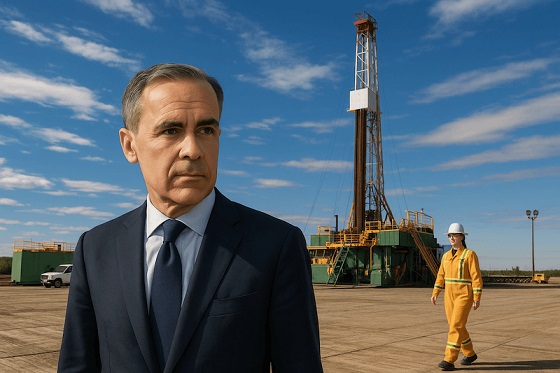
Canada’s sudden rediscovery of energy ambition has been greeted with a familiar charge: hypocrisy
-
 Alberta1 day ago
Schools should go back to basics to mitigate effects of AI
-
 Daily Caller1 day ago
Chinese Billionaire Tried To Build US-Born Baby Empire As Overseas Elites Turn To American Surrogates
-
 Daily Caller1 day ago
Two states designate Muslim group as terrorist