
Uncategorized
Top of mind: ‘Justice’ is Merriam-Webster’s word of the year


NEW YORK — Racial justice. Obstruction of justice. Social justice. The Justice Department. Merriam-Webster has chosen “justice” as its 2018 word of the year, driven by the churning news cycle over months and months.

The word follows “toxic,” picked by Oxford Dictionaries, and “misinformation,” plucked by Dictonary.com.
Peter Sokolowski, Merriam-Webster’s editor at large, told The Associated Press ahead of Monday’s announcement that “justice” consistently bubbled into the top 20 or 30 lookups on the company’s
While it’s one of those common words people likely know how to spell and use correctly in a sentence, Sokolowski pointed to other reasons that drive search traffic. Among them is an attempt to focus a train of thought around a philosophical problem, or to seek aspirational motivation. Such well-known words are often among the most looked up every year, including those that are slightly abstract, including “love,” he said.
The designation for “justice” came soon after President Trump’s one-time fixer, Michael Cohen, was sentenced to three years in prison for crimes that included arranging the payment of hush money to conceal his boss’ alleged sexual affairs. He told a judge he agreed time and again to cover up Trump’s “dirty deeds” out of “blind loyalty.”
It also came ahead of a Senate vote on the “First Step Act,” a criminal justice reform bill with broad bipartisan support. Earlier in the year, Kim Kardashian West not once but twice paid a White House visit on Trump to discuss prison and sentencing reform. Sentencing for drug crimes, treatment for opioid addiction, a loosening of cannabis laws, a Tesla probe, the Mueller investigation into the Trump campaign: Justice will remain top of mind into the new year.
“These are stories that connect to the culture and to society across races, across classes,” Sokolowski said. “We get this word that filters in.”
That includes Twitter in a big way.
Often, when Trump tweets about the Department of Justice, he uses simply “Justice.” On Aug. 1, when he tweeted his wish for then-Attorney General Jeff Sessions to stop the Mueller investigation, searches spiked significantly. Trump referred to “obstruction of justice,” a separate entry on the Merriam-Webster site, prompting a lookup increase of 900
Searches for “justice” throughout the year, when compared to 2017, were up 74
“We are not editorializing. We looked at our data and we were ourselves surprised by this word,” Sokolowski said. “This is a word that people have been thinking about for this entire year.”
The word “justice” comes from Latin, unlike a lot of the more emotional words that rose in Old English. Old English did have “law,” ”fair” and “right,” but never “justice,” in reference to a system of laws.
“It’s not a coincidence that it comes from the 12th century, which immediately follows the Norman conquest. When the Normans invaded England they brought their language, Old French, which was basically the then-modern version of Latin. They brought their system of government and laws and imposed them on the people they conquered, and that’s why all of the legal language in English today is Latin, just like the word justice,” Sokolowski explained. “It took the imposition of a system of laws to bring us the word justice.”
One rule breaker: “witness,” a word with a purely Old English start.
Other words that experienced lookup spikes this year: “maverick” (Sen. John McCain died); “respect” (Aretha Franklin died); “excelsior” (Stan Lee’s signature battle cry. He died); “pissant” (A radio host described Tom Brady’s daughter that way); “pansexual” (Janelle Monae described herself that way); “laurel” (Remember laurel vs. yanny?); “feckless” (What Samantha Bee called Ivanka Trump, combined with a pejorative that begins with “c”); “epiphany” (The title of a BTS K-pop song that dropped this year); “lodestar” (used in reference to McCain in the anonymous New York Times op-ed identified as coming from inside the Trump administration); and “nationalism” (At an Oct. 22 rally in Texas, Trump declared himself a nationalist).
Leanne Italie, The Associated Press

Uncategorized
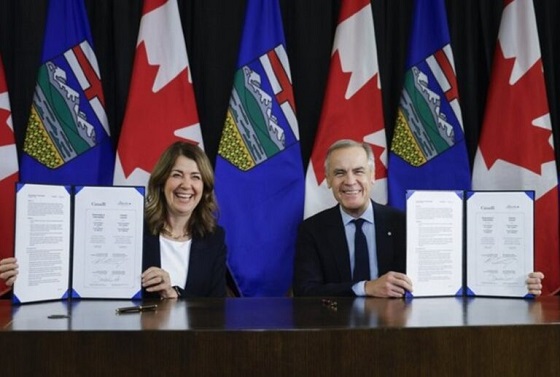
Mortgaging Canada’s energy future — the hidden costs of the Carney-Smith pipeline deal


Much of the commentary on the Carney-Smith pipeline Memorandum of Understanding (MOU) has focused on the question of whether or not the proposed pipeline will ever get built.
That’s an important topic, and one that deserves to be examined — whether, as John Robson, of the indispensable Climate Discussion Nexus, predicted, “opposition from the government of British Columbia and aboriginal groups, and the skittishness of the oil industry about investing in a major project in Canada, will kill [the pipeline] dead.”
But I’m going to ask a different question: Would it even be worth building this pipeline on the terms Ottawa is forcing on Alberta? If you squint, the MOU might look like a victory on paper. Ottawa suspends the oil and gas emissions cap, proposes an exemption from the West Coast tanker ban, and lays the groundwork for the construction of one (though only one) million barrels per day pipeline to tidewater.
But in return, Alberta must agree to jack its industrial carbon tax up from $95 to $130 per tonne at a minimum, while committing to tens of billions in carbon capture, utilization, and storage (CCUS) spending, including the $16.5 billion Pathways Alliance megaproject.
Here’s the part none of the project’s boosters seem to want to mention: those concessions will make the production of Canadian hydrocarbon energy significantly more expensive.
As economist Jack Mintz has explained, the industrial carbon tax hike alone adds more than $5 USD per barrel of Canadian crude to marginal production costs — the costs that matter when companies decide whether to invest in new production. Layer on the CCUS requirements and you get another $1.20–$3 per barrel for mining projects and $3.60–$4.80 for steam-assisted operations.
While roughly 62% of the capital cost of carbon capture is to be covered by taxpayers — another problem with the agreement, I might add — the remainder is covered by the industry, and thus, eventually, consumers.
Total damage: somewhere between $6.40 and $10 US per barrel. Perhaps more.
“Ultimately,” the Fraser Institute explains, “this will widen the competitiveness gap between Alberta and many other jurisdictions, such as the United States,” that don’t hamstring their energy producers in this way. Producers in Texas and Oklahoma, not to mention Saudi Arabia, Venezuela, or Russia, aren’t paying a dime in equivalent carbon taxes or mandatory CCUS bills. They’re not so masochistic.
American refiners won’t pay a “low-carbon premium” for Canadian crude. They’ll just buy cheaper oil or ramp up their own production.
In short, a shiny new pipe is worthless if the extra cost makes barrels of our oil so expensive that no one will want them.
And that doesn’t even touch on the problem for the domestic market, where the higher production cost will be passed onto Canadian consumers in the form of higher gas and diesel prices, home heating costs, and an elevated cost of everyday goods, like groceries.
Either way, Canadians lose.
So, concludes Mintz, “The big problem for a new oil pipeline isn’t getting BC or First Nation acceptance. Rather, it’s smothering the industry’s competitiveness by layering on carbon pricing and decarbonization costs that most competing countries don’t charge.” Meanwhile, lurking underneath this whole discussion is the MOU’s ultimate Achilles’ heel: net-zero.
The MOU proudly declares that “Canada and Alberta remain committed to achieving Net-Zero greenhouse gas emissions by 2050.” As Vaclav Smil documented in a recent study of Net-Zero, global fossil-fuel use has risen 55% since the 1997 Kyoto agreement, despite trillions spent on subsidies and regulations. Fossil fuels still supply 82% of the world’s energy.
With these numbers in mind, the idea that Canada can unilaterally decarbonize its largest export industry in 25 years is delusional.
This deal doesn’t secure Canada’s energy future. It mortgages it. We are trading market access for self-inflicted costs that will shrink production, scare off capital, and cut into the profitability of any potential pipeline. Affordable energy, good jobs, and national prosperity shouldn’t require surrendering to net-zero fantasy.If Ottawa were serious about making Canada an energy superpower, it would scrap the anti-resource laws outright, kill the carbon taxes, and let our world-class oil and gas compete on merit. Instead, we’ve been handed a backroom MOU which, for the cost of one pipeline — if that! — guarantees higher costs today and smothers the industry that is the backbone of the Canadian economy.
This MOU isn’t salvation. It’s a prescription for Canadian decline.

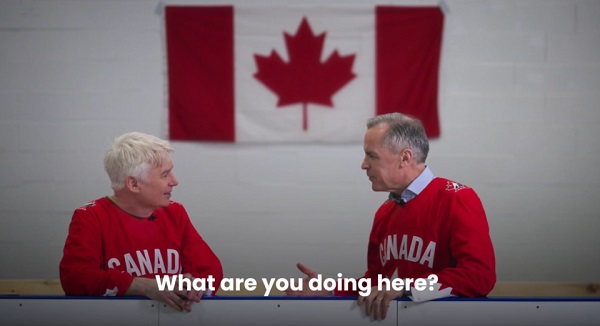

The cost of the bureaucracy increased by $6 billion last year, according to newly released numbers in Public Accounts disclosures. The Canadian Taxpayers Federation is calling on Prime Minister Mark Carney to immediately shrink the bureaucracy.
“The Public Accounts show the cost of the federal bureaucracy is out of control,” said Franco Terrazzano, CTF Federal Director. “Tinkering around the edges won’t cut it, Carney needs to take urgent action to shrink the bloated federal bureaucracy.”
The federal bureaucracy cost taxpayers $71.4 billion in 2024-25, according to the Public Accounts. The cost of the federal bureaucracy increased by $6 billion, or more than nine per cent, over the last year.
The federal bureaucracy cost taxpayers $39.6 billion in 2015-16, according to the Public Accounts. That means the cost of the federal bureaucracy increased 80 per cent over the last 10 years. The government added 99,000 extra bureaucrats between 2015-16 and 2024-25.
Half of Canadians say federal services have gotten worse since 2016, despite the massive increase in the federal bureaucracy, according to a Leger poll.
Not only has the size of the bureaucracy increased, the cost of consultants, contractors and outsourcing has increased as well. The government spent $23.1 billion on “professional and special services” last year, according to the Public Accounts. That’s an 11 per cent increase over the previous year. The government’s spending on professional and special services more than doubled since 2015-16.
“Taxpayers should not be paying way more for in-house government bureaucrats and way more for outside help,” Terrazzano said. “Mere promises to find minor savings in the federal bureaucracy won’t fix Canada’s finances.
“Taxpayers need Carney to take urgent action and significantly cut the number of bureaucrats now.”
Table: Cost of bureaucracy and professional and special services, Public Accounts
| Year | Bureaucracy | Professional and special services |
|
$71,369,677,000 |
$23,145,218,000 |
|
|
$65,326,643,000 |
$20,771,477,000 |
|
|
$56,467,851,000 |
$18,591,373,000 |
|
|
$60,676,243,000 |
$17,511,078,000 |
|
|
$52,984,272,000 |
$14,720,455,000 |
|
|
$46,349,166,000 |
$13,334,341,000 |
|
|
$46,131,628,000 |
$12,940,395,000 |
|
|
$45,262,821,000 |
$12,950,619,000 |
|
|
$38,909,594,000 |
$11,910,257,000 |
|
|
$39,616,656,000 |
$11,082,974,000 |


Alberta’s new diagnostic policy appears to meet standard for Canada Health Act compliance

Brown University shooter dead of apparent self-inflicted gunshot wound

RFK Jr reversing Biden-era policies on gender transition care for minors
Geopolitics no longer drives oil prices the way it used to
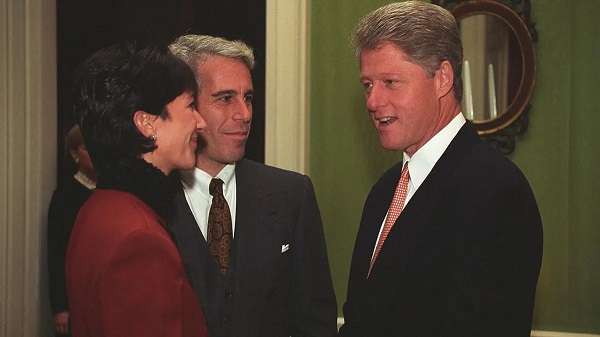
‘Almost Sounds Made Up’: Jeffrey Epstein Was Bill Clinton Plus-One At Moroccan King’s Wedding, Per Report
Ex-FDA Commissioners Against Higher Vaccine Standards Took $6 Million From COVID Vaccine Makers

Canadian university censors free speech advocate who spoke out against Indigenous ‘mass grave’ hoax
-
 Business2 days ago
Some Of The Wackiest Things Featured In Rand Paul’s New Report Alleging $1,639,135,969,608 In Gov’t Waste
-
 Energy2 days ago
‘The electric story is over’
-
Alberta2 days ago
Ottawa-Alberta agreement may produce oligopoly in the oilsands
-
 International1 day ago
$2.6 million raised for man who wrestled shotgun from Bondi Beach terrorist
-
 Energy1 day ago
Western Canada’s supply chain for Santa Claus
-
 Energy1 day ago
The Top News Stories That Shaped Canadian Energy in 2025 and Will Continue to Shape Canadian Energy in 2026
-
 armed forces13 hours ago
Remembering Afghanistan and the sacrifices of our military families
-
 Fraser Institute13 hours ago
How to talk about housing at the holiday dinner table