
Business
Too nice to fight, Canada’s vulnerability in the age of authoritarian coercion




By Stephen Nagy for Inside Policy

Beijing understands what many Canadians still resist: that our greatest national virtues, including our desire to be an “honest broker” on the world stage, have become our most exploitable weaknesses.
On December 1, 2018, RCMP officers arrested Huawei CFO Meng Wanzhou at Vancouver International Airport. As Canadians know well, within days, China seized two Canadians, Michael Kovrig and Michael Spavor, on fabricated espionage charges. For 1,019 days, they endured arbitrary detention while Canada faced an impossible choice of abandoning the rule-of-law or watching its citizens suffer in Chinese prisons.
This was hostage diplomacy. But more insidiously, it was also the opening move in a broader campaign against Canada, guided by the ancient Chinese proverb “借刀杀人” (Jiè dāo shā rén), or “Kill with a borrowed knife.” Beijing’s strategy, like the proverb, exploits others to do its bidding while remaining at arm’s length. In this case, it seeks to exploit Canadian vulnerabilities such as our resource-dependent economy, our multicultural identity, our loosely governed Arctic territories, and our naïve belief that we can balance relationships with all major powers – even when those powers are in direct conflict with one another.
With its “borrowed knife” campaign, Beijing understands what many Canadians still resist: that our greatest national virtues, including our desire to be an “honest broker” on the world stage, have become our most exploitable weaknesses.
The Weaponization of Canadian Niceness
Canadian foreign policy rests on the Pearsonian tradition. It is the belief that our lack of imperial history and (now irrelevant) middle-power status uniquely positions us as neutral mediators. We pride ourselves on sending peacekeepers, not warfighters. We build bridges through dialogue and compromise.
Beijing exploited this subjective, imagined identity. When Canada arrested Meng pursuant to our extradition treaty with the United States, Chinese state media framed it as Canada “choosing sides” and betraying its honest broker role. This narrative trapped Canadian political culture. Our mythology says we transcend conflicts through enlightened multilateralism. But the modern world increasingly demands choosing sides.
When former Prime Minister Jean Chrétien and former Ambassador John McCallum advocated releasing Meng to free the “Two Michaels,” they weren’t acting as Chinese agents. They were expressing a genuinely Canadian impulse that conflict resolves through compromise. Yet this “Canadian solution” was precisely what Beijing sought, abandoning legal principles under pressure.
China’s economic coercion has followed a similar logic. When Beijing blocked Canadian canola, pork, and beef exports – targeting worth $2.7 billion worth of Prairie agricultural products – the timing was transparently political. However, China maintained the fiction of “quality concerns,” making it extremely difficult for Canada to challenge the restrictions via the World Trade Organization. At the same time, Prairie farmers pressured Ottawa to accommodate Beijing.
The borrowed knife was Canadian democratic debate itself, turned against Canadian interests. Beijing didn’t need to directly change policy, it mobilized Canadian farmers, business lobbies, and opposition politicians to do it instead.
The Arctic: Where Mythology Meets Reality
No dimension better illustrates China’s strategy than the Arctic. Canada claims sovereignty over vast northern territories while fielding six icebreakers to Russia’s forty. We conduct summer sovereignty operations that leave territories ungoverned for nine months annually. Chinese state-owned enterprises invest in Arctic mining, Chinese research vessels map Canadian waters, and Beijing now calls itself a “near-Arctic state,” a term appearing nowhere in international law.
This campaign weaponizes the gap between Canadian mythology and capacity. When China proposes infrastructure investment, our reflex is “economic opportunity.” When Chinese researchers request Arctic access, our instinct is accommodation because we’re co-operative multilateralists. Each accommodation establishes precedent, each precedent normalizes Chinese presence, and each normalized presence constrains future Canadian options.
Climate change accelerates these dynamics. As ice melts, the Northwest Passage becomes navigable. Canada insists these are internal waters. China maintains they’re international straits allowing passage. The scenario exposes Canada’s dilemma perfectly. Does Ottawa escalate against our second-largest trading partner over waters we cannot patrol, or accept Chinese transits as fait accompli? Either choice represents failure.
The Diaspora Dilemma
Canada’s multiculturalism represents perhaps our deepest national pride. The Chinese Communist Party has systematically weaponized this openness through United Front Work Department operations, an ostensibly independent community organization that provides genuine services while advancing Beijing’s agenda including: monitoring dissidents, mobilizing Chinese-Canadians for CCP-approved candidates, organizing counter-protests against Tibetan and Uyghur activists, and creating environments where criticism of Beijing risks community ostracism and threats to relatives in China.
The establishment of illegal Chinese police stations in Toronto and Vancouver represents this operation’s logical endpoint. These “overseas service centres” conducted intimidation operations, pressured targets to return to China, and maintained surveillance on diaspora communities.
Canada’s response illuminates our vulnerability. When investigations exposed how Chinese organized crime groups, operating with apparent CCP protection, laundered billions through Vancouver real estate while financing fentanyl trafficking, initial reactions accused investigators of anti-Chinese bias. When CSIS warned that MPs might be compromised, debate focused on whether the warning represented racial profiling rather than whether compromise occurred.
Beijing engineered this trap brilliantly. Legitimate criticism of CCP operations becomes conflated with anti-Chinese racism. Our commitment to multiculturalism gets inverted into paralysis when a foreign government exploits ethnic networks for political warfare. The borrowed knife is Canadian anti-racism, wielded against Canadian sovereignty and this leaves nearly two million Chinese-Canadians under a cloud of suspicion while actual operations continue with limited interference.

What Resistance Requires
Resisting comprehensive pressure demands abandoning comfortable myths and making hard choices.
First, recognize that 21st-century middle-power independence is increasingly fictional. The global order is re-polarizing. Canada cannot maintain equidistant relationships with Washington and Beijing during strategic competition. We can trade with China, but not pretend shared rhetoric outweighs fundamental disagreements about sovereignty and human rights. The Pearsonian honest-broker role is obsolete when major powers want you to choose sides.
Second, invest in sovereignty capacity, not just claims. Sovereignty is exercised or forfeited. This requires sustained investment in military forces, intelligence services, law enforcement, and Arctic infrastructure. It means higher defence spending, more robust counterintelligence, and stricter foreign investment screening, traditionally un-Canadian approaches, which is precisely why we need them.
Third, build coalitions with countries facing similar pressures. Australia, Japan, South Korea, Lithuania, and others have faced comparable campaigns. When China simultaneously blocks Canadian canola, Australian wine, and Lithuanian dairy, that’s not separate trade disputes but a pattern requiring coordinated democratic response. The borrowed knife only works when we’re isolated.
Fourth, Ottawa must do much more to protect diaspora communities while confronting foreign operations. Effective policy must shut down United Front operations and illegal police stations while ensuring actions don’t stigmatize communities. Success requires clear communication that we’re targeting a foreign government’s operations, not an ethnic community.
Finally, we must accept the necessity of selective economic diversification. Critical infrastructure, sensitive technologies, and strategic resources cannot be integrated with an authoritarian state weaponizing interdependence. This means higher costs and reduced export opportunities – but maximum efficiency sometimes conflicts with strategic resilience. Canada can achieve this objective with a synergistic relationship with the US and other allies and partners that understand the tangential link between economic security and national security.
Conclusion
Canada’s myths, that we transcend conflicts, that multiculturalism creates only strength, that resource wealth brings pure prosperity and positivity, coupled with our deep vein of light-but-arrogant anti-Americanism, have become exploitable weaknesses. Beijing systematically tested each myth and used the gap between self-conception and reality as leverage.
The borrowed knife strategy works because we keep handing over the knife. Our openness becomes the vector for interference. Our trade dependence becomes the lever for coercion. Our niceness prevents us from recognizing we’re under attack.
Resistance doesn’t require abandoning Canadian values. It requires understanding that defending them demands costs we’ve historically refused to pay. The Chinese “Middle Kingdom” that tells the world it has had 5,000 years of peaceful history has entered a world that doesn’t reward peaceability, it exploits it. The question is whether we’ll recognize the borrowed knife for what it is and put it down before we bleed out from self-inflicted wounds.
Stephen R. Nagy is a professor of politics and international studies at the International Christian University in Tokyo and a senior fellow and China Project lead at the Macdonald-Laurier Institute (MLI). The title for his forthcoming monograph is “Japan as a Middle Power State: Navigating Ideological and Systemic Divides.”


The Canadian Taxpayers Federation is calling on the federal, Ontario and municipal governments to publicly reject subsidizing a new arena for the Ottawa Senators.
“Politicians need to stand up for taxpayers and tell the Ottawa Senators’ lobbyists NO,” said Noah Jarvis, CTF Ontario Director. “Prime Minister Mark Carney, Ontario Premier Doug Ford and Ottawa Mayor Mark Sutcliffe all need to publicly reject giving taxpayers’ money to the owners of the Ottawa Senators.”
The Ottawa Citizen recently reported that “the Ottawa Senators have a team off the ice lobbying federal and provincial governments for funds to help pay the hefty price tag for a new arena.”
The Ottawa Senators said they don’t intend on asking the city of Ottawa for taxpayer dollars. However, the Ottawa Citizen reported that “it’s believed Senators’ owner Michael Andlauer would like a similar structure to the [Calgary] arena deal.” The Calgary arena deal included municipal subsidies.
As of December 2024, the Ottawa Senators were worth just under $1.2 billion, according to Forbes.
Meanwhile, both the federal and Ontario governments are deep in debt. The federal debt will reach $1.35 trillion by the end of the year. The Ontario government is $459 billion in debt. The city of Ottawa is proposing a 3.75 per cent property tax increase in 2026.
“Governments are up to their eyeballs in debt and taxpayers shouldn’t be forced to fund a brand-new fancy arena for a professional sports team,” said Franco Terrazzano, CTF Federal Director. “If the owners of the Ottawa Senators want to build a fancy new arena, then they should be forced to fund it with ticket sales not tax hikes.”

From the Fraser Institute
By Jake Fuss and Grady Munro
The number of Canadians donating to charity—as a percentage of all tax filers—is at the lowest point in 20 years, finds a new study published by the
Fraser Institute, an independent, non-partisan Canadian public policy think-tank.
“The holiday season is a time to reflect on charitable giving, and the data shows Canadians are consistently less charitable every year, which means charities face greater challenges to secure resources to help those in need,” said Jake Fuss, director of Fiscal Studies at the Fraser Institute and co-author of Generosity in Canada: The 2025 Generosity Index.
The study finds that the percentage of Canadian tax filers donating to charity during the 2023 tax year—just 16.8 per cent—is the lowest proportion of Canadians donating since at least 2003. Canadians’ generosity peaked at 25.4 per cent of tax-filers donating in 2004, before declining in subsequent years.
Nationally, the total amount donated to charity by Canadian tax filers has also fallen from 0.55 per cent of income in 2013 to 0.52 per cent of income in 2023.
The study finds that Manitoba had the highest percentage of tax filers that donated to charity among the provinces (18.7 per cent) during the 2023 tax year while New Brunswick had the lowest (14.4 per cent).
Likewise, Manitoba also donated the highest percentage of its aggregate income to charity among the provinces (0.71 per cent) while Quebec and Newfoundland and Labrador donated the lowest (both 0.27 per cent).
“A smaller proportion of Canadians are donating to registered charities than what we saw in previous decades, and those who are donating are donating less,” said Fuss.
“This decline in generosity in Canada undoubtedly limits the ability of Canadian charities to improve the quality of life in their communities and beyond,” said Grady Munro, policy analyst and co-author.
Generosity of Canadian provinces and territories
Ranking (2025) % of tax filers who claiming donations Average of all charitable donations % of aggregate income donated
Manitoba 18.7 $2,855 0.71
Ontario 17.2 $2,816 0.58
Quebec 17.1 $1,194 0.27
Alberta 17.0 $3,622 0.68
Prince Edward Island 16.6 $1,936 0.45
Saskatchewan 16.4 $2,597 0.52
British Columbia 15.9 $3,299 0.61
Nova Scotia 15.3 $1,893 0.40
Newfoundland and Labrador 15.0 $1,333 0.27
New Brunswick 14.4 $2,076 0.44
Yukon 14.1 $2,180 0.27
Northwest Territories 10.2 $2,540 0.20
Nunavut 5.1 $2,884 0.15
NOTE: Table based on 2023 tax year, the most recent year of comparable data in Canada
Generosity in Canada: The 2025 Generosity Index
- Manitoba had the highest percentage of tax filers that donated to charity among the provinces (18.7%) during the 2023 tax year while New Brunswick had the lowest (14.4%).
- Manitoba also donated the highest percentage of its aggregate income to charity among the provinces (0.71%) while Quebec and Newfoundland and Labrador donated the lowest (both 0.27%).
- Nationally, the percentage of Canadian tax filers donating to charity has fallen over the last decade from 21.9% in 2013 to 16.8% in 2023.
- The percentage of aggregate income donated to charity by Canadian tax filers has also decreased from 0.55% in 2013 to 0.52% in 2023.
- This decline in generosity in Canada undoubtedly limits the ability of Canadian charities to improve the quality of life in their communities and beyond.

Jake Fuss
Director, Fiscal Studies, Fraser Institute

Grady Munro
Policy Analyst, Fraser Institute


The Trickster Politics of the Tanker Ban are Hiding a Much Bigger Reckoning for B.C.
While Trump has southern border secure, hundreds of thousands of illegal immigrants still flooding in from Canada
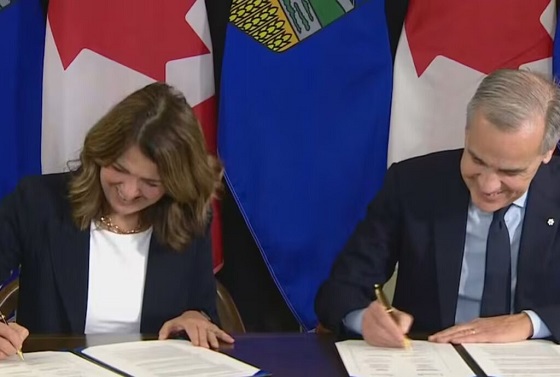
What the Data Shows About the New Canada-Alberta Pipeline Opportunity

Can the COVID Scamsters Stick the Landing?
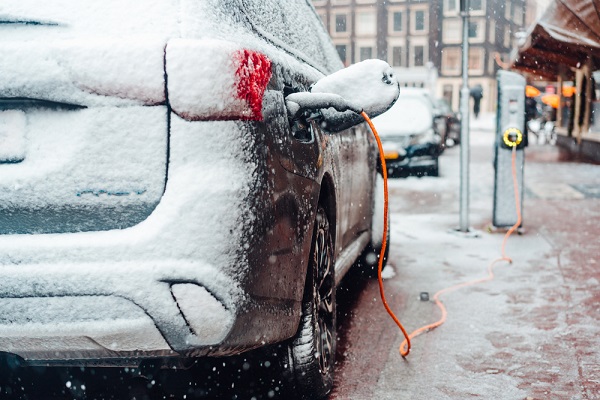
Canada’s EV Mandate Is Running On Empty
Why Does Canada “Lead” the World in Funding Racist Indoctrination?
Premier Smith: Canadians support agreement between Alberta and Ottawa and the major economic opportunities it could unlock for the benefit of all
-
 Automotive2 days ago
The $50 Billion Question: EVs Never Delivered What Ottawa Promised
-
 Agriculture1 day ago
Growing Alberta’s fresh food future
-
 Business2 days ago
Storm clouds of uncertainty as BC courts deal another blow to industry and investment
-
 C2C Journal1 day ago
Wisdom of Our Elders: The Contempt for Memory in Canadian Indigenous Policy
-
 Alberta1 day ago
Alberta introducing three “all-season resort areas” to provide more summer activities in Alberta’s mountain parks
-
 Censorship Industrial Complex1 day ago
Conservative MP calls on religious leaders to oppose Liberal plan to criminalize quoting Scripture
-
 International9 hours ago
100 Catholic schoolchildren rescued, Nigeria promises release of remaining hostages
-
Business11 hours ago
Albertans give most on average but Canadian generosity hits lowest point in 20 years