
National
This Changes Nothing – Conservative Leader Pierre Poilievre

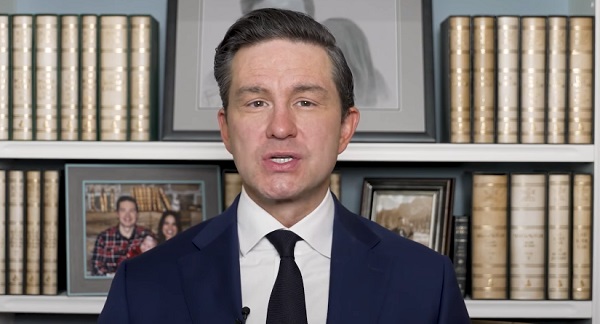

From Conservative Party Communications
The Hon. Pierre Poilievre, Leader of the Conservative Party of Canada and the Official Opposition, released the following statement on Justin Trudeau resigning as the Liberal Leader:

“Canadians desperate to turn the page on this dark chapter in our history might be relieved today that Justin Trudeau is finally leaving.
“But what has really changed?
“Every Liberal MP in power today and every potential Liberal leadership contender fighting for the top job helped Justin Trudeau break the country over the last 9 years. All Liberal politicians actively worked to pass into law the job-killing, inflationary carbon tax—a tax that Carbon Tax Carney endorsed in his book. All supported a law quadrupling the tax over the next 5 years. All voted for or actively supported Trudeau’s out-of-control spending, debt and immigration. All passed Trudeau’s housing policies that doubled the cost of homes. All Liberal politicians helped pass catch-and-release bail and house arrest for the most rampant reoffenders, policies that increased violent crime 50%, gun crime 116% and hate crime by 250%.
“So, given that Liberal MPs and leadership contenders unanimously supported everything Trudeau has done, why dump him now, right before an election?
“Have they had a change of heart?
“Is it because they feel guilty that they doubled housing costs, hiked taxes, unleashed crime, broke immigration, forced a quarter of the population into poverty? No. They continued supporting Trudeau when he did all those things.
“No. Their only objection is that he is no longer popular enough to win an election and keep them in power. They want to protect their pensions and paycheques by sweeping their hated leader under the rug months before an election to trick you, and then do it all over again.
“Now, while leaderless Liberals focus on saving their jobs and fighting each other for power—the country spirals out of control—an out-of-control housing emergency, an out-of-control migrant crisis, an out-of-control $62 billion deficit, not to mention tariff threats from the United States, oh, and another NDP-Liberal carbon tax hike kicks in this April 1st … everything is out of control… and now, the government is out-of-control.
“The Liberals know how wrong this all is, that’s exactly why they shut down Parliament and paralyze government, all to save their own skins.
“This cannot go on. We need a carbon tax election now, to choose between:
- The NDP-Liberal costly coalition that taxes your food, punishes your work, doubles your housing costs and unleashes crime and drugs in your community.
OR
- Common Sense Conservatives who will axe the tax, build the homes, fix the budget and stop the crime.
“Canadians can take back control of their lives and their country. Take back control of our border, take back control of immigration, take back control of spending, deficits and inflation. Take back control of our streets by locking up criminals, banning drugs, treating addiction and stopping gun smugglers. We’ll cap spending, axe taxes, reward work, build homes, uphold family, stop crime, secure borders, rearm our forces, restore our freedom and put Canada First.
“All with one mission: to bring home Canada’s promise that every hardworking Canadian gets a powerful paycheque and pension that buys affordable food and homes on safe streets; where all are united for the country we know and love: Canada first, Canada last, Canada always.
“Let’s bring it home.”

Indigenous
Residential school burials controversy continues to fuel wave of church arsons, new data suggests


By Edgardo Sepulveda for Inside Policy
Church arsons surged again in 2024 according to new data released by Statistics Canada—continuing a disturbing trend first uncovered by a Macdonald-Laurier Institute investigation published last year.
Scorched Earth: A quantitative analysis of arson at Canadian religious institutions and its threat to reconciliation, which I published last April, warned that the arson wave – almost certainly spurred by ongoing anger over potential unmarked burials of children at residential schools –would not disappear without concerted government policy intervention.
Unfortunately, my prediction is proving accurate.
Newly available custom data from Statistics Canada confirms that arsons in 2024 continued at nearly double the baseline level established from 2011–17.
This persistent elevation is particularly concerning given that arson is a dangerous crime with significant financial costs and, in the case of religious institutions, broader implications for Canadian society and political discourse. Most importantly for those committed to Indigenous reconciliation, the apparent lack of effective policy response risks undermining public support for reconciliation efforts—suggesting these crimes are not being treated with the seriousness they deserve, particularly because many targets are Catholic churches associated with residential school legacies.
Scorched Earth developed specific terms and a conceptual framework to analyze arsons at religious institutions. First, I refer to “potential unmarked burials” rather than other terminology, including “mass graves” – language suggesting verified remains and, potentially, the site of clandestine burials. Neither has been established. No remains have been verified at any of the 21 announced sites. The Tk’emlúps te Secwépemc First Nation revised its own characterization of the Kamloops, BC, announcements in May 2024 to “probable unmarked burial sites,” a significant shift from its initial May 2021 announcement of “remains of 215 children.” This precipitated announcement, together with some of the initial media coverage in Canada and elsewhere, likely contributed to the intensity of the arson response.
Second, the conceptual framework, updated with the latest Statistics Canada data, separates “baseline” from “excess” arson associated with specific shocks, such as the announcements. It shows that arsons at religious institutions have remained elevated since the initial spike in 2021. Based on careful geographic statistical analysis presented in Scorched Earth, I demonstrated that the most likely explanation for elevated arsons was a criminal response prompted by the 17 announcements of potential unmarked burials at former residential schools, beginning in Kamloops, B.C., in May 2021. Four additional announcements occurred in 2024, bringing the total to 21. While data through 2023 showed no detectable increase in arsons related to the Israel-Gaza conflict, analysis of 2024 data suggests this changed: arsons in response to that conflict now constitute a minority of the increase above baseline levels, with the majority remaining those related to announcements of potential unmarked burials.
Investigation and Prosecution Rates Remain Insufficient for Effective Deterrence
Statistics Canada’s newly released custom clearance data for arson at religious institutions provides the first comprehensive official view of law enforcement effectiveness in these cases, superseding the preliminary compilation included in Scorched Earth.
Crimes in Canada are considered “solved” when police identify a suspect with sufficient evidence to support charges. Cases are then classified as “cleared” through two mechanisms: laying charges (“cleared by charge”) or alternative processes such as diversion programs (“cleared otherwise”).
As Figure 2 illustrates, the cleared-by-charge rate for all arson averaged 13.1 per cent over the 2011–24 period. For religious institutions, the yearly average reached 14.4 per cent—marginally higher but still concerning. The clearance rate for religious institutions shows significant year-over-year variability, reflecting the smaller statistical base compared to all arsons. The “cleared otherwise” category adds an average of 4.7 per cent for both arson types.
While these low clearance rates align with those for other property crimes, the continuing elevated arson rate suggests they provide insufficient deterrence for either first-time or serial arsonists. Evidence from Scorched Earth indicates that sustained clearance rates in the mid-30 per cent range—achieved by the National Church Arson Task Force (NCATF) in the United States during the 1990s—effectively reduced church arsons targeting predominantly Black congregations in the American South.
While my statistical analysis indicates that announcements of potential unmarked burials likely motivated many incidents, this remains circumstantial evidence. Direct evidence would require confessions or explicit statements of rationale from arrested arsonists, or credible claims of responsibility from organized groups. Out of the 306 arsons at religious institutions over the 2021-24 period, 53 resulted in charges and 13 were cleared through alternative processes, totaling 64 cleared incidents—an overall clearance rate of 21 per cent.
A clearance rate at this level, while insufficient for effective deterrence, makes it unlikely that most arsons during this period resulted from organized political, ideological, or anti-religious campaigns. A coordinated campaign would likely be visible to investigators even at this clearance level. Since police identify suspects in far more cases than they prosecute, investigators develop a broader perspective on potential culprits than clearance rates alone suggest. Law enforcement officials have not provided any indication of such organized campaigns.
Federal and Provincial Funding Addresses Searches But Ignores Consequences
Neither federal nor provincial governments have introduced policy initiatives addressing elevated arson rates at religious institutions, despite substantial new funding for related matters.
Following the Kamloops announcement, the federal government launched the Residential Schools Missing Children Community Support program, providing $246 million to hundreds of communities, including for research and field investigations. Separately, British Columbia, Alberta, Ontario, and other provinces have committed hundreds of millions in additional dollars, including programs to address mental health effects from the search process and announcements.
This funding inventory highlights a significant policy gap: substantial resources address the cause—announcements of potential unmarked burials—while none target the effect: arsons at religious institutions.
Even viewed narrowly as a crime issue, recent government responses to other property crimes demonstrate available policy tools. When auto theft peaked in 2023, the federal government announced $121 million in federal support, convened a national summit with all levels of government and law enforcement, and released a National Action Plan by May 2024.
Policy Gaps and a Call to Action
The NCATF, created in response to arsons targeting Black churches in the 1990s United States, achieved clearance rates sufficient to reduce incidents. Canada possesses the same policy tools but has not deployed them for residential school-related arsons.
This is not a matter of capacity or institutional precedent. Recent government responses to other serious property crimes, such as auto theft, demonstrate that Canada can mobilize coordinated federal-provincial action when it chooses to. The apparent policy inaction since 2021 for residential school-related arsons must end.
Canada is not powerless to stop the arsonists. The policy recommendations set out in Scorched Earth continue to be valid:
- Create a national or regional integrated police/fire investigations unit focused specifically on arson at religious institutions. This integrated unit would investigate arsons at all religious institutions—Christian, Muslim, Jewish, and others.
- Improve Indigenous police and fire protection services, including to ensure full Indigenous participation in the integrated unit.
- Complete the long-running project of building and maintaining a comprehensive and timely national and on-reserve database of fire statistics.
Law enforcement officials must thoroughly investigate and prosecute the arsonists. The attacks threaten reconciliation and full Indigenous equality—and they must be condemned by all Canadians.
Economist Edgardo Sepulveda has more than 30 years of experience advising clients in more than forty countries. He has written for Jacobin magazine, TVO Today, and the Alberta Federation of Labour, and has been lead author of three peer-reviewed academic articles in the last five years. He received his BA (Hon) from the University of British Columbia and his MA from Queen’s University, both in Economics. He established Sepulveda Consulting Inc. in 2006.
Health
Saskatchewan woman approved for euthanasia urged to seek medical help in Canada rather than US

From LifeSiteNews
Saskatchewan Premier Scott Moe encouraged Jolene Van Alstine, who has a rare disease, to work with his government on a solution.
Saskatchewan Premier Scott Moe is urging a woman with a rare disease, who has been approved to die by euthanasia because she can’t get proper care, to instead work with his government on a solution.
As reported by LifeSiteNews last week, Saskatchewan resident Jolene Van Alstine was approved to die by state-sanctioned euthanasia because she has had to endure long wait times for what she considers to be proper care for a rare parathyroid disease.
Van Alstine’s condition, normocalcemic primary hyperparathyroidism (nPHPT), causes her to experience vomiting, nausea, and bone pain.
As a result of Van Alstine’s frustrations with the healthcare system, she applied for Canada’s Medical Assistance in Dying (MAiD) and was approved for a January 7, 2026, death date.
Her case drew the attention of American media personality Glenn Beck, who has been in contact with Van Alstine to determine whether she can get the surgery done in the United States. Even the administration of U.S. President Donald Trump has been briefed on the matter.
According to Moe, Van Alstine has taken her case to Saskatchewan Health Minister Jeremy Cockrill, asking for help.
“There has been an opportunity to see specialists in Saskatchewan and outside of Saskatchewan, and those conversations about maybe potentially seeing additional specialists continue with the minister’s office and the Ministry of Health,” Moe said yesterday at a press conference.
“I would hope that she’d continue to work with the Ministry of Health, because I think there’s work going on to see even additional specialists at this point,”
A recent Euthanasia Prevention Coalition report revealed that Canada has euthanized 90,000 people since 2016, the year it was legalized.
Even some lobby groups have pushed for MAiD to be expanded to minors.
As reported by LifeSiteNews, over 23,000 Canadians have died while on wait lists for medical care as Prime Minister Mark Carney’s Liberal government focuses on euthanasia expansions.


The $50 Billion Question: EVs Never Delivered What Ottawa Promised
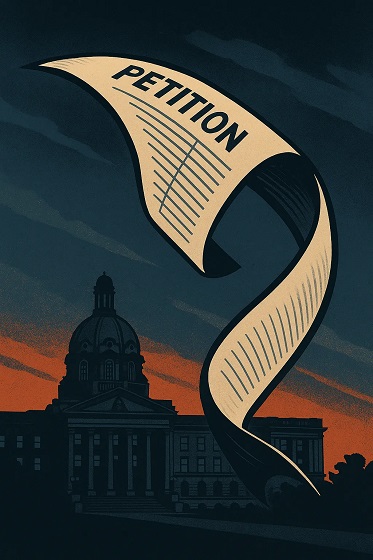
The Recall Trap: 21 Alberta MLA’s face recall petitions

Wisdom of Our Elders: The Contempt for Memory in Canadian Indigenous Policy

Taxpayers Federation calls on politicians to reject funding for new Ottawa Senators arena

Canada’s free speech record is cracking under pressure

Growing Alberta’s fresh food future

U.S. seizes Cuba-bound ship with illicit Iranian oil history
-
 Business2 days ago
Major tax changes in 2026: Report
-
 Daily Caller2 days ago
Chinese Billionaire Tried To Build US-Born Baby Empire As Overseas Elites Turn To American Surrogates
-
 Digital ID1 day ago
Canada releases new digital ID app for personal documents despite privacy concerns
-
 Daily Caller2 days ago
Two states designate Muslim group as terrorist
-
 International2 days ago
Russia Now Open To Ukraine Joining EU, Officials Briefed On Peace Deal Say
-
 Censorship Industrial Complex2 days ago
Death by a thousand clicks – government censorship of Canada’s internet
-
 Energy1 day ago
Canada’s sudden rediscovery of energy ambition has been greeted with a familiar charge: hypocrisy
-
 Alberta2 days ago
Schools should go back to basics to mitigate effects of AI