
espionage
The Scientists Who Came in From the Cold: Canada’s National Microbiology Laboratory Scandal, Part I


From the C2C Journal
By Peter Shawn Taylor

In a breathless 1999 article on the opening of Canada’s top-security National Microbiology Laboratory (NML) in Winnipeg, the Canadian Medical Association Journal described the facility as “the place where science fiction movies would be shot.” The writer was fascinated by the various containment devices and security measures designed to keep “the bad boys from the world of virology: Ebola, Marburg, Lassa” from escaping. But what if insiders could easily evade all those sci-fi features in order to help Canada’s enemies? In the first of a two-part series, Peter Shawn Taylor looks into the trove of newly-unclassified evidence regarding the role of NML scientists Xiangguo Qiu and Keding Cheng in aiding China’s expanding quest for the study – and potential military use – of those virus bad boys.
 No happy endings here: The Spy Who Came in From the Cold, spy novelist John Le Carré’s masterwork, depicts a gritty and amoral vision of modern espionage. Shown, a scene from the 1965 movie adaptation starring Richard Burton.
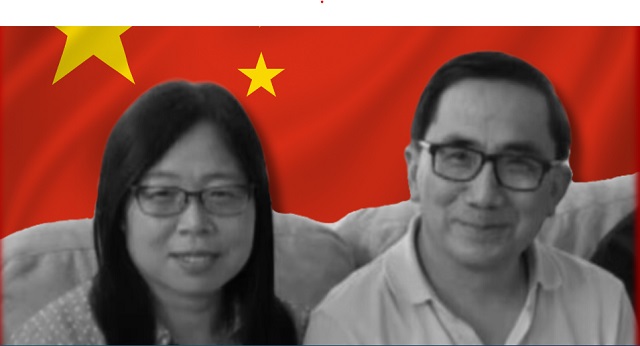
This trove of once-secret material concerns the case of Xiangguo Qiu, an internationally-recognized scientist at Winnipeg’s National Microbiology Laboratory (NML), Canada’s highest-security biohazard facility, and her husband and fellow NML biologist Keding Cheng. Made public only after an unprecedented political struggle, the documents suggest Qiu had been doing the bidding of organizations linked to China’s military, possibly since 2016.
Using her security clearance, position and knowledge, Qiu transferred valuable information and materials out of the country – serving China’s interests while undermining those of Canada. The now-public material further suggests Qiu and Cheng took care to cover their tracks. As suspicions were raised about their activities, both lied and dissembled. And when their subterfuge was finally and fully revealed – but before Canada could be bothered to arrest them – they quietly escaped to China. Today they’re apparently living comfortably under new names while working in their preferred occupations. Here at home, the RCMP says it’s still investigating.
Qiu and Cheng, in other words, appear to have pulled off every spy’s dream: to accomplish their mission and get home safely while authorities sputter and fume comically on the other side of the border. As a recruiting ad for would-be agents, their tale succeeds brilliantly. If there is an unhappy ending to be found, it’s in the impact all this will have on Canada’s reputation as a vigilant and reliable ally.
A Curious Incident at the Lab
The NML is Canada’s only Level 4 Biosafety Lab (BSL4) and hence the only location in the country where deadly viruses such as Ebola, Henipah and Marburg along with other dangerous biological materials can be stored and studied. When the CBC first broke the story in July 2019 that RCMP officers had escorted Qiu, Cheng and their foreign research students out of the building and cancelled their security clearances, the Public Health Agency of Canada (PHAC), which oversees the NML, dismissed it as merely an “administrative matter” involving a breach of internal policy by staff.
 Internationally-renowned virologist Xiangguo Qiu (top left) and her husband, biologist Keding Cheng (top right), both worked at Winnipeg’s National Microbiology Laboratory (NML) until they were escorted off the premises in July 2019 for what was initially described as an “administrative matter”. (Sources of photos: (top left) Public Policy Forum, licensed under CC BY-ND 2.0; (top right) Governor General’s Innovation Awards; (bottom) Trevor Brine/CBC)
At the time, Qiu was Head of Vaccines and Antivirals in the Zoonotic Diseases and Special Pathogens division of NML and internationally renowned for her work on Ebola. In 2018 she won a Governor General’s Innovation Award for co-developing a breakthrough treatment for the deadly virus. Cheng held a more junior position as a biologist at NML. Both were born in China and came to Canada to work in the 1990s; both are naturalized Canadian citizens.
A few weeks after Qiu and Cheng were removed from the NML, the Winnipeg Free Press reported on a mysterious March 2019 shipment of Ebola and Henipah virus samples from the NML to China. It had been organized by Qiu, and appeared to violate standard transfer protocols. In response, the PHAC again said there was nothing to be alarmed about. “The NML routinely shares samples of pathogens and toxins with laboratory partners in Canada and in other countries,” was the boilerplate response to all media inquiries. Further, the PHAC stated the virus shipment was “in response to a request” from an institute in China and that Qiu and Cheng’s “administrative investigation is not related to the shipment of virus samples to China.” There was, PHAC repeated, no connection between the two incidents.
Yet the possibility that Qiu and Cheng were involved in something other than an administrative matter piqued the interest of both media and opposition parties. Dogged investigative reporting turned up numerous problems inside the NML going back many years. The Winnipeg Free Press, for example, revealed significant security and safety concerns at the lab, including a petri dish containing tuberculosis culture that fell behind a work desk and lay undiscovered for a year; in 2009 a former NML researcher was caught at the U.S. border with 22 vials of biological material stolen from the lab – including some Ebola virus genes – hidden in a glove in his trunk.
As pressure mounted to explain what was really going on at the NML, in March 2021 the House of Commons’ Special Committee on the Canada-People’s Republic of China Relationship demanded evidence to support the contention that the case of Qiu and Cheng had no connection to national security matters. The Justin Trudeau government responded with a heavily-censored, 290-page collection of documents. Unhelpfully, whole pages were blacked out and many files were missing entirely. Of the legible material, most were media briefing notes and internal emails regarding the most mundane aspects of the 2019 virus shipment to China. (The declared value of 30 vials of some of the deadliest viruses in existence: $2.50 each.) Anything directly connected to Qiu and Cheng was redacted. The committee, comprised of an equal number of Liberal and opposition MPs, made a subsequent request, and when that didn’t work the House of Commons passed its own a motion demanding to see the full slate of uncensored documents.

Pressed hard to disclose the information, the federal Liberals dug in their heels, declaring it to be a matter of national security. In response, the House declared the government in contempt of Parliament. Iain Stewart, head of PHAC, was brought before the bar of Parliament and admonished for his refusal to release the requested documents, something that hadn’t happened to a federal civil servant in over a century. Stewart’s boss, Health Minister Patty Hadju, also refused to hand over any further documents, telling the Canada-China Committee “the information requested has both privacy and national security implications.” She also repeated the now-standard line that “there is no connection between the transfer of viruses…and the subsequent departure of these employees.”
Remarkably, even the Liberal-appointed Speaker of the House of Commons, Anthony Rota, took up the case, arguing that Parliament has an unfettered right to demand whatever it needs to do its job of holding the government to account. The Prime Minister’s Office in turn threatened to sue the Speaker in federal court, an unprecedented turn of events that prompted Rota to declare that the “Federal Court has no jurisdiction to restrict the House’s power to request documents.” What was shaping up to be a fascinating constitutional battle royale between the legislative and executive branches of government was rendered moot by the snap federal election of 2021.
After their re-election to another minority government, the Liberals had an apparent change of heart, perhaps due to legal advice that Rota’s position was unquestionable correct or, alternatively, a shift in personnel. Mark Holland, Hajdu’s replacement as health minister, agreed to make the documents available to an ad hoc committee consisting of one MP from each of the four main federal parties. Together with a panel of judges, the MPs were sworn to secrecy and allowed to examine the complete file in order to decide what documents were in the public’s interest to see and what should remain secret for national security reasons. The end result was a ground-breaking 623-page document released this past February.
 A look behind the curtain: Made public in February 2024, the 623-page collection of formerly-classified documents includes (from left to right) a third-party investigation into Qiu and Cheng, secret “Canadian Eyes Only” reports from the Canadian Security Intelligence Service (CSIS) and the pair’s own response to accusations made against them.
The package constitutes a remarkable collection of sensitive government files. It includes confidential internal investigations by the PHAC, secret “Canadian Eyes Only” reports by the Canadian Security and Intelligence Service (CSIS), Qiu and Cheng’s own responses to the accusations made against them, the official letters firing them and the government’s timeline of the entire saga. The level of disclosure is wide-ranging, although the names of most individuals are obscured. And while this cache of material still leaves many important questions unanswered, it provides a coherent – and deeply troubling – narrative for one of the most consequential breaches of Canada’s national security to have ever become public.
“Scientists need to do what scientists do”
John Williamson had a front-row seat to the entire Qiu-Cheng affair. As a member of the House of Commons’ Canada-China Committee prior to the 2021 election, the Conservative MP from New Brunswick was a participant in the raucous hearings and subsequent constitutional dust-up. “It was such a highly, highly unusual situation,” recalls Williamson in an interview. “For the RCMP to go into the lab and remove the scientists didn’t fit with initial government statements minimizing the situation. It had to be more than a personnel matter.”
As time passed and suspicions grew the government’s reasons for keeping the documents secret kept changing. “First it was privacy, then it was national security,” Williamson says. “The excuses were increasingly unconvincing.” The Canada-China Committee’s ultimate success in prying the documents out of a reluctant government’s hands is evidence, he says, that Parliament remains relevant despite the vast centralization of power in the Prime Minister’s Office.
 “For the RCMP to go into the lab and remove the scientists…it had to be more than a personnel matter,” says John Williamson, a Conservative MP from New Brunswick. Williamson was the only Conservative member on the ad hoc committee of four MPs given access to the entire file of classified documents ahead of their public release. (Source of photo: John Williamson)
This process revealed that Qiu and Cheng shared a surprisingly carefree attitude towards rules, an obvious problem given that they worked at Canada’s highest-level biosafety research lab. Cheng deliberately mislabelled sensitive biological material as “kitchen utensils” to circumvent necessary transportation precautions. He also improperly downloaded data onto removable storage devices and was involved in several curious incidents at the building’s front desk involving the comings and goings of his research students, most of whom had links to China.
In an interview with a third-party investigator hired by the PHAC, Qiu’s standard reply to any security concerns was that she was solely focused on research and considered excessive rule-following to be an impediment to her work. “Scientists need to do what scientists do,” was her common refrain. At other times she pointed a finger at the PHAC’s poor training practices. Cheng met bothersome security requirements with a similar shrug.
 “Scientists need to do what scientists do”: Initial investigations by the PHAC and CSIS revealed that Qiu and Cheng shared a surprisingly carefree attitude towards security rules, despite working in Canada’s only Level 4 Biosafety Laboratory. Shown, Qiu at work in her Winnipeg lab. (Source of photo: CBC)
Initially taking this evidence at face-value, Williamson recalls thinking it “looked to be a made-in-Canada problem concerning public servants not following the rules. Management seemed quite lax and there was no effective oversight.” An obvious problem, he thought, but not one with major national security implications.
Following the third-party investigation of Qiu and Cheng, CSIS weighed in with its own report on the two scientists dated April 9, 2020. This includes observations that Qiu was involved in joint research with officials from China’s Academy of Military Medical Sciences, the People’s Liberation Army’s (PLA) top medical research institution. As a matter of national security, CSIS makes specific note of the PLA’s plans for improving its chemical and biological warfare capabilities. Another item of concern was an NML researcher – identified as “Individual 2” in the documents – who attempted to remove ten vials of material from the NML lab. Individual 2 would later be revealed to be a senior technician from the Wuhan Institute of Virology (WIV) working in partnership with Qiu.
 The plot unfolds: The first CSIS investigation revealed that Qiu had conducted joint research with scientists at China’s Academy of Military Medical Sciences (shown). Despite this worrisome connection, CSIS was initially reluctant to categorize Qiu as a security risk. (Source of photo: N509FZ, licensed under CC BY-SA 4.0)
“As you dig deeper into the documents, you begin to realize mainland China military officials may have infiltrated the lab,” recalls Williamson. “Now it looks like we could have a clandestine espionage operation meant to remove information and Canadian lab officials are just missing it. Now we have a national security problem.”
Despite these initial warning signs, CSIS was initially reluctant to accuse Qiu of anything nefarious. While observing she had a flexible concept of loyalty towards Canada and seemed unconcerned about security procedures, the report states, “The Service does not have a reason to suggest that Ms. QIU would willingly cooperate with a foreign power knowing harm would come to Canada.” Here the matter nearly ended.
According to the federal timeline of events on April 13, 2020 – nearly a year-and-a-half after concerns were first raised about Qiu and Cheng – PHAC management was preparing to close the investigation. Reprimand letters for the pair were drafted. Sanctions against the pair were to include “disciplinary measures and training”, but they would keep their jobs and security clearances. A week later, however, this reprimand process was “paused due to new information related to external investigation.”
Complete Collapse of Canada’s National Security Interests
On April 20, 2020, CSIS reopened its files on Qiu and Cheng as a result of “newly discovered information”. Where this information came from is not revealed, and has likely been kept hidden by the ad hoc committee. It could be the result of continuing CSIS investigations, or it could have been provided by the intelligence service of an allied country. Regardless of its provenance, CSIS immediately lost confidence in Qiu’s loyalty to Canada due to her “close and clandestine relationships with a variety of entities of the People’s Republic of China.”
“When you get to the later CSIS documents, you begin to realize how huge the issue really is,” says Williamson. “Now not only do you have People’s Republic of China people in the labs, but Canadian citizens are working as agents for mainland China. At this point I realized I was looking at a complete collapse of Canada’s national security interests – this is why the government didn’t want to release the documents.”
 CSIS reopened its investigation into Qiu and Cheng after “newly discovered information” cast doubt on Qiu’s loyalty to Canada due to her “close and clandestine relationships with a variety of entities of the People’s Republic of China.”
The additional information comprises the meat of the unredacted material and contains many alarming subplots. The most damning is the existence of numerous applications filled out in the name of Qiu and Cheng for China’s notorious “talent” programs. In accordance with China’s ambitions to globally dominate certain technologies and scientific fields, talent programs offer generous rewards to Chinese researchers in western countries who can bring that knowledge home by whatever means. There are hundreds of talent programs throughout China operating at all levels of government, the most famous being the national Thousand Talents Program (TTP). According to FBI research, “talent programs usually involve undisclosed and illegal transfers of information, technology, or intellectual property.” They are, in other words, thinly-veiled espionage operations.
Applications for talent programs originate with Chinese institutions and are then offered to targeted individuals before being approved by the “foreign expert affairs bureau” of the requisite level of government. One TTP application made out in Qiu’s name offered to provide up to $1 million in research funding plus preferential health care and taxation benefits. Another offered her a salary of $15,000 per month for time spent in China, plus $30,000 per year while she was outside the country. This income would be in addition to her day job with the Government of Canada. Cheng was also named in applications for regional talent programs. To be clear, the documents do not conclusively prove Qiu or Cheng were participants in any talent programs, just that there were application forms filled out in their names by various Chinese institutions. And that both Qiu and Cheng knew about this.
 A talent for espionage: According to the FBI, China’s many “talent” programs usually involve “undisclosed and illegal transfers of information, technology, or intellectual property” from western countries to China.
What is crystal clear is that Qiu’s skills and position were very attractive to Chinese institutions making talent applications in her name. One particularly eager suitor was the WIV. This facility is now infamous for its proximity to the epicentre of the global outbreak of Covid-19 and its possible role as the source of the SARS CoV-2 virus. The WIV also has a long track record of collaboration with Chinese military researchers, as a 2023 report by the U.S. Office of the Director of National Intelligence explains. Back in 2018, however, the WIV had just become China’s first BSL4 lab (also referred to as P4) and needed someone with experience to help it develop protocols befitting its new status and to get some new research projects up and running.
According to documents summarized in a June 30, 2020 CSIS report, the WIV said it considered Qiu to be “the only highly experienced Chinese expert available internationally, who is still fighting on the front lines for a P4 laboratory.” Beyond Qiu’s much-needed experience and know-how, the WIV also wanted her help in gaining access to a supply of deadly viruses necessary for its future research plans. At the time, U.S. export restrictions denied China easy access to these materials and, according to the CSIS summary, Qiu’s participation with the WIV was considered “beneficial for…importing the P4 virus research resources from abroad.”
It was these comments, Williamson says, that brought his reading of the classified material to a full stop as the problems at the NML came into sharp focus. “Here was a Chinese institution stating plainly that Qiu was the only Chinese scientist available who could feed their ambitions. She was Beijing’s greatest asset in a Level 4 lab in any western nation.”
Qiu made five trips to China in 2017 and 2018. In October 2018 she visited Wuhan and made a side trip to the WIV to lead a workshop on biosafety for 30 staff scientists. This event was not recorded in the official itinerary she filed with her Canadian employer. The same month the WIV formally requested the transfer of 30 vials of Ebola and other deadly viruses from the NML, a transaction overseen by Qiu. Recall that both PHAC and former federal Health Minister Hajdu repeatedly declared this shipment to be unrelated to the “administrative matter” of Qiu and Cheng being escorted off the premises of NML. Given what we now know, that seems very unlikely.
Based on the document dump, it appears Qiu was aggressively recruited by the Wuhan lab, possibly with the encouragement of a TTP, to participate in several sensitive and potentially-controversial research projects. What is referred to as WIV Project 1 included developing “mouse-adapted and guinea pig-adapted Ebola viruses”. Key to this project was a selection of virus samples identical to those ultimately provided by the NML in March 2019 through Qiu’s efforts. Reinforcing the secretive nature of the relationship between Qiu and the WIV, the project’s plan states: “We are in the process of applying for the official permit to transfer BSL4 pathogens from Canada to China. To avoid confusing the leaders, it is better not to let National Microbiology Laboratory know about this project.” Qiu seems to have done as she was told. CSIS reports “PHAC was not aware of this project.”
 “The only highly experienced Chinese expert available”: CSIS uncovered documents revealing that Qiu was considered essential to the research ambitions of the Wuhan Institute of Virology (shown), an institution with close ties to the Chinese military and infamous for its proximity, and likely connection, to the initial outbreak of Covid-19. (Source of photo: AP Photo/Ng Han Guan)
The weight of evidence suggests Qiu was a vital link in China’s apparently successful strategy to enhance its biological research capabilities using information and materials taken from Canada’s highest security biohazard lab. And it appears this type of subterfuge was ongoing for a considerable period of time. Documentation for an award presented to Qiu in 2016 by China’s Academy of Military Medical Sciences and obtained by CSIS says Qiu “used Canada’s Level 4 Biosecurity Laboratory as a base to assist China to improve its capability to fight highly-pathogenic pathogens…and achieve brilliant results.”
A subsequent CSIS report delves deeper into the background of the many research students and other scientists associated with the Chinese regime that cultivated connections with Qiu and Cheng during their time at the NML. Among these characters is Shi Zhengli, the WIV deputy-director widely referred to as “bat-woman” for her focus on bat virus research at the WIV prior to the Covid-19 outbreak. Shi is identified as “Individual 1” in the CSIS files. Another frequent Qiu collaborator was Major-General Chen Wei, named China’s “top biowarfare expert” by a U.S. congressional investigation. CSIS similarly describes Chen – identified as “Major General, PLA/Top Virologist AMMS (Chief 2)” in the at-times easily-broken code of the documents – as “China’s chief biological weapons defense expert engaged in research related to biosafety, bio-defence and bio-terrorism.”
Another name that pops up frequently is Feihu Yan. He is described in academic papers as being associated with the Institute for Military Veterinary at China’s Academy of Military Medical Sciences, as well as Canada’s NML and the University of Manitoba. In the declassified CSIS documents, Feihu is referred to as “Restricted Visitor 4”, which means he had access to NML’s BSL4 lab under Qiu’s supervision. Qiu and Feihu appear as co-authors on ten research papers published in a variety of scientific journals from 2016 through 2021. Over the same period, Qiu and Chen co-authored two papers. All the research concerns deadly viruses such as Ebola and Rift Valley fever.
 Bosom buddies: Shi Zhengli, WIV’s deputy-director and often referred to as “bat-woman” (left), and Major-General Chen Wei, China’s “top biowarfare expert” (right), frequently collaborated with Qiu during her time at the NML. (Source of left photo: Chinatopix via AP, File)
As the CSIS documentation makes clear, this research has both civil and military applications and is of considerable interest to China’s PLA. Among the Academy of Military Medical Science’s tasks, CSIS observes, is “the development of military biotechnologies, biological counter-terrorism and prevention and control of major diseases.” As for China’s greater goals, then-U.S. Director of National Intelligence John Ratcliffe caused a stir in 2020 with a Wall Street Journal commentary about the threats posed by China’s talent programs and its use of scientific research stolen from western countries. Referring specifically to its biowarfare ambitions, Ratcliffe said China had “conducted human testing on members of the People’s Liberation Army in hope of developing soldiers with biologically enhanced capabilities.” In an ominous coda, he warned “There are no ethical boundaries to Beijing’s pursuit of power.”
Espionage? Never Heard of it
CSIS’s evolving investigation into Qiu and Cheng established numerous situations in which they attempted to keep their deep links with China’s scientific and military establishments hidden. As early as 2016, for example, Qiu held multiple positions at Chinese universities which she left off her Canadian CVs. She also had her name scrubbed from the online program of a 2017 conference in Wuhan at which she gave a talk. And there are the gaps in her travel itineraries and the secrecy surrounding the 2019 virus shipment. Cheng’s work seems equally cloaked in mystery. According to CSIS, he had been conducting a three-year research program at the NML on behalf of China’s Centre for Disease Control – without NML management’s knowledge.
 Scrubbed clean: Qiu held multiple positions at Chinese universities as early as April 2016, but hid these facts from PHAC management and lied about them in her initial interview with CSIS.
Confronted with evidence of their deceptions, Qiu and Cheng adopted differing tactics to explain away their behaviour. In a November 26, 2020 written response to the accusations against her, Qiu took on the aura of a workaholic, politically-clueless scientist. “Please let me express my sincere gratitude to you and PHAC administration for the opportunity and consideration on the clarifications of the [security] report,” her letter begins. She then claimed, “It was only during the investigative interview that I started to know some new words to me, such as ‘NATO’, ‘Spy’ and ‘espionage’.” Qiu further insisted that, “I have dedicated almost all my time to the beauty of science through hardworking and national and international collaborations, no TV watching, no time to take vacations.”
Qiu maintained this façade of the dedicated-if-naïve scientist throughout the investigation. When confronted with contrary evidence, such as TPP applications filled out in her name, her central role in WIV Project 1, an undeclared bank account in China, unrecorded trips to the WIV and so on, she repeatedly claimed it was a mistake or the result of her poor grasp of English. It was not always a convincing tactic. Pressed to explain the presence of “Restricted Visitor 1” in her lab, an individual who held a Chinese public affairs passport and had clear ties to the Chinese military through bioweapons expert Major-General Chen, Qiu claimed not to know anything about her. It was later revealed Restricted Visitor 1 had rented a house owned by Qiu and Cheng when she was in Winnipeg.
 “There are no ethical boundaries to Beijing’s pursuit of power”: Former U.S. Director of National Intelligence John Ratcliffe raised the alarm about China’s biowarfare ambitions in 2020, noting that China has “conducted human testing on members of the People’s Liberation Army in hope of developing soldiers with biologically enhanced capabilities.” (Source of photo: Texas A&M University-Commerce Marketing Communications Photography, licensed under CC BY 2.0)
In his own letter in response to PHAC’s investigation, Cheng took a more pragmatic approach to explaining his actions. When presented with a talents form in his name that required the applicant to declare they “passionately love the socialist motherland”, he observed that applying for jobs was a very Canadian thing to do, and that he was simply “putting bread and butter on the table.” Maintaining a healthy income was often central to Cheng’s responses.
When these efforts didn’t dissuade the investigators, the couple launched a union grievance claiming racial discrimination. In an August 5, 2020 complaint, Qiu and Cheng alleged they were “treated differently and more severely than other employees” because of their Chinese background, and that this was an example of “racial profiling.” This accusation of racism appears to have added two months to the investigative process. After being identified as potential security risks as early as September 2019, it wasn’t until January 19, 2021 that Qiu and Cheng were both formally stripped of their security clearances and fired.
Adherence to numerous human resources procedures, union-erected obstacles and sensitivity towards the feelings of the alleged spies – even after it was well-established they were “not being truthful” – largely explains why it took so long to finally fire them. Much of the federal timeline’s 14 pages (what is called the “Investigative Critical Path”) depicts an investigation bogged down by protocols and rules. There is little hint of urgency. “Conduct the interviews in a respectful and professional manner,” reads one entry advising investigators to avoid upsetting Qiu and Cheng. “Care will be taken to avoid any comments or behaviours that could intimidate or be perceived as badgering.” This approach continued right through to the letters firing them. “I appreciate that this may be a stressful time, and remind you that the Employee Assistance Program is available 24 hours a day, 7 days a week,” their identical termination letters conclude. Such velvet-glove treatment seems absurd given the obvious threat they posed to Canada’s national security.
 Spies happily ever-after: According to a Globe and Mail investigation, Qiu and Cheng currently live in China and are each employed in their chosen fields. Curiously, they appear to have adopted new names – Sandra Chiu and Kaiting Cheng.

From LifeSiteNews
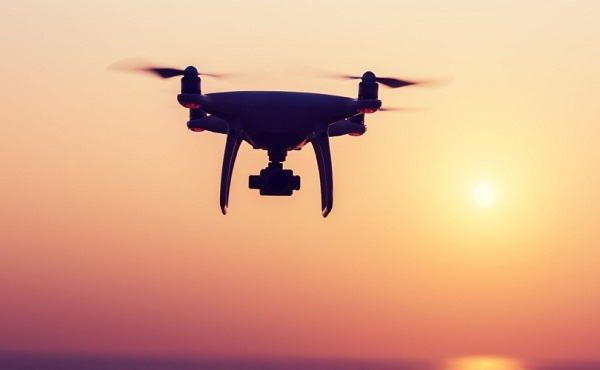
Of the Royal Canadian Mounted Police’s fleet of 1,200 drones, 79% pose national security risks due to them being made in China
Canada’s top police force spent millions on now near-useless and compromised security drones, all because they were made in China, a nation firmly controlled by the Communist Chinese Party (CCP) government.
An internal report by the Royal Canadian Mounted Police (RCMP) to Canada’s Senate national security committee revealed that $34 million in taxpayer money was spent on a fleet of 973 Chinese-made drones.
Replacement drones are more than twice the cost of the Chinese-made ones between $31,000 and $35,000 per unit. In total, the RCMP has about 1,228 drones, meaning that 79 percent of its drone fleet poses national security risks due to them being made in China.
The RCMP said that Chinese suppliers are “currently identified as high security risks primarily due to their country of origin, data handling practices, supply chain integrity and potential vulnerability.”
In 2023, the RCMP put out a directive that restricted the use of the made-in-China drones, putting them on duty for “non-sensitive operations” only, however, with added extra steps for “offline data storage and processing.”
The report noted that the “Drones identified as having a high security risk are prohibited from use in emergency response team activities involving sensitive tactics or protected locations, VIP protective policing operations, or border integrity operations or investigations conducted in collaboration with U.S. federal agencies.”
The RCMP earlier this year said it was increasing its use of drones for border security.
Senator Claude Carignan had questioned the RCMP about what kind of precautions it uses in contract procurement.
“Can you reassure us about how national security considerations are taken into account in procurement, especially since tens of billions of dollars have been announced for procurement?” he asked.
“I want to make sure national security considerations are taken into account.”
The use of the drones by Canada’s top police force is puzzling, considering it has previously raised awareness of Communist Chinese interference in Canada.
Indeed, as reported by LifeSiteNews, earlier in the year, an RCMP internal briefing note warned that agents of the CCP are targeting Canadian universities to intimidate them and, in some instances, challenge them on their “political positions.”
The final report from the Foreign Interference Commission concluded that operatives from China may have helped elect a handful of MPs in both the 2019 and 2021 Canadian federal elections. It also concluded that China was the primary foreign interference threat to Canada.
Chinese influence in Canadian politics is unsurprising for many, especially given former Prime Minister Justin Trudeau’s past admiration for China’s “basic dictatorship.”
As reported by LifeSiteNews, a Canadian senator appointed by Trudeau told Chinese officials directly that their nation is a “partner, not a rival.”
China has been accused of direct election meddling in Canada, as reported by LifeSiteNews.
As reported by LifeSiteNews, an exposé by investigative journalist Sam Cooper claims there is compelling evidence that Carney and Trudeau are strongly influenced by an “elite network” of foreign actors, including those with ties to China and the World Economic Forum. Despite Carney’s later claims that China poses a threat to Canada, he said in 2016 the Communist Chinese regime’s “perspective” on things is “one of its many strengths.”


Shared Labs, Shared Harm names MIT, Oxford and McGill among universities working with Beijing-backed AI institutes linked to Uyghur repression and China’s security services.
Over the past five years, some of the world’s most technologically advanced campuses in the United States, Canada and the United Kingdom — including MIT, Oxford and McGill — have relied on taxpayer funding while collaborating with artificial-intelligence labs embedded in Beijing’s security state, including one tied to China’s mass detention of Uyghurs and to the Ministry of Public Security, which has been accused of targeting Chinese dissidents abroad.
That is the core finding of Shared Labs, Shared Harm, a new report from New York–based risk firm Strategy Risks and the Human Rights Foundation. After reviewing tens of thousands of scientific papers and grant records, the authors conclude that Western public funds have repeatedly underwritten joint work between elite universities and two Chinese “state-priority” laboratories whose technologies drive China’s domestic surveillance machinery — an apparatus that, a recent U.S. Congressional threat assessment warns, is increasingly being turned outward against critics in democratic states.
The key Chinese collaborators profiled in the study are closely intertwined with China’s security services. One of the two featured labs is led by a senior scientist from China Electronics Technology Group Corporation (CETC), the sanctioned conglomerate behind the platform used to flag and detain Uyghurs in Xinjiang; the other has hosted “AI + public security” exchanges with the Ministry of Public Security’s Third Research Institute, the bureau responsible for technical surveillance and digital forensics.
The report’s message is blunt: even as governments scramble to stop technology transfer on the hardware side, open academic science has quietly been supplying Chinese security organs with new tools to track bodies, faces and movements at scale.
It lands just as Washington and its allies move to tighten controls on advanced chips and AI exports to China. In the Netherlands’ Nexperia case, the Dutch government invoked a rarely used Cold War–era emergency law this fall to take temporary control of a Chinese-owned chipmaker and block key production from being shifted to China — prompting a furious response from Beijing, and supply shocks that rippled through European automakers.
“The Chinese Communist Party uses security and national security frameworks as tools for control, censorship, and suppressing dissenting views, transforming technical systems into instruments of repression,” the report says. “Western institutions lend credibility, knowledge, and resources to Chinese laboratories supporting the country’s surveillance and defense ecosystem. Without safeguards … publicly funded research will continue to support organizations that contribute to repression in China.”
Cameras and Drones
The Strategy Risks team focuses on two state-backed institutes: Zhejiang Lab, a vast AI and high-performance computing campus founded by the Zhejiang provincial government with Alibaba and Zhejiang University, and the Shanghai Artificial Intelligence Research Institute (SAIRI), now led by a senior CETC scientist. CETC designed the Integrated Joint Operations Platform, or IJOP — the data system that hoovered up phone records, biometric profiles and checkpoint scans to flag “suspicious” people in Xinjiang.
United Nations investigators and several Western governments have concluded that IJOP and related systems supported mass surveillance, detention and forced-labor campaigns against Uyghurs that amount to crimes against humanity.
Against that backdrop, the scale of Western collaboration is striking.
Since 2020, Zhejiang Lab and SAIRI have published more than 11,000 papers; roughly 3,000 of those had foreign co-authors, many from the United States, United Kingdom, and Canada. About 20 universities are identified as core collaborators, including MIT, Stanford, Harvard, Princeton, Carnegie Mellon, Johns Hopkins, UC Berkeley, Oxford, University College London — and Canadian institutions such as McGill University — along with a cluster of leading European technical universities.
Among the major U.S. public funders acknowledged in these joint papers are the National Science Foundation (NSF), the National Institutes of Health (NIH), the Office of Naval Research (ONR), the Defense Advanced Research Projects Agency (DARPA) and the Department of Transportation. For North America, the warning is twofold: U.S. and Canadian universities are far more entangled with China’s security-linked AI labs than most policymakers grasp — and existing “trusted research” frameworks, built around IP theft, are almost blind to the human-rights risk.
In one flagship example, Zhejiang Lab collaborated with MIT on advanced optical phase-shifting — a field central to high-resolution imaging systems used in satellite surveillance, remote sensing and biometric scanning. The paper cited support from a DARPA program, meaning U.S. defense research dollars effectively underwrote joint work with a Chinese lab that partners closely with military universities and the CETC conglomerate behind Xinjiang’s IJOP system.
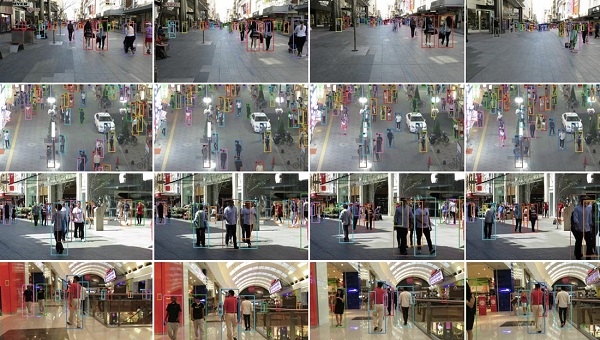
Carnegie Mellon projects with Zhejiang Lab focused on multi-object tracking and acknowledged funding from the National Science Foundation and the U.S. Office of Naval Research. Multi-object tracking is a backbone technology for modern surveillance — allowing cameras and drones to follow multiple people or vehicles across crowds and city blocks. “In the Chinese context,” the report notes, such capabilities map naturally onto “public security applications such as protest monitoring,” even when the academic papers present them as neutral advances in computer vision.
The report also highlights Zhejiang Lab’s role as an international partner in CAMERA 2.0, a £13-million U.K. initiative on motion capture, gait recognition and “smart cities” anchored at the University of Bath, and its leadership in BioBit, a synthetic-biology and imaging program whose advisory board includes University College London, McGill University, the University of Glasgow and other Western campuses.
Meanwhile, SAIRI has quietly become a hub for AI that blurs public-security, military and commercial lines.
Established in 2018 and run since 2020 by CETC academician Lu Jun — a designer of China’s KJ-2000 airborne early-warning aircraft and a veteran of command-and-control systems — SAIRI specializes in pose estimation, tracking and large-scale imaging.
Under Lu, the institute has deepened ties with firms already sanctioned by Washington for their roles in Xinjiang surveillance. In 2024 it signed cooperation agreements with voice-recognition giant iFlytek and facial-recognition champion SenseTime, as well as CloudWalk and Intellifusion, which market “smart city” policing platforms.
SAIRI also hosted an “AI + public security” exchange with the Ministry of Public Security’s Third Research Institute — the bureau responsible for technical surveillance and digital forensics — and co-developed what Chinese media billed as the country’s first AI-assisted shooting training system. That platform, nominally built for sports, was overseen by a Shanghai government commission that steers AI into defense and public-security applications, raising the prospect of its use in paramilitary or police training.
Outside the lab, MPS officers have been charged in the United States with running online harassment and intimidation schemes targeting Chinese dissidents, and MPS-linked “overseas police service stations” in North America and Europe have been investigated for pressuring exiles and critics to return to China.
Meanwhile, Radio-Canada, drawing on digital records first disclosed to Australian media in 2024 by an alleged Chinese spy, has reported new evidence suggesting that a Chinese dissident who died in a mysterious kayaking accident near Vancouver was being targeted for elimination by MPS officers and agents embedded in a Chinese conglomerate that the U.S. Treasury accuses of running a money-laundering and modern-slavery empire out of Cambodia.
The new reporting focuses on a former undercover agent for Office No. 1 of China’s Ministry of Public Security — the police ministry at the core of so-called “CCP police stations” in global and Canadian cities, and reportedly tasked with hunting dissidents abroad.
Taken together, cases of alleged Chinese “police station” networks operating globally, new U.S. Congressional reports on worldwide threats from the Chinese Communist Party, and the warnings in Shared Labs, Shared Harm suggest that Western universities are not only helping to build China’s domestic repression apparatus with U.S. taxpayer funds, but may also be contributing to global surveillance tools that can be paired with Beijing’s operatives abroad.
To counter this trend, the paper urges a reset in research governance: broaden due diligence to weigh human-rights risk, mandate transparency over all international co-authorships and joint labs, condition partnerships with security-linked institutions on strict safeguards and narrow scopes of work, and strengthen university ethics bodies so they take responsibility for cross-border collaborations.
The Bureau is a reader-supported publication.
To receive new posts and support my work, consider becoming a free or paid subscriber.

Carney’s Toronto cabinet meetings cost $530,000

The Trickster Politics of the Tanker Ban are Hiding a Much Bigger Reckoning for B.C.

Integration Or Indignation: Whose Strategy Worked Best Against Trump?
What the Data Shows About the New Canada-Alberta Pipeline Opportunity
While Trump has southern border secure, hundreds of thousands of illegal immigrants still flooding in from Canada
Alberta will use provincial laws to stop Canadian gov’t from trying to confiscate legal firearms
Why Does Canada “Lead” the World in Funding Racist Indoctrination?
-
 Crime2 days ago
Inside the Fortified Sinaloa-Linked Compound Canada Still Can’t Seize After 12 Years of Legal War
-
 Automotive19 hours ago
The $50 Billion Question: EVs Never Delivered What Ottawa Promised
-
 Great Reset1 day ago
Proposed ban on euthanasia for mental illness sparks passionate debate in Canada’s Parliament
-
 Censorship Industrial Complex1 day ago
Liberals gain support for ‘hate speech’ bill targeting Bible passages against homosexuality
-
 Health1 day ago
US podcaster Glenn Beck extends a lifeline to a Saskatchewan woman waiting for MAiD
-
 Business1 day ago
Storm clouds of uncertainty as BC courts deal another blow to industry and investment
-
 National2 days ago
Liberal bill “targets Christians” by removing religious exemption in hate-speech law
-
 C2C Journal18 hours ago
Wisdom of Our Elders: The Contempt for Memory in Canadian Indigenous Policy