Economy
The Net-Zero Dream Is Unravelling And The Consequences Are Global
From the Frontier Centre for Public Policy
The grand net-zero vision is fading as financial giants withdraw from global climate alliances
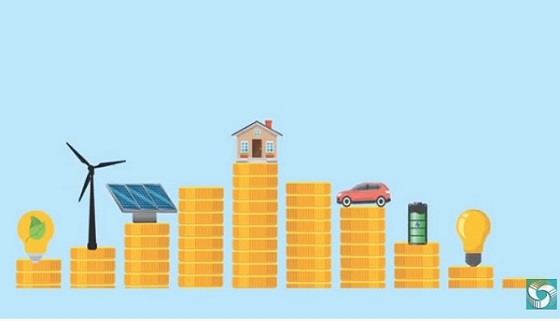
In recent years, governments and Financial institutions worldwide have committed to the goal of “net zero”—cutting greenhouse gas emissions to as close to zero as possible by 2050. One of the most prominent initiatives, the Glasgow Financial Alliance for Net Zero (GFANZ), sought to mobilize trillions of dollars by shifting investment away from fossil fuels and toward green energy projects.
The idea was simple in principle: make climate action a core part of financial decision-making worldwide.
The vision of a net-zero future, once championed as an inevitable path to global prosperity and environmental sustainability, is faltering. What began as an ambitious effort to embed climate goals into the flow of international capital is now encountering hard economic and political realities.
By redefining financial risk to include climate considerations, GFANZ aimed to steer financial institutions toward supporting a large-scale energy transition.
Banks and investors were encouraged to treat climate-related risks—such as the future decline of fossil fuels—as central to their financial strategies.
But the practical challenges of this approach have become increasingly clear.
Many of the green energy projects promoted under the net-zero banner have proven financially precarious without substantial government subsidies. Wind and solar technologies often rely on public funding and incentives to stay competitive. Energy storage and infrastructure upgrades, critical to supporting renewable energy, have also required massive financial support from taxpayers.
At the same time, institutions that initially embraced net-zero commitments are now facing soaring compliance costs, legal uncertainties and growing political resistance, particularly in major economies.
Major banks such as JPMorgan Chase, Citigroup and Goldman Sachs have withdrawn from GFANZ, citing concerns over operational risks and conflicting fuduciary duties. Their departure marks a signifcant blow to the alliance and signals a broader reassessment of climate finance strategies.
For many institutions, the initial hope that governments and markets would align smoothly around net-zero targets has given way to concerns over financial instability and competitive disadvantage. But that optimism has faded.
What once appeared to be a globally co-ordinated movement is fracturing. The early momentum behind net-zero policies was fuelled by optimism that government incentives and public support would ease the transition. But as energy prices climb and affordability concerns grow, public opinion has become noticeably more cautious.
Consumers facing higher heating bills and fuel costs are beginning to question the personal price of aggressive climate action.
Voters are increasingly asking whether these policies are delivering tangible benefits to their daily lives. They see rising costs in transportation, food production and home energy use and are wondering whether the promised green transition is worth the economic strain.
This moment of reckoning offers a crucial lesson: while environmental goals remain important, they must be pursued in balance with economic realities and the need for reliable energy supplies. A durable transition requires market-based solutions, technological innovation and policies that respect the complex needs of modern economies.
Climate progress will not succeed if it comes at the expense of basic affordability and economic stability.
Rather than abandoning climate objectives altogether, many countries and industries are recalibrating, moving away from rigid frameworks in favour of more pragmatic, adaptable strategies. Flexibility is becoming essential as governments seek to maintain public support while still advancing long term environmental goals.
The unwinding of GFANZ underscores the risks of over-centralized approaches to climate policy. Ambitious global visions must be grounded in reality, or they risk becoming liabilities rather than solutions. Co-ordinated international action remains important, but it must leave room for local realities and diverse economic circumstances.
As the world adjusts course, Canada and other energy-producing nations face a clear choice: continue down an economically restrictive path or embrace a balanced strategy that safeguards both prosperity and environmental stewardship. For countries like Canada, where natural resources remain a cornerstone of the economy, the stakes could not be higher.
The collapse of the net-zero consensus is not an end to climate action, but it is a wake-up call. The future will belong to those who learn from this moment and pursue practical, sustainable paths forward. A balanced approach that integrates environmental responsibility with economic pragmatism offers the best hope for lasting progress.
Marco Navarro-Genie is the vice president of research at the Frontier Centre for Public Policy. With Barry Cooper, he is coauthor of Canada’s COVID: The Story of a Pandemic Moral Panic (2023).
Business
Canada Hits the Brakes on Population
The population drops for the first time in years, exposing an economy built on temporary residents, tuition cash, and government debt rather than real productivity
Canadians have been told for years that population decline was unthinkable, that it was an economic death spiral, that only mass immigration could save us. That was the line. Now the numbers are in, and suddenly the people who said that are very quiet.
Statistics Canada reports that between July 1 and October 1, 2025, Canada’s population fell by 76,068 people, a decline of 0.2 percent, bringing the total population to 41,575,585. This is not a rounding error. It is not a model projection. It is an official quarterly population loss, outside the COVID period, confirmed by the federal government’s own data
The reason matters. This did not happen because Canadians suddenly stopped having children or because of a natural disaster. It happened because the number of non‑permanent residents dropped by 176,479 people in a single quarter, the largest quarterly decline since comparable records began in 1971. Permit expirations outpaced new permits by more than two to one. Outflows totaled 339,505, while inflows were just 163,026
That is the so‑called growth engine shutting down.
Permanent immigration continued at roughly the same pace as before. Canada admitted 102,867 permanent immigrants in the quarter, consistent with recent levels. Births minus deaths added another 17,600 people. None of that was enough to offset the collapse in temporary residency. Net international migration overall was negative, at minus 93,668
And here’s the part you’re not supposed to say out loud. For the Liberal‑NDP government, this is bad news. Their entire economic story has rested on population‑driven GDP growth, not productivity. Add more people, claim the economy is growing, borrow more money, and run the national credit card a little harder. When population growth reverses, that illusion collapses. GDP per capita does not magically improve. Housing shortages do not disappear. The math just stops working.
The regional numbers make that clear. Ontario’s population fell by 0.4 percent in the quarter. British Columbia fell by 0.3 percent. Every province and territory lost population except Alberta and Nunavut, and even Alberta’s growth was just 0.2 percent, its weakest since the border‑closure period of 2021
Now watch who starts complaining first. Universities are already bracing for it. Study permit holders alone fell by 73,682 people in three months, with Ontario losing 47,511 and British Columbia losing 14,291. These are the provinces with the largest university systems and the highest dependence on international tuition revenue
You’re going to hear administrators and activists say this is a crisis. What they mean is that fewer students are paying international tuition to subsidize bloated campuses and programs that produce no measurable economic value. When the pool of non‑permanent residents shrinks, departments that exist purely because enrollment was artificially inflated start to disappear. That’s not mysterious. That’s arithmetic.
For years, Canadians were told that any slowdown in population growth was dangerous. The truth is more uncomfortable. What’s dangerous is building a national economic model on temporary residents, borrowed money, and headline GDP numbers while productivity stagnates. The latest StatsCan release doesn’t just show a population decline. It shows how fragile the story really was, and how quickly it unravels when the numbers stop being padded.
Subscribe to The Opposition with Dan Knight
Business
White House declares inflation era OVER after shock report
The White House on Thursday declared a decisive turn in the inflation fight, pointing to new data showing core inflation has fallen to its lowest level in nearly five years — a milestone the administration says validates President Donald Trump’s economic reset after inheriting what it calls a historic cost-of-living crisis from the Biden era. In a statement accompanying the report, White House Press Secretary Karoline Leavitt said inflation “came in far lower than market expectations,” drawing a sharp contrast with the 9 percent peak under President Joe Biden and arguing the numbers reflect sustained relief for American households. “Core inflation is at a new multi-year low, as prices for groceries, medicine, gas, airfare, car rentals, and hotels keep falling,” Leavitt said, adding that lower prices and rising paychecks are expected to continue into the new year.
According to the White House, core inflation — widely viewed by economists as the most reliable gauge because it strips out volatile food and energy costs — is now down roughly 70 percent from its Biden-era high. Officials noted that if inflation continues at the pace of the last two months, it would be running at an annualized rate of about 1.2 percent, well below the Federal Reserve’s 2 percent target. The report also highlighted broad-based price moderation across consumer staples and services, with declines in groceries, dairy, fruits and vegetables, prescription drugs, clothing, airfares, natural gas, car and truck rentals, and hotel prices. Average gas prices have fallen to multi-year lows, while rent inflation has dropped to its lowest level since October 2021, a shift the administration attributes in part to tougher enforcement against illegal immigration and reduced pressure on housing demand.
Wages, the White House says, are rising alongside easing prices. Private-sector workers are on track to see real wages increase by about $1,300 in President Trump’s first full year back in office, clawing back purchasing power lost during the inflation surge of the previous administration. Gains are strongest among blue-collar workers, with annualized real earnings up roughly $1,800 for construction workers and $1,600 for manufacturing employees. Administration officials also took aim at critics who warned Trump’s tariff policies would reignite inflation, arguing the data shows no demonstrable inflationary impact despite repeated predictions from Wall Street and academic economists.
NEC Director Kevin Hassett on the latest inflation report: "It was just an absolute blockbuster report… We looked at 61 forecasts, and this number came in better than every single one of them." 🔥 pic.twitter.com/rBJpkmjuNa
— Rapid Response 47 (@RapidResponse47) December 18, 2025
Even commentators across the media spectrum acknowledged the strength of the report. CNBC’s Steve Liesman called it “a very good number,” while CNN’s Matt Egan said it was “another step in the right direction.” Harvard economist Ken Rogoff described the reading as “a better number than anyone was expecting,” adding, “There’s no other way to spin it.” Bloomberg’s Chris Anstey noted the figure came in two-tenths below the lowest estimate in a survey of 62 economists, calling it “remarkable,” while The Washington Post’s Andrew Ackerman wrote that inflation “cooled unexpectedly,” easing pressure on household budgets.
For the White House, the message was blunt: the inflation era is over. Officials framed Thursday’s report as proof that Trump has followed through on his promise to defeat the cost-of-living crisis he inherited, laying what they called the groundwork for a strong year ahead. As the president told the nation this week, the administration insists the progress is real — and that, in his words, the best is yet to come.
-
Crime3 hours agoBrown University shooter dead of apparent self-inflicted gunshot wound
-
Business14 hours agoCanada Hits the Brakes on Population
-
Business2 days agoOttawa Pretends To Pivot But Keeps Spending Like Trudeau
-
Energy2 days agoLiberals Twisted Themselves Into Pretzels Over Their Own Pipeline MOU
-
Frontier Centre for Public Policy17 hours agoCanada Lets Child-Porn Offenders Off Easy While Targeting Bible Believers
-
Censorship Industrial Complex2 days agoHow Wikipedia Got Captured: Leftist Editors & Foreign Influence On Internet’s Biggest Source of Info
-
International2 days agoBondi Beach Shows Why Self-Defense Is a Vital Right
-
Crime2 days agoThe Uncomfortable Demographics of Islamist Bloodshed—and Why “Islamophobia” Deflection Increases the Threat