
Canadian Energy Centre
The importance of Canadian crude oil to refineries in the U.S.


From the Canadian Energy Centre
By Ven VenkatachalamOil from Canada supplies more than 23% of U.S. refinery feedstock, helping bolster North American energy security
Introduction
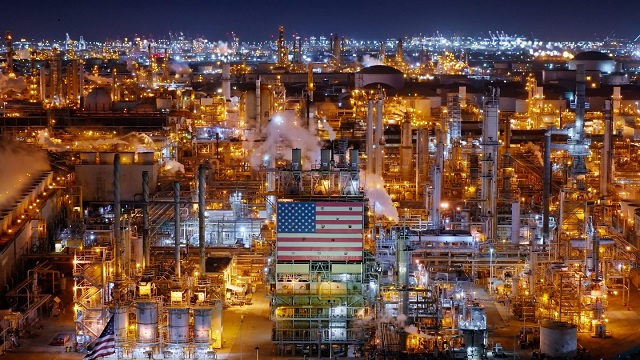
The refining industry¹ in the United States is one of the world’s largest, with capacity to process 18 million barrels of oil per day. Canada plays a crucial role by supplying more than one-fifth of the crude oil refined in the U.S.

The U.S.–Canada cross-border crude oil trade is essential to North American energy security. Canadian crude oil exports and the U.S. refinery industry are highly integrated. In recent years, Canada’s crude oil sector has been making a growing contribution to the operations of U.S. oil refineries.
U.S. refineries are converting Canadian crude oil, including heavy oil,² into products that North Americans use daily, such as transportation fuels (gasoline and diesel), chemicals, and plastics. Although the U.S. has increased its production of oil in recent years, U.S. refineries still rely on Canadian heavy crude oil to meet their feedstock (i.e., the raw materials and intermediate materials processed at refineries to produce finished petroleum products, otherwise known as refinery inputs) specifications.
In this CEC Fact Sheet, we examine several economic indicators that illustrate the importance of Canadian crude oil, particularly heavy crude, to U.S. refineries. This fact sheet also analyzes the refining industry’s direct and indirect economic impacts on the U.S. economy.
1. NAICS Code 324110 (Petroleum Refineries): This industry comprises
establishments primarily engaged in refining crude petroleum into refined petroleum.
2. A majority of the crude oil imported by the U.S. from Canada is heavy crude (between 15-25 API gravity). API gravity is a commonly used index for measuring the density of crude oil or refined products. Crude oil typically has an API between 15 and 45 degrees. The higher the API, the lighter the crude; the lower the API, the heavier the crude.
Imports of Canadian crude oil to refineries in the United States
The physical characteristics of crude oil determine how it is processed in refineries. Generally, heavy crude oil offers higher yields of low-value products (coke and asphalt) and lower yields of high-value products (gasoline). Heavy crude oil requires more complicated processing than lighter crude if it is to produce high-value products.
Overall, Canadian crude oil imports to U.S. refineries for processing have risen from over 1.3 million barrels per day in 2000 to just under 3.8 million barrels per day in 2022, an increase of 181 per cent (see Figure 1). The per cent of Canadian crude in U.S. refinery feedstock has steadily risen from nearly 9 per cent in 2000 to over 23 per cent by the end of 2022.

Source: U.S. Energy Information Administration (2024a, 2024b, 2024c)
The U.S. refining industry
Since the first U.S. refinery began operating in 1861, the refining industry has been one of the largest manufacturing sectors in the United States. There are currently 129 petroleum refineries across the five U.S. PADDS³ (125 operating refineries and five refineries that are idle but not permanently shut down) (see Table 1).
3. The United States is divided into five Petroleum Administration for Defense
Districts (PADDs) for the allocation of fuels derived from petroleum products,
including gasoline and diesel fuel. The geographic breakdown of PADDs enables
U.S. policymakers to better analyze petroleum supplies in the country

Source: U.S. Energy Information Administration (2023)
Total refining capacity in the United States has risen from 16.2 million barrels of crude processed in 2000 to nearly 17.8 million barrels per day in 2022, an increase of over 8 per cent (see Figure 2). The refining utilization⁴ has also recovered, growing from 79 per cent during COVID-19 to a high of 91 per cent in 2022.

Source: U.S. Energy Information Administration (2024b)
The impact of the U.S. refining industry on the American economy
The estimated direct and indirect economic impacts of the U.S. refining industry in 2024 include 1.6 million direct and indirect jobs, $206 billion in labour income, $577 billion in direct and indirect value-added, and $1.6 trillion in what is known as “outputs,” i.e., the value of goods and services produced by the industry (see Table 2).⁵
4. Capacity measures how much crude oil refineries are able to process.
Utilization measures how much is actually being processed (as a percentage of
maximum capacity).
5. These projected amounts are in nominal U.S. dollars

Source: Author’s calculations using the IMPLAN modelling system. Details may not add up to totals due to rounding
Projected spending by the U.S. refining industry, 2024-2030
Figure 3 illustrates the industry’s projected annual spending between 2024 and 2030. Industry spending is expected to be US$58 billion in 2024, rising to US$62 billion by 2030. This includes operating expenditures (OPEX) and capital expenditures (CAPEX). Cumulatively, between 2024 and 2030, the industry is projected to spend over US$428 billion.⁶
6. These projected amounts are in nominal U.S. dollars and are calculated using
the Rystad Energy UCube.

Source: Derived from Rystad Energy (2024), Service Market Solution
Conclusion
American refineries are critical to the country’s strategic interest. U.S. refineries are projected to spend more than $428 billion in the next seven years on operating and capital expenditures. The industries support millions of jobs. Canadian crude is an important part of the equation. It supplies more than 23 per cent of U.S. refinery feedstock.
Not only are Canadian crude oil supplies critical for the U.S. refining industry, but they are key to North American energy security. Limiting access to Canadian crude oil for U.S. refineries would require increased U.S. imports from less-free countries, which in turn would risk North American energy security.
References
Rystad Energy (2024), Service Market Solution <http://tinyurl.com/28fmv6a6>; U.S. Energy Information Administration (Undated), Oil and Petroleum Products Explained: Refining Crude Oil <http://tinyurl.com/3b2uwrxh>; U.S. Energy Information Administration (2023), Refinery Capacity Report <http://tinyurl.com/2s4ybz9z>; U.S. Energy Information Administration (2024a), Petroleum and Other Liquids: PADD District Imports by Country of Origin <http://tinyurl.com/58mzvtts>; U.S. Energy Information Administration (2024b), Petroleum and Other Liquids: Refinery Utilization and Capacity <http://tinyurl.com/3wx957k4>; U.S. Energy Information Administration (2024c), Petroleum and Other Liquids: U.S. Imports by Country of Origin <http://tinyurl.com/bdcsbwhn>; U.S. Environmental Protection Agency (Undated), Appendix A — Overview of Petroleum Refining, Proposed Clean Fuels Refinery DEIS <http://tinyurl.com/dveyzc8k>.

From the Canadian Energy Centre
Canada’s energy landscape changed significantly in 2025, with mounting U.S. economic pressures reinforcing the central role oil and gas can play in safeguarding the country’s independence.
Here are the Canadian Energy Centre’s top five most-viewed stories of the year.
5. Alberta’s massive oil and gas reserves keep growing – here’s why

The Northern Lights, aurora borealis, make an appearance over pumpjacks near Cremona, Alta., Thursday, Oct. 10, 2024. CP Images photo
Analysis commissioned this spring by the Alberta Energy Regulator increased the province’s natural gas reserves by more than 400 per cent, bumping Canada into the global top 10.
Even with record production, Alberta’s oil reserves – already fourth in the world – also increased by seven billion barrels.
According to McDaniel & Associates, which conducted the report, these reserves are likely to become increasingly important as global demand continues to rise and there is limited production growth from other sources, including the United States.
4. Canada’s pipeline builders ready to get to work

Photo courtesy Coastal GasLink
Canada could be on the cusp of a “golden age” for building major energy projects, said Kevin O’Donnell, executive director of the Mississauga, Ont.-based Pipe Line Contractors Association of Canada.
That eagerness is shared by the Edmonton-based Progressive Contractors Association of Canada (PCA), which launched a “Let’s Get Building” advocacy campaign urging all Canadian politicians to focus on getting major projects built.
“The sooner these nation-building projects get underway, the sooner Canadians reap the rewards through new trading partnerships, good jobs and a more stable economy,” said PCA chief executive Paul de Jong.
3. New Canadian oil and gas pipelines a $38 billion missed opportunity, says Montreal Economic Institute

Steel pipe in storage for the Trans Mountain Pipeline expansion in 2022. Photo courtesy Trans Mountain Corporation
In March, a report by the Montreal Economic Institute (MEI) underscored the economic opportunity of Canada building new pipeline export capacity.
MEI found that if the proposed Energy East and Gazoduq/GNL Quebec projects had been built, Canada would have been able to export $38 billion worth of oil and gas to non-U.S. destinations in 2024.
“We would be able to have more prosperity for Canada, more revenue for governments because they collect royalties that go to government programs,” said MEI senior policy analyst Gabriel Giguère.
“I believe everybody’s winning with these kinds of infrastructure projects.”
2. Keyera ‘Canadianizes’ natural gas liquids with $5.15 billion acquisition

Keyera Corp.’s natural gas liquids facilities in Fort Saskatchewan, Alta. Photo courtesy Keyera Corp.
In June, Keyera Corp. announced a $5.15 billion deal to acquire the majority of Plains American Pipelines LLP’s Canadian natural gas liquids (NGL) business, creating a cross-Canada NGL corridor that includes a storage hub in Sarnia, Ontario.
The acquisition will connect NGLs from the growing Montney and Duvernay plays in Alberta and B.C. to markets in central Canada and the eastern U.S. seaboard.
“Having a Canadian source for natural gas would be our preference,” said Sarnia mayor Mike Bradley.
“We see Keyera’s acquisition as strengthening our region as an energy hub.”
1. Explained: Why Canadian oil is so important to the United States

Enbridge’s Cheecham Terminal near Fort McMurray, Alberta is a key oil storage hub that moves light and heavy crude along the Enbridge network. Photo courtesy Enbridge
The United States has become the world’s largest oil producer, but its reliance on oil imports from Canada has never been higher.
Many refineries in the United States are specifically designed to process heavy oil, primarily in the U.S. Midwest and U.S. Gulf Coast.
According to the Alberta Petroleum Marketing Commission, the top five U.S. refineries running the most Alberta crude are:
- Marathon Petroleum, Robinson, Illinois (100% Alberta crude)
- Exxon Mobil, Joliet, Illinois (96% Alberta crude)
- CHS Inc., Laurel, Montana (95% Alberta crude)
- Phillips 66, Billings, Montana (92% Alberta crude)
- Citgo, Lemont, Illinois (78% Alberta crude)

From the Canadian Energy Centre
By Will Gibson
Oil sands could maintain current production rates for more than 140 years
Investor interest in Canadian oil producers, primarily in the Alberta oil sands, has picked up, and not only because of expanded export capacity from the Trans Mountain pipeline.
Enverus Intelligence Research says the real draw — and a major factor behind oil sands equities outperforming U.S. peers by about 40 per cent since January 2024 — is the resource Trans Mountain helps unlock.
Alberta’s oil sands contain 167 billion barrels of reserves, nearly four times the volume in the United States.
Today’s oil sands operators hold more than twice the available high-quality resources compared to U.S. shale producers, Enverus reports.
“It’s a huge number — 167 billion barrels — when Alberta only produces about three million barrels a day right now,” said Mike Verney, executive vice-president at McDaniel & Associates, which earlier this year updated the province’s oil and gas reserves on behalf of the Alberta Energy Regulator.
Already fourth in the world, the assessment found Alberta’s oil reserves increased by seven billion barrels.
Verney said the rise in reserves despite record production is in part a result of improved processes and technology.
“Oil sands companies can produce for decades at the same economic threshold as they do today. That’s a great place to be,” said Michael Berger, a senior analyst with Enverus.
BMO Capital Markets estimates that Alberta’s oil sands reserves could maintain current production rates for more than 140 years.
The long-term picture looks different south of the border.
The U.S. Energy Information Administration projects that American production will peak before 2030 and enter a long period of decline.
Having a lasting stable source of supply is important as world oil demand is expected to remain strong for decades to come.
This is particularly true in Asia, the target market for oil exports off Canada’s West Coast.
The International Energy Agency (IEA) projects oil demand in the Asia-Pacific region will go from 35 million barrels per day in 2024 to 41 million barrels per day in 2050.
The growing appeal of Alberta oil in Asian markets shows up not only in expanded Trans Mountain shipments, but also in Canadian crude being “re-exported” from U.S. Gulf Coast terminals.
According to RBN Energy, Asian buyers – primarily in China – are now the main non-U.S. buyers from Trans Mountain, while India dominates purchases of re-exports from the U.S. Gulf Coast. .
BMO said the oil sands offers advantages both in steady supply and lower overall environmental impacts.
“Not only is the resulting stability ideally suited to backfill anticipated declines in world oil supply, but the long-term physical footprint may also be meaningfully lower given large-scale concentrated emissions, high water recycling rates and low well declines,” BMO analysts said.


Ottawa-Alberta agreement may produce oligopoly in the oilsands

‘The electric story is over’

The Top News Stories That Shaped Canadian Energy in 2025 and Will Continue to Shape Canadian Energy in 2026

Some Of The Wackiest Things Featured In Rand Paul’s New Report Alleging $1,639,135,969,608 In Gov’t Waste

Western Canada’s supply chain for Santa Claus

A Christmas wish list for health-care reform

$2.6 million raised for man who wrestled shotgun from Bondi Beach terrorist
-
 Business2 days ago
Land use will be British Columbia’s biggest issue in 2026
-
 Business17 hours ago
Canada needs serious tax cuts in 2026
-
 Energy2 days ago
Why Japan wants Western Canadian LNG
-
 Business6 hours ago
Ottawa Is Still Dodging The China Interference Threat
-
 Business6 hours ago
Minneapolis day care filmed empty suddenly fills with kids
-
 Business2 days ago
Mainstream media missing in action as YouTuber blows lid off massive taxpayer fraud
-
 Business2 days ago
Stripped and shipped: Patel pushes denaturalization, deportation in Minnesota fraud
-
 Business4 hours ago
Disclosures reveal Minnesota politician’s husband’s companies surged thousands-fold amid Somali fraud crisis