
Business
The Grocery Greed Myth




Haultain’s Substack is a reader-supported publication.
To receive new posts and support our work, please consider becoming a free or paid subscriber.
Try it out.
The Justin Trudeau and Jagmeet Singh charges of “greedflation” collapses under scrutiny.
“It’s not okay that our biggest grocery stores are making record profits while Canadians are struggling to put food on the table.” —PM Justin Trudeau, September 13, 2023.
A couple of days after the above statement, the then-prime minister and his government continued a campaign to blame rising food prices on grocery retailers.

 |
The line Justin Trudeau delivered in September 2023, triggered a week of political theatre. It also handed his innovation minister, François-Philippe Champagne, a ready-made role: defender of the common shopper against supposed corporate greed. The grocery price problem would be fixed by Thanksgiving that year. That was two years ago. Remember the promise?
But as Ian Madsen of the Frontier Centre for Public Policy has shown, the numbers tell a different story. Canada’s major grocers have not been posting “record profits.” They have been inching forward in a highly competitive, capital-intensive sector. Madsen’s analysis of industry profit margins shows this clearly.
Take Loblaw. Its EBITDA margin (earnings before interest, taxes, depreciation, and amortization) averaged 11.2 per cent over the three years ending 2024. That is up slightly from 10 per cent pre-COVID. Empire grew from 3.9 to 7.6 per cent. Metro went from 7.6 to 9.6. These are steady trends, not windfalls. As Madsen rightly points out, margins like these often reflect consolidation, automation, and long-term investment.
Meanwhile, inflation tells its own story. From March 2020 to March 2024, Canada’s money supply rose by 36 per cent. Consumer prices climbed about 20 per cent in the same window. That disparity suggests grocers helped absorb inflationary pressure rather than drive it. The Justin Trudeau and Jagmeet Singh charges of “greedflation” collapses under scrutiny.
Yet Ottawa pressed ahead with its chosen solution: the Grocery Code of Conduct. It was crafted in the wake of pandemic disruptions and billed as a tool for fairness. In practice, it is a voluntary framework with no enforcement and no teeth. The dispute resolution process will not function until 2026. Key terms remain undefined. Suppliers are told they can expect “reasonable substantiation” for sudden changes in demand. They are not told what that means. But food inflation remains.
This ambiguity helps no one. Large suppliers will continue to settle matters privately. Small ones, facing the threat of lost shelf space, may feel forced to absorb losses quietly. As Madsen observes, the Code is unlikely to change much for those it claims to protect.
What it does serve is a narrative. It lets the government appear responsive while avoiding accountability. It shifts attention away from the structural causes of price increases: central bank expansion, regulatory overload, and federal spending. Instead of owning the crisis, the state points to a scapegoat.
This method is not new. The Trudeau government, of which Carney’s is a continuation, has always shown a tendency to favour symbolism over substance. Its approach to identity politics follows the same pattern. Policies are announced with fanfare, dissent is painted as bigotry, and inconvenient facts are set aside.
The Grocery Code fits this model. It is not a policy grounded in need or economic logic. It is a ritual. It gives the illusion of action. It casts grocers as villains. It gives the impression to the uncaring public that the government is “providing solutions,” and that “it has their backs.” It flatters the state.
Madsen’s work cuts through that illusion. It reminds us that grocery margins are modest, inflation was monetary, and the public is being sold a story.
Canadians deserve better than fables, but they keep voting for the same folks. They don’t think to think that they deserve a government that governs within its limits; a government that accept its role in the crises it helped cause, and restores the conditions for genuine economic freedom. The Grocery Code is not a step in that direction. It was always a distraction, wrapped in a moral pose.
And like most moral poses in Ottawa, it leaves the facts behind.
Haultain’s Substack is a reader-supported publication.
To receive new posts and support our work, please consider becoming a free or paid subscriber.
Try it out.

Alberta
Emissions Reduction Alberta offering financial boost for the next transformative drilling idea
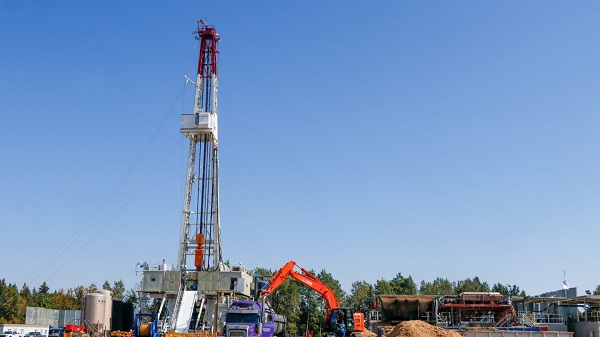
From the Canadian Energy Centre
$35-million Alberta challenge targets next-gen drilling opportunities
‘All transformative ideas are really eligible’
Forget the old image of a straight vertical oil and gas well.
In Western Canada, engineers now steer wells for kilometres underground with remarkable precision, tapping vast energy resources from a single spot on the surface.
The sector is continually evolving as operators pursue next-generation drilling technologies that lower costs while opening new opportunities and reducing environmental impacts.
But many promising innovations never reach the market because of high development costs and limited opportunities for real-world testing, according to Emissions Reduction Alberta (ERA).
That’s why ERA is launching the Drilling Technology Challenge, which will invest up to $35 million to advance new drilling and subsurface technologies.
“The focus isn’t just on drilling, it’s about building our future economy, helping reduce emissions, creating new industries and making sure we remain a responsible leader in energy development for decades to come,” said ERA CEO Justin Riemer.
And it’s not just about oil and gas. ERA says emerging technologies can unlock new resource opportunities such as geothermal energy, deep geological CO₂ storage and critical minerals extraction.
“Alberta’s wealth comes from our natural resources, most of which are extracted through drilling and other subsurface technologies,” said Gurpreet Lail, CEO of Enserva, which represents energy service companies.
ERA funding for the challenge will range from $250,000 to $8 million per project.
Eligible technologies include advanced drilling systems, downhole tools and sensors; AI-enabled automation and optimization; low-impact rigs and fluids; geothermal and critical mineral drilling applications; and supporting infrastructure like mobile labs and simulation platforms.
“All transformative ideas are really eligible for this call,” Riemer said, noting that AI-based technologies are likely to play a growing role.
“I think what we’re seeing is that the wells of the future are going to be guided by smart sensors and real-time data. You’re going to have a lot of AI-driven controls that help operators make instant decisions and avoid problems.”
Applications for the Drilling Technology Challenge close January 29, 2026.


From the Daily Caller News Foundation
The global war business scored record revenues in 2024 amid multiple protracted proxy conflicts across the world, according to a new industry analysis released on Monday.
The top 100 arms manufacturers in the world raked in $679 billion in revenue in 2024, up 5.9% from the year prior, according to a new Stockholm International Peace Research Institute (SIPRI) study. The figure marks the highest ever revenue for manufacturers recorded by SIPRI as the group credits major conflicts for supplying the large appetite for arms around the world.
“The rise in the total arms revenues of the Top 100 in 2024 was mostly due to overall increases in the arms revenues of companies based in Europe and the United States,” SIPRI said in their report. “There were year-on-year increases in all the geographical areas covered by the ranking apart from Asia and Oceania, which saw a slight decrease, largely as a result of a notable drop in the total arms revenues of Chinese companies.”
Notably, Chinese arms manufacturers saw a large drop in reported revenues, declining 10% from 2023 to 2024, according to SIPRI. Just off China’s shores, Japan’s arms industry saw the largest single year-over-year increase in revenue of all regions measured, jumping 40% from 2023 to 2024.
American companies dominate the top of the list, which measures individual companies’ revenue, with Lockheed Martin taking the top spot with $64,650,000,000 of arms revenue in 2024, according to the report. Raytheon Technologies, Northrop Grumman and BAE Systems follow shortly after in revenue,
The Czechoslovak Group recorded the single largest jump in year-on-year revenue from 2023 to 2024, increasing its haul by 193%, according to SIPRI. The increase is largely driven by their crucial role in supplying arms and ammunition to Ukraine.
The Pentagon contracted one of the group’s subsidiaries in August to build a new ammo plant in the U.S. to replenish artillery shell stockpiles drained by U.S. aid to Ukraine.
“In 2024 the growing demand for military equipment around the world, primarily linked to rising geopolitical tensions, accelerated the increase in total Top 100 arms revenues seen in 2023,” the report reads. “More than three quarters of companies in the Top 100 (77 companies) increased their arms revenues in 2024, with 42 reporting at least double-digit percentage growth.”


From Underdog to Top Broodmare

Boris Johnson Urges Ukraine to Continue War
Federal major projects list raises questions
Is affirming existing, approved projects truly the best we can do in Canada?

Crown seeks to punish peaceful protestor Chris Barber by confiscating his family work truck “Big Red”

Health Canada suggests MAiD expansion by pre-approving ‘advance requests’

Afghan Ex–CIA Partner Accused in D.C. National Guard Ambush
-
 Alberta2 days ago
Net Zero goal is a fundamental flaw in the Ottawa-Alberta MOU
-
 Food2 days ago
Canada Still Serves Up Food Dyes The FDA Has Banned
-
 COVID-192 days ago
The dangers of mRNA vaccines explained by Dr. John Campbell
-
 Alberta2 days ago
Keynote address of Premier Danielle Smith at 2025 UCP AGM
-
 Artificial Intelligence1 day ago
‘Trouble in Toyland’ report sounds alarm on AI toys
-
 Addictions2 days ago
Manitoba Is Doubling Down On A Failed Drug Policy
-
 COVID-192 days ago
FDA says COVID shots ‘killed’ at least 10 children, promises new vaccine safeguards
-
 Daily Caller1 day ago
Tom Homan Predicts Deportation Of Most Third World Migrants Over Risks From Screening Docs