
Connect with us
[the_ad id="89560"]

Opinion

The day the ‘King of rock ‘n’ roll saved the Arizona memorial

Published

7 minute read

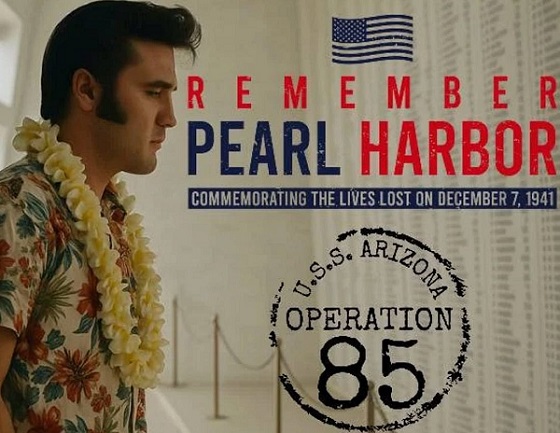
Elvis visits the Arizona Memorial in Pearl Harbor. Handout

“As we express our gratitude, we must never forget that the highest appreciation is not to utter words but to live by them.”
— President John F. Kennedy, visiting the Arizona Memorial on June 9, 1963

I was on an Aston Hotels media junket to Hawaii, and I had a morning off.

My wife took our daughter Rica, to spend a day at Waikiki beach, while I headed to Pearl Harbor on a bus.

It was my only chance to see the Arizona Memorial, and I was determined to do so.

A small ferry boat takes you there, and I have to say, it is a silent trip.

Everyone on board, seemed to feel the same weight of the moment.

The memorial is simple, but very impactful, to the say the least.

A list of the names, of the 1,177 sailors who died on Dec. 7, 1941, is posted along a wall.

That’s a lot of sailors, to go down with the ship, folks.

The Japanese attack on Pearl Harbor began at 7:55 that morning. The entire attack took only one hour and 15 minutes.

But the devastation, was immense.

Of the eight U.S. battleships present, all were damaged and four were sunk. All but Arizona were later raised, and six were returned to service during the war.

The Japanese also sank or damaged three cruisers, three destroyers, an anti-aircraft training ship, and a minelayer. More than 180 U.S. aircraft were destroyed.

Only six sailors were rescued from the burning USS Arizona, by a sailor from the nearby repair ship USS Vestal.

There is no evidence of men being trapped alive within the submerged hull of the Arizona after the ship settled on the harbor bottom, unlike on other ships like the USS Oklahoma and USS West Virginia, where trapped sailors were heard tapping on the hull for days.

SCUBA technology did not exist at that time, but at least one rescue was successful.

Civilian yard worker Julio DeCastro led a team that used pneumatic hammers to cut through the hull of the capsized USS Oklahoma and rescued 32 men who had been trapped for hours.

No U.S. aircraft carriers were present at Pearl Harbor during the attack, as USS Enterprise, USS Lexington, and USS Saratoga were all at sea on missions, while the six Japanese carriers that attacked;  AkagiKagaSōryūHiryūShōkakuZuikaku — all returned to Japan safely after the raid, though most were sunk later in the war.

I only remember one moment of that day. A young Japanese woman dropped a garland of flowers, into the water above the wreck.

Like magic, it floated directly over the length of the ship, which is still leaking oil.

A moment of time, I can never forget.

Most people don’t know, that the Airzona Memorial almost didn’t happen.

If not for Elvis Presley.

In the early 1960s, fundraising for the memorial had stalled.

Less than half of the roughly $500,000 needed had been raised, and the project was slipping from view.

After his manager, Colonel Tom Parker, read about the struggle, Elvis organized a benefit concert in Hawaii.

Newly discharged from the U.S. Army and on his way to film Blue Hawaii — the King stepped in to help without hesitation.

With one carefully staged benefit at Pearl Harbor’s Bloch Arena on March 25, 1961, he reignited public interest, raising over US $60,000 (equivalent to millions today) for the stalled fundraising effort, which helped push President John F. Kennedy and Congress to finish the job.

The memorial opened the following year.

Bloch Arena on the Navy base became the venue, and Parker handled the details with a fundraiser’s ruthlessness: tickets would range from $3 to $100, and no complimentary tickets would be issued — not even to admirals or VIPs.

Reports from the time underscore Parker’s insistence that everyone pay, a point that generated headlines and maximized proceeds.

A crowd of about 4,000 packed the hall to see Elvis in his gold lamé jacket deliver a rare live set — one of only a handful of concerts he performed between his Army service and the 1968 “Comeback Special.”

He later admitted forgetting lyrics due to being out of practice but was grateful for the crowd’s noise, which covered his mistakes.

He would visit the memorial in 1965 and place a wreath there, showing his deep respect.

The Arizona, launched in June 1915, measured 608 ft, with a beam of 97 ft. She was fully modernized in 1929, after which she was crewed by 92 officers and 1,639 enlisted men.

A Pennsylvania class battleship, she was the flagship of Battleship Division One at the time.

The final living survivor of the Arizona, Lou Conter, died last year, on April 1, 2024.

At Pearl Harbor, the Arizona was hit by four bombs just after 8 a.m., the final one of these is believed to have gone through the armoured deck and blown up the ship’s forward magazines with devastating effects.

Both the captain of the Arizona, Franklin Van Valkenburgh, and rear admiral Isaac Campbell Kidd, the head of the Battleship Division One were killed on the bridge of the Arizona.

More than two million people visit the memorial each year. It is only accessible by boat and straddles the sunken hull of the Arizona, without touching it.

THE MAKICHUK REPORT is free today.

But if you enjoyed this post, you can tell THE MAKICHUK REPORT that their writing is valuable by pledging a future subscription.

You won’t be charged unless they enable payments.

Pledge your support

Before Post

Todayville is a digital media and technology company. We profile unique stories and events in our community. Register and promote your community event for free.

Follow Author

Focal Points

Common Vaccines Linked to 38-50% Increased Risk of Dementia and Alzheimer’s

Published on

By Nicolas Hulscher, MPH

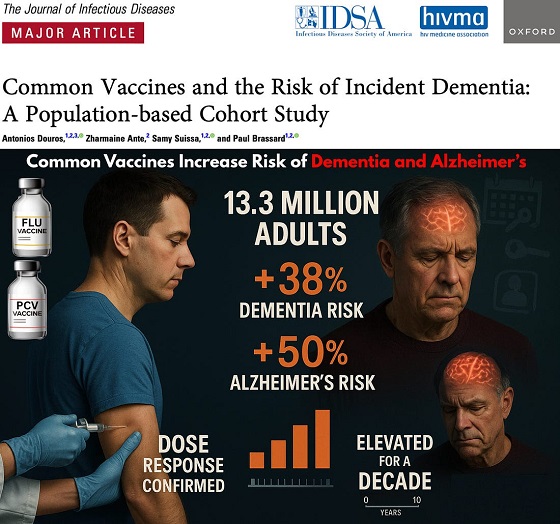
The single largest vaccine–dementia study ever conducted (n=13.3 million) finds risk intensifies with more doses, remains elevated for a full decade, and is strongest after flu and pneumococcal shots.

The single largest and most rigorous study ever conducted on vaccines and dementia — spanning 13.3 million UK adults — has uncovered a deeply troubling pattern: those who received common adult vaccines faced a significantly higher risk of both dementia and Alzheimer’s disease.

The risk intensifies with more dosesremains elevated for a full decade, and is strongest after influenza and pneumococcal vaccination. With each layer of statistical adjustment, the signal doesn’t fade — it becomes sharper, more consistent, and increasingly difficult to explain away.

And critically, these associations persisted even after adjusting for an unusually wide range of potential confounders, including age, sex, socioeconomic status, BMI, smoking, alcohol-related disorders, hypertension, atrial fibrillation, heart failure, coronary artery disease, stroke/TIA, peripheral vascular disease, diabetes, chronic kidney and liver disease, depression, epilepsy, Parkinson’s disease, cancer, traumatic brain injury, hypothyroidism, osteoporosis, and dozens of medications ranging from NSAIDs and opioids to statins, antiplatelets, immunosuppressants, and antidepressants.

Even after controlling for this extensive list, the elevated risks remained strong and remarkably stable.


Vaccinated Adults Had a 38% Higher Risk of Dementia

The primary adjusted model showed that adults receiving common adult vaccines (influenza, pneumococcal, shingles, tetanus, diphtheria, pertussis) had a:

38% increased risk of developing dementia (OR 1.38)

This alone dismantles the narrative of “vaccines protect the brain,” but the deeper findings are far worse.


Alzheimer’s Disease Risk Is Even Higher — 50% Increased Risk

Buried in the supplemental tables is a more shocking result: when the authors restricted analyses to Alzheimer’s disease specifically, the association grew even stronger.

50% increased risk of Alzheimer’s (Adjusted OR 1.50)

This indicates the effect is not random. The association intensifies for the most devastating subtype of dementia.


Clear Dose–Response Pattern: More Vaccines = Higher Risk

The authors ran multiple dose–response models, and every one of them shows the same pattern:

Dementia (all types)

From eTable 2:

  • 1 vaccine dose → Adjusted OR 1.26 (26% higher risk)
  • 2–3 doses → Adjusted OR 1.32 (32% higher risk)
  • 4–7 doses → Adjusted OR 1.42 (42% higher risk)
  • 8–12 doses → Adjusted OR 1.50 (50% higher risk)
  • ≥13 doses → Adjusted OR 1.55 (55% higher risk)

Alzheimer’s Disease (AD) Shows the Same—and Even Stronger—Trend

From eTable 7:

  • 1 dose → Adjusted OR 1.32 (32% higher risk)
  • 2–3 doses → Adjusted OR 1.41 (41% higher risk)
  • ≥4 doses → Adjusted OR 1.61 (61% higher risk)

This is one of the most powerful and unmistakable signals in epidemiology.


Time–Response Curve: Risk Peaks Soon After Vaccination and Remains Elevated for Years

Another signal strongly inconsistent with mere bias: a time-response relationship.

The highest dementia risk occurs 2–4.9 years after vaccination (Adjusted OR 1.56). The risk then slowly attenuates but never returns to baseline, remaining elevated across all time windows.

After 12.5 years, the risk is still meaningfully elevated (Adjusted OR 1.28) — a persistence incompatible with short-term “detection bias” and suggestive of a long-lasting biological impact.

This pattern is what you expect from a biological trigger with long-latency neuroinflammatory or neurodegenerative consequences.


Even After a 10-Year Lag, the Increased Risk Does Not Disappear

When the authors apply a long 10-year lag — meant to eliminate early detection bias — the elevated risk persists:

  • Dementia: OR 1.20
  • Alzheimer’s: OR 1.26

If this were simply “people who see doctors more often get diagnosed earlier,” the association should disappear under long lag correction.


Influenza and Pneumococcal Vaccines Drive the Signal

Two vaccines show particularly strong associations:

Influenza vaccine

  • Dementia: OR 1.39 → 39% higher risk
  • Alzheimer’s: OR 1.49 → 49% higher risk

Pneumococcal vaccine

  • Dementia: OR 1.12 → 12% higher risk
  • Alzheimer’s: OR 1.15 → 15% higher risk

And again, both exhibit dose–response escalation — the hallmark pattern of a genuine exposure–outcome relationship.


Taken together, the findings across primary, supplemental, dose–response, time–response, stratified, and sensitivity analyses paint the same picture:

• A consistent association between cumulative vaccination and increased dementia risk

• A stronger association for Alzheimer’s than for general dementia

• A dose–response effect — more vaccines, higher risk

• A time–response effect — risk peaks after exposure and persists long-term

• Influenza and pneumococcal vaccines strongly drive the signal

• The association remains after 10-year lag correction and active comparator controls

This is what a robust epidemiologic signal looks like.


In the largest single study ever conducted on vaccines and dementia, common adult vaccinations were associated with a 38% higher risk of dementia and a 50% higher risk of Alzheimer’s disease. The risk increases with more doses, persists for a decade, and is strongest for influenza and pneumococcal vaccines.


Nicolas Hulscher, MPH

Epidemiologist and Foundation Administrator, McCullough Foundation

Support our mission: mcculloughfnd.org

Please consider following both the McCullough Foundation and my personal account on X (formerly Twitter) for further content.

FOCAL POINTS (Courageous Discourse) is a reader-supported publication.

To receive new posts and support my work, consider becoming a free or paid subscriber.

Continue Reading

Censorship Industrial Complex

US Condemns EU Censorship Pressure, Defends X

Published on

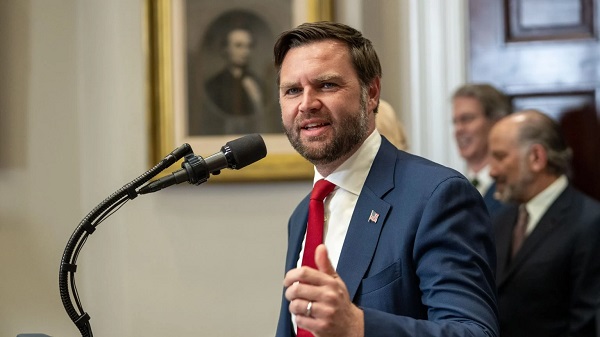
US Vice President JD Vance criticized the European Union this week after rumors reportedly surfaced that Brussels may seek to punish X for refusing to remove certain online speech.

In a post on X, Vance wrote, “Rumors swirling that the EU commission will fine X hundreds of millions of dollars for not engaging in censorship. The EU should be supporting free speech not attacking American companies over garbage.”

His remarks reflect growing tension between the United States and the EU over the future of online speech and the expanding role of governments in dictating what can be said on global digital platforms.

Screenshot of a verified social-media post with a profile photo, reading: "Rumors swirling that the EU commission will fine X hundreds of millions of dollars for not engaging in censorship. The EU should be supporting free speech not attacking American companies over garbage." Timestamp Dec 4, 2025, 5:03 PM and "1.1M Views" shown.

Vance was likely referring to rumors that Brussels intends to impose massive penalties under the bloc’s Digital Services Act (DSA), a censorship framework that requires major platforms to delete what regulators define as “illegal” or “harmful” speech, with violations punishable by fines up to six percent of global annual revenue.

For Vance, this development fits a pattern he’s been warning about since the spring.

In a May 2025 interview, he cautioned that “The kind of social media censorship that we’ve seen in Western Europe, it will and in some ways, it already has, made its way to the United States. That was the story of the Biden administration silencing people on social media.”

He added, “We’re going to be very protective of American interests when it comes to things like social media regulation. We want to promote free speech. We don’t want our European friends telling social media companies that they have to silence Christians or silence conservatives.”

Yet while the Vice President points to Europe as the source of the problem, a similar agenda is also advancing in Washington under the banner of “protecting children online.”

This week’s congressional hearing on that subject opened in the usual way: familiar talking points, bipartisan outrage, and the recurring claim that online censorship is necessary for safety.

The House Subcommittee on Commerce, Manufacturing, and Trade convened to promote a bundle of bills collectively branded as the “Kids Online Safety Package.”

The session, titled “Legislative Solutions to Protect Children and Teens Online,” quickly turned into a competition over who could endorse broader surveillance and moderation powers with the most moral conviction.

Rep. Gus Bilirakis (R-FL) opened the hearing by pledging that the bills were “mindful of the Constitution’s protections for free speech,” before conceding that “laws with good intentions have been struck down for violating the First Amendment.”

Despite that admission, lawmakers from both parties pressed ahead with proposals requiring digital ID age verification systems, platform-level content filters, and expanded government authority to police online spaces; all similar to the EU’s DSA censorship law.

Vance has cautioned that these measures, however well-intentioned, mark a deeper ideological divide. “It’s not that we are not friends,” he said earlier this year, “but there’re gonna have some disagreements you didn’t see 10 years ago.”

That divide is now visible on both sides of the Atlantic: a shared willingness among policymakers to restrict speech for perceived social benefit, and a shrinking space for those who argue that freedom itself is the safeguard worth protecting.

If you’re tired of censorship and surveillance, join Reclaim The Net.

Fight censorship and surveillance. Reclaim your digital freedom.

Get news updates, features, and alternative tech explorations to defend your digital rights.

Continue Reading

Trending

X