
Opinion
The CBC is failing by every metric. It’s promotion of ‘non-binary’ insanity shows why



From LifeSiteNews

The percentage of Canadians who watch CBC content is within the statistical margin of error. Which, incidentally, I find encouraging – the ideological drivel they serve under the banner of ‘Canadian content’ has caused Canadians to tune out.
Last May, the editorial board of the Globe and Mail took an uncharacteristically surprising position. Canada’s state broadcaster the Canadian Broadcasting Corporation (CBC), they observed, has failed by any metric:
CBC English-language television is failing badly. CBC’s third-quarter report shows its share of the national prime-time viewing audience dropped to 4.4 per cent (excluding Saturday), down sharply from 7.6 per cent in 2018, and trending below target for the year. Or, to turn that around: 95.6 per cent of TV-viewing Canadians do not tune in to CBC’s English language prime-time programming.
Supper-hour newscasts in English-speaking markets are attracting tiny audiences. In Calgary, the CBC daily broadcast reaches just 20,000 people, on average.
As English TV audiences have been shrinking, the CBC’s annual government funding has increased, up nearly 21 per cent from 2016, to $1.24-billion in 2022. (That funding is for all of CBC’s operations, not just English television).
The CBC is effectively crowding out competitors using money given to them by the government (which the government took from the taxpayers). Canadians are paying for something that, by the numbers, they do not want. We are funding the careers of delusional activists who use tax dollars to aggressively push a far-left agenda, campaigning against any Canadian conservative who dares to say something mildly centrist and for the boundary-smashing agenda of the LGBT movement.
In short, we are paying for the extravagantly expensive vanity project of a handful of out-of-touch elites who claim they are essential but cannot get a viewership for their state-funded content. The percentage of Canadians who watch CBC content is within the statistical margin of error. Which, incidentally, I find encouraging – the ideological drivel they serve under the banner of “Canadian content” has caused Canadians to tune out.
Consider, for example, a new CBC documentary – part of a series ironically titled “The Nature of Things” – titled Fluid: Life Beyond the Binary. “Non-binary Toronto comedian and actor Mae Martin says their new documentary about gender fluidity feels especially relevant as transgender rights ‘are really under attack’ in Canada and the United States,” CityNews Toronto reported. Martin wants to tackle “dangerous myths about gender identity perpetuated on both sides of the border,” such as the reality of biological sex.
The documentary is directed by a former executive producer of “Canada’s Drag Race” and takes aim at Alberta Premier Danielle Smith’s science-driven proposal to ban sex change “treatments” for minors, which Martin calls “disheartening”: “It’s so disheartening. To feel like you have no recourse and no support and you’re being demonized, particularly when you’re young and going to school, I think that’s pretty devastating.” To be clear, this is a government-funded LGBT activist cosplaying as a comedian getting paid by the state to attack an elected premier for advocating a policy supported by a solid majority of Canadians.
Martin, who is a trans-identifying female, had a double mastectomy in 2021, went on testosterone afterwards, and is an advocate for “sex change” surgeries. She did not explain why, if she is “non-binary,” she needs to use the “they” pronoun – or why she needed surgeries or drugs at all. She did, however, explain how female lions who develop masculine traits when taking care of the pride is an example of evidence for the transgender movement’s premises. If you believe that, I’ve got a pretty good idea of who you’re voting for.
Martin enthused that it is very exciting for “a revered institution” like the CBC to tackle gender fluidity, and said she hopes Fluid will create “more empathy and understanding” among Canadians. Unfortunately for Martin but fortunately for the Canadian public, almost nobody watches this stuff. We do, however, have yet another example of why a Conservative government needs to make defunding the CBC a top priority. The CBC is no longer revered; it is barely relevant. We shouldn’t have to pay for a handful of activists to talk to themselves and their delusional clique.


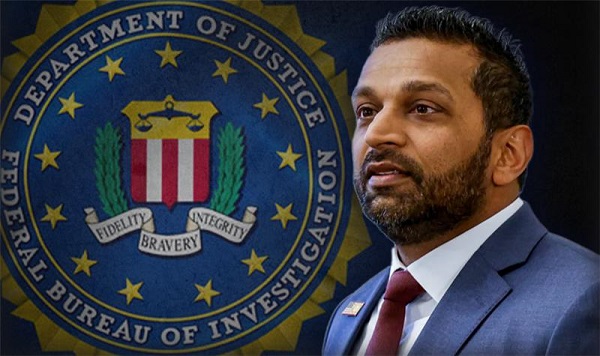

FBI Director Kash Patel issued a blunt warning over the weekend as federal investigators continue unraveling a sprawling fraud operation centered in Minnesota, saying the hundreds of millions already uncovered represent “just the tip of a very large iceberg.”
In a lengthy statement posted to social media, Patel said the Federal Bureau of Investigation had quietly surged agents and investigative resources into the state well before the scandal gained traction online. That effort, he said, led to the takedown of an estimated $250 million fraud scheme that stole federal food aid intended for vulnerable children during the COVID pandemic.
According to Patel, the investigation exposed a network of sham vendors, shell companies, and large-scale money laundering operations tied to the Feeding Our Future case. Defendants named by the FBI include Abdiwahab Ahmed Mohamud, Ahmed Ali, Hussein Farah, Abdullahe Nur Jesow, Asha Farhan Hassan, Ousman Camara, and Abdirashid Bixi Dool, each charged with offenses ranging from wire fraud to conspiracy and money laundering.
Patel also said Abdimajid Mohamed Nur and others were charged in a separate attempt to bribe a juror with $120,000 in cash. He noted that several related cases have already resulted in guilty pleas, prison sentences of up to 10 years, and nearly $48 million in restitution orders.
Despite those outcomes, Patel warned the case is far from finished.
“The FBI believes this is just the tip of a very large iceberg,” he said, adding that investigators will continue following the money and that the probe remains ongoing. Patel further confirmed that many of those convicted are being referred to immigration authorities for possible denaturalization and deportation proceedings where legally applicable.
The renewed focus follows a viral video circulated by independent journalist Nick Shirley, which appeared to show multiple childcare and learning centers operating as empty or nonfunctional storefronts. The footage sparked immediate backlash from Republicans, including Vice President JD Vance.
House Majority Whip Tom Emmer accused Minnesota Gov. Tim Walz of sitting idle while massive sums were stolen from taxpayers. Walz addressed the allegations during a November press conference, before the full scope of the fraud became public, saying the scandal “undermines trust in government” and threatens programs meant to help vulnerable residents.
“If you’re committing fraud, no matter where you come from or what you believe, you are going to go to jail,” Walz said at the time.
Authorities say the alleged schemes date back to at least 2015, beginning with overbilling Minnesota’s Child Care Assistance Program and later expanding into Medicaid-funded disability and housing programs. One such housing initiative, aimed at helping seniors and disabled residents secure stable housing, was shut down earlier this year after officials cited what they described as large-scale fraud.
The fallout has already reached the federal level. Last month, President Trump announced the suspension of Temporary Protected Status for Somali nationals, arguing that Minnesota had become a hub for organized welfare fraud and money laundering activity.

Vice President JD Vance is giving public credit to a YouTube journalist for doing what he says legacy media and elite institutions have failed to do: follow the money in Minnesota. In a post on X, Vance praised independent reporter Nick Shirley for digging into alleged fraud networks tied to the state, saying Shirley “has done far more useful journalism than any of the winners of the 2024 Pulitzer prizes.” The comment was a direct response to a video Shirley shared online documenting what he described as widespread fraud, with Shirley claiming his team identified more than $110 million in suspicious activity in a single day while confronting facilities allegedly receiving millions in public funds.
Shirley’s reporting has been circulating widely among conservatives, with commentators amplifying clips of him visiting supposed daycare and education centers that appeared inactive despite receiving massive federal aid. Conservative media personality Benny Johnson said Shirley had exposed more than $100 million in Minnesota Somali-linked fraud routed through fake daycare and healthcare fronts, adding to the pressure on state leadership. The issue gained further traction after Tom Emmer, Minnesota’s top House Republican, demanded answers from Gov. Tim Walz following a viral clip showing Shirley confronting workers at an alleged daycare in South Minneapolis. Shirley reported the center, called the “Quality Learning Center,” showed no visible activity despite claims it served up to 99 children, and even misspelled “learning” on its signage. As Shirley approached, a woman inside was heard shouting “Don’t open up,” while incorrectly accusing him of being an ICE agent.
🚨 Here is the full 42 minutes of my crew and I exposing Minnesota fraud, this might be my most important work yet. We uncovered over $110,000,000 in ONE day. Like it and share it around like wildfire! Its time to hold these corrupt politicians and fraudsters accountable
We ALL… pic.twitter.com/E3Penx2o7a
— Nick shirley (@nickshirleyy) December 26, 2025
The controversy builds on earlier reporting from City Journal, which published a November investigation citing federal counterterrorism sources who said millions of dollars siphoned through Minnesota fraud schemes had been sent overseas, with some of the money allegedly ending up in the hands of Al-Shabaab. One confidential source quoted in the report bluntly claimed, “The largest funder of Al-Shabaab is the Minnesota taxpayer.” Since that report, the scrutiny has widened inside the Trump administration. Treasury Secretary Scott Bessent has announced that the Treasury Department is examining whether Minnesota taxpayer funds were diverted to terrorist-linked groups, while Education Secretary Linda McMahon has publicly called on Walz to resign amid separate allegations of large-scale education fraud within the state’s college system.
Taken together, the attention from Vance, congressional Republicans, and multiple federal agencies has elevated Shirley’s reporting from viral internet content to a flashpoint in a broader debate over fraud, accountability, and the role of independent journalists. For the vice president, the message was clear: real accountability sometimes comes not from prize committees or press rooms, but from outsiders willing to ask uncomfortable questions and stand in front of locked doors with a camera rolling.

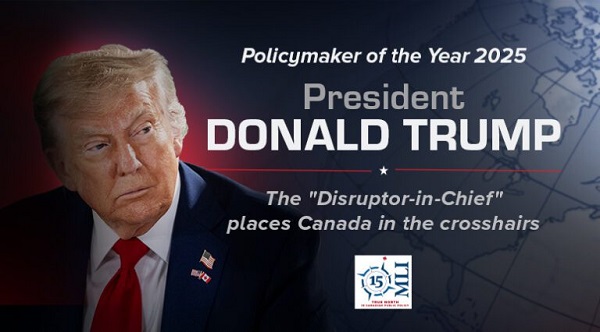
The “Disruptor-in-Chief” places Canada in the crosshairs
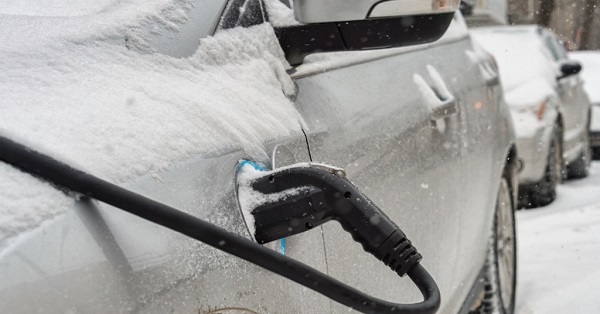
Canada’s EV gamble is starting to backfire

End Supply Management—For the Sake of Canadian Consumers

UK Police Pilot AI System to Track “Suspicious” Driver Journeys

Judge Declares Mistrial in Landmark New York PRC Foreign-Agent Case

Canadian government launches trial version of digital ID for certain licenses, permits

Alberta Next Panel calls to reform how Canada works
-
 Business2 days ago
“Magnitude cannot be overstated”: Minnesota aid scam may reach $9 billion
-
 Business2 days ago
Largest fraud in US history? Independent Journalist visits numerous daycare centres with no children, revealing massive scam
-
 Haultain Research22 hours ago
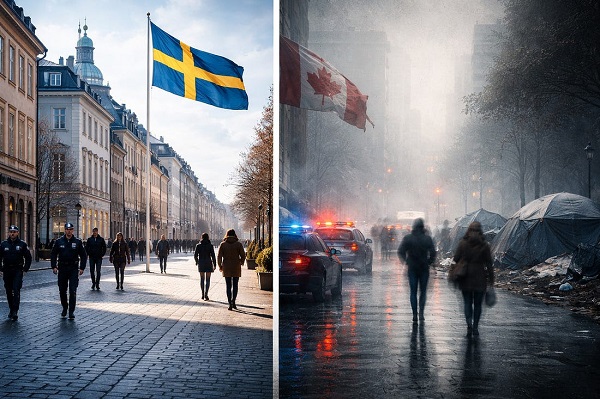
Sweden Fixed What Canada Won’t Even Name
-
 Censorship Industrial Complex2 days ago
US Under Secretary of State Slams UK and EU Over Online Speech Regulation, Announces Release of Files on Past Censorship Efforts
-
 Business21 hours ago
What Do Loyalty Rewards Programs Cost Us?
-
 Business9 hours ago
Land use will be British Columbia’s biggest issue in 2026
-
 Energy10 hours ago
Why Japan wants Western Canadian LNG
-
Business7 hours ago
Mainstream media missing in action as YouTuber blows lid off massive taxpayer fraud