
Frontier Centre for Public Policy
Tent Cities Were Rare Five Years Ago. Now They’re Everywhere


From the Frontier Centre for Public Policy

Canada’s homelessness crisis has intensified dramatically, with about 60,000 people homeless this Christmas and chronic homelessness becoming entrenched as shelters overflow and encampments spread. Policy failures in immigration, housing, monetary policy, shelters, harm reduction, and Indigenous governance have driven the crisis. Only reversing these policies can meaningfully address it.
Encampments that were meant to be temporary have become a permanent feature in our communities
As Canadians settle in for the holiday season, 60,000 people across this country will spend Christmas night in a tent, a doorway, or a shelter bed intended to be temporary. Some will have been there for months, perhaps years. The number has quadrupled in six years.
In October 2024, enumerators in 74 Canadian communities conducted the most comprehensive count of homelessness this country has attempted. They found 17,088 people sleeping without shelter on a single autumn night, and 4,982 of them living in encampments. The count excluded Quebec entirely. The real number is certainly higher.
In Ontario alone, homelessness increased 51 per cent between 2016 and 2024. Chronic homelessness has tripled. For the first time, more than half of all homelessness in that province is chronic. People are no longer moving through the system. They are becoming permanent fixtures within it.
Toronto’s homeless population more than doubled between April 2021 and October 2024, from 7,300 to 15,418. Tents now appear in places that were never seen a decade ago. The city has 9,594 people using its shelter system on any given night, yet 158 are turned away each evening because no beds are available.
Calgary recorded 436 homeless deaths in 2023, nearly double the previous year. The Ontario report projects that without significant policy changes, between 165,000 and 294,000 people could experience homelessness annually in that province alone by 2035.
The federal government announced in September 2024 that it would allocate $250 million over two years to address encampments. Ontario received $88 million for ten municipalities. The Association of Municipalities of Ontario calculated that ending chronic homelessness in their province would require $11 billion over ten years. The federal contribution represents less than one per cent of what is needed.
Yet the same federal government found $50 billion for automotive subsidies and battery plants. They borrow tonnes of money to help foreign car manufacturers with EVs, while tens of thousands are homeless. But money alone does not solve problems. Pouring billions into a bureaucratic system that has failed spectacularly without addressing the policies that created the crisis would be useless.
Five years ago, tent cities were virtually unknown in most Canadian communities. Recent policy choices fuelled it, and different choices can help unmake it.
Start with immigration policy. The federal government increased annual targets to over 500,000 without ensuring housing capacity existed. Between 2021 and 2024, refugees and asylum seekers experiencing chronic homelessness increased by 475 per cent. These are people invited to Canada under federal policy, then abandoned to municipal shelter systems already at capacity.
Then there is monetary policy. Pandemic spending drove inflation, which made housing unaffordable. Housing supply remains constrained by policy. Development charges, zoning restrictions, and approval processes spanning years prevent construction at the required scale. Municipal governments layer fees onto new developments, making projects uneconomical.
Shelter policy itself has become counterproductive. The average shelter stay increased from 39 days in 2015 to 56 days in 2022. There are no time limits, no requirements, no expectations. Meanwhile, restrictive rules around curfews, visitors, and pets drive 85 per cent of homeless people to avoid shelters entirely, preferring tents to institutional control.
The expansion of harm reduction programs has substituted enabling for treatment. Safe supply initiatives provide drugs to addicts without requiring participation in recovery programs. Sixty-one per cent cite substance use issues, yet the policy response is to make drug use safer rather than to make sobriety achievable. Treatment programs with accountability would serve dignity far better than an endless supply of free drugs.
Indigenous people account for 44.6 per cent of those experiencing chronic homelessness in Northern Ontario despite comprising less than three per cent of the general population. This overrepresentation is exacerbated by policies that fail to recognize Indigenous governance and self-determination as essential. Billions allocated to Indigenous communities are never scrutinized.
The question Canadians might ask this winter is whether charity can substitute for competent policy. The answer is empirically clear: it cannot. What is required before any meaningful solutions is a reversal of the policies that broke it.
Marco Navarro-Genie is vice-president of research at the Frontier Centre for Public Policy and co-author with Barry Cooper of Canada’s COVID: The Story of a Pandemic Moral Panic (2023).


From the Frontier Centre for Public Policy
Livestock contribute far less to emissions than activists claim, and eliminating them would weaken nutrition, resilience and food security
The war on livestock pushed by Net Zero ideologues is not environmental science; it’s a dangerous, misguided campaign that threatens global food security.
The priests of Net Zero 2050 have declared war on the cow, the pig and the chicken. From glass towers in London, Brussels and Ottawa, they argue that cutting animal protein, shrinking herds and pushing people toward lentils and lab-grown alternatives will save the climate from a steer’s burp.
This is not science. It is an urban belief that billions of people can be pushed toward a diet promoted by some policymakers who have never worked a field or heard a rooster at dawn. Eliminating or sharply reducing livestock would destabilize food systems and increase global hunger. In Canada, livestock account for about three per cent of total greenhouse gas emissions, according to Environment and Climate Change Canada.
Activists speak as if livestock suddenly appeared in the last century, belching fossil carbon into the air. In reality, the relationship between humans and the animals we raise is older than agriculture. It is part of how our species developed.
Two million years ago, early humans ate meat and marrow, mastered fire and developed larger brains. The expensive-tissue hypothesis, a theory that explains how early humans traded gut size for brain growth, is not ideology; it is basic anthropology. Animal fat and protein helped build the human brain and the societies that followed.
Domestication deepened that relationship. When humans raised cattle, sheep, pigs and chickens, we created a long partnership that shaped both species. Wolves became dogs. Aurochs, the wild ancestors of modern cattle, became domesticated animals. Junglefowl became chickens that could lay eggs reliably. These animals lived with us because it increased their chances of survival.
In return, they received protection, veterinary care and steady food during drought and winter. More than 70,000 Canadian farms raise cattle, hogs, poultry or sheep, supporting hundreds of thousands of jobs across the supply chain.
Livestock also protected people from climate extremes. When crops failed, grasslands still produced forage, and herds converted that into food. During the Little Ice Age, millions in Europe starved because grain crops collapsed. Pastoral communities, which lived from herding livestock rather than crops, survived because their herds could still graze. Removing livestock would offer little climate benefit, yet it would eliminate one of humanity’s most reliable protections against environmental shocks.
Today, a Maasai child in Kenya or northern Tanzania drinking milk from a cow grazing on dry land has a steadier food source than a vegan in a Berlin apartment relying on global shipping. Modern genetics and nutrition have pushed this relationship further. For the first time, the poorest billion people have access to complete protein and key nutrients such as iron, zinc, B12 and retinol, a form of vitamin A, that plants cannot supply without industrial processing or fortification. Canada also imports significant volumes of soy-based and other plant-protein products, making many urban vegan diets more dependent on long-distance supply chains than people assume. The war on livestock is not a war on carbon; it is a war on the most successful anti-poverty tool ever created.
And what about the animals? Remove humans tomorrow and most commercial chickens would die of exposure, merino sheep would overheat under their own wool and dairy cattle would suffer from untreated mastitis (a bacterial infection of the udder). These species are fully domesticated. Without us, they would disappear.
Net Zero 2050 is a climate target adopted by federal and provincial governments, but debates continue over whether it requires reducing livestock herds or simply improving farm practices. Net Zero advocates look at a pasture and see methane. Farmers see land producing food from nothing more than sunlight, rain and grass.
So the question is not technical. It is about how we see ourselves. Does the Net Zero vision treat humans as part of the natural world, or as a threat that must be contained by forcing diets and erasing long-standing food systems? Eliminating livestock sends the message that human presence itself is an environmental problem, not a participant in a functioning ecosystem.
The cow is not the enemy of the planet. Pasture is not a problem to fix. It is a solution our ancestors discovered long before anyone used the word “sustainable.” We abandon it at our peril and at theirs.
Dr. Joseph Fournier is a senior fellow at the Frontier Centre for Public Policy. An accomplished scientist and former energy executive, he holds graduate training in chemical physics and has written more than 100 articles on energy, environment and climate science.
Frontier Centre for Public Policy
Canada Lets Child-Porn Offenders Off Easy While Targeting Bible Believers

From the Fr0ntier Centre for Public Policy
By Lee Harding
Judges struck down one-year minimum prison sentences for child pornography possession. Meanwhile, the chair of the Parliamentary Human Rights Committee publicly stated that religious scriptures condemning homosexuality are “hateful.” Lee Harding says the 1982 Charter has led to an inversion of Canadian values.
Light sentences for child-porn possession collide with federal signals that biblical texts could be prosecuted as hate
Was Canada’s 1982 Charter meant to condemn the Bible as hate literature or to weaken sentencing for child pornography? Like it or not, that is the direction post-Charter Canada is moving.
For Halloween, the black-robed justices at the Supreme Court of Canada ruled that a one-year mandatory sentence for accessing or possessing child sexual abuse materials amounted to “cruel and unusual punishment.” The judgment upheld a similar ruling from the Quebec Court of Appeal.
A narrow 5-4 majority leaned on a hypothetical. If an 18-year-old received a sexually explicit image from a 17-year-old girlfriend, that image would technically be child porn. If prosecuted, the recipient could face a one-year minimum sentence. On that basis, the judges rejected the entire minimum sentence law.
But the real case before them was far more disturbing. Two Quebec men possessed images and videos that were clearly the result of abuse. One had 317 unique images of child porn, with 90 per cent showing girls aged three to six years old forced into penetration and sodomy by adults or other minors. The other had 531 images and 274 videos of girls aged five to 10 engaged in sexual acts, including anal and vaginal penetration and, in some cases, multiple children.
The sentences were light. The first offender received 90 days of intermittent imprisonment, served concurrently, plus 24 months of probation. The second received nine months of imprisonment and the same probation period. How is this acceptable?
The judgment did not emerge without warning. Daniel A. Lang, a Liberal campaign chair appointed to the Senate by Lester B. Pearson, saw this coming more than 40 years ago. On April 23, 1981, he expressed concerns that the new Constitution could be used to erode basic decency laws. He pointed to the U.S. experience and predicted that Canada could face a wave of cases challenging laws on “obscenity, pornography and freedom of speech,” leading to the “negation of federal or provincial legislation.”
His warning has come true. If Parliament wants to restore mandatory minimum sentences, it can do so by passing a new law that removes the obscure scenario judges used to strike them down. Section 33, the notwithstanding clause, gives elected officials the power to override court rulings for up to five years at a time.
This reflects Canada’s own system. In the British tradition Canada inherited, Parliament—not the courts—is the ultimate authority. British common law developed over centuries through conventions and precedents shaped by elected lawmakers. Section 33 protects that balance by ensuring Parliament can still act when judges disagree.
There is a democratic check as well. If a government uses Section 33 and voters believe it made the wrong call, they can remove that government at the next election. A new government can then follow the judges’ views or let the old law expire after five years. That accountability is precisely why Section 33 strengthens democracy rather than weakening it.
Yet today, Ottawa is working to limit that safeguard. In September, the Carney Liberals asked the Supreme Court to rule on new limits to how legislatures can use Section 33. Five premiers wrote to Carney to oppose the move. Former Newfoundland and Labrador premier Brian Peckford, the last living signatory to the agreement that produced the 1982 Constitution Act, has also condemned the attempt as wrongful.
The judges will likely approve the new limits. Why would they refuse a chance to narrow the one tool elected governments have to get around their rulings? For decades, the Supreme Court has made a habit of striking down laws, telling Parliament it is wrong and forcing political change.
And while minimum sentences for child-porn offenders fall, the Carney cabinet is focused on something else entirely: prosecuting Bible believers for alleged hate.
The quiet part was said out loud by Montreal lawyer Marc Miller, former minister of immigration and citizenship and chair of the Parliamentary Human Rights Committee. On Oct. 30, he told the committee, “In Leviticus, Deuteronomy, Romans, there’s other passages, there’s clear hatred towards, for example, homosexuals.”
The former minister added, “There should perhaps be discretion for prosecutors to press charges … [T]here are clearly passages in religious texts that are clearly hateful.”
That is the former minister’s view. Instead of Bible thumpers, we now have Charter thumpers who use their “sacred” document to justify whatever interpretation suits their cause and wield it against their ideological opponents. When wokeness hardens into dogma, disagreement becomes heresy. And we know what happens to heretics.
A country that lets child-porn offenders off easy while it hunts down Bible believers for fines and possible prison has lost its way. Most Canadians would reject this trade-off, but their rulers do not, whether in cabinet or on the judges’ bench. A dark shadow is settling over the country.
Lee Harding is a research fellow for the Frontier Centre for Public Policy


Brown University shooter dead of apparent self-inflicted gunshot wound

Canada Hits the Brakes on Population

Alberta’s new diagnostic policy appears to meet standard for Canada Health Act compliance

RFK Jr reversing Biden-era policies on gender transition care for minors

Why is Canada paying for dairy ‘losses’ during a boom?

Geopolitics no longer drives oil prices the way it used to

Ex-FDA Commissioners Against Higher Vaccine Standards Took $6 Million From COVID Vaccine Makers
-
 International2 days ago
Georgia county admits illegally certifying 315k ballots in 2020 presidential election
-
 Business2 days ago
Warning Canada: China’s Economic Miracle Was Built on Mass Displacement
-
 Alberta2 days ago
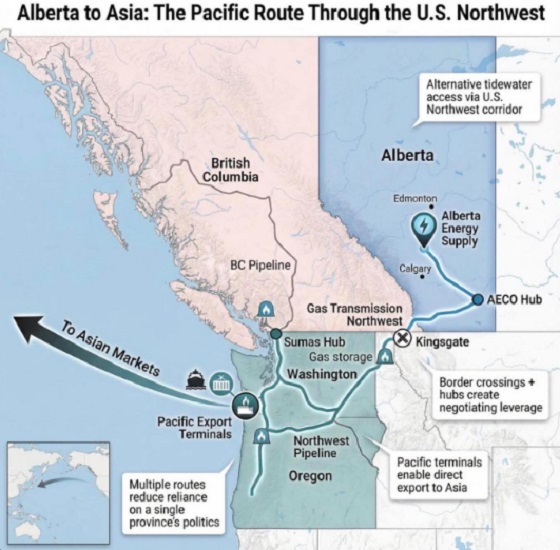
What are the odds of a pipeline through the American Pacific Northwest
-
 International2 days ago
Communist China arrests hundreds of Christians just days before Christmas
-
 Alberta2 days ago
A Christmas wish list for health-care reform
-
 Business1 day ago
Some Of The Wackiest Things Featured In Rand Paul’s New Report Alleging $1,639,135,969,608 In Gov’t Waste
-
 Energy1 day ago
‘The electric story is over’
-
 Energy23 hours ago
Western Canada’s supply chain for Santa Claus