
Uncategorized
Tax Freedom Day – Canadian families face larger tax burden than last year



From the Fraser Institute
By Grady Munro and Jake Fuss

According to a recent poll, nearly half of all Canadians are living paycheque to paycheque. While inflation has cooled and the steep growth in grocery prices has abated, taxes remain the single largest expense for Canadian families, and their tax bill continues to rise.
Canadians pay many different taxes and it can be hard to know how much you pay in total. We pay income taxes, sales taxes, health taxes, payroll taxes, property taxes and many others as part of our total tax bill. But while some of these taxes are visible—for example, you can check your income tax return to see how much you pay in personal income taxes—many others are hidden.
To help Canadians understand how much they pay in taxes, each year the Fraser Institute calculates Tax Freedom Day—the day of the year when the average Canadian family has earned enough money to pay all taxes levied by the federal, provincial and local governments. In other words, if Canadians were required to pay all their taxes up front, each and every dollar they earned prior to Tax Freedom Day would be paid to the government.
In 2024, the average Canadian family (two or more people) earning $147,570 will pay an estimated $65,766 in total taxes—or 44.6 per cent of its income. So, if you paid all your taxes for 2024 up front, you would pay the government every dollar you earned until June 13. After working the first 164 days of the year for the government, you now get to work for yourself.
Arriving on June 13, this year’s Tax Freedom Day comes one day later than last year—meaning the average Canadian family must work one day extra to pay off its total tax bill—because while the average family saw its income rise by 3.1 per cent, its total tax bill rose by 3.9 per cent.
And all signs point to rising taxes in the future.
This year the federal government expects to run a $39.8 billion deficit. Moreover, cumulative provincial deficits are projected to equal $30.1 billion, meaning total federal/provincial government debt is expected to increase by $69.9 billion in 2024/25. Future generations of Canadians will undoubtedly face tax increases to pay off this debt and few governments are demonstrating any fiscal restraint. Several governments (notably the federal government) have no plans to balance their budgets in the foreseeable future.
To help illustrate the size of the debt burden we’re passing on, we also calculate a Balanced Budget Tax Freedom Day, which reveals the hypothetical tax burden on Canadians if governments across the country had to raise taxes today to balance their budgets. This year, Balanced Budget Tax Freedom Day would arrive on June 23—10 days later than Tax Freedom Day.
With Tax Freedom Day falling one day later than last year, the burden of taxation is increasing for Canadian families. Unfortunately, governments are demonstrating little to no fiscal restraint, meaning Tax Freedom Day will likely arrive later in years to come.
Authors:




The cost of the bureaucracy increased by $6 billion last year, according to newly released numbers in Public Accounts disclosures. The Canadian Taxpayers Federation is calling on Prime Minister Mark Carney to immediately shrink the bureaucracy.
“The Public Accounts show the cost of the federal bureaucracy is out of control,” said Franco Terrazzano, CTF Federal Director. “Tinkering around the edges won’t cut it, Carney needs to take urgent action to shrink the bloated federal bureaucracy.”
The federal bureaucracy cost taxpayers $71.4 billion in 2024-25, according to the Public Accounts. The cost of the federal bureaucracy increased by $6 billion, or more than nine per cent, over the last year.
The federal bureaucracy cost taxpayers $39.6 billion in 2015-16, according to the Public Accounts. That means the cost of the federal bureaucracy increased 80 per cent over the last 10 years. The government added 99,000 extra bureaucrats between 2015-16 and 2024-25.
Half of Canadians say federal services have gotten worse since 2016, despite the massive increase in the federal bureaucracy, according to a Leger poll.
Not only has the size of the bureaucracy increased, the cost of consultants, contractors and outsourcing has increased as well. The government spent $23.1 billion on “professional and special services” last year, according to the Public Accounts. That’s an 11 per cent increase over the previous year. The government’s spending on professional and special services more than doubled since 2015-16.
“Taxpayers should not be paying way more for in-house government bureaucrats and way more for outside help,” Terrazzano said. “Mere promises to find minor savings in the federal bureaucracy won’t fix Canada’s finances.
“Taxpayers need Carney to take urgent action and significantly cut the number of bureaucrats now.”
Table: Cost of bureaucracy and professional and special services, Public Accounts
| Year | Bureaucracy | Professional and special services |
|
$71,369,677,000 |
$23,145,218,000 |
|
|
$65,326,643,000 |
$20,771,477,000 |
|
|
$56,467,851,000 |
$18,591,373,000 |
|
|
$60,676,243,000 |
$17,511,078,000 |
|
|
$52,984,272,000 |
$14,720,455,000 |
|
|
$46,349,166,000 |
$13,334,341,000 |
|
|
$46,131,628,000 |
$12,940,395,000 |
|
|
$45,262,821,000 |
$12,950,619,000 |
|
|
$38,909,594,000 |
$11,910,257,000 |
|
|
$39,616,656,000 |
$11,082,974,000 |

From the Daily Caller News Foundation
By Jason Hopkins
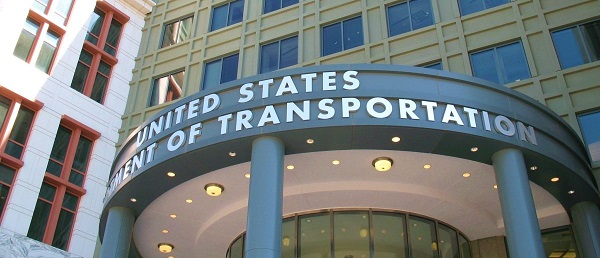
The Trump administration is creating a first-of-its-kind task force aimed at ushering in a new “Golden Age” of beautiful infrastructure across the U.S.
The Department of Transportation (DOT) will announce the establishment of the Beautifying Transportation Infrastructure Council (BTIC) on Thursday, the Daily Caller News Foundation exclusively learned. The BTIC seeks to advise Transportation Secretary Sean Duffy on design and policy ideas for key infrastructure projects, including highways, bridges and transit hubs.
“What happened to our country’s proud tradition of building great, big, beautiful things?” Duffy said in a statement shared with the DCNF. “It’s time the design for America’s latest infrastructure projects reflects our nation’s strength, pride, and promise.”
“We’re engaging the best and brightest minds in architectural design and engineering to make beautiful structures that move you and bring about a new Golden Age of Transportation,” Duffy continued.
Mini scoop – here is the DOT’s rollout of its Beautifying Transportation Infrastructure Council, which will be tasked with making our buildings beautiful again. pic.twitter.com/
9iV2xSxdJM — Jason Hopkins (@jasonhopkinsdc) October 23, 2025
The DOT is encouraging nominations of the country’s best architects, urban planners, artists and others to serve on the council, according to the department. While ensuring that efficiency and safety remain a top priority, the BTIC will provide guidance on projects that “enhance” public areas and develop aesthetic performance metrics.
The new council aligns with an executive order signed by President Donald Trump in August 2025 regarding infrastructure. The “Making Federal Architecture Beautiful Again” order calls for federal public buildings in the country to “respect regional architectural heritage” and aims to prevent federal construction projects from using modernist and brutalist architecture styles, instead returning to a classical style.
“The Founders, in line with great societies before them, attached great importance to Federal civic architecture,” Trump’s order stated. “They wanted America’s public buildings to inspire the American people and encourage civic virtue.”
“President George Washington and Secretary of State Thomas Jefferson consciously modeled the most important buildings in Washington, D.C., on the classical architecture of ancient Athens and Rome,” the order continued. “Because of their proven ability to meet these requirements, classical and traditional architecture are preferred modes of architectural design.”
The DOT invested millions in major infrastructure projects since Trump’s return to the White House. Duffy announced in August a $43 million transformation initiative of the New York Penn Station in New York City and in September unveiledmajor progress in the rehabilitation and modernization of Washington Union Station in Washington, D.C.
The BTIC will comprise up to 11 members who will serve two-year terms, with the chance to be reappointed, according to the DOT. The task force will meet biannually. The deadline for nominations will end Nov. 21.

New era of police accountability

Tech Mogul Gives $6 Billion To 25 Million Kids To Boost Trump Investment Accounts

Learning the Truth about “Children’s Graves” and Residential Schools is More Important than Ever

Recent price declines don’t solve Toronto’s housing affordability crisis
Carney’s Toronto cabinet meetings cost $530,000

Emissions Reduction Alberta offering financial boost for the next transformative drilling idea

Health Canada report finds euthanasia now accounts for over 5% of deaths nationwide
-
 Focal Points2 days ago
Pharma Bombshell: President Trump Orders Complete Childhood Vaccine Schedule Review
-
 Business1 day ago
Why Does Canada “Lead” the World in Funding Racist Indoctrination?
-
 Alberta2 days ago
Premier Smith: Canadians support agreement between Alberta and Ottawa and the major economic opportunities it could unlock for the benefit of all
-
 Automotive1 day ago
Trump Deals Biden’s EV Dreams A Death Blow
-
 Automotive1 day ago
Canada’s EV Mandate Is Running On Empty
-
 Media1 day ago
They know they are lying, we know they are lying and they know we know but the lies continue
-
 Opinion2 days ago
Country music star Paul Brandt asks Parliament to toughen laws against child porn
-
 Focal Points1 day ago
The West Needs Bogeymen (Especially Russia)