
Haultain Research
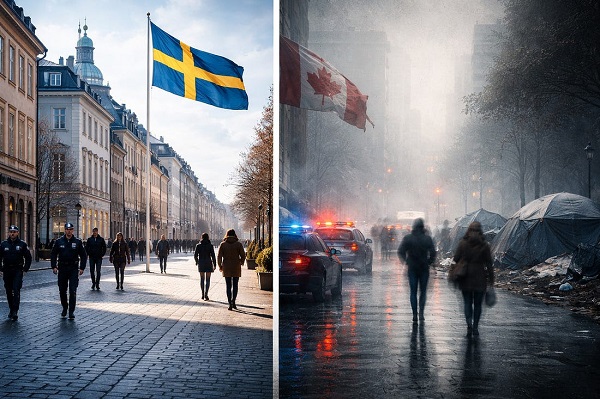
Sweden Fixed What Canada Won’t Even Name


 Marco Navarro-Génie
The Longer Ottawa Delays the Needed Reforms, the Worse It Will Be
Over the past decade, Sweden has undertaken one of the most consequential reversals of immigration and multicultural policy in the Western world. Once celebrated as a moral exemplar of openness, Sweden has moved deliberately toward tighter immigration controls, stricter citizenship requirements, and a civic integration model that places social cohesion above ideological fashion. These reforms emerged not from whim but from a sober political will issuing from social conditions that the Swedish state could no longer manage under existing policy.

Canada today exhibits many of the same underlying conditions that drove Sweden’s course correction, yet its ruling elites lack the wisdom and the courage to change course. Those conditions have been building since at least 2015 and have intensified since the 2020-22 COVID policies. Yet Canada remains immobilized by doctrine, woke culture, ideologically captured institutions, and entrenched incentives that reward delay. The contrast is revealing.
1. Sweden’s Immigration, Citizenship, and Multicultural Reforms
Sweden’s reforms are anchored in the political framework established after the September 2022 election, most notably through the Tidö Agreement. Named after Tidö Castle where the four right-of-centre party leaders negotiated, the agreement set out a program to reduce asylum immigration, tighten family reunification, strengthen enforcement and returns, and raise the threshold for acquiring citizenship. The document runs more than 60 pages and contains nearly 200 reform proposals.
The agreement explicitly targets a “paradigm shift” in Swedish asylum policy. Refugee quotas were slashed from 5,000 per year to just 900. Family reunification rights were reduced to the minimum permitted under EU law. The agreement signals that Sweden will no longer be more generous than its international legal obligations require.
Citizenship reform sits at the centre of this shift. A government inquiry released in January 2025 proposed extending the required period of residence from five years to eight. It introduced stricter self-sufficiency expectations and tightened criminal and conduct standards through an “honourable lifestyle” requirement, which extends the waiting period before an applicant who has committed a crime can be admitted as a Swedish citizen. The proposal also expands citizenship testing to include not only Swedish language proficiency and civic knowledge but also additional areas such as the role of media in society and children’s rights. These legislative amendments are proposed to enter into force on 1 June 2026.
Administrative reforms already require in-person identity verification and expanded documentation for citizenship applicants. Proposals are underway to permit revocation of citizenship in cases of fraud, “system-threatening crime,” or serious national security threats. In September 2025, a government commission proposed revoking permanent residence permits previously granted on asylum-related grounds, requiring affected individuals to obtain citizenship, qualify for a temporary permit, or leave the country by 2027.
Since 2022, approximately 40 legislative proposals have been presented in this restrictive direction, covering naturalization, detention, return, deportation, duration of re-entry bans, and incentive structures for voluntary repatriation. The Social Democrats, the largest opposition party and architects of the 2015-16 policy changes, now advocate a similar migration policy. The political consensus has shifted.
Multiculturalism has not been repealed, but it has been demoted. It is no longer a governing ideology but a social reality managed through integration requirements. Swedish policy now stresses adaptation to Swedish norms rather than state accommodation. Citizenship is treated as the culmination of integration, not a shortcut to it.
2. The Conditions That Forced Sweden’s Hand
Sweden did not change course because restraint became fashionable. It pivoted because conditions became operationally intolerable.
The most visible trigger was organized crime. Sweden experienced a sustained rise in gun violence tied to criminal networks, particularly in urban and suburban areas. Gun violence began increasing in the mid-2000s and accelerated sharply from 2013 onward. By 2022, Sweden recorded 391 confirmed shootings and 63 people killed by gunfire, its bloodiest year of gun violence in modern times. The Swedish National Council for Crime Prevention (Brå) reports that Sweden’s gun homicide rate stands at approximately 4 deaths per million inhabitants, compared to a European average of 1.6. In 2023, 53 people were shot dead, the second-highest number ever recorded.
The problem extends beyond shootings. In 2024, police recorded 317 bombings, more than double the number in 2023. Gang-related explosions rose from 149 incidents in 2023 to 317 in 2024. Media estimates suggest that more than 60,000 people may be connected to organized criminal networks. These networks developed the capacity to recruit minors, intimidate witnesses, launder money, and exploit welfare systems. Swedish authorities began describing the phenomenon as “system-threatening crime,” signalling that the problem had moved beyond ordinary policing into a challenge to state authority itself.
Parallel social fragmentation deepened the multicultural strain. Swedish police identified “vulnerable areas” marked by low employment, weak language integration, limited trust in institutions, and the presence of informal authority structures. As of 2024, approximately 65 such areas exist nationwide, housing around 550,000 people, or 5 percent of Sweden’s population. In the most serious “particularly vulnerable areas,” now numbering 19, police report that the situation makes it “difficult or almost impossible” for them to fulfill their mission. Parallel society structures exercise their own form of justice and control. Residents show widespread disinclination to participate in legal processes, and systematic threats and violence target witnesses.
Schools and social services struggled to enforce standards. Emergency services adapted their behaviour by ensuring proper backup, entering areas via alternative routes, or reversing vehicles to enable quick departure if needed. In 2017, police estimated that 40 percent of residents in vulnerable areas had not completed primary education, and less than half of 15-year-olds in Gothenburg’s especially vulnerable areas qualified for secondary education.
Equally important was the collapse of elite credibility. For years, Swedish political and cultural elites insisted that crime and integration failure were unrelated to migration volume or composition. As evidence accumulated, public trust eroded. Immigration policy became inseparable from questions of public order, welfare sustainability, and state capacity.
Haultain Research is a reader-supported publication.
To receive new posts and support our work, consider becoming a free or paid subscriber.
3. Canada’s Comparable Conditions Since 2015
Canada’s deterioration since 2015 has been real, cumulative, and measurable. It is not identical to Sweden’s experience, but the conditions increasingly rhyme with it.
Crime severity in Canada has risen since 2015, as measured by Statistics Canada’s Crime Severity Index. After a temporary decline in 2020 due to the initial lockdowns, crime severity rose again, with three consecutive years of increases through 2023. The Index decreased 4% in 2024, the second decrease in a decade. The pattern is not linear, but the direction since 2015 is unmistakable. Canada has not enjoyed the sustained improvement in public safety that many citizens still assume is the norm. Several categories of violent crime increased in the post-2020 period, including extortion, which rose 35% in 2023 for the fourth consecutive year.
Canada’s organized crime problem is extensive and deeply embedded. Unlike Sweden’s highly visible gang warfare, much of Canada’s organized crime operates through fentanyl production and trafficking, large-scale auto theft rings exporting vehicles overseas, money laundering through real estate and trade-based schemes, and human trafficking and labour exploitation. This criminal economy is less spectacular but more corrosive. It fuels addiction, distorts housing markets, normalizes fraud, and erodes confidence that the rules apply evenly.
The opioid crisis illustrates the scale of this harm. More than 53,000 Canadians have died from apparent opioid toxicity since January 2016. In the first half of 2025, an average of 21 people died each day. These deaths are not abstractions. They exert sustained pressure on policing, emergency medicine, hospitals, and social services, while feeding criminal networks that thrive where enforcement is slow and authority fragmented.
Canada’s social services have simultaneously degraded. Housing supply failed to keep pace with demand well before the COVID event. The Canada Mortgage and Housing Corporation estimates that restoring affordability levels last seen in 2019 will require between 430,000 and 480,000 new housing units per year for the next decade. This represents an approximate doubling of the current pace of home construction. In 2022, CMHC originally estimated Canada needed 3.5 million additional units by 2030 to restore affordability to early-2000s levels; by 2025, the agency had to scale down its target, effectively acknowledging that early-2000s affordability was no longer realistic. Rapid population growth fuelled by migration after 2020 collided with that shortage, producing rising rents, collapsing affordability, and growing homelessness, including among working Canadians.
Healthcare systems face persistent strain. Emergency departments report rising volumes and extended lengths of stay, with staffing shortages exacerbated by draconian vaccination mandates compounding delays. Schools and municipal services struggle with overcrowding, language integration demands, and infrastructure deficits. These pressures are now structural, not temporary.
Immigration acts as a stress multiplier rather than a sole cause. Population growth has outpaced housing, healthcare, transit, and education capacity. Asylum and temporary resident processing inventories have grown substantially in recent years. Integration expectations remain modest relative to the intake scale.
Public trust erodes quietly, but it erodes under the weight of intimidation by ideological and propagandistic smears of racism. Citizens lower their expectations, adjust their behaviour, and accept disorder as background noise. That adaptation is an early signal of institutional retreat.
4. Canada Remains Paralyzed
Despite these conditions, Canada has not adopted reforms comparable to Sweden’s. The paralysis has multiple, reinforcing causes.
Political entrenchment matters. The same federal party governed from 2015 to early 2025, the period during which many deterioration indicators emerged or intensified, including rising crime severity, prolonged housing unaffordability, growing asylum backlogs, and visible strain across social services. Continuity of power blurs accountability. Structural problems are reframed as inherited, masked as global, or treated as administrative rather than as the predictable outcomes of sustained choices.
Electoral incentives deepen inertia. Immigration policy is closely tied to coalition management in major urban centres in Central Canada, where immigrant communities represent important and growing voting blocs. This is not a claim of illegitimate influence, although serious questions about foreign interference remain unresolved. It is at least electoral arithmetic. Policies perceived as restrictive or enforcement-oriented carry political risk in constituencies where immigration is framed as identity affirmation rather than capacity-limited policy. That risk favours symbolism over structural reform. Canada developed a government that governed through symbolic pronouncements rather than solutions.
Narrative lock-in reinforces the problem, fuelled by a press captured by the federal state through direct subsidies. Immigration and multiculturalism have acquired moral status. Evidence of failure is treated as miscommunication rather than misdesign. Housing shortages become funding debates filled by recurrent promises that never materialize. Crime becomes an optics problem. Service strain becomes a funding argument. The possibility that intake exceeds integration capacity is excluded early from acceptable discourse.
Canada’s advocacy and consultative ecosystem further narrows the space for reform. Many organizations operate within frameworks that assume continued high immigration and expansive accommodation. They do not set policy, but they shape the environment in which policy is evaluated. They, too, are clients of the state.
Urban concentration also matters. The benefits of high immigration accrue disproportionately to metropolitan labour markets and asset-owning sectors. Many of the costs fall on municipalities, renters, younger cohorts, and strained service systems with limited fiscal autonomy. This asymmetry reduces urgency. The wealth and generational gap between beneficiaries of the status quo and those bearing its costs is remarkable.
Jurisdictional fragmentation, often exploited as a political tool, compounds paralysis. Immigration is mostly federal in practice, though it is constitutionally shared. Housing, healthcare delivery, policing resources, and social services are largely provincial or municipal. Lower levels of government see their planning and programmes sabotaged by federal policy that operates without regard for downstream consequences. Responsibility diffuses easily. Problems in Ottawa are treated as separate files rather than as interacting consequences.
Finally, time horizons work against reform. The benefits of high intake are immediate: labour supply, headline GDP growth, and short-term fiscal flows. The costs accumulate slowly: degraded services, entrenched criminal economies, weakened trust. Electoral systems reward short-term stability over long-term repair.
5. Anticipating the Objections
Several objections predictably arise whenever Canada’s immigration and integration failures are raised. They deserve direct answers for the conversation to move forward.
Canada is not Sweden. That is true in the narrow sense and beside the point in the larger one. The comparison is not about copying policies but about recognizing patterns. Organized crime exploits weak enforcement wherever it finds it. Housing shortages follow population growth that outpaces supply in any market. Social trust erodes when citizens experience disorder and declining services while being told that concern itself is the problem. Geography does not repeal capacity limits.
Crime and social strain are unrelated to immigration. This objection mistakes interaction for causation. Immigration does not create every problem. It amplifies existing weaknesses when intake exceeds the capacity of integration and enforcement. Sweden learned this when welfare systems and policing were stretched beyond what trust-based governance could sustain. Canada’s experience since 2015 shows the same interaction at work, compounded by misguided movements to defund police.
Economic benefits justify current levels. Immigration does contribute to labour supply and headline GDP. What is disputed is the assumption that aggregate growth equals public benefit. When gains concentrate in asset inflation and low-wage labour supply, while costs are borne through housing unaffordability, service overload, vanishing productivity growth, and weakened enforcement, social consent erodes.
Reform risks intolerance. This contention confuses enforcement with animus. Sweden’s reforms are based on conduct, compliance, and capacity, not ethnicity or belief. Citizenship thresholds, benefit conditions, and removal enforcement apply by rule, not identity. Treating immigration and citizenship as policy instruments rather than moral symbols is governance, not exclusion.
Canada lacks the legal room to act. This overstates constitutional paralysis. The Charter constrains means, not ends. It requires proportionality and fairness, not the passivity we see daily. The COVID period showed what governments can do and how they can circumvent obstacles when they want something done. Canada retains broad authority over intake levels, enforcement priorities, benefit conditions, and citizenship criteria. The authority needs to be exercised.
These problems are temporary shocks. Canada’s crime trends since 2015, its housing supply gap, its opioid death toll, and its enforcement backlogs are cumulative indicators. But ten years of waiting for them to correct themselves is not prudent (That strategy already failed in the fiscal sphere). It is abdication.
These objections do not defeat the necessity for reform. But they explain the paralyzing delay.
Conclusion
Sweden changed course when a critical and courageous mass of citizens concluded that the state could no longer guarantee cohesion under existing policies. Does Canada have the necessary courage and critical mass to push for similar solutions?
Sweden’s reforms were not driven by hostility to newcomers. They were driven by a sober recognition that inclusion without enforcement and generosity without reciprocity corrode the foundations of a liberal state. Sweden concluded that immigration must align with integration capacity, that citizenship must mean something, and that social trust cannot be sustained by slogans alone.
Canada faces the same choice. Since 2015, crime severity has risen, organized criminal economies have embedded themselves more deeply, housing affordability has collapsed, healthcare systems have strained, and institutional trust has weakened. Since 2020, these pressures have intensified. None of this requires panic. It requires honesty and the courage to face reality.
Meaningful reform is not anti-immigrant, as Sweden has demonstrated. It is pro-citizen and pro-integration. A system that enforces its rules, sets clear thresholds, and aligns intake with capacity is fairer to newcomers and to those of us already here. It offers membership rather than ambiguity, and belonging rather than permanent precarity.
Sweden chose boundaries before its institutions failed. Canada theoretically still has that option. But it lacks the courage to act, the willingness to accept limits and the sobriety to tell the truth about trade-offs. There is room for Canada’s long-established immigrants to take the lead in advocating for these reforms, which the timid Laurentian elites aren’t fit to correct. A serious country does not confuse moral posture with policy, or delay correction until ideological dysfunction hardens into a norm.
The question is not whether Canada needs reform. It is whether it will choose reform deliberately, or be forced to adopt worse policies later under even worse conditions.
Haultain Research is a reader-supported publication.
To receive new posts and support our work, consider becoming a free or paid subscriber.





When Democratic Tools Become Weapons
A Canadian politician once kept his legislative seat while serving time in prison.
Gilles Grégoire, a founding figure in Quebec’s nationalist movement, was convicted in 1983 of multiple counts of sexual assault against minors, mostly girls between the ages of 10 and 14. He inhabited a cell yet remained a member of the National Assembly. A representative of free citizens could no longer walk among them.
Grégoire became the kind of figure who seems made for a recall law. His presence in office after conviction insulted the very notion of a democratic mandate. Yet Quebec lacked recall legislation, and the Assembly chose not to intervene. The episode lingers as a reminder that even robust democracies sometimes fail to protect themselves from rare, glaring contradictions.
Such cases hold powerful sway over the political imagination. They tempt reformers to believe that recall is the cure for democratic injustice, giving it exceptional weight it does not deserve. A constitution shaped by anomalies becomes a constitution shaped by distortion.
We are grateful that you’re enjoying Haultain Research.
For the full experience, and to help us bring you more quality research and commentary, please upgrade your subscription.
Alberta’s own history proves the point, though the lesson has been forgotten. William Aberhart’s rise in 1935 owed more to spiritual magnetism and Depression-era desperation than to prudent reform. He promised Social Credit prosperity through monthly dividends to all citizens. The electorate believed that a new economic order would arrive at a cheerful pace. It did not. Within eighteen months of taking office, Aberhart found himself the target of what he himself had created. His government had passed recall legislation in its first session, fulfilling a campaign promise to democratize Alberta’s government. When the promised dividends failed to materialize, his own constituents in Okotoks-High River began gathering signatures for his removal. The charge was not misconduct but failure to deliver miracles.
Faced with this threat, Aberhart’s government retroactively repealed the recall legislation rather than allow him to be forced from his seat. He thus became the first Canadian politician to institute recall and to be threatened with it. History recorded the episode as a cautionary tale rather than a triumph of democratic vigilance. It showed how easily recall could slip from a tool for integrity to a weapon for frustration, revealing a truth that democratic societies often forget: mechanisms designed for exceptional cases seldom remain limited to them.
Those two stories frame Alberta’s problem today. The province revived recall legislation under Premier Jason Kenney in 2021, with the law taking effect later that year. The measure returned with assurances that high thresholds would prevent misuse. Its defenders claimed recall would restrain arrogance and encourage accountability, offering ordinary Albertans a way to hold politicians accountable between elections. Then, facing discontent within his own party over COVID mandates, Kenney himself became the subject of a different form of recall, a leadership review that undermined his power. Premier Danielle Smith, who succeeded him, amended the recall legislation in July 2025 to make it easier to use. She lowered the signature threshold and extended the collection period, changes that would soon work against her own government.
The result has been quite different from what either leader intended. On October 23, 2025, Alberta approved its first recall petition of the modern era, targeting Education Minister Demetrios Nicolaides in Calgary-Bow. The applicant, Jennifer Yeremiy of a group called AB Resistance, told reporters that their goal was “to put forward enough recalls to trigger an early election.” This was not a response to corruption or criminality. It was an explicit strategy to overturn the results of the 2023 provincial election.
The floodgates opened from there. As of December 10, 2025, twenty-one MLAs face active recall petitions. The list now includes Premier Smith herself, as well as multiple cabinet ministers, backbenchers, and even one NDP opposition member. None confronts allegations of criminality. None confronts evidence of corruption. None resembles Gilles Grégoire. Their adversaries object to education funding decisions, the government’s use of the notwithstanding clause during a teachers’ strike, and various claims of insufficient constituent engagement. These are matters of policy disagreement, not grounds for judicial removal from office.
The principled case for recall legislation deserves some consideration. A democratic society must guard against officeholders whose conduct becomes so egregious that the public cannot wait for the next scheduled election. A mechanism for such removal, carefully designed and narrowly applied, reflects respect for citizenship and the dignity of democratic representation. The theory imagines a vigilant electorate using a sharp tool with care, meeting the rare case with a rare response.
Reality seldom matches this ideal. British Columbia has maintained recall legislation since 1995—thirty years during which not a single MLA has been successfully recalled, despite no shortage of controversial politicians and unpopular decisions. When recall petitions have been attempted there, they have almost exclusively targeted MLAs from close ridings over policy disputes rather than serious misconduct. The pattern is remarkably consistent. Recall becomes a tool for the sore losers of close elections, not a mechanism for removing the genuinely unfit.
This should not surprise us. Most political conflicts involve competing policy visions rather than breaches of trust. Legislators are elected precisely to judge the merits of those visions over a defined term. Elections confer authority because they settle disputes for a time, allowing governments to govern and oppositions to organize for the next contest. A recall mechanism that permits policy quarrels to trigger removal undermines the very purpose of elections. It invites factions to overturn results they dislike through extraordinary means, weakening the equilibrium that representative government tries to protect.
The Aberhart episode illustrates this tendency with clarity. His opponents did not claim he had abused office or engaged in corruption. They claimed he had failed to conjure prosperity, which was entirely true; his promise of monthly dividends proved impossible to deliver. Their frustration stemmed from disappointment rather than betrayal, from unmet expectations rather than broken trust. Yet they seized on the recall mechanism to express that disappointment, nearly removing him on that basis alone. The effort had nothing to do with the integrity of public office and everything to do with the volatility of public expectation during desperate times.
The contemporary Alberta law requires signatures from sixty percent of voters who participated in the last election, collected within 90 days. This appears to be a significant threshold designed to prevent frivolous attempts. The appearance misleads in several ways. First, the threshold is lower than it sounds because it requires sixty percent of actual voters rather than eligible voters—a crucial distinction that substantially reduces the number needed. Second, even petitions that fall short of this threshold can inflict severe political damage. The mere existence of an active recall petition marks an MLA with the taint of public disapproval, regardless of whether the petition succeeds.
The scale and coordination of current efforts reveal something more troubling than isolated expressions of constituent dissatisfaction. A website called Operation Total Recall provides organizational infrastructure for a systematic campaign targeting all 44 MLAs who voted to use the notwithstanding clause during the teachers’ strike. This is not spontaneous grassroots democracy. It is coordinated political warfare using recall as a weapon to overturn electoral outcomes. The effort aims not at removing individual members for cause, but at destabilizing an elected government through mass petitions. Analysis of the 2023 election results shows that five UCP MLAs won by fewer than 1,000 votes, with roughly a dozen more winning by fewer than 2,000. Multiple successful recalls could topple a government with only an 11-seat majority, precisely the outcome the organizers openly seek.
Each successful petition would trigger not just a referendum but also, if that referendum passes, a by-election costing taxpayers between $500,000 and $1 million. This is public money spent not to address disqualifying conduct but to re-litigate policy disagreements that voters already decided in 2023. The financial cost alone should give pause. But the deeper costs run to the foundations of representative government itself.
Prudence counsels caution here. Stable institutions exist precisely to restrain public passions rather than reflect them in every heated moment. Legislators must make decisions that sometimes contradict immediate popular sentiment, particularly when facing complex policy files or managing competing interests across diverse constituencies. A system that keeps them in constant survival mode, forever fighting off recall petitions over unpopular but necessary decisions, cannot foster the kind of judgment that good governance requires. Hayek warned that societies often overestimate their ability to redesign the political order according to the impulses of the moment, mistaking the intensity of feeling for the wisdom of action. Recall legislation embodies exactly this temptation, pretending to offer precise accountability while producing disorder and instability.
The concerns of those organizing these recall campaigns may well be sincere. Many genuinely believe that government policies on education funding or the use of constitutional override powers represent serious failures deserving extraordinary remedy. But sincerity of belief does not make the remedy appropriate. These matters played out during the 2023 election campaign. Voters heard the arguments on both sides. They weighed the competing visions. They made their choices. Those choices produced a government with a mandate to govern according to its platform, which included the education policies and approach to constitutional questions now under attack through recall petitions.
A representative who steals public funds or breaks criminal law betrays the trust voters placed in him. Recall aimed at such behaviour may have genuine merit, providing a necessary safeguard against serious malfeasance. But a representative who supports an unpopular policy does not betray his office—he exercises the judgment he was elected to exercise. That is the political job. Voters who disagree may vote him out at the end of his term. They ought not demand his eviction for legislative disagreement over education funding levels or the appropriate use of constitutional tools in labour disputes.
The shift that recall produces goes beyond individual cases. It fundamentally alters the character of political engagement, moving energy away from long-term relationship building and toward short-term confrontation. Petition campaigns demand signatures rather than solutions. They mobilize resentment rather than reflection. They organize anger rather than deliberation. The timing of the first modern recall petition makes this dynamic clear—it launched during a province-wide teachers’ strike, piggybacking on existing mobilization and emotion. But teachers’ strikes happen. Contract negotiations sometimes get contentious. Should every education minister facing difficult bargaining face recall? Should every healthcare minister dealing with doctors’ disputes become a petition target? This path leads to governance by perpetual crisis, where every unpopular but necessary decision triggers a removal campaign.
The effect on the dignity and effectiveness of public work deserves particular attention. Legislators must confront complex files that rarely offer clearly correct answers. They must choose among imperfect options while balancing competing demands from local constituents and provincial interests. Recall turns these unavoidable difficulties into personal liabilities. Taking a principled but unpopular stand risks triggering a petition. The pressure to remain popular at all times can overwhelm the responsibility to remain principled, inverting the proper relationship between representative and constituency.
If Albertans are genuinely dissatisfied with their government’s direction, a perfectly functional mechanism exists to express that dissatisfaction: the next general election, scheduled for October 2027. That is less than two years away—hardly an eternity in democratic terms. In the meantime, voters retain numerous other tools for making their voices heard. They may contact their MLAs directly, organize politically through parties and interest groups, attend town halls and constituency meetings, and build support for the opposition. These traditional channels require patience and persuasion. They require building actual majority support rather than mobilizing intense minorities. Recall petitions short-circuit this democratic process, allowing well-organized groups to force expensive special votes over disputes that were already litigated during the last election. The NDP opposition, which came close but ultimately fell short in 2023, appears in a hurry to open a back door to reverse its electoral fortune through extraordinary means.
The case of Gilles Grégoire illuminates a genuine weakness in democratic systems—the inability to remove someone whose continued presence in office becomes morally intolerable. This reveals a fundamental flaw. But the solution lies in targeted remedies: clear rules for automatic expulsion upon conviction for serious offences, for instance, rather than a broad recall system that allows every policy grievance to become a removal campaign. Such targeted measures would correct specific defects without inviting the broader turmoil that comprehensive recall legislation produces.
Alberta’s present situation echoes the Aberhart lesson with remarkable fidelity. Recall laws seldom remain tied to their original purpose. They drift toward unintended uses, shifting from instruments of moral accountability to weapons of political agitation. They reward passion rather than judgment at precisely the time when there is already far too much passion and not nearly enough good political judgment. They trade stability for drama and substitute the illusion of democratic empowerment for the reality of weakened institutions that guard freedom.
When Jason Kenney introduced recall legislation in 2021, Alberta had twenty-six years of British Columbia evidence showing how these laws function in practice. That evidence pointed clearly in one direction. Yet the UCP proceeded anyway, and in July 2025, the Smith government made recalls even easier, lowering thresholds and extending signature periods precisely when the government enjoyed a comfortable majority. Now, multiple petitions target UCP cabinet ministers and backbenchers while organizers openly seek to force an early election. The NDP leader’s response captured the irony perfectly: “Hoisted on your own petard.”
A healthy political community requires transparent elections that produce precise results, firm mandates that allow governments to govern, and representatives who can exercise judgment with appropriate stability between electoral contests. It requires citizens who understand that disagreement over policy, much less tit for tat, does not warrant removal. It requires carefully designed safeguards against genuine abuse of office rather than mechanisms that allow temporary frustration to masquerade as a permanent principle. Recall legislation promises a swift cure for democratic ailments while delivering turbulence and rewarding radical impatience.
Democracy depends on accepting election results even when we disagree with them. It depends on waiting for our turn to make our case to voters at the next scheduled opportunity. The recall weapon undermines these basic norms in the service of immediate partisan advantage, encouraging precisely the kind of political mischief that corrodes public trust. This is not democratic vitality expressing itself through new channels. It is democratic exhaustion, the permanent campaign that prevents anyone from governing.
Alberta stands at a point where history speaks with unusual clarity. The Grégoire case shows us the moral outlier who truly deserved immediate removal from office. The Aberhart episode shows us the grave danger of using recall for anything less serious. The voters of this province should draw the correct lesson from both stories. They should protect democracy by resisting the recall illusion—not by eliminating all accountability mechanisms, but by insisting that extraordinary remedies be reserved for truly remarkable circumstances rather than routine policy disputes. That distinction makes all the difference between a legitimate tool and a partisan weapon.
We are grateful that you’re enjoying Haultain Research.
For the full experience, and to help us bring you more quality research and commentary, please upgrade your subscription.


Beware of government promises that arrive gift-wrapped in moral certainty.
The pattern repeats across the sector: subsidies extracted, production scaled back, workers laid off, taxpayers absorbing losses while executives collect bonuses and move on, and politicians pretend that it never happened. CBC isn’t asking Justin Trudeau, Katherine McKenna or Steven Guilbeault any questions about it. They are not asking Mark Carney.
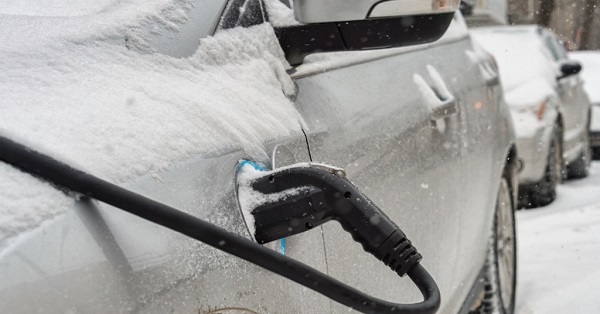
Buy an electric vehicle, they said, and you will save the planet, no questions asked. Justin Trudeau and several of his ministers proclaimed it from podiums. Environmental activists, often cabinet members, chanted it at rallies. Automotive executives leveraged it to extract giant subsidies. For over a decade, the message never wavered: until $50 billion in public money disappeared into corporate failures, and the economic wreckage became impossible to ignore.
Prime Minister Mark Carney, himself a spokesperson for the doomsday culture, inherited the policy disaster from Trudeau and still clings to the wreckage. The 2026 EV sales target sits suspended, a grudging acknowledgment that reality refused to cooperate with radical predictions and Ottawa’s mandates. Yet the 2030 and 2035 targets remain federal law, monuments to a central-planning exercise that delivered the opposite of what it promised.
Their claims were never quite true. Electric vehicles were pure good. They were marketed as unconditionally cleaner than conventional cars, a transformation so obviously beneficial that questioning it invited accusations of climate denial. Government messaging suggested switching to an EV meant immediate environmental virtue. The nuance, the conditions, and the caveats were conveniently omitted from the government sales pitch that justified tens of billions of your money into subsidies for foreign EV manufacturing and corporate advancement.
The Reality Ottawa Is Hiding
Research documented the conditional nature of EV benefits for over a decade, yet Ottawa proceeded as if the complexity didn’t exist. Studies from China, where coal dominates electricity generation, showed as early as 2010 that EVs in coal-dependent regions had “very limited benefits” in reducing emissions compared to gasoline vehicles. In Northern China, where electricity generation is over 80% coal-based, EVs could produce lifecycle emissions comparable to or even higher than those of conventional cars. A 2015 Chinese study found that EVs generated lifecycle emissions that were only 18% lower than those of gasoline vehicles, compared to 40-70% reductions in regions with cleaner grids.
Volvo began publishing transparent lifecycle assessments for its first EV in 2019, making it the first major automaker to document the significant upfront emissions from battery production publicly. Their 2021 C40 Recharge report, released during the COP26 climate summit in Glasgow, revealed that manufacturing an EV produces 70% more emissions than building a comparable conventional vehicle. But there are no CBC reports about that. The Volvo report showed that an EV charged on a coal-heavy global grid required 68,000 to 110,000 miles of driving to break even with a conventional car, potentially more than half the vehicle’s usable lifetime. For drivers with low annual mileage in regions with dirty electricity grids, that breakeven point could take six to nine years to reach, if ever.
Battery manufacturing location proved enormously consequential. Production in China, powered by coal, generates 60-85% higher emissions than manufacturing in Europe or the United States. Yet Canadian subsidies flowed to companies regardless of where batteries were made or where vehicles would be charged. The federal government committed over $50 billion without requiring the environmental due diligence that should precede such massive public investment.
The Canadian government never acknowledged Volvo’s findings. Not once. A search of federal policy documents, ministerial statements, and environmental assessments from 2019 forward reveals no mention of the lifecycle complexities Volvo documented. Ottawa’s silence on inconvenient research speaks loudly about how ideology trumped evidence in shaping EV policy.
You want to build a pipeline in Canada. There will be 8 to 10 years of red tape and environmental impact assessments. But if you say you want to make EVs, Laurentian provincial premiers and the feds will bend over backwards. They handed over billions while the economy and social conditions in their cities decayed.
The environmental promise was conditional: clean electricity grids, high annual mileage, manufacturing in regions with low-carbon energy, and vehicles driven long enough to offset the massive carbon debt from battery production. Remove those conditions, and the environmental case collapses. The subsidies, however, remained unconditional.
The Subsidies Flow, The Companies Fail
Corporate casualties now litter the landscape. Northvolt received $240 million in federal subsidies to build a Quebec battery plant before filing for bankruptcy protection in November. Lion Electric, Quebec’s homegrown EV manufacturer, burned through $100 million in government support before announcing massive layoffs and production cuts. Arrival, which secured subsidies for its electric van facility, collapsed entirely, leaving taxpayers with nothing but broken promises.
Stellantis and LG Energy Solution extracted $15 billion, the most extensive corporate handout in Canadian history, for their Windsor battery plant. Volkswagen secured $13 billion for St. Thomas. Provincial governments layered on additional incentives. The public investment dwarfed any plausible return, yet the money kept flowing based on environmental claims the government either never bothered to verify or suppressed from its own documents and reports.
Despite this flood of subsidies and regulatory coercion, Canadian consumers rejected the offering. Even with massive incentives, EVs accounted for only 15% of new vehicle sales in 2024, far short of the mandated 20% target for 2026, let alone the 60% demanded by 2030. When federal subsidies ended in early 2025, sales collapsed to 9%, revealing the limited consumer demand. Dealer lots overflow with unsold inventory. Manufacturers scaled back production plans. The market spoke; Ottawa is only half listening.
The GM plant in Oshawa serves as a cautionary tale. Thousands of jobs lost. Promises of green manufacturing jobs evaporated. Workers who believed government assurances that EV mandates would secure their livelihoods found themselves unemployed as companies redirected production or collapsed entirely. The pattern repeats across the sector: subsidies extracted, production scaled back, workers laid off, taxpayers absorbing losses while executives collect bonuses and move on, and politicians pretend that it never happened. CBC isn’t asking Justin Trudeau, Katherine McKenna or Steven Guilbeault any questions about it. They are not asking Mark Carney.
The Central Planning Failure
The EV disaster illustrates why economies run by political offices never succeed. Friedrich Hayek observed that “The curious task of economics is to demonstrate to men how little they really know about what they imagine they can design.” Politicians and bureaucrats in Ottawa do not possibly possess the dispersed knowledge embedded in millions of individual economic decisions. But they think that they do.
Markets aggregate information that no central planner can access. Consumer preferences for vehicle range, charging convenience, and total cost of ownership. Regional variations in electricity generation and the pace of grid decarbonization. Battery technology improvements and supply chain vulnerabilities. Resource constraints and mining capacity. These factors interact in ways too complex for any cabinet planning committee to comprehend, yet Ottawa presumed to mandate outcomes a generation in advance.
Federal ministers with no experience in automotive manufacturing or battery chemistry presumed to direct the transformation of a trillion-dollar industry. Career bureaucrats drafted regulations determining which vehicles Canadians could purchase years hence, as if they possessed prophetic knowledge of technological development, grid decarbonization rates, consumer preferences, and global supply chains.
The EV mandate attempted to force a technological transition. It was an economic coup. Environmental claims proved conditional at best. Billions in subsidies flowed to failing companies. Taxpayers absorbed losses while corporations extracted rents and walked away. It worked well for the corporations, but the coup failed Canadians and Canadian workers. They are not building back better.
Green ideology provided perfect cover for this overreach. Invoke climate emergency, and fiscal responsibility vanishes. Question subsidies and you’re labelled a denier. Point out that environmental benefits depend on specific conditions, and you’re accused of spreading misinformation. The rhetorical shield, aided and abetted by a complicit media unable to see past its own financial interests, allowed government to bypass scrutiny that should attend any massive industrial policy intervention.
The Trust Deficit
As Canadians learn that EV environmental benefits depend heavily on electricity sources and driving patterns, as they watch subsidized companies collapse, as they discover how thoroughly the promise was oversold and how completely Ottawa ignored contrary evidence, trust in government erodes. This badly needed skepticism will spread beyond EVs and undermine legitimate government functions.
It would be good if future government claims about environmental policy face rising skepticism. Corporations wrapping themselves in green rhetoric may be viewed as con artists. Environmental activists who championed these policies may see their credibility destroyed. When citizens conclude their government systematically misled them about costs, benefits, and basic facts while suppressing inconvenient research, liberal democracy itself suffers. But that may not happen at all in Laurentian LaLa-land or in the Pacific Lotusland.
Over fifty billion dollars are distributed among local and foreign industrialists, while tens of thousands live in tents in Laurentian cities.
The EV debacle demonstrates that overselling policy benefits, suppressing complexity, and using ideology to short-circuit debate produce a backlash far worse than honest acknowledgment of nuance would have. The damage compounds when governments commit billions based on conditional environmental claims they never verified, then remain silent when industry-leading manufacturers publish data revealing those conditions.
The Path Forward
Canada needs a full repeal of the EV mandate and a complete retreat from Ottawa directing market decisions. The EV law must be struck, not merely paused. The 2030 and 2035 targets must be abandoned entirely. No new subsidies for EV production (or any other production). No bailouts for failed battery plants. No additional funds for charging infrastructure. And absolutely no subsidies for conventional or hybrid vehicle production justified by the same environmental complexity that should have prevented EV mandates in the first place.
Let markets determine which technologies Canadians choose. If EVs deliver genuine value for specific consumers in specific circumstances—those with clean electricity grids, high annual mileage, and long vehicle ownership timelines—those consumers will buy them without mandates or subsidies. If hybrids or improved conventional vehicles better serve other consumers’ needs, manufacturers will produce them without government direction.
The aggregated wisdom of millions of economic actors making decisions based on their actual circumstances will produce better outcomes than any planning committee in Ottawa. Some Canadians will find EVs deliver environmental and financial benefits. Others will not. Both conclusions can be correct simultaneously, a nuance Ottawa spent $50 billion refusing to acknowledge.
Markets work because no one has to know everything. Central planning fails because someone must. I wish I could say that Ottawa has learned this lesson the expensive way. Or whether Laurentians will remember it at the next election. Or whether the same politicians and bureaucrats who delivered this disaster will identify the next technology to mandate and subsidize, armed with new promises that reality will eventually expose as conditional at best.
But let’s keep our dreams in check. It seems more likely, given their ideological make-up and propensities for certainty, that low-information Laurentian and Pacific Coast voters will go right for the next green-washed fantasy that the feds and provincial governments will put in front of them, provided it is coiled into a catchy slogan.
Subscribe to Haultain Research.
For the full experience, and to help us bring you more quality research and commentary,
please upgrade your subscription.


There’s No Bias at CBC News, You Say? Well, OK…

Religion on trial: what could happen if Canada passes its new hate speech legislation

Australian PM booed at Bondi vigil as crowd screams “shame!”

Mortgaging Canada’s energy future — the hidden costs of the Carney-Smith pipeline deal
The “Disruptor-in-Chief” places Canada in the crosshairs
Canada’s EV gamble is starting to backfire

UK Police Pilot AI System to Track “Suspicious” Driver Journeys
-
 Business1 day ago
“Magnitude cannot be overstated”: Minnesota aid scam may reach $9 billion
-
 Censorship Industrial Complex22 hours ago
US Under Secretary of State Slams UK and EU Over Online Speech Regulation, Announces Release of Files on Past Censorship Efforts
-
 Business2 days ago
Socialism vs. Capitalism
-
 Energy2 days ago
Canada’s debate on energy levelled up in 2025
-
 Daily Caller2 days ago
Is Ukraine Peace Deal Doomed Before Zelenskyy And Trump Even Meet At Mar-A-Lago?
-
 Business24 hours ago
Largest fraud in US history? Independent Journalist visits numerous daycare centres with no children, revealing massive scam
-
 Business7 mins ago
What Do Loyalty Rewards Programs Cost Us?